
Spinal Cord Injury · Virginia
Blunt Trauma and Spinal Cord Injury: Examples in Virginia
Crashes, falls and other forceful impacts can damage the spinal cord even when no bone breaks. Here is how that happens and where to start if it happened to you.
Published October 26, 2026
Which is an example of blunt trauma that can result in a spinal cord injury? A motor vehicle crash is one of the most common examples. Crashes, falls and other forceful impacts can damage the spinal cord even when no bone breaks. This guide explains how that happens and what Virginia’s timing rules may mean for someone hurt this way.
What Is Blunt Trauma?
Blunt trauma is injury from a forceful impact that does not break through the skin. Penetrating injuries, such as gunshot or stab wounds, enter the body through an opening. Blunt force does not. It can cause serious harm from the outside in, often with few visible marks.
The spinal cord runs inside the spine. It is protected by layers of tissue and bathed in cerebrospinal fluid (CSF), which acts as a cushion against shock. That cushion helps, but it has limits. A strong enough impact can squeeze, bruise or stretch the cord.
For background on how these injuries occur, see NINDS spinal cord injury information.
Not sure what your next step is?
Talk it through with Correll Law Firm — we can walk you through how a situation like yours is usually handled and what your options are.

Common Examples of Blunt Trauma to the Spine
Motor vehicle crashes, falls, workplace accidents, sports injuries and assaults are the most common examples. According to the National Spinal Cord Injury Statistical Center, vehicle crashes rank among the most common causes of blunt-trauma spinal cord injury.
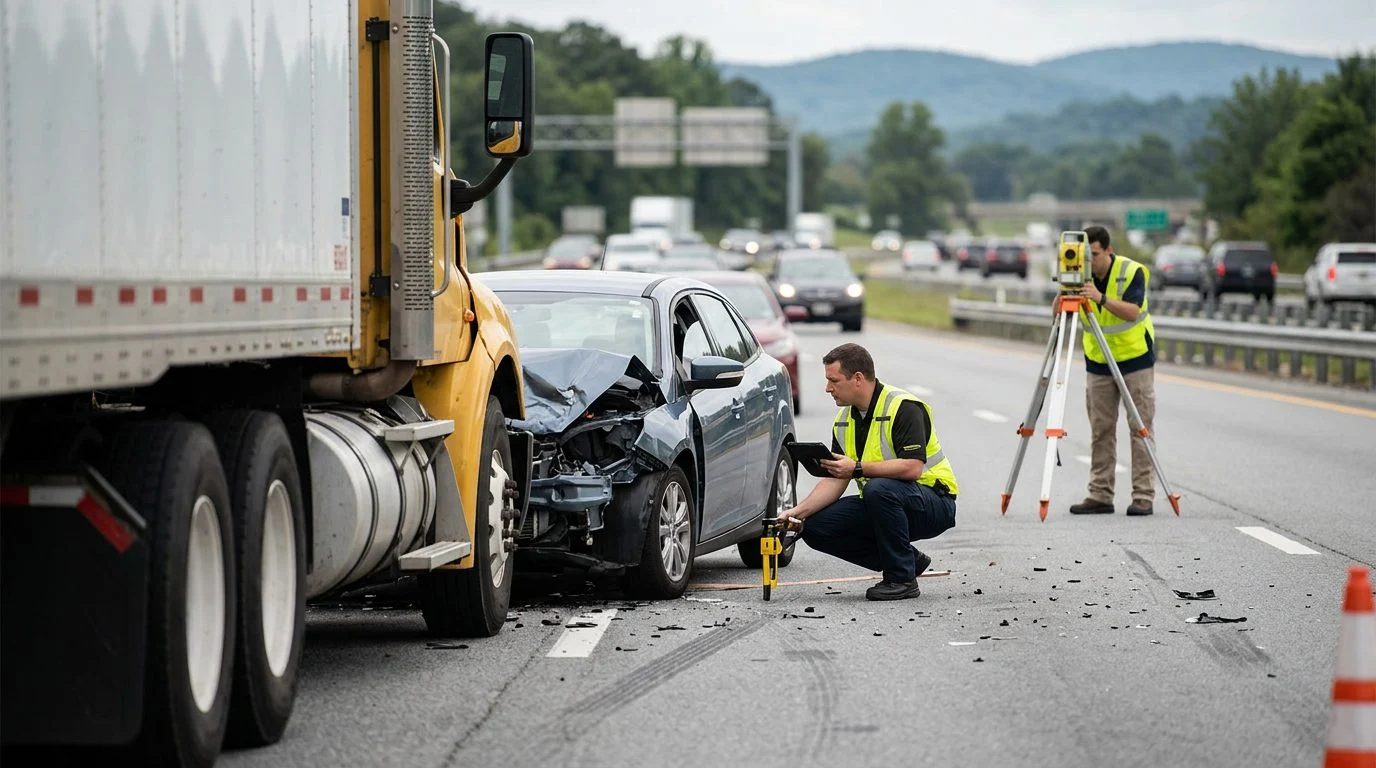
In a crash, the body stops suddenly while the head and spine keep moving. The neck can snap forward and back. The torso can strike a steering wheel, door frame or seatbelt. Heavier vehicles carry more force, so truck collisions can be especially severe.
Falls from ladders, roofs or stairs can drive the spine into a hard surface. Diving into shallow water is a known cause. Workplace accidents involving heavy machinery or falling objects can also cause these injuries, as can tackle football and other sports.
Each example works the same way. A sudden force compresses or moves the spine faster than the body can absorb it.
How Blunt Trauma Damages the Spinal Cord
Blunt trauma damages the cord in two stages: the impact itself, and the body’s response to it. The first stage is mechanical. Nerve fibers can be crushed, bruised or torn at the moment of impact.
The second stage is a secondary injury cascade. Swelling and inflammation can build in the cord over the following hours or days, and that process can make the damage worse. For more on how these injuries progress, see NINDS spinal cord injury information.
That is why early medical care matters. Prompt evaluation lets doctors check the spine and track symptoms from the start. It also creates a dated medical record of what happened after the impact. Report every symptom, including numbness, tingling or weakness in the arms, hands, legs or feet.
What Are Examples of Blunt Trauma?
Examples of blunt trauma include a crash, a fall from height, a worker struck by a falling load, and a hard collision in sports. Picture these general scenarios. A driver’s body is thrown into the seatbelt during a head-on collision. A person falls from a roof onto concrete. A worker is hit in the back by a dropped pallet.
Why do some impacts cause cord injury and others do not? Force is part of the answer. Direction and angle matter too. A blow from the front can load the spine differently than one from behind. A person’s existing spinal condition can also shape the result.
Two people in the same crash can leave with very different injuries. That is one reason the medical record and the details of the event both matter.
What Are Some Examples of Spinal Trauma?
Spinal trauma is the broad term for any injury to the spine or spinal cord caused by an outside force. Blunt trauma is one type. Penetrating spinal trauma happens when an object such as a bullet or knife enters the body and reaches the spine.
Both types can damage the cord. Both can cause serious, lasting harm. Spinal trauma can involve fractures of the vertebrae, the bones that make up the spine, as well as injury to the cord itself.
What Can Result in a Spinal Cord Injury?
A spinal cord injury can result from trauma, disease or degeneration of the spine. Trauma is one major group. It includes blunt force from crashes, falls and workplace events, and penetrating wounds from gunshots and stabbings. Non-traumatic causes include disease, infection and conditions present from birth, as described in NINDS spinal cord injury information.
Many traumatic injuries happen when another person’s careless driving, unsafe equipment or hazardous conditions played a part. Responsibility depends on the facts of each event, and those facts can often be examined after the fact.
Not sure what your next step is?
Talk it through with Correll Law Firm — we can walk you through how a situation like yours is usually handled and what your options are.

If You or a Loved One Has Suffered a Spinal Cord Injury
A spinal cord injury can change daily life quickly, and the questions that follow can feel overwhelming. The injured person or family may have legal options.
If you were in a crash, Virginia requires a driver involved in a crash with injury or death to stop and report it to police immediately (Va. Code §§ 46.2-371, 46.2-894).
Virginia generally allows two years from the date of injury to file a personal injury lawsuit (Va. Code § 8.01-243(A)); the clock runs from the date of injury, not the date of discovery, with narrow exceptions.
Correll Law Firm, based in Winchester with an office in Harrisonburg, focuses on car and truck crashes and catastrophic injuries, including spinal cord injuries. For the broader picture, see the spinal cord injury overview.
Is a car crash a common cause of this kind of injury? Yes. Motor vehicle crashes are among the most common causes of blunt-trauma spinal cord injury, per the National Spinal Cord Injury Statistical Center.