
Traumatic Brain Injury
Brain Injury from Commercial Truck Accidents: Virginia
If you or a family member suffered a traumatic brain injury in a crash with a commercial truck, Correll Law Firm helps injured Virginians pursue the compensation they deserve.
Published October 03, 2026
Brain Injury from Commercial Truck Accidents: Virginia Rights
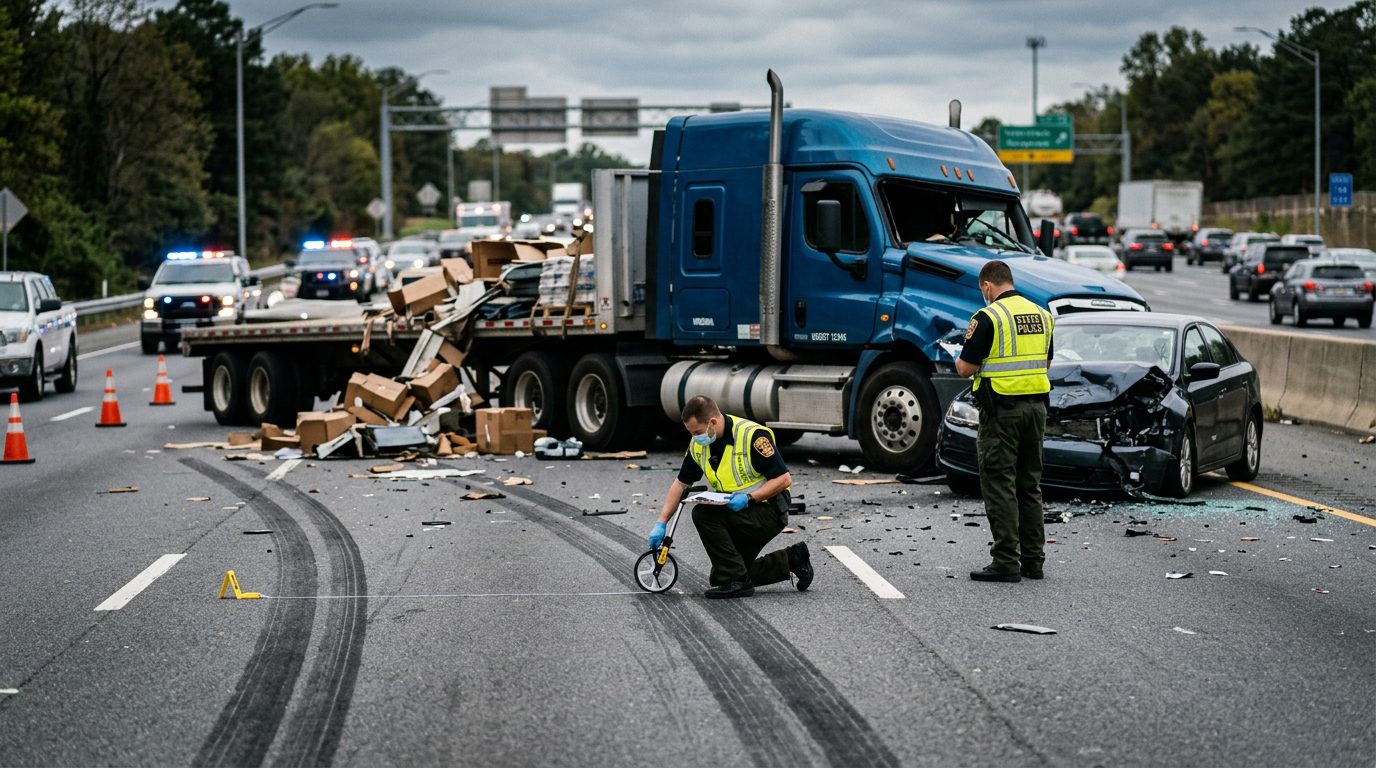
A traumatic brain injury (TBI) from a collision with a commercial truck is a serious, life-altering event that demands immediate medical care and careful legal action. Unlike car accidents, commercial truck crashes involve federal safety rules, multiple liable parties, and insurance policies far more complex than standard auto coverage—and that complexity directly affects your ability to recover damages.
If you’ve suffered a brain injury in a commercial truck accident in Virginia, understanding your rights and the legal process ahead is the first step toward protecting your claim and your family’s future.
If a commercial truck collision left you or a family member with a brain injury, you may have a claim for medical costs, lost wages, and more. Talk it through with our team — the first case evaluation is free, confidential, and carries no obligation.

What Is a Traumatic Brain Injury from a Commercial Truck Accident?
A traumatic brain injury occurs when the force of a collision causes the brain to move inside the skull or damages brain tissue directly, disrupting normal brain function. Commercial trucks—tractor-trailers, dump trucks, cement mixers, and other heavy commercial vehicles—weigh far more than a passenger car, creating collision forces that can cause more severe injuries than typical car accidents.
The impact of a commercial truck can cause immediate symptoms: loss of consciousness, severe headache, confusion, dizziness, or difficulty speaking. Other signs appear days or weeks later—memory problems, trouble concentrating, mood changes, sleep disturbances, or sensitivity to light and noise. Both immediate and delayed symptoms matter legally because they document the full extent of your injury and its ongoing impact on your life.
TBI severity varies widely. A mild concussion may resolve in weeks. A moderate or severe brain injury can result in permanent cognitive, physical, or behavioral changes that affect your ability to work, care for yourself, or maintain relationships. The National Institute of Neurological Disorders and Stroke identifies TBI as a leading cause of death and disability in the United States, with long-term effects that can last a lifetime.
Why Commercial Truck Accidents Are Different—and More Complex
Commercial truck accidents are fundamentally different from car crashes in ways that affect your legal claim.
Federal Safety Regulations
Commercial trucks and their drivers are subject to strict federal safety rules enforced by the Federal Motor Carrier Safety Administration (FMCSA). These rules cover hours-of-service limits (how long a driver can work without rest), vehicle maintenance standards, driver qualifications and training, cargo loading procedures, and electronic logging devices. A personal vehicle is not subject to these rules. When a trucking company or driver violates these federal standards, that violation is powerful evidence of negligence in your claim.
Multiple Liable Parties
A car accident typically involves two drivers. A commercial truck accident may involve the truck driver, the trucking company, a maintenance contractor, a cargo loader, the truck manufacturer, or a parts supplier—each potentially liable and each carrying separate insurance policies with different coverage limits. Identifying all liable parties and their insurers requires careful investigation that must begin immediately after the crash.
Complex Insurance and Coverage
Commercial trucking companies carry liability insurance with much higher limits than personal auto insurance. However, those policies contain exclusions, subrogation clauses, and coverage disputes that personal auto policies rarely have. Navigating this coverage landscape requires knowledge of commercial insurance law and industry practice.
Evidence That Disappears
Truck maintenance records, driver logs, hours-of-service data, safety training files, and company safety policies are often destroyed or “lost” within weeks or months after an accident if not preserved by legal action. Federal regulations require trucking companies to maintain these records, but without a lawyer’s preservation letter, critical evidence vanishes. Once it’s gone, your claim is weakened.
What Your Brain Injury Claim Can Cover
Depending on the facts, a claim in Virginia for a brain injury from a commercial truck accident may seek:
- Medical expenses: emergency care, hospitalization, surgery, rehabilitation, ongoing therapy, medications, and assistive devices.
- Lost wages: income you lost while recovering and unable to work.
- Loss of earning capacity: if your brain injury permanently reduces your ability to earn income in your former job or any job.
- Pain and suffering: compensation for physical pain, emotional distress, anxiety, depression, and reduced quality of life.
- Long-term care costs: if the injury results in permanent disability requiring ongoing nursing care, therapy, or home modifications.
- Punitive damages: for willful or wanton conduct, or recklessness showing a conscious disregard for others’ safety, Virginia law allows punitive damages capped at $350,000 total.
Every dollar of loss must be documented from the beginning. Medical records, wage statements, therapy invoices, and testimony from family members about changes in your daily functioning all build the case for full recovery.
How Fault Works in Virginia Truck Accident Cases
Virginia follows contributory negligence: if you are found even partly at fault, you may be barred from recovering, with limited exceptions. Talk to a lawyer about your facts. A judge or jury weighs the evidence and decides whether the truck driver or trucking company was negligent and whether you were negligent.
Common causes of commercial truck accidents include driver fatigue (often tied to violations of hours-of-service rules), speeding, improper vehicle maintenance, overloading, inadequate driver training, and cargo that shifts during transit. Evidence of federal safety violations—a driver working beyond legal hours, a truck with known brake problems, a company with a poor safety record—strengthens your claim significantly.
A lawyer can help you understand how the facts of your accident apply to Virginia law and what your case may be worth.
What to Expect: The Legal Process for a Commercial Truck Brain Injury Claim
Understanding the process helps you prepare and protects your rights.
Step 1: Initial Case Evaluation
Your attorney gathers medical records, the police accident report, witness statements, photos of the crash scene, and information about the truck, driver, and trucking company. This step establishes the severity of your injury and the basic facts of liability.
Step 2: Investigation and Evidence Preservation
Your lawyer sends a preservation letter to the trucking company, demanding that it preserve all records related to the truck, driver, and accident. Simultaneously, investigation begins: obtaining truck maintenance records, driver qualification files, hours-of-service logs, electronic data from the truck’s onboard computer, company safety policies, and driver training records. This phase is critical and must happen quickly.
Step 3: Demand and Negotiation
Once investigation is complete, your attorney prepares a detailed demand letter to the trucking company’s insurer, laying out the facts of liability, the severity of your injury, your medical evidence, and your damages. Most cases settle during this phase through negotiation.
Step 4: Litigation
If settlement cannot be reached, your case proceeds to court. Commercial truck cases often take longer than car accident cases because the stakes are higher, the liability is more complex, and discovery (the exchange of evidence) is extensive. Your attorney will be prepared to litigate if necessary to protect your rights.
Timeline
Commercial truck brain injury cases typically take 1 to 3 years from accident to resolution, depending on the complexity of liability, the severity of injury, and whether settlement is reached. Early legal action preserves evidence and prevents delays that could harm your claim.
Not sure what your next step is?
Talk it through with our team — the first case evaluation is free, confidential, and carries no obligation.
Why You Need a Lawyer for a Commercial Truck Brain Injury Case
Trucking companies and their insurers have teams of lawyers and professional investigators working to minimize what they pay. They understand federal trucking regulations, industry standards, and the tactics used to challenge brain injury claims. Facing that alone puts you at a severe disadvantage.
A lawyer who handles commercial truck accident cases brings in-depth knowledge of FMCSA regulations, trucking industry practices, and the medical evidence needed to prove TBI. Correll Law Firm handles serious truck accident cases across Virginia—from the Shenandoah Valley to Richmond and Henrico County. We investigate these cases, work to preserve critical evidence, and present your injury and damages clearly.
Early representation also prevents costly mistakes: missing filing deadlines, failing to preserve evidence, accepting a low settlement offer, or saying something to an insurer that weakens your claim. A lawyer protects your rights from day one.
Common Questions About Brain Injury Claims from Commercial Truck Accidents
How long do I have to file a claim?
Generally, you have two years from the date of the accident to file a personal injury lawsuit in Virginia. However, notice requirements and other deadlines may apply sooner. Do not wait—contact a lawyer immediately.
What if I was partly at fault for the truck accident?
You should speak with a lawyer about your circumstances to understand how Virginia’s contributory negligence rule applies to your accident (Contributory negligence bars recovery in Virginia).
How much is my case worth?
Every case is unique. Value depends on the severity of your injury, the strength of medical evidence, your lost income and earning capacity, the clarity of liability, and the insurance coverage available. A lawyer can evaluate your case and discuss what recovery may be possible.
Do I have to go to trial?
Most commercial truck accident cases settle before trial. However, if the insurer refuses a fair offer, we are prepared to litigate and present your case to a judge or jury.
What if the truck driver was an independent contractor?
Liability may still attach to the trucking company that hired the driver, depending on the facts. Investigation is essential to identify all liable parties and their insurance.

Next Steps: Schedule Your Free Case Evaluation
If a commercial truck collision has left you or a family member with a brain injury, Correll Law Firm is ready to help you understand your rights and pursue a claim for your injuries.
We offer a free case evaluation to discuss your accident, your injury, and your legal options. No attorney’s fee unless we win. Clients may remain responsible for costs accrued in the case.
Reach out today. People who have suffered brain injuries in commercial truck accidents can contact us—and we’re here to listen and guide you through what comes next.
Related practice areas
- Traumatic Brain Injury from Car and Truck Accidents: Legal Help in Virginia
- Commercial Vehicle Accident Lawyer Virginia | Correll Law