

Wrongful Death | Virginia
A Crash Injury, a Death Weeks Later: What Virginia Families Should Know
When a loved one dies weeks after a crash, families often ask whether a claim is still possible. Here is how the question is approached under Virginia law, in plain terms.
Published November 21, 2026
When someone dies weeks after a crash, the family often asks whether the death can still lead to a legal claim. A brain injury from a crash may contribute to a death that comes later, and Virginia law provides a wrongful death action for that situation.
This page explains the basics in plain words. It covers who files, what a claim may include, which deadlines apply, and how medical records link a later death to the crash. For broader background, see the Virginia wrongful death claims overview.
What a Brain Injury Death Weeks After a Crash Means Legally
The legal question is whether the crash caused the brain injury and whether that injury contributed to the death. The time between the crash and the death does not answer that question by itself.
Complications can develop or worsen after the first hospital visit. That means a death may come weeks later, even when the injured person seemed stable at the start.
A wrongful death claim is not the same as an injury claim. While the injured person is alive, that person may bring a claim for the injury. After a death, Virginia law allows a separate action. The law allows it when the same conduct would have allowed the injured person to sue had death not occurred. See Va. Code § 8.01-50.
The sections below cover who files, what may be recovered, the deadlines, punitive damages, and the evidence that matters. Each part of a claim rests on proof, so the records from the crash and the hospital matter a great deal.
If a loved one died weeks after a crash, you may have questions about a claim, and the firm is glad to talk them through with you. Talk it through with Correll Law Firm — we can walk you through how a situation like yours is usually handled and what your options are.

What Traumatic Brain Injury Is and Why Delayed Deaths Happen
Traumatic brain injury is brain damage caused by a sudden outside force, such as the head striking something in a crash. The Administration for Community Living reports that automobile crashes can cause traumatic brain injuries, which involve severe brain damage.
A head injury can look stable at first. A person may be awake and talking, then decline days or weeks later. Some people are sent home, and others are moved to a different ward.
Families often notice changes before doctors do. New confusion, unusual sleepiness, or trouble speaking are worth telling the treating team. Those reports become part of the medical record.
Medical terms in these records can be hard to follow. A later decline can come from the original injury or from a complication that develops after it. Medical professionals read the records to sort out which is which. For more on the injury itself, see traumatic brain injury claims in Virginia.
Linking a Later Death to the Crash
A later death is linked to a crash through medical records and the opinions of medical professionals who review them. The question is whether the crash was a cause of the injury that led to the death.
The early records often matter most. These include emergency department notes, imaging results, admission records, and the discharge summary. For what to keep after a head impact, see ER records for a head injury.
Here is a hypothetical example, not based on any real person. A driver hits the head on a window in a crash. The emergency department treats the driver and discharges the driver the same day. Three weeks later, the condition worsens, and the records from that later stay describe a brain injury that began with the crash.
In that situation, the early and later records would be read together. How strong the link is depends on the facts.
Who May Bring a Wrongful Death Claim in Virginia
A Virginia wrongful death action is filed by the decedent’s personal representative within two years of the death (Va. Code §§ 8.01-50(C), 8.01-244(B)), on behalf of the family members the statute protects.
The personal representative is the person who acts for the deceased person in the lawsuit. Family members do not file the action themselves. They share in any recovery the statute allows. A wrongful death action under § 8.01-50 is brought by and in the name of the personal representative of the deceased person; actions for fetal death under subsection B are brought by and in the name of the natural mother, but if the natural mother dies or is under a disability as defined in § 8.01-2, the administrator of her estate, her guardian, or her personal representative qualified to bring such action may initiate or maintain it.
Virginia also sets rules for who shares in a recovery. Under Va. Code § 8.01-53, the first group to share is the surviving spouse, the children, and the children of any deceased child.
If there is no surviving spouse, child of the deceased, or child of any deceased child of the deceased, the award may go to parents, brothers and sisters, and any other relative who is primarily dependent on the decedent for support or services and is also a member of the same household as the decedent. The list of beneficiaries is set when the verdict is entered or the judgment is rendered.
What a Wrongful Death Claim May Recover
Virginia wrongful death damages cover the family’s sorrow, mental anguish and loss of the decedent’s companionship, guidance and care; lost income and services; medical expenses from the injury; funeral expenses; and, for willful or wanton conduct, punitive damages (Va. Code § 8.01-52).
Under Va. Code § 8.01-52, the jury or the court may award such damages as to it may seem fair and just, and any damages for the decedent’s care, treatment and hospitalization, reasonable funeral expenses, or punitive damages must be specifically stated by the jury or the court. It lets the jury or the court award damages that seem fair and just.
The claim centers on the family’s losses, such as the companionship and guidance the family lost, and the income and services the decedent provided. Medical expenses from the injury and reasonable funeral expenses are also named in the statute.
Medical records from the time of the crash help show which expenses link to the injury. Keeping those records organized from the start makes that link easier to follow.
Two-Year Deadlines and the Injury Date
The wrongful death clock runs from the date of death, not the date of the crash, under Va. Code § 8.01-244.
Virginia generally allows two years from the date of injury to file a personal injury lawsuit (Va. Code § 8.01-243(A)); the clock runs from the date of injury, not the date of discovery, with narrow exceptions. Under Va. Code § 8.01-243, subsection A, an action for personal injuries, whatever the theory of recovery, is brought within two years after the cause of action accrues, unless this section or another statute provides otherwise.
The two clocks answer different questions. Because of that, a family may wish to ask about both early. Keep the crash date, each hospital visit date, and the date of death in one place. Clear dates make it easier to track each clock.
Not sure what your next step is?
Talk it through with Correll Law Firm — we can walk you through how a situation like yours is usually handled and what your options are.
Punitive Damages in Virginia Wrongful Death Cases
Virginia allows punitive damages for actual malice, or for willful or wanton conduct or recklessness showing a conscious disregard for the safety of others, capped at $350,000 (Va. Code § 8.01-38.1).
The statute is Va. Code § 8.01-38.1. The limit applies to total punitive damages against all liable defendants, and the jury is not told about it.
Punitive damages are not awarded simply because a crash caused a death. A driver who knowingly ignores a clear danger to others shows the kind of conduct the standard addresses. Whether the facts of a given crash meet that standard depends on the specific evidence in the case.
Fault, Crash Reports and Records
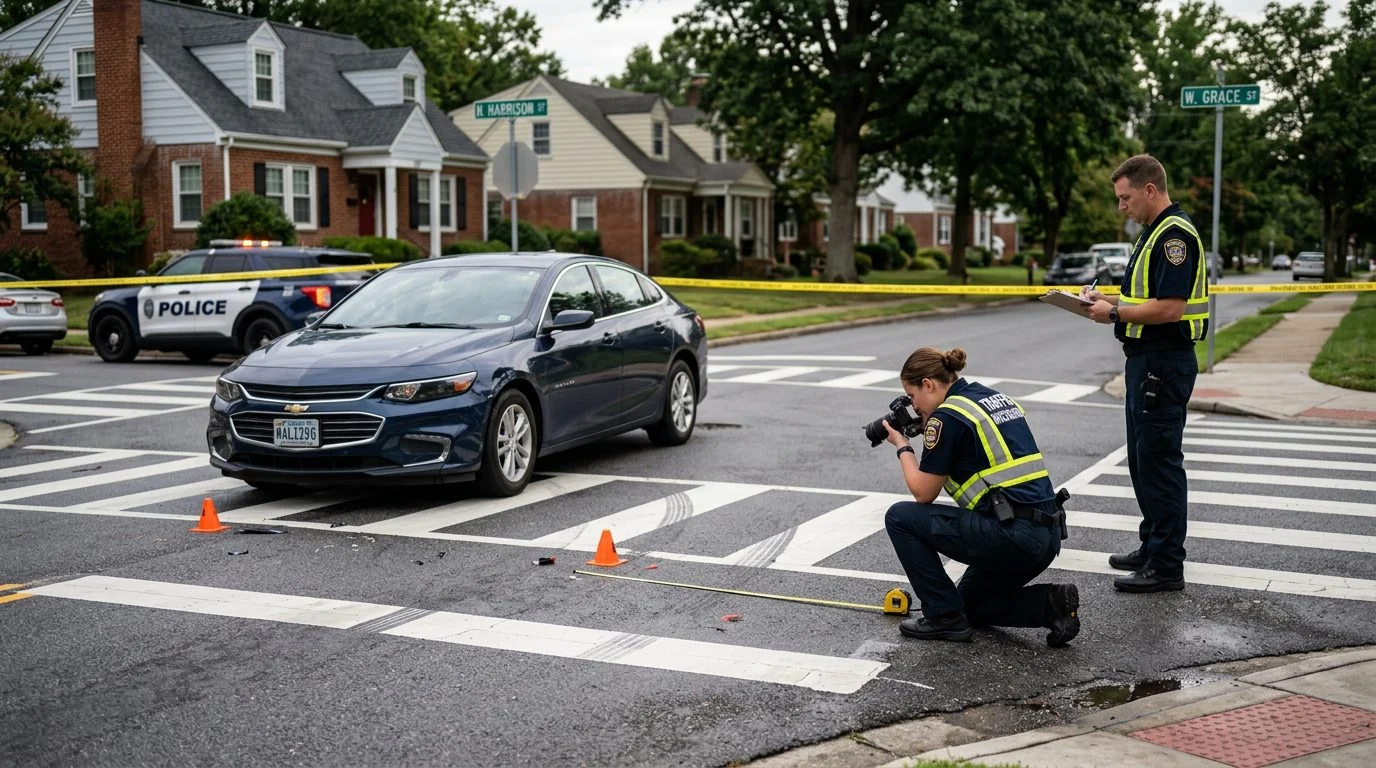
Virginia requires a driver involved in a crash with injury or death to stop and report it to police immediately (Va. Code §§ 46.2-371, 46.2-894). The statutes are Va. Code § 46.2-371 and Va. Code § 46.2-894.
That is a duty to report the crash.
Virginia follows contributory negligence: if you are found even partly at fault, you may be barred from recovering, with limited exceptions. Talk to a lawyer about your facts.
Helpful evidence can include the police crash report, witness names and their information, photographs, vehicle data, and the full medical file. Together, these show how the crash happened and how the injury progressed.
Can a family bring a claim if the death came weeks after the crash?
Yes, a Virginia wrongful death action may apply when a crash-related brain injury contributes to a later death. The medical records are central to showing that link.
Does the crash report have to be filed within two years?
No. The duty is to report the crash immediately, while the two-year period applies to filing a lawsuit.