

Car Accidents | Virginia
Diffuse Axonal Injury After a Car Crash: What Virginia Families Should Know
Learn how this serious brain injury happens, why it can be hard to detect, and how the firm helps people hurt in crashes across Virginia, including the Shenandoah Valley and Richmond.
Published October 31, 2026
A diffuse axonal injury from a car crash is damage to the brain’s nerve fibers, spread across wide areas of the brain. Many people hear that a first scan looked normal and wonder what that means. This guide explains what the injury is, how a crash can cause it, and why medical records matter to a claim.
What Diffuse Axonal Injury Means
Diffuse axonal injury is damage to axons, the long nerve fibers that carry signals between brain cells, spread across many areas of the brain.
Think of axons as wires that link one part of the brain to another. When many of those wires are stretched or torn at once, signals slow or fail in several places. That is why doctors use the word “diffuse.” It describes spread, not a single spot.
Diffuse axonal injury is one form of traumatic brain injury. It can occur with or without a skull fracture. It can also occur without an obvious bruise on the brain.
Many people picture a single bruise after a hit to the head. Diffuse damage is different. Nothing stands out in one place, so it is easy to miss on a quick look.
The word “diffuse” describes where the damage sits, not how severe it is. A diffuse injury can be mild or serious. Doctors judge severity from symptoms, exams, and testing over time.
Not sure what your next step is?
Talk it through with Correll Law Firm — we can walk you through how a situation like yours is usually handled and what your options are.
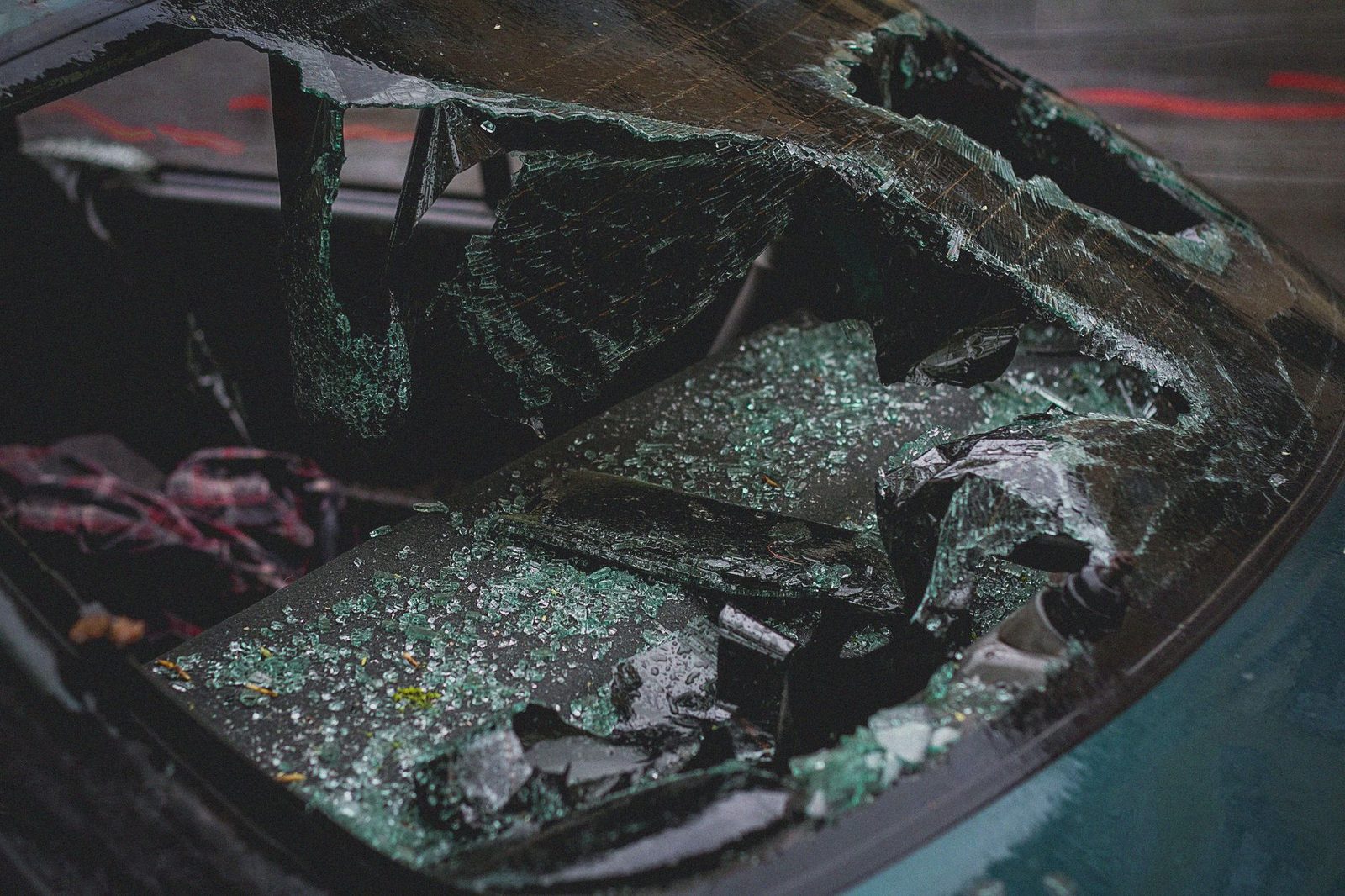
How a Crash Can Damage Nerve Fibers
A crash can damage nerve fibers when the head speeds up, slows down, and twists in a short time.
The brain floats inside the skull. In a sudden stop or impact, it can move forward, move back, and rotate against the hard skull and the tissue around it. That motion stretches and shears the axons. A stretched fiber can tear or stop working.
This can happen even when the head never strikes an object. The forces act on the brain itself, not only on the skull. A person may have no visible wound on the scalp and still have a serious injury inside.
In a diffuse axonal injury car crash, the forces can vary a great deal. A commercial truck collision or a high-speed crash can involve different forces than a low-speed bump. Doctors often ask how the crash happened, because those forces help explain the symptoms.
Why a Normal Early Scan Does Not Rule Out Brain Injury
A normal early CT scan does not rule out diffuse axonal injury.
Computed tomography (CT) is often the first brain scan in an emergency room. It is fast and good at finding bleeding and skull fractures. It is less suited to picking up the small, scattered nerve fiber damage that defines diffuse axonal injury. A scan can look clear while nerve fibers are still hurt.
That is why a normal early result is one clinical fact, not the final answer. Doctors read it alongside the person’s symptoms, the neurological exam, and later tests. A normal scan at one point in time is not proof that nothing happened.
Many people leave the hospital told the scan was normal and assume they are fine. That assumption is common. It can delay follow-up care and the medical record a claim depends on. If symptoms continue, it is worth asking the treating doctor what further testing may apply.
What a normal scan means depends on the facts of each case.
Symptoms That May Appear Over Time
Symptoms of diffuse axonal injury may include memory trouble, slow thinking, sleep problems, mood changes, headaches, and tiredness.
These symptoms can be subtle at first. They may change over days or weeks. A person may feel fine on the first day and notice trouble concentrating later. Family members often notice changes before the injured person does. A spouse may say the person seems slower, more irritable, or forgetful.
Some signs are easy to dismiss. A person may blame stress, poor sleep, or pain from other injuries. Writing symptoms down as they happen helps. A simple journal with dates, what changed, and what the doctor was told can make the medical timeline clear later.
An animal study offers a clue about the kinds of changes that can follow brain injury. In a PubMed rat study, traumatic brain injury was associated with impaired cognitive flexibility, reward-feedback processing, and impulsivity. Those findings come from rats, not human patients, so they show a pattern rather than a diagnosis.
How Doctors Evaluate for Diffuse Axonal Injury
Doctors usually check brain function with a neurological exam, and they may order an MRI when diffuse axonal injury is suspected after a normal early CT.
Doctors who evaluate a diffuse axonal injury car crash patient look at both symptoms and scans. The neurological exam tests thinking, coordination, eye movement, reflexes, and strength. Changes in these areas can point toward a brain problem even when a scan looks clear.
Magnetic resonance imaging (MRI) often shows changes that CT can miss. Some MRI sequences are designed to pick up small areas of bleeding or nerve fiber damage. Timing matters, so a doctor may repeat imaging or testing after some days or weeks.
Neuropsychological testing measures memory, attention, and processing speed. Repeating it over time can show whether those skills are changing. These results help doctors understand the injury and plan care.
The most useful step a person can take is to report every symptom to the treating doctor. Even minor symptoms can matter. Doctors can only record what they are told.
Why Medical Records and Treatment History Matter to a Claim
A claim depends on documented proof that connects the injury to the crash.
Useful records include emergency room notes, imaging reports, neurology notes, test results, prescriptions, therapy notes, and work restrictions. Each one shows what was reported, what was found, and when. Together, they tell the story a claim needs.
Consistent follow-up helps. Records that show regular visits, reported symptoms, and a treatment plan help link the injury to the crash. Gaps in treatment, or symptoms missing from the chart, can make that link harder to show.
A diagnosis of diffuse axonal injury is a medical judgment. The records show how doctors reached it.
Not sure what your next step is?
Talk it through with Correll Law Firm — we can walk you through how a situation like yours is usually handled and what your options are.

Time Limits and Documentation to Keep in Mind
Virginia generally allows two years from the date of injury to file a personal injury lawsuit (Va. Code § 8.01-243(A)); the clock runs from the date of injury, not the date of discovery, with narrow exceptions. The full text of Va. Code § 8.01-243 sets out that two-year rule.
There is a narrow exception: if the attorney, chief executive, or mayor of the locality, or any insurer or entity providing coverage or indemnification of the claim, had actual knowledge of the claim, which includes the nature of the claim and the time and place at which the injury is alleged to have occurred, within that six-month period, the failure to file a written statement does not bar it. The section is mandatory and strictly construed (Va. Code § 15.2-209). Readers may wish to find out early which deadlines apply to their facts.
Practical record-keeping helps. Write down the date and place of the crash. List every doctor, clinic, and therapist seen. Keep a symptom journal, and save copies of all imaging and test reports.
Does diffuse axonal injury show up on an MRI?
MRI can show changes that CT may miss, so doctors often order it when the injury is suspected.
Can a diffuse axonal injury car crash leave no scan finding?
Yes, it can. A diagnosis usually rests on symptoms, exams, and several tests taken together.