
Virginia Crash Reporting | Shenandoah Valley and Richmond
Reporting a Crash in Virginia Starts at the Scene
A plain-language guide to the reporting step, the separate lawsuit timeline and the questions people ask after a crash.
Published November 11, 2026
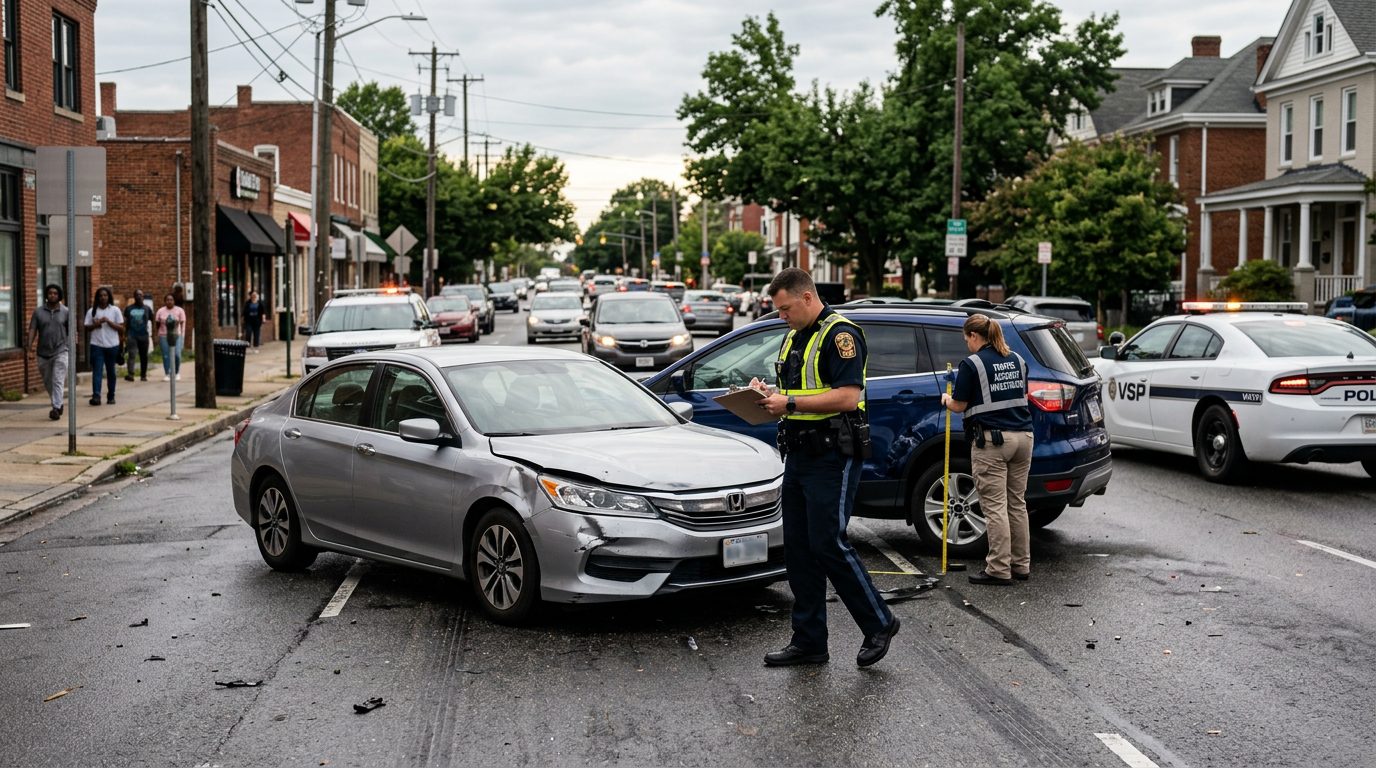
A crash can leave you shaken, hurt, and unsure what to do next. After a crash, it is common to feel shaken and unsure which steps come first. In short, a driver in a crash that causes injury or death must stop and report it right away, not at some later time. This guide explains what the law says, why timing matters, and how the reporting duty differs from the deadline to file a lawsuit.
What Virginia law requires after a crash
Virginia requires a driver involved in a crash with injury or death to stop and report it to police immediately (Va. Code §§ 46.2-371, 46.2-894).
Under Va. Code § 46.2-894, the driver must stop as close to the scene as possible without blocking traffic. The driver must also give his or her name, address, driver’s license number and vehicle registration number. That information goes to the State Police or local law enforcement, to the person struck if that person appears capable of understanding and retaining it, or to the driver or other occupant of the vehicle collided with or the custodian of other damaged property.
The driver must also give reasonable help to anyone hurt. That includes taking the injured person to a doctor, surgeon or hospital when treatment looks necessary or the injured person asks for it. The law says “immediately,” so the duty starts at the scene, not days later.
If a crash left you hurt or worried about someone you love, you do not have to sort out the next steps alone. The firm is glad to talk through your situation. Talk it through with Correll Law Firm — we can walk you through how a situation like yours is usually handled and what your options are.

Immediately means at the scene, not later
Immediately means the driver stops at the scene and makes the report right away, before leaving the area.
If injuries prevent that, the timing shifts slightly. The driver must then make the report to police as soon as reasonably possible, and make a reasonable effort to find the other people involved, under Va. Code § 46.2-894.
Timing matters because scenes change fast. Vehicles get moved, traffic keeps flowing, and details about where cars stopped or what people said fade quickly. A prompt report captures those facts while they are still clear.
Penalties apply to drivers who break these rules. A person convicted of violating § 46.2-894 is guilty of a Class 5 felony if the crash results in injury or death or more than $1000 of property damage, and of a Class 1 misdemeanor if the crash results in damage of $1000 or less to property. A willful failure to give notice under § 46.2-371 is a Class 4 misdemeanor.
Reporting a crash is different from filing a lawsuit
Reporting and filing run on separate clocks. The two-year period is for filing a lawsuit, not for reporting a crash.
Virginia generally allows two years from the date of injury to file a personal injury lawsuit (Va. Code § 8.01-243(A)); the clock runs from the date of injury, not the date of discovery, with narrow exceptions.
Some claims carry shorter notice requirements. A claim against a county, city or town for negligence requires a written statement of the nature of the claim, including the time and place of the injury, within six months after it accrued (Va. Code § 15.2-209); a missing statement does not bar the claim if, within that period, the locality’s attorney, chief executive or mayor, or any insurer or entity providing coverage or indemnification of the claim, had actual knowledge of the claim, including its nature and the time and place of the injury, and if the claimant was under a disability when the claim accrued, the tolling provisions of § 8.01-229 apply.
Which deadline applies to your claim depends on the facts.
Why a prompt report and a clear record matter
A prompt report starts an early record of how the crash happened.
A police report can record vehicle positions, damage, road conditions, and what drivers and witnesses say. Those details are hard to rebuild weeks later.
Your own notes help too. Write down the names and addresses of witnesses, the time and place, and what you remember while it is fresh. If it is safe, photograph the scene and the vehicles.
Related topics, such as whether accident reports are public record in Virginia and what witnesses can do after a crash, are covered in other pages on this site.
A report does not decide who caused the crash or what a claim is worth. It gives everyone a starting point.
Injuries that may not show up right away
Some injuries are not obvious at the scene, and that includes some brain injuries.
Tell your medical provider about every symptom you notice, including headaches, dizziness, confusion or memory changes, even if it seems minor or shows up later. Writing down new symptoms as they happen, with the date, keeps your own record accurate.
An evaluation after a crash also gives you a dated medical record of your condition.
Traumatic brain injury and spinal cord injury after car and truck crashes are covered in other pages on this site, as are broken bones that imaging can confirm.
Frequently asked questions
Does a car accident in Virginia have to be reported to police?
Yes. Yes. Virginia requires a driver involved in a crash with injury or death to stop and report it to police immediately (Va. Code §§ 46.2-371, 46.2-894).
Is the reporting deadline the same as the lawsuit deadline?
No. Reporting happens at the scene, while the lawsuit period is separate and generally runs two years from the date of injury (Va. Code § 8.01-243).