
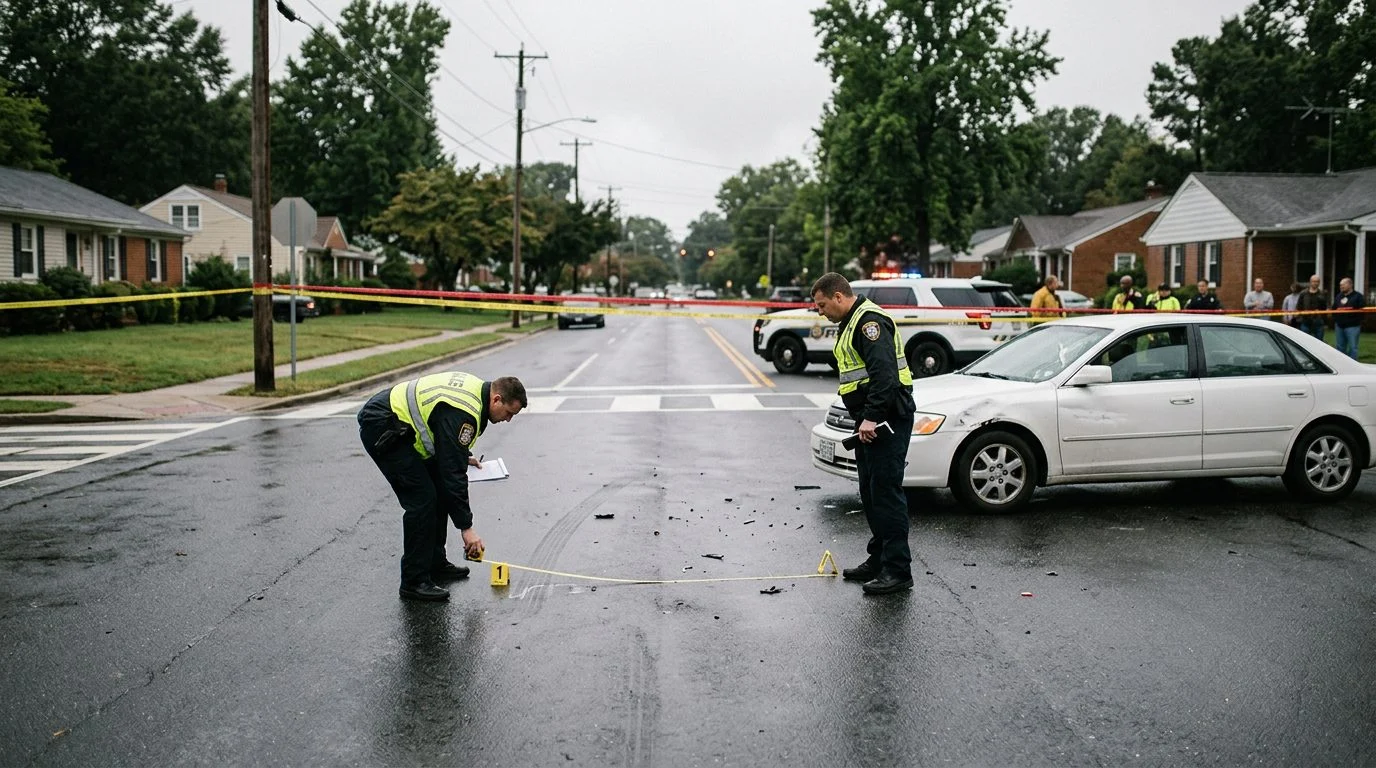
Henrico County | I-295 Crash Injuries
Brain Injury After an I-295 Crash? Start With These Records
Plain-language guidance from Correll Law Firm for Henrico County families dealing with a traumatic brain injury after a car or truck crash.
Published November 5, 2026
For an I-295 crash brain injury Henrico County families may face, the records you keep early can matter later. Start with the crash report, the scene, and your medical records. Then track symptoms from the first day. This page explains what to keep and why timing matters.
Why Records and Evidence Matter After an I-295 Crash With a Head Injury
Early records matter because a brain injury can be hard to see at the scene. Some symptoms appear or change over days and weeks. Proof made early carries weight later.
Interstate traffic on I-295 can move fast, cross several lanes, and slow down suddenly. Those conditions make the order of events hard to rebuild from memory alone. Notes, photos, and records made close to the crash fill that gap.
That is why a clear, dated paper trail helps.
This page covers records and evidence only. It follows the order most people meet them: the crash report, the scene, the medical chart, and then work and family records.
If you were hurt in a crash on I-295, you may have a claim, and the firm can talk through your facts with you. Talk it through with Correll Law Firm — we can walk you through how a situation like yours is usually handled and what your options are.

Getting and Reading the Crash Report
The crash report is the first official record of what happened. It reflects what officers saw and heard that day. Virginia requires a driver involved in a crash with injury or death to stop and report it to police immediately (Va. Code §§ 46.2-371, 46.2-894). The two-year period is the deadline to file a lawsuit, not to report a crash.
Reports usually list the date, time, and location. They also name the vehicles, drivers, passengers, and witnesses. Road and weather conditions appear, along with the officer’s narrative and a diagram.
Check every field. Look for wrong names, plate numbers, lane positions, and direction of travel. Note anything missing. If something is wrong, ask for a correction in writing so the request is on record.
The report is one record among several. Statements in it are not the final word on what happened.
Preserving Scene, Vehicle, and Witness Evidence
Scene, vehicle, and witness evidence can change or disappear quickly. Acting early helps.
Take photos of the roadway as soon as it is safe. Capture lane markings, skid marks, debris, traffic signs, lighting, and weather. Photos taken the same day show conditions that are hard to picture later.
Keep vehicles unrepaired or unsold until the injured person has documented them.
Trucks carry more records. A motor carrier must keep records of duty status for not less than six months from the date of receipt (49 C.F.R. § 395.8). Under 49 C.F.R. § 391.51, a motor carrier must keep each driver’s qualification file for as long as the driver is employed and for three years after, although certain records, such as the medical examiner’s certificate, may be removed from the file three years after the date of execution. Under 49 C.F.R. § 379.3, companies must retain records for at least the minimum periods in appendix A to that part, after which the records may be destroyed at the discretion of each company’s management, and the part is not to be read as excusing compliance with the lawful requirements of any other governmental body that prescribes longer retention periods for any category of records. An early written preservation request helps protect these records in a truck crash.
Write down the names of anyone who saw the crash, how to reach them, and what each person saw. Do it while memories are fresh. Dashcam video and nearby business or traffic camera footage can be overwritten, so requests should go out promptly.
Virginia follows contributory negligence: if you are found even partly at fault, you may be barred from recovering, with limited exceptions. Talk to a lawyer about your facts. This is why evidence about what each driver did in the seconds before impact matters.
Building a Medical Timeline for a Brain Injury
A medical timeline is a dated list of symptoms and care. It starts with the first emergency or urgent care visit.
That first record often matters most. It should note the head injury, any loss of consciousness, and the symptoms reported. Patients should monitor their symptoms and report new or worsening problems to their health care providers.
Keep a symptom journal. Write down headaches, dizziness, sleep changes, memory or concentration trouble, mood changes, and sensitivity to light or noise. Date each entry, and note how it affects work and daily tasks.
Follow-up visits, imaging reports, neurology notes, rehabilitation records, and referrals show how the injury was evaluated and treated over time. Keep a copy of every itemized record. Make a list of every provider seen, with dates.
Gaps in treatment can be questioned later. Describe changes accurately at each visit, and note the date of each symptom you report. Dated, honest notes give the medical record an accurate account of what you experienced.
Documenting Work, Daily Life, and Family Impact
Records of work and daily life show how the injury affects you beyond the medical chart.
Start with income. Keep earnings statements. Ask your employer in writing for letters that show missed time or modified duties. Tax records can help show earnings before the crash.
Track daily limits too. Note any help you need with driving, household tasks, childcare, or personal care, and the date each limit started. A simple daily log works well.
Keep personal messages. Texts, emails, and social media posts that mention the crash, symptoms, or activity limits can be evidence. Do not delete them. Avoid posting about the crash or your injury while a claim is pending.

Deadlines and Why Early Preservation Helps
Virginia generally allows two years from the date of injury to file a personal injury lawsuit (Va. Code § 8.01-243(A)); the clock runs from the date of injury, not the date of discovery, with narrow exceptions.
Some claims carry notice requirements that run out sooner. Gathering records early leaves more time to review them.
For wrongful death, Virginia law sets its own timing. A Virginia wrongful death action is filed by the decedent’s personal representative within two years of the death (Va. Code §§ 8.01-50(C), 8.01-244(B)), on behalf of the family members the statute protects. Family members do not file; the decedent’s personal representative brings the action.
Whether a particular record matters most depends on the facts of the crash and the injury. Records often come from several sources over time.
Common Questions
Which records matter most after an I-295 crash brain injury Henrico County?
The crash report, every medical record, a dated symptom journal, and proof of lost income or daily limits matter most.
Can brain injury symptoms show up days later?
Yes. Symptoms can be delayed, so keep tracking them and report changes to a health care professional.
Does a crash report decide who was at fault?
No. It is one record, and its statements are not the final word on what happened.
Records Checklist
- Crash report, plus any correction requests in writing
- Photos of the scene, roadway, and vehicles
- Vehicles kept unrepaired or unsold until documented
- Witness names and what each person saw
- Every itemized medical record and a list of providers
- A dated symptom journal
- Earnings statements, employer letters, and tax records
- Texts, emails, and posts, kept unedited