
Brain injuries from car and truck crashes
Keeping Proof After a Brain Injury From a Crash
Memory, mood and focus can change in ways that are hard to put into words later. A few simple habits can keep your side of the story clear.
Published November 22, 2026
After a crash, a brain injury can be hard to prove. Headaches, memory lapses and sensitivity to light are real, but they often don’t show up on a scan.
Here is the short answer: keep your medical records, a dated symptom journal, crash scene evidence, work and income records, and every insurance letter. Start on the first day, not after symptoms settle.
Why proof matters after a brain injury from a crash
Proof matters because a brain injury often shows up in what the person reports, not only in test results. A traumatic brain injury (TBI) is damage to the brain from a blow or a violent jolt to the head.
Vehicle crashes can cause moderate to severe brain injuries. The effects can reach physical ability, relationships, home life and work, according to the Brain Injury Association of America.
Mild TBI is a known proof challenge. The Brain Injury Association of America notes that symptoms after a car crash can be delayed or masked during an emergency room exam. Early, specific notes are easier to connect to the crash than a summary written months later. A clear record from the start helps tell the full story.
The firm handles car and commercial truck crash cases from Winchester and Harrisonburg. It also serves people across the Shenandoah Valley, Richmond and Henrico County. For the wider topic, see the firm’s guide to traumatic brain injury after a car accident.
If a crash left you or someone you love with a brain injury, the firm is glad to talk through your situation and whether you may have a claim. Talk it through with Correll Law Firm — we can walk you through how a situation like yours is usually handled and what your options are.

Medical records and the diagnosis timeline
Medical records are the core of brain injury proof. The best ones show symptoms recorded from the first visit onward.
Keep these records: emergency department notes, CT and MRI imaging reports, discharge instructions, referral letters, and visit summaries from primary care, neurology or therapy. A symptom reported at the first visit and again at a later visit creates a timeline. Gaps in treatment are often questioned by insurers and others reviewing the claim. A missed follow-up can leave a gap that others will ask about.
Tell every treating provider about all your symptoms, even ones that seem minor. Ask for copies of notes and test results as you go. Keep copies of any work restrictions, such as limits on driving or screen time, that a provider gives you.
A neurologist is a doctor who treats the brain and nervous system. If one evaluates you, ask for the written report and keep it with the rest of your file. Write down each provider’s name and the date of each visit. That list saves time later when records are requested.
Keep a symptom and daily-life journal
A symptom journal is a dated record of what you feel and what you can no longer do.
Start it in the first week. Record headaches, dizziness, sleep changes, trouble with memory or focus, mood shifts, and sensitivity to light or noise. Also note what you could do before the crash that you struggle with now, such as driving, reading for long stretches or keeping up with chores.
Write each entry the same day. Memories fade, and a note written that day is easier to trust than one reconstructed months later. Keep the journal short and factual. Write what happened, not what you think a reviewer wants to hear.
Ask a family member or friend to keep their own dated notes too. Others can notice memory and mood changes before the injured person does. A journal supports medical records; it does not replace them. Keep it alongside appointment summaries so each entry can be matched to a visit.
Crash scene and crash report evidence
Evidence from the scene ties your symptoms to the crash. A police report creates an early official record.
Virginia requires a driver involved in a crash with injury or death to stop and report it to police immediately (Va. Code §§ 46.2-371, 46.2-894). Under Va. Code § 46.2-371, the driver of any vehicle involved in any accident resulting in injury to or death of any person, or some person acting for him, shall immediately give notice of the accident to a law-enforcement officer. A willful failure to make the report required in this section shall constitute a Class 4 misdemeanor.
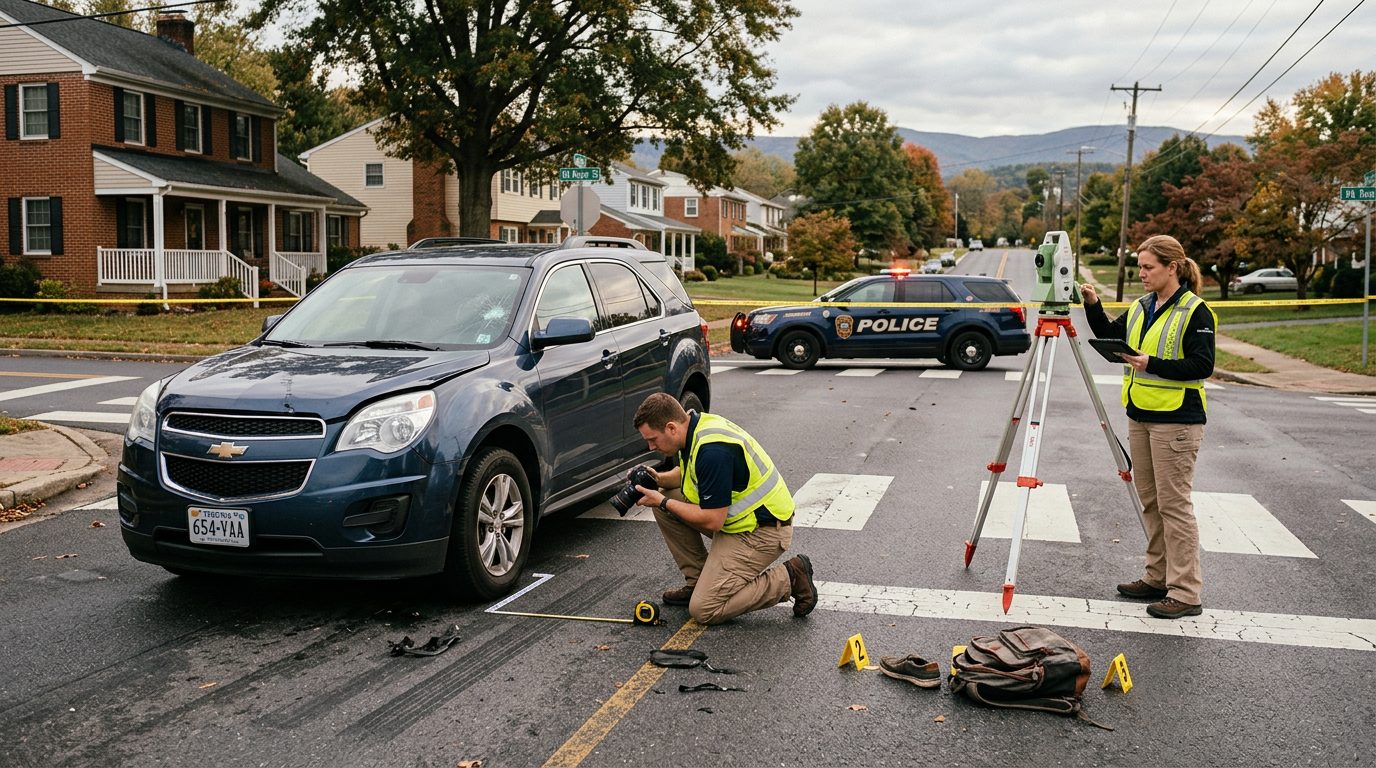
Note the report number from any responding officer. Photograph the vehicles, the roadway, skid marks, lighting and weather. Write down the names and contact details of witnesses while memories are fresh. The date and time of the crash matter, because they link early symptoms and treatment to the event.
Commercial truck crashes can leave more records. Under 49 C.F.R. § 395.8, motor carriers subject to the requirements of this part must require each driver used by the motor carrier to record duty status for each 24-hour period (except private nonbusiness passenger carriers), and no driver or motor carrier may make a false report about it. Under 49 C.F.R. § 396.21, the motor carrier, intermodal equipment provider or other entity responsible for a truck’s inspection must keep the inspection report for fourteen months from the date of the report. Because that window is limited, ask early.
Work and income records
Keep records that show how the injury has changed your work, your money and your daily routine.
Save pay stubs, time sheets and schedules. Keep employer letters about leave, modified duty or reduced hours, with their dates. Keep receipts for prescriptions, therapy visits and mileage to appointments. Write the date next to each one.
Gather records of past work or school performance, such as performance reviews or grade reports. Set them beside the records from after the crash to show the change. Your job duties before and after the crash also show how the injury affects daily life. Write a short list of tasks you did before and what you can do now.
If a family member helps with appointments, ask them to keep the receipts they handle. Store everything in one folder, paper or digital, sorted by date.

Insurance communications and the filing timeline
Keep every insurance communication and the date you received it. Those records show what was said and when.
Save copies of letters, emails, claim forms, requests for a recorded statement, and texts from any insurer or adjuster. Note the date and the name of each person who called. Keep a list of any claim numbers you were given.
After a phone call, write down what was said while it is fresh. Review any written statement carefully before you sign it, since short answers can miss memory and symptom details.
Virginia generally allows two years from the date of injury to file a personal injury lawsuit (Va. Code § 8.01-243(A)); the clock runs from the date of injury, not the date of discovery, with narrow exceptions. Subsection A of Va. Code § 8.01-243 provides that, unless otherwise provided in that section or by other statute, every action for personal injuries, whatever the theory of recovery, shall be brought within two years after the cause of action accrues.
Some claims carry notice requirements that run out sooner. Whether a given deadline applies depends on the facts, so keep every record and date until a lawyer can review your matter.
Frequently asked questions
What proof do you need after a brain injury from a car accident?
Medical records from the first visit, a dated symptom journal, crash and police report evidence, and work and income records work together as proof.
Can a brain injury be shown if the scan looks normal?
A normal scan does not end the record. Symptom notes and doctor visits also form part of the proof.
Should a symptom journal replace medical records?
No. A journal supports medical records and works best when kept with visit summaries.