

Spinal Cord Injury | Virginia
How a Spinal Cord Injury Lawsuit in Virginia Gets Started
A plain-language guide for people and families facing a spinal cord injury after a crash, from the first medical decisions to the legal steps that may follow.
Where the firm works
2
Offices, in Winchester and Harrisonburg
Published November 21, 2026
A serious spinal injury can change work, family life and plans for years. If you want to know how a spinal cord injury lawsuit in Virginia starts, the answer begins at the crash scene, with prompt medical care, careful records and a clear view of the filing deadline.
The sections below explain each step in plain language, from the first hours after a crash to the stages of a lawsuit.
What a Spinal Cord Injury Lawsuit Involves
A spinal cord injury lawsuit is a civil case. The injured person asks a court to hold an at-fault party responsible for the harm the injury caused.
Spinal cord injuries often follow car crashes and commercial truck crashes. The injury can change a person’s ability to work, handle daily tasks and plan for long-term care. Those effects can take months to become clear, which is why the harm is measured over time, not only at the scene.
Many claims begin as insurance claims. A lawsuit is one possible next step if the insurance claim does not resolve the matter.
A spinal injury that leads to death creates a different path. That path is a wrongful death action, and it is covered on its own page.
Correll Law Firm is based in Winchester, has an office in Harrisonburg, and represents injured people from the Shenandoah Valley to Richmond and Henrico County. The rules in this article are Virginia rules, so they apply in each of those areas.
If a crash has left you or someone you love with a spinal injury, the firm is glad to talk through your situation and whether you may have a claim. Talk it through with Correll Law Firm — we can walk you through how a situation like yours is usually handled and what your options are.

The First Steps After a Crash
The first steps are reporting the crash, getting medical care and keeping simple records. Those steps protect the injured person’s health and the facts of any later claim.
Virginia requires a driver involved in a crash with injury or death to stop and report it to police immediately (Va. Code §§ 46.2-371, 46.2-894). The driver must also stop as close to the scene as possible and give reasonable assistance to anyone hurt, as Va. Code § 46.2-894 describes.
That reporting duty is separate from the lawsuit deadline. The two-year period discussed below is the deadline to file a lawsuit, not the deadline to report a crash (Va. Code § 8.01-243).
Seek medical care promptly. Get emergency care for any neck or back pain, numbness, weakness or loss of movement, even if the symptoms seem mild at first.
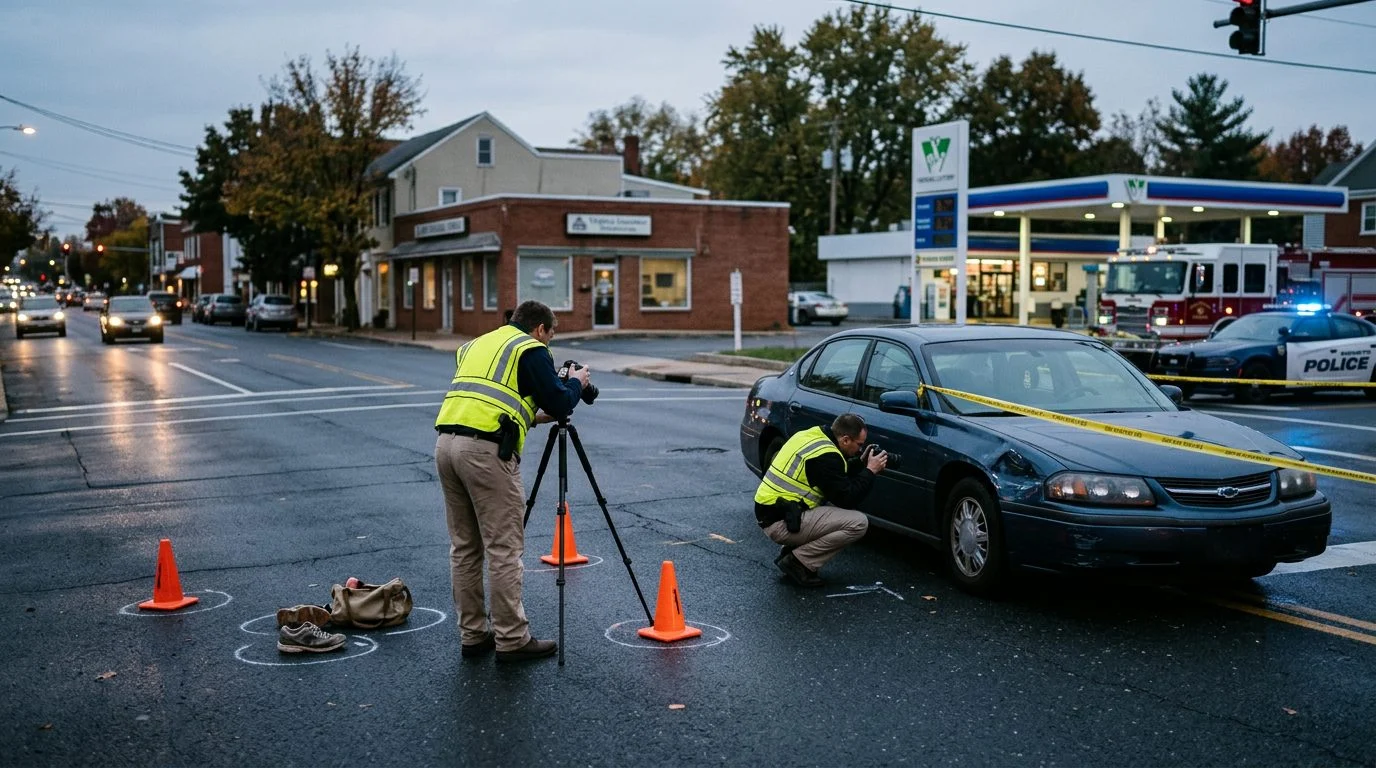
Keep simple records when you can. Take photos of the scene and vehicles, write down witness names and contact details, and note the other driver’s information and any police report number.
Medical Records That Shape a Spinal Cord Injury Claim
The medical record is the backbone of a spinal cord injury claim. It shows what was injured, how it was treated and what the treating providers expect.
Records usually include imaging such as X-rays, MRIs and CT scans, notes from the spine doctor, surgical reports, emergency room records and rehabilitation notes.
Follow-up care matters. Gaps in treatment can make it harder to connect later symptoms to the crash. Keep your appointments and tell providers about every new symptom, even small ones.
Some spinal injuries become clearer over weeks or months, so the medical record grows over time. Keep a personal journal. Note your symptoms, your limits at work and at home, and any appointments you missed or rescheduled.
Ask providers to explain the diagnosis in writing. That way, you and the firm can read the same account.
Evidence and Responsible Parties in Truck and Commercial Vehicle Crashes
Truck and commercial vehicle crashes often involve more than one responsible party. The driver, the carrier or employer, the vehicle owner, a maintenance provider or a cargo company may each play a role.
Federal rules create evidence that can matter. Motor carriers must install and require drivers to use an electronic logging device (ELD) to record each driver’s duty status, under 49 C.F.R. § 395.8.
Records do not last forever. Under 49 C.F.R. § 379.3, companies keep records for the minimum retention periods, and after those periods management may destroy them at its discretion, but this does not excuse compliance with other government requirements that prescribe longer retention periods. That is why a written request to preserve evidence should go out early.
Reconstruction professionals and medical professionals may review the crash and the injury when the facts call for it. For more on this topic, see the firm’s truck accident spinal cord injury page.
Insurance Claims Before a Lawsuit
An insurance claim often comes first. A lawsuit may follow only if the claim does not resolve.
Insurers may contact the injured person early, sometimes before the full effects of a spinal injury are known. The medical picture may still be changing at that point.
Early statements, recorded interviews and signed forms can become part of the file. Readers may wish to think carefully before giving a recorded statement.
An adjuster works for the insurance company. A claim decision can be questioned, disputed or taken further if it does not resolve the matter.
Some claims carry notice requirements that run out sooner than the lawsuit deadline. Timing matters from the start.
Virginia’s Two-Year Filing Period
Virginia generally allows two years from the date of injury to file a personal injury lawsuit (Va. Code § 8.01-243(A)); the clock runs from the date of injury, not the date of discovery, with narrow exceptions.
Va. Code § 8.01-230 sets that accrual rule for injury claims.
A spinal injury may be found weeks or months after the crash. That delay does not move the start date.
Treat two years as a date to plan around, not a date to wait for.
Not sure what your next step is?
Talk it through with Correll Law Firm — we can walk you through how a situation like yours is usually handled and what your options are.
Partial Fault Under Virginia Law
Virginia follows contributory negligence: if you are found even partly at fault, you may be barred from recovering, with limited exceptions. Talk to a lawyer about your facts.
Fault disputes often arise early. Insurers and other parties may argue about who had the right of way, who was distracted or how the crash unfolded.
That is why scene details, witness names and an early written account matter. They help show the sequence of events while the facts are still fresh.
How a Virginia Lawsuit Moves Forward
A lawsuit begins when a complaint is filed in court and the other side responds.
Next comes discovery, the formal exchange of information between the sides. It can include written questions, requests for documents and depositions, which are sworn statements given outside the courtroom.
Medical record reviews and professional reports are common in spinal cord injury cases. Those reports explain the injury, its treatment and its effect on daily life.
Many lawsuits end through settlement talks or mediation, a meeting with a neutral third party to explore a resolution. Some cases go to trial. The path depends on the facts.
Readers in Richmond and Henrico County face the same Virginia filing rules as readers in the Shenandoah Valley. For more on one injury type, see paralysis after a car accident in Virginia.
Damages a Spinal Cord Injury Claim May Address
A spinal cord injury claim may seek damages for losses that the medical and wage records support.
Common categories include medical bills, future care needs, lost income, reduced ability to earn and the household help the injured person now needs.
Under Va. Code § 8.01-35, provable lost income is not reduced because another source reimbursed it, and that reimbursement cannot be admitted into evidence.
Punitive damages are a separate question, and they are not part of every claim. Virginia allows punitive damages for actual malice, or for willful or wanton conduct or recklessness showing a conscious disregard for the safety of others, capped at $350,000 (Va. Code § 8.01-38.1). The jury must find that the conduct met this standard. The jury is not told about the cap.
Frequently Asked Questions
Can a family bring a spinal cord injury lawsuit in Virginia if the injury leads to death?
A Virginia wrongful death action is filed by the decedent’s personal representative within two years of the death (Va. Code §§ 8.01-50(C), 8.01-244(B)), on behalf of the family members the statute protects. Family members share in the recovery rather than filing the claim themselves.