
Virginia Spinal Cord Injury and Wrongful Death
Helping Virginia Families Through Spinal Cord Injury and Wrongful Death Claims
Correll Law Firm works with people hurt in serious crashes and the families left behind, from offices in Winchester and Harrisonburg to clients in Front Royal, Richmond and Henrico County.
Published November 9, 2026
A crash can change a family’s life in a single moment. If someone was left with a spinal cord injury or died in a crash, the questions come fast. This page explains how a Virginia spinal cord injury and wrongful death claim works, and how the two differ.
What a Spinal Cord Injury Wrongful Death Claim Is
A spinal cord injury claim belongs to the injured person. A wrongful death case is different from an injury case, and it can be hard for a family to think about the legal questions while they are grieving.
The spinal cord carries signals between the brain and the body. When a crash damages it, movement or feeling below the injury can change, and some of those changes can last. Doctors describe several spinal cord injury clinical syndromes, each with its own nerve findings.
If the injured person survives, that person may bring a claim for their own injuries. If a crash caused by someone’s wrongful act, neglect, or default causes a death, and that act would have entitled the injured person to sue had death not occurred, the claim is a wrongful death action. Virginia law states it this way: A Virginia wrongful death action is filed by the decedent’s personal representative within two years of the death (Va. Code §§ 8.01-50(C), 8.01-244(B)), on behalf of the family members the statute protects.
For related crash injuries, see traumatic brain injury after a car or truck crash.
Not sure what your next step is?
Talk it through with Correll Law Firm — we can walk you through how a situation like yours is usually handled and what your options are.

Crashes That Lead to Spinal Cord Injury and Wrongful Death
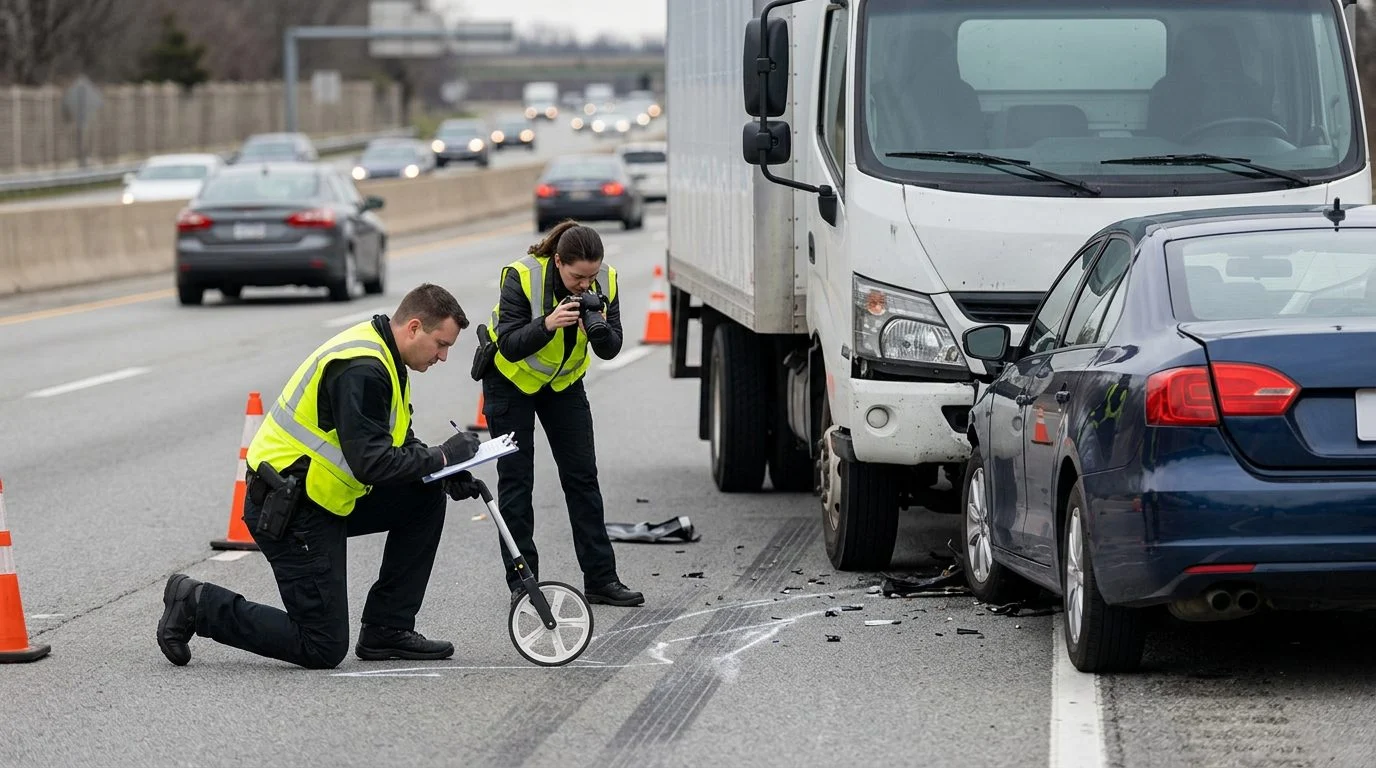
Spinal cord injuries and wrongful death claims can come from passenger car crashes, commercial truck crashes and other commercial vehicle crashes.
The firm handles car accident, truck accident and commercial vehicle accident claims. It also handles catastrophic injury matters, including spinal cord injury cases.
How a crash happens shapes the medical picture. The type of impact, where the occupant sat and how the body moved all matter. Only medical professionals can say what an injury means for a person’s future. Lawyers focus on the crash facts and records that show what happened.
Commercial vehicles add another layer of records. Federal rules require motor carriers to record each driver’s duty status, including the city and state for each change in status (federal driver duty-status rules). Those records can matter early in a truck case, so they’re worth asking about soon after a crash.
Questions about walking after a crash are common. For information on that topic, read can you walk again after a spinal cord injury crash. Each person’s medical course is different.
What a Virginia Wrongful Death Claim Can Cover
A Virginia wrongful death claim can cover the family’s losses, and in some cases punitive damages.
Virginia wrongful death damages cover the family’s sorrow, mental anguish and loss of the decedent’s companionship, guidance and care; lost income and services; medical expenses from the injury; funeral expenses; and, for willful or wanton conduct, punitive damages (Va. Code § 8.01-52).
Each item needs proof. Bills, pay and employment records, funeral receipts and testimony from family members all help show the loss.
Virginia law also sets out who shares in an award, including a surviving spouse, children and, in some cases, parents (Va. Code § 8.01-53).
Virginia allows punitive damages for actual malice, or for willful or wanton conduct or recklessness showing a conscious disregard for the safety of others, capped at $350,000 (Va. Code § 8.01-38.1).
Deadlines, Crash Reporting and Notice Requirements
The main filing deadline is two years, but some notice steps run out sooner.
Virginia generally allows two years from the date of injury to file a personal injury lawsuit (Va. Code § 8.01-243(A)); the clock runs from the date of injury, not the date of discovery, with narrow exceptions.
Some claims carry notice requirements that run out sooner. A negligence claim against a county, city or town requires a written statement of the nature of the claim, including the time and place of the injury, filed within six months after the claim accrues, with limited exceptions (Va. Code § 15.2-209). Va. Code § 15.2-209 reads: “Failure to provide such statement shall not bar a claim against any county, city, or town, provided that the attorney, chief executive, or mayor of such locality, or any insurer or entity providing coverage or indemnification of the claim, had actual knowledge of the claim, which includes the nature of the claim and the time and place at which the injury is alleged to have occurred, within six months after such cause of action accrued.”
Virginia requires a driver involved in a crash with injury or death to stop and report it to police immediately (Va. Code §§ 46.2-371, 46.2-894). The two-year period is the deadline to file a lawsuit, not the deadline to report a crash (Va. Code § 8.01-243).
Early steps matter. Crash reports, photographs, vehicle data and medical records can be lost or overwritten over time. Requesting them early keeps the timeline in view.
How Fault Works in a Virginia Crash Claim
Fault is often the central question in a crash claim. Virginia’s rule works like this.
Virginia follows contributory negligence: if you are found even partly at fault, you may be barred from recovering, with limited exceptions. Talk to a lawyer about your facts.
A crash can have more than one proximate cause.
Evidence usually includes police reports, driver logs and inspection records for commercial vehicles, witness statements and medical records. Outside medical professionals and accident reconstruction professionals may help explain the findings. Their opinions should be checked against the records.
How the Process Works, Step by Step
The process moves through six stages, and the timing depends on the facts.
- First conversation. The family or injured person shares the crash facts, the medical situation and any reports already received.
- Preserving evidence. The firm requests vehicle data, carrier records and scene photographs before they are lost.
- Medical records. Records and bills come from treating providers, and the injury’s effect on daily life and family is documented.
- Identifying parties. Every party who may share responsibility is identified, such as another driver, a trucking company or a vehicle owner.
- Presenting the claim. The firm’s lawyers prepare the demand to the insurer and handle negotiation.
- Filing suit. If a fair resolution is not reached, suit is filed within the Virginia deadlines, and the case is prepared for trial if needed.
Not sure what your next step is?
Talk it through with Correll Law Firm — we can walk you through how a situation like yours is usually handled and what your options are.

Why Families Work With Correll Law Firm and Common Questions
Correll Law Firm handles car, truck, commercial vehicle, catastrophic injury, traumatic brain injury, spinal cord injury and wrongful death matters.
The firm has an office in Winchester and an office in Harrisonburg. It serves people from the surrounding area and clients across the Shenandoah Valley, Richmond and Henrico County. The firm has more than one lawyer and support staff, and it works with families through each stage above.
Can a family bring a wrongful death claim if the injured person lived for a time?
Yes. The wrongful death period runs from the death, and the injured person’s own claim can be a separate matter.
Who files a Virginia wrongful death claim?
Families often have questions about who takes part in a wrongful death case and what each person’s role is.
Does a spinal cord injury claim have the same deadline as a wrongful death claim?
Not necessarily. An injury claim runs from the date of injury, while a wrongful death claim runs from the date of death, so the timing can differ.
Are commercial truck claims handled differently?
They can be more involved. Carriers, drivers and their records can add parties and evidence to a spinal cord injury wrongful death lawyer’s review in Virginia.