
Car & Truck Accidents | Virginia
Understanding When an Accident Is Considered Serious
Injuries from a crash can change a family's life in an instant. Here is how the firm looks at serious injuries across Virginia, from the Shenandoah Valley to Richmond and Henrico County.
Published November 9, 2026
What qualifies as a serious accident? In everyday use, it’s a crash that causes major harm to a person’s body, health or daily life. In Virginia, the phrase is a description, not one fixed test for most injury claims. Severity is usually judged from the injury itself, the care it needs, and how long its effects last. This guide explains those points in plain terms for people hurt in car, truck and commercial vehicle crashes, and for families affected by a death.
What ‘serious accident’ means in everyday use
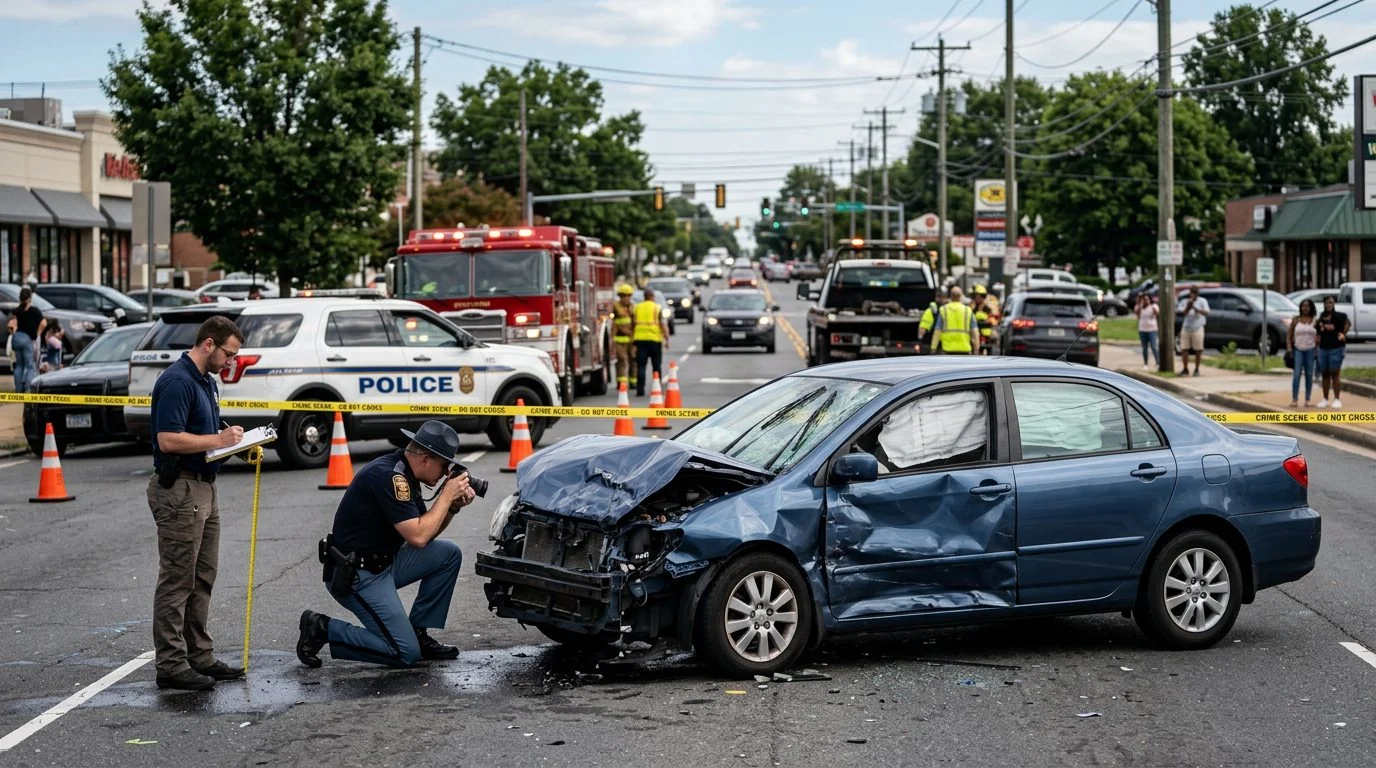
A serious accident is usually a crash that causes major injury, hospital care or long-lasting harm. People use the phrase for crashes where someone is hurt badly. When people ask what qualifies as a serious accident, they’re usually asking about the injury, not the dents in the car. A crash can be serious even when the vehicles look only lightly damaged. Small dents can hide serious injuries. Some heavily damaged vehicles leave people with minor harm. A useful question is what the person can no longer do, or what care they now need. Three ideas are easy to mix up. The crash is the event. The injury is the harm to the body. The claim is a request for compensation. Whether a claim succeeds is a separate question under Virginia law.
Not sure what your next step is?
Talk it through with Correll Law Firm — we can walk you through how a situation like yours is usually handled and what your options are.

Injuries commonly described as serious
Serious injuries often involve the brain, the spine, or a major break or organ. A traumatic brain injury is harm to the brain caused by a blow, a jolt, or an object that penetrates the skull. A spinal cord injury damages the nerves running through the spine, and it can affect movement, feeling or bodily function. Readers can learn more on this site’s spinal cord injury page. Other injuries often called serious include severe fractures, crush injuries, amputation, internal organ injuries and serious burns. A fracture breaks a bone, while a crush injury squeezes tissue under heavy force. Amputation means a limb is lost. Some internal injuries are not visible at the scene. A systematic review of motorcycle crash injuries identifies head, neck, thoraco-abdominal, pelvic and limb injuries as serious types. That review covers motorcycle crashes, not car or truck crashes. Still, it shows the body areas where serious harm can occur.
How severity is judged after a crash
Severity is usually judged from the diagnosis, the treatment needed and the lasting effects on the person. Emergency care, surgery, hospital stays and rehabilitation all show how serious an injury is. So do the effects on work, household tasks and family life. Medical records are the main proof. Emergency and hospital charts, imaging results and notes from treating providers describe the injury in clinical terms. Notes written during treatment record what providers found at the time. Some injuries take time to show their full effects, so early records may not tell the whole story. Whether a particular injury is serious depends on the facts. Gaps in treatment can leave gaps in the record, which can make an injury harder to describe later.
Car, truck and commercial vehicle crashes
A car crash involves passenger vehicles, while a truck crash involves large freight trucks. A commercial vehicle crash involves a vehicle used for business. Commercial vehicles can include vehicles used to carry goods or passengers, not just big trucks. Larger, heavier vehicles can carry more force into a collision, so the injuries can be more severe. Federal rules for commercial vehicles define which vehicles are covered and what counts as a reportable accident. The FMCSR Part 390 general regulations page explains those federal rules. Because a commercial crash may involve a driver, a company and other parties, the records can be spread across several sources. The firm handles car, truck and commercial vehicle crash claims.
What counts as a vehicle accident, and the duty to report
A vehicle accident generally means a collision involving a motor vehicle on a road or in a public area. That includes car, truck and commercial vehicle collisions, and impacts with pedestrians or cyclists. Virginia requires a driver involved in a crash with injury or death to stop and report it to police immediately (Va. Code §§ 46.2-371, 46.2-894). The driver must also give identifying details and render reasonable assistance to someone hurt, under Va. Code § 46.2-894. Notice to a law-enforcement officer is covered in Va. Code § 46.2-371. The reporting duty is separate from the deadline to file a lawsuit. A crash report is due right away, while a lawsuit deadline runs for a longer period. Keeping notes helps. Write down the time, the place, the names of other drivers, and any report number the officer gives.
When a serious crash results in a death
A crash that causes a death may lead to a wrongful death action in Virginia if the death was caused by the wrongful act, neglect, or default of any person or corporation, and that act, neglect, or default is such as would, if death had not ensued, have entitled the injured person to maintain an action and recover damages. A Virginia wrongful death action is filed by the decedent’s personal representative within two years of the death (Va. Code §§ 8.01-50(C), 8.01-244(B)), on behalf of the family members the statute protects. Family members don’t file the case themselves. Virginia wrongful death damages cover the family’s sorrow, mental anguish and loss of the decedent’s companionship, guidance and care; lost income and services; medical expenses from the injury; funeral expenses; and, for willful or wanton conduct, punitive damages (Va. Code § 8.01-52). Families dealing with a death often face these questions while grieving. Keeping the death certificate and medical records together early can help.
Not sure what your next step is?
Talk it through with Correll Law Firm — we can walk you through how a situation like yours is usually handled and what your options are.

Time limits and records that help show seriousness
Virginia generally allows two years from the date of injury to file a personal injury lawsuit (Va. Code § 8.01-243(A)); the clock runs from the date of injury, not the date of discovery, with narrow exceptions. Some claims carry notice requirements that run out sooner, so don’t assume two years applies to every situation. Va. Code § 8.01-229 contains tolling rules that can pause or change how a limitation period is counted. Records make the severity picture clearer. Useful documents include emergency and hospital records, imaging, notes from therapists and other treating providers, work absence records, and a dated journal of symptoms and daily limits. Gathering them early helps, because records can be hard to collect after time passes.
In short, serious describes the injury, its treatment and its lasting effects, not only the crash. Virginia’s crash reporting duty, lawsuit deadline and wrongful death rules are separate, so each needs its own attention.
What qualifies as a serious accident in Virginia?
There is no single Virginia test for most injury claims. Severity is judged from the injury, the care it needs and how long its effects last.
Is a traumatic brain injury from a car accident serious?
Traumatic brain injury is one of the injuries often described as serious. Its severity is judged the same way as other injuries, from diagnosis, treatment and lasting effects.