

Truck Crash Evidence | Virginia
Truck Driver Logs Can Be Key Evidence After a Brain Injury Crash
Logs and related records can help show what happened on the road. Correll Law Firm represents people seriously hurt in truck crashes across the Shenandoah Valley, Richmond and Henrico County.
Published November 8, 2026
Truck driver logs can show whether a driver was working or resting in the hours before a crash. In a brain injury claim, those logs matter most when they are read with the crash timeline and the medical record. This page explains what the records are, what else can support them, and why timing matters.
What Federal Hours-of-Service Rules Are
Federal hours-of-service rules limit how long many commercial truck drivers may drive and work before a required rest. Federal law lets the Secretary of Transportation set maximum hours for drivers of motor carriers, as 49 U.S.C. § 31502 explains.
The core limits are these. Within that window, a driver may drive a total of 11 hours. 49 C.F.R. § 395.3
Weekly totals apply too. Under 49 C.F.R. § 395.3, a driver of a property-carrying commercial motor vehicle may not drive after having been on duty 60 hours in any period of 7 consecutive days if the employing motor carrier does not operate commercial motor vehicles every day of the week, or after having been on duty 70 hours in any period of 8 consecutive days if the employing motor carrier operates commercial motor vehicles every day of the week. Either period may end with the beginning of an off-duty period of 34 or more consecutive hours. 49 C.F.R. § 395.3
The reach of these rules depends on the vehicle, the cargo and the route. The goal is to reduce crashes caused by driver fatigue. A separate rule bars drivers from operating a commercial motor vehicle when their ability or alertness is impaired, or so likely to become impaired, through fatigue, illness, or any other cause, as to make it unsafe to operate the truck, except in a grave emergency where the hazard to occupants of the commercial motor vehicle or other users of the highway would be increased by compliance with this section, in which case the driver may continue to the nearest place that hazard is removed. 49 C.F.R. § 392.3
Not sure what your next step is?
Talk it through with Correll Law Firm — we can walk you through how a situation like yours is usually handled and what your options are.

What Driver Logs and Electronic Logging Devices Record
A driver log, formally called a record of duty status, shows how a driver spent each 24-hour period. 49 C.F.R. § 395.8 requires motor carriers, except a private motor carrier of passengers (nonbusiness), to make drivers record that status, using an electronic logging device (ELD) for most trucks.
An ELD connects to the truck’s engine. It automatically records date, time, location, engine hours, vehicle miles, and driver and vehicle identification. When the truck is moving and no status change has been recorded in the past hour, the device adds an entry on its own. 49 C.F.R. § 395.26
Investigators line these entries up against the crash time. If a log shows the driver off duty at the moment of the crash, that is a fact to test against other records. If it shows a long run after too little rest, that raises fatigue questions to examine.
A log is still a record made by people and companies. The ELD records the data elements listed in 49 C.F.R. § 395.26 at each duty change, and 49 C.F.R. § 395.8 bars false reports and tampering that keeps an ELD from accurately recording data. 49 C.F.R. § 395.8 So accuracy is a question to examine, not something to assume.
Other Records That Can Show Whether a Driver Was Rested
Other records can confirm or contradict a driver log. Dispatch and load assignment records show when a driver was given work and where the load was headed. Fuel and toll receipts carry timestamps and locations. Bills of lading and delivery times show when freight was picked up and dropped off.
Payroll and mileage records can show how much time and distance a driver logged. Messages between the driver and dispatch may show when the driver was asked to start a run or keep going.
Vehicle event data, sometimes called a black box, may record speed, braking and engine activity before a crash. GPS and telematics data, where a truck has it, can show where the truck was and how it moved over time.
Some electronic data is overwritten over time, so the timing of a request matters. No single record tells the whole story. A timeline built from several sources is more useful than any one page of a log.
How These Records Connect to a Brain Injury Claim
These records matter because a brain injury claim often turns on a clear timeline. The timeline runs from the hours before the crash, to the crash itself, to the first medical evaluation, and then to the symptoms reported and the treatment that followed.
Hours-of-service records can help show whether fatigue was a possible factor in the crash. That affects how the crash is understood. It does not prove fatigue on its own.
Trucking companies also make decisions about dispatch and scheduling, and those decisions can be part of the evidence. Federal rules also bar a motor carrier from requiring or permitting a driver to operate while the driver’s ability or alertness is so impaired, or so likely to become impaired, through fatigue, illness, or any other cause, as to make it unsafe for him/her to operate the vehicle, except in a case of grave emergency where compliance would increase the hazard. 49 C.F.R. § 392.3
Medical records are reviewed alongside the crash data. Medical professionals, and sometimes outside accident reconstruction professionals, may examine both. The goal is a timeline that holds together.
Why Brain Injury Symptoms Can Change Over Time
Brain injury symptoms can appear or grow days or weeks after a crash, so the early medical record matters. The Administration for Community Living describes traumatic brain injury (TBI) as severe damage to the brain, and notes that automobile crashes can cause it.
Headaches, memory problems, mood changes and trouble concentrating can show up later. A prompt medical evaluation creates a record that links these symptoms to the crash. Gaps in care can make that link harder to show.
Family members often notice changes first. A written journal of memory, mood, sleep and daily tasks can support what the medical record shows. Outcomes differ from person to person.
Why Early Preservation of Truck Records Matters
Asking for truck records early helps make sure they still exist in their original form. Trucking records can be overwritten, purged or lost under normal business practices.
Federal rules allow records to be kept with any technology that accurately reflects the information and stays accessible. 49 C.F.R. § 379.7 That rule does not mean every record will survive without a request.
A written request to preserve evidence, sent early, is a common step in truck crash claims. The firm handles truck crash cases, and preservation requests are one part of that work.
The filing deadline is also a key date. Virginia generally allows two years from the date of injury to file a personal injury lawsuit (Va. Code § 8.01-243(A)); the clock runs from the date of injury, not the date of discovery, with narrow exceptions. The statute is at Va. Code § 8.01-243. Some claims carry notice requirements that run out sooner.
Not sure what your next step is?
Talk it through with Correll Law Firm — we can walk you through how a situation like yours is usually handled and what your options are.
What Logs and Crash Records Cannot Show on Their Own
Logs and crash records cannot settle the fatigue question alone. A log that shows compliance does not end that question.
Logs can be inaccurate, incomplete or altered. A log that looks compliant still has to be checked against the crash report, witness statements, vehicle damage and medical records. The meaning of one record comes from the others.
Virginia requires a driver involved in a crash with injury or death to stop and report it to police immediately (Va. Code §§ 46.2-371, 46.2-894). The reporting duty appears in Va. Code § 46.2-371 and Va. Code § 46.2-894. The two-year period is the deadline to file a lawsuit, not to report a crash.
How strong records-based evidence is depends on the facts of each crash.
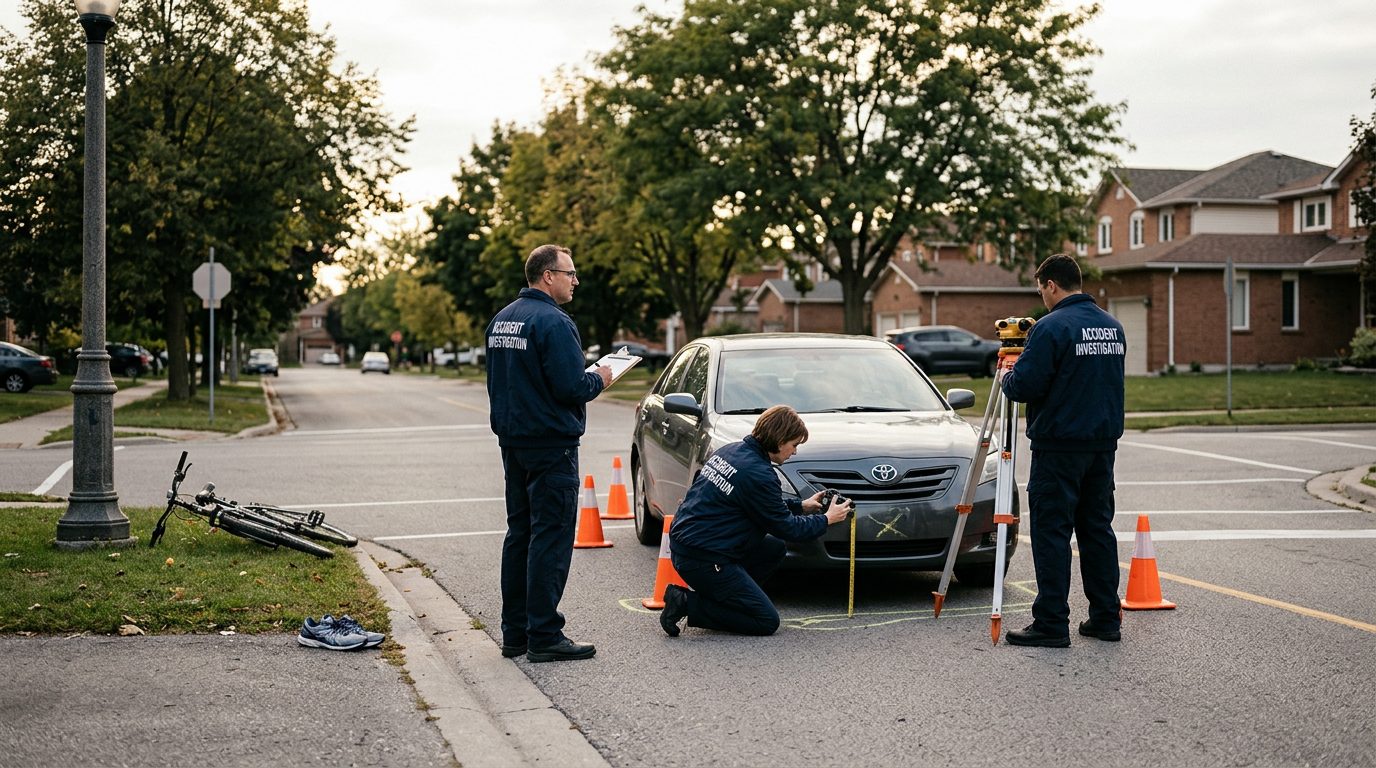
Truck Crash Brain Injury Evidence Across Virginia
People across Virginia who are hurt in truck crashes can use records like these to understand what a claim may involve. The firm is based in Winchester and has an office in Harrisonburg. It represents people hurt in car and commercial truck crashes across the Shenandoah Valley, and it serves people in Richmond and Henrico County too.
Readers in Richmond, Henrico County, Winchester and the Shenandoah Valley can find related practice information on the firm’s website. For the wider picture of brain injury symptoms, medical evaluation and legal options, the firm’s traumatic brain injury page covers car and truck accidents.
Common Questions
What is an ELD?
An electronic logging device is equipment that connects to a truck’s engine and records driving time automatically.
Can a driver log be falsified?
Federal rules bar false reports and tampering with an ELD, so a log’s accuracy is a fair question to test.
Records gathered early, and read together with medical documentation, give a clearer picture of what happened on the road and in the body.