
Car Accidents | Shenandoah Valley and Virginia
Was Your Virginia Crash Reportable? Here's How to Think It Through
Plain-language guidance from the firm for drivers who were in a minor collision and are unsure what it may mean for them.
Published November 18, 2026
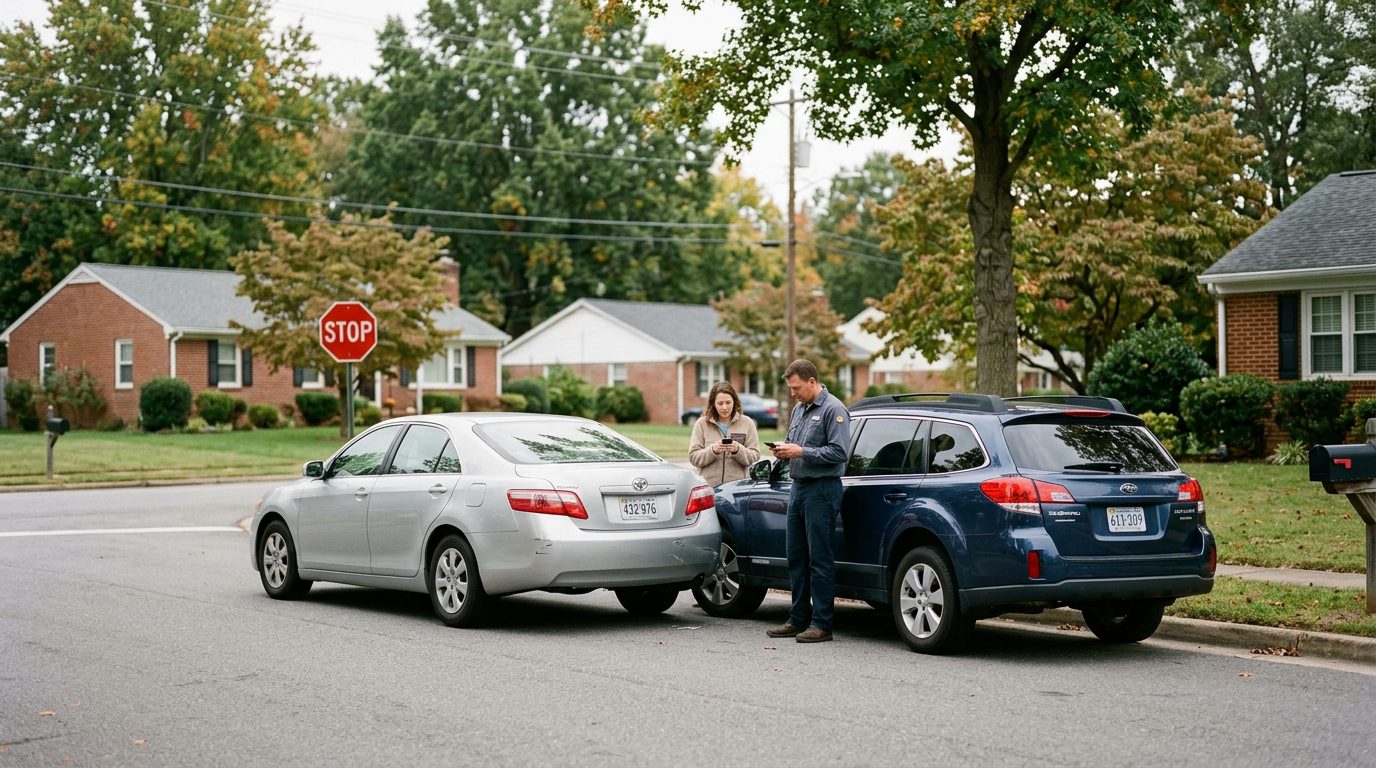
You were in a crash, and now you aren’t sure Virginia law required you to report it to police. In everyday talk, a “non-reportable” crash is one that does not trigger the state’s stop-and-report rule. Virginia’s rule applies when a crash involves injury, death, or damage to attended property.
What “non-reportable” means in plain terms
“Non-reportable” is shorthand, not a term the state’s code uses. A willful failure to make the report required in this section shall constitute a Class 4 misdemeanor (Va. Code § 46.2-371).
The label is easy to misread. Many drivers assume a small crash needs no report because the damage looked minor. Calling a crash non-reportable does not settle the question; the facts of the crash do.
This page covers four things: the stop-and-report rule, the injury-or-death line, why a note at the scene falls short, and the paperwork terms drivers see. It closes with the deadlines that often come up next.
Not sure what your next step is?
Talk it through with Correll Law Firm — we can walk you through how a situation like yours is usually handled and what your options are.
What Virginia requires after a crash with injury or death
Virginia requires a driver involved in a crash with injury or death to stop and report it to police immediately (Va. Code §§ 46.2-371, 46.2-894). The duty sits in Va. Code § 46.2-371 and Va. Code § 46.2-894.
Many people feel shaken and wait to call.
The duty applies to the driver of any vehicle involved in an accident resulting in injury to or death of any person, whether or not that driver believes the crash was their fault. A driver who thinks the other person caused it still has to give notice of the accident to a law-enforcement officer. For fault questions, see how to prove an accident was not your fault in Virginia.
Why the injury-or-death line decides whether a crash is non-reportable
A crash with no injury, no death and no damage to attended property falls outside the stop-and-report duty. That is the category most people mean by non-reportable. Whether a given crash fits that category depends on the facts.
Start with two questions. Was anyone injured or killed? Was an attended vehicle or other attended property damaged?
Damage size does not decide whether the duty applies. Section 46.2-894 sets no dollar floor for stopping and reporting. Dollar amounts set the penalty level: a Class 5 felony where the crash results in injury or death, or more than $1,000 of property damage, and a Class 1 misdemeanor where damage is $1,000 or less (Va. Code § 46.2-894).
A small dent on an attended car can still count. Keep the question on what happened, not on how the damage looked.
Why leaving a note at the scene does not meet the reporting duty
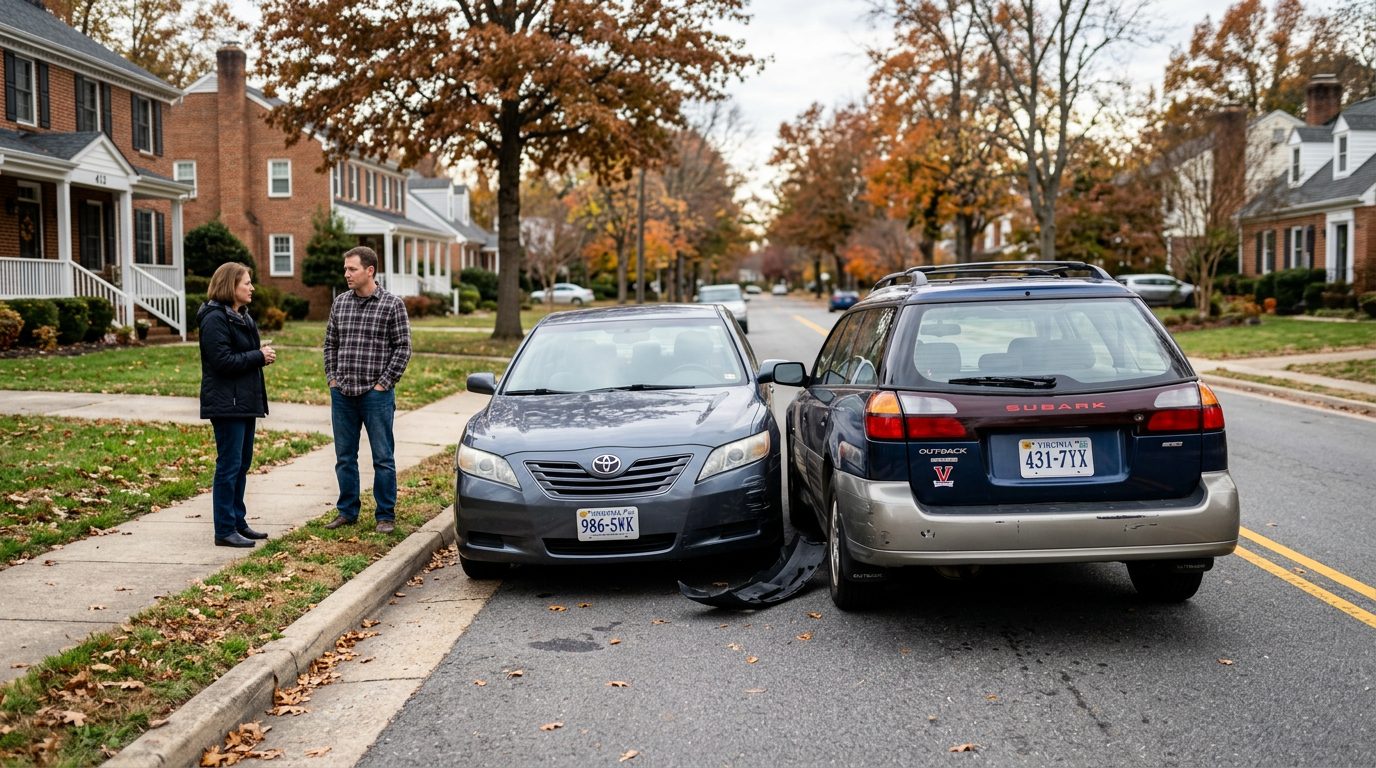
A note left on a windshield or handed to another driver does not replace a police report in a crash with injury or death. The statute lists who receives the driver’s name, address, driver’s license number and vehicle registration number: the State Police or local law-enforcement agency, the person struck and injured if that person appears able to understand and retain the information, or the driver or an occupant of the other vehicle or the custodian of the damaged property.
But it is not the whole duty. The as-soon-as-reasonably-possible rule for when injuries prevent reporting is in § 46.2-894. For more on the note question, see the firm’s guide on leaving a note after hitting someone.
Terms drivers see on crash paperwork: MVC and MVA
MVC means motor vehicle crash, and MVA means motor vehicle accident. Both are shorthand for the same kind of event: a crash involving a car, truck or other motor vehicle.
A crash labeled MVC or MVA may require a stop and a police report, or it may not. The facts decide. Check whether anyone was hurt or killed, and whether an attended vehicle or other attended property was damaged.
Records use their own terms too.
Why the reporting question matters for later steps
Reporting a crash to police and filing a lawsuit are two separate requirements. Virginia generally allows two years from the date of injury to file a personal injury lawsuit (Va. Code § 8.01-243(A)); the clock runs from the date of injury, not the date of discovery, with narrow exceptions. The two-year period is the deadline to file a lawsuit, not to report a crash (Va. Code § 8.01-243).
Readers hurt in a crash may also want to read about traumatic brain injury, a topic the firm covers. The firm’s offices are in Winchester and Harrisonburg, and it serves people throughout the Shenandoah Valley, Richmond and Henrico County.
Do I have to report a car accident to police in Virginia?
Yes, when the crash involved injury or death, Virginia requires a driver to immediately give notice of the accident to a law-enforcement officer (Va. Code § 46.2-371).
Does property damage alone require a report?
It can. Damage to an attended vehicle or other attended property triggers the stop-and-report duty in Va. Code § 46.2-894, however small the damage.