
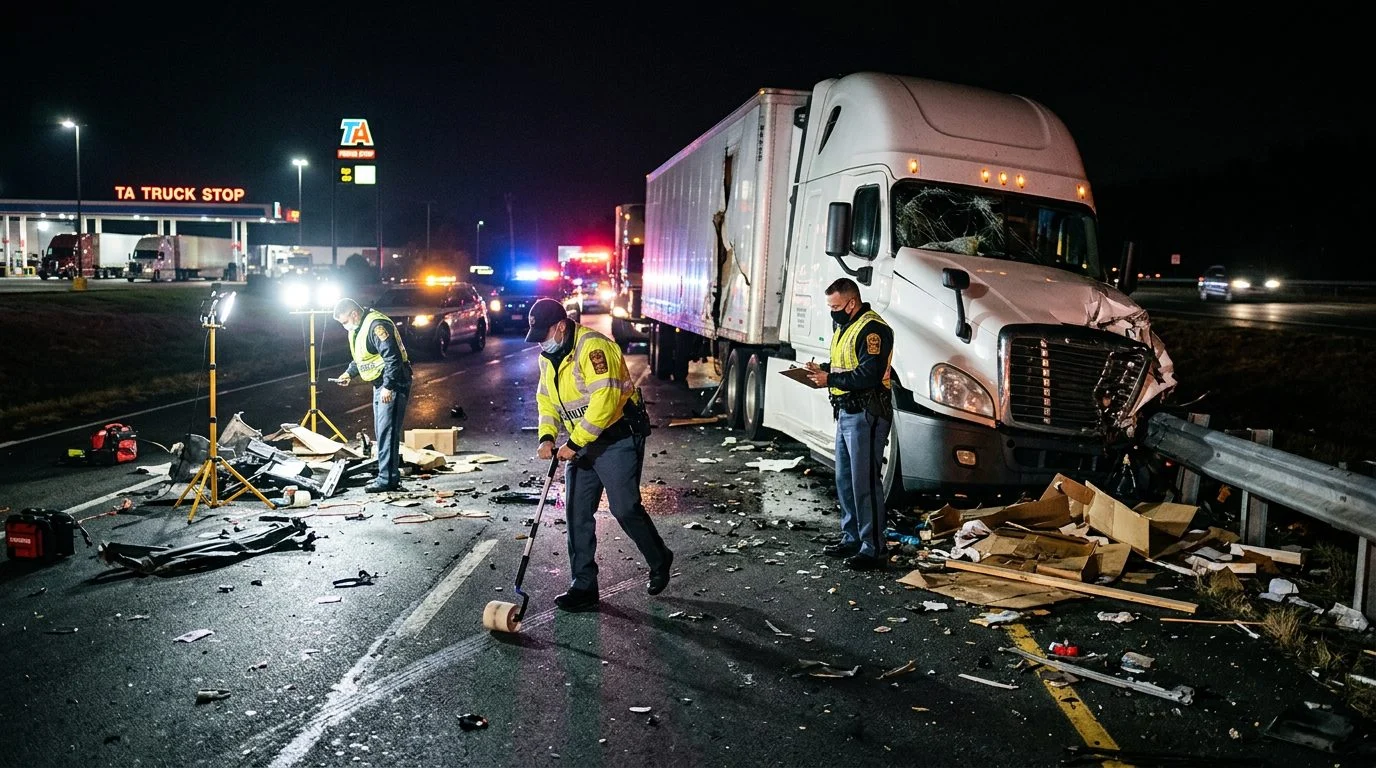
Truck Accidents | Interstate 81, Virginia
A Truck Crash on I-81: What to Do First
Clear, practical steps to protect your health and your options after a collision with a commercial truck on the I-81 corridor in Virginia.
Published October 29, 2026
After a truck crash on I-81 in Virginia, get medical care, make the scene as safe as you can, and report the crash to police. Then record the details while they are still fresh. This guide walks through those steps in order, along with the Virginia rules that apply to them.
Why I-81 Truck Crashes Need a Clear Order of Steps
Start with safety and medical care, because those matter most in the first hour after a crash.
Interstate 81 carries heavy truck traffic through the Shenandoah Valley, including the stretches near Winchester and Harrisonburg. A crash involving a tractor-trailer can block lanes for a long time and slow traffic quickly. Stress makes it hard to think clearly, and that reaction is normal.
A simple order helps. Health and safety come first. Reporting to police comes next. Recording details comes after that. Readers in Richmond and Henrico County who were hurt on I-81 while traveling can use the same order.
These steps are general information. The facts of each crash decide what matters most, so this guide is not advice about one specific crash.
If a truck crash on I-81 left you or someone you love hurt, you do not have to sort out the next steps alone. We are glad to offer a free case evaluation to talk through what happened. Talk it through with Correll Law Firm — we can walk you through how a situation like yours is usually handled and what your options are.

Get Medical Care First, Even If You Feel Fine
Get checked by a medical professional soon after the crash, even if you feel fine.
Some injuries do not show symptoms right away. Adrenaline can hide pain. A head injury, or a neck or back injury, may cause symptoms later in the day or in the days after the crash. Concussions can be easy to miss at the scene.
Tell the medical staff that the injury happened in a truck crash. Describe every place that hurts, including places that feel only sore or stiff. Mention headache, confusion, dizziness or memory trouble, even when the symptoms seem mild.
Keep your records. Save visit notes, imaging results, prescriptions and discharge papers. Start a simple daily journal of symptoms, sleep, pain level and the tasks you could not do. These notes can help show how the injury changed your daily life over time.
Move to Safety and Call 911 on a Busy Interstate
If you can, turn on your hazard lights and call 911 from a spot that is as safe as you can reach.
Turn on your hazard lights. If traffic is still moving fast, staying buckled in your vehicle may be safer than standing on the roadway. Move to a shoulder only when that is clearly safer than staying put.
Tractor-trailer crashes can involve jackknifing, spilled cargo, fuel leaks and lanes blocked for long periods. Give 911 the exact location. Share the direction you were traveling, the nearest exit, any mile marker you can see, and whether lanes are blocked. Stay away from debris and any fuel. Watch for drivers who may not see the scene in time, especially in fog or after dark.
Federal rules also cover stopped commercial trucks. When a commercial motor vehicle is stopped upon the traveled portion or the shoulder of a highway for any cause other than necessary traffic stops, the driver must turn on the hazard warning flashers immediately. The driver must also place warning devices as soon as possible, and within 10 minutes, under 49 C.F.R. § 392.22.
Report the Crash to Police as Virginia Requires
Virginia requires a driver involved in a crash with injury or death to stop and report it to police immediately (Va. Code §§ 46.2-371, 46.2-894).
The reporting duties appear in Va. Code § 46.2-371 and Va. Code § 46.2-894. Under the second statute, the driver must also give a name, address, driver’s license number and vehicle registration number to police or the other people involved. The driver must also give reasonable help to anyone who is hurt.
It is a separate matter from the lawsuit deadline discussed later, which runs on its own clock.
Ask the responding officer for the report number. Get the name of the agency that took the report, and write down the officer’s name and badge number if they share it. Ask how to get a copy of the written report later.
Record the Exact Location and Conditions
Write down where the crash happened and what conditions were like while you still remember them.
Note the direction of travel, the nearest exit, the mile marker or a landmark, the lane you were in, and which lanes were blocked. Note the time, the weather, the road surface and how far you could see. Note whether a construction zone or lane closure was in place.
On I-81 near Winchester and Harrisonburg, the nearest exit name and the county or city line often describe a spot better than a mile marker you may not see. Use whatever landmark you can name clearly. Drivers from Richmond and Henrico County may not know the local exits well, so a photo of the nearest exit sign helps.
Draw a simple sketch of the lanes, the truck’s position and the other vehicles. Mark where each vehicle came to rest. A rough sketch made the same day is easier to explain later than a memory from weeks ago.
Identify the Truck, the Driver, and the Carrier
Record the truck’s company name, its DOT number and the driver’s details as soon as it is safe to do so.
Photograph the cab and the trailer from several sides. Capture the company name, the DOT number if it appears, the trailer number and the license plates. Photograph any markings on the doors or on the trailer.
Get the driver’s full name, license information and insurance details. Virginia law requires a driver in a crash to share name, address, license number and registration number, so ask for those first if the driver is able to talk.
The company that operates the truck can be different from the company whose name appears on the trailer. Write down both names. A leased truck or trailer can carry the name of a business other than the one that runs it.
Not sure what your next step is?
Talk it through with Correll Law Firm — we can walk you through how a situation like yours is usually handled and what your options are.
Preserve Evidence: Photos, Witnesses, and Cameras
Photos, witness names and camera footage can disappear quickly, so collect them early.
Photograph the vehicle damage, the roadway, skid marks, debris and any visible injuries. Take wide shots and close-up shots from several angles. Keep the original files on your phone. Do not edit, crop or filter them, because edits can raise questions about what the photo shows.
Get the names and phone numbers of witnesses, including other drivers and passengers. Write down what each person says they saw while the memory is fresh.
Note any nearby businesses, traffic cameras or dash cameras that may have recorded the crash. Many camera systems record over old footage after a set period. Identifying them early gives you the best chance to ask whether the footage still exists.
Keep Records and Be Careful What You Say
Keep every bill, receipt and work record in one place, and keep what you say about the crash short and factual.
Save medical bills, pharmacy receipts, records of missed work, rental car receipts and repair estimates. Store paper copies and digital copies together. A simple list of expenses with the date and amount for each item makes the record easier to follow.
Tell police and medical staff what you remember. Avoid guessing about who was at fault. Do not post about the crash on social media. Posts and photos can be read out of context and used to question what you say later.
Insurance representatives may call quickly. Write down who called, when they called, and what they asked. You may wish to speak with a lawyer before giving a recorded statement or signing any paper from an insurer.
Timelines and Fault Rules to Understand Early
Virginia generally allows two years from the date of injury to file a personal injury lawsuit (Va. Code § 8.01-243(A)); the clock runs from the date of injury, not the date of discovery, with narrow exceptions.
Fault is the second rule to understand early. Virginia follows contributory negligence: if you are found even partly at fault, you may be barred from recovering, with limited exceptions. Talk to a lawyer about your facts.
That is why the evidence you gather at the scene matters. Photos, witness names and a clear record of the location can help explain how the crash happened.
Some claims carry notice requirements that run out sooner. How these rules apply depends on the facts of your crash.

If Someone Died in the Crash
A Virginia wrongful death action is filed by the decedent’s personal representative within two years of the death (Va. Code §§ 8.01-50(C), 8.01-244(B)), on behalf of the family members the statute protects.
The filing rules appear in Va. Code § 8.01-50 and Va. Code § 8.01-244. They share in any recovery, and Va. Code § 8.01-53 sets out who shares, starting with the surviving spouse and children of the deceased.
Virginia wrongful death damages cover the family’s sorrow, mental anguish and loss of the decedent’s companionship, guidance and care; lost income and services; medical expenses from the injury; funeral expenses; and, for willful or wanton conduct, punitive damages (Va. Code § 8.01-52).
Families who are grieving may want to keep the crash report, medical records and funeral receipts together. Having them in one place can help whoever takes on the personal representative role.
Quick Answers
What should I do first after a truck crash on I-81?
Get medical care when you can, make the scene as safe as possible, and call 911.
Is reporting the crash to police required in Virginia?
Yes. A driver in a crash with injury or death must report it to police immediately.
Does feeling fine mean I was not hurt?
Not always. Some injuries, including head and neck injuries, can show symptoms later.