
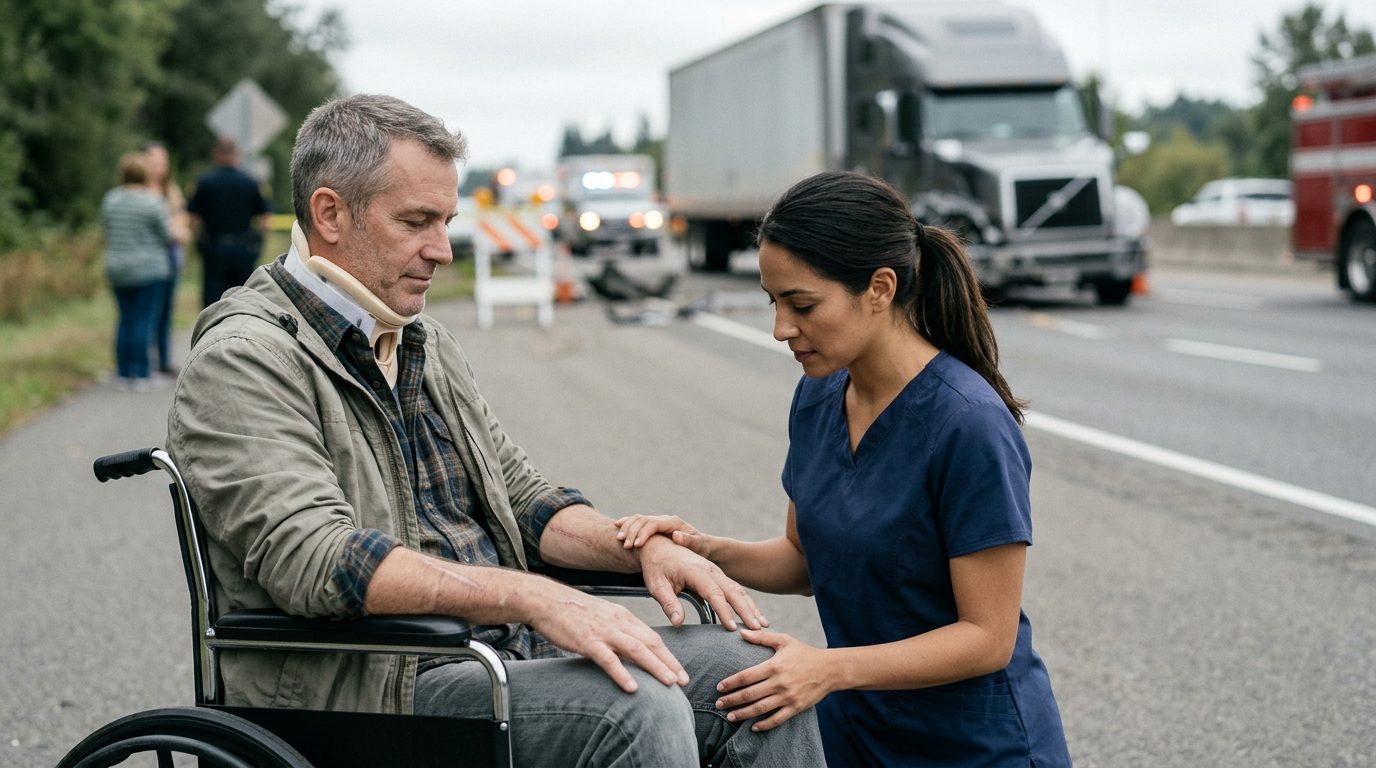
Spinal Cord Injury Symptoms After a Truck Accident in Virginia
Spinal cord injury symptoms can appear immediately after a truck crash or develop over hours and days as swelling worsens. Recognizing these signs early and seeking emergency care is critical to your safety and recovery.
Why Truck Crashes Cause Serious Spinal Cord Injuries
Large trucks weigh 20–30 times as much as passenger vehicles, creating forces that damage the spinal cord even without spine fractures. The spinal cord has three protective layers and cerebrospinal fluid that cushion it. A high-impact truck crash can overwhelm that protection.
Symptoms may appear right away or emerge gradually over 24 to 72 hours as swelling and bleeding develop around the cord. Early recognition and emergency care affect your recovery and long-term support needs. This guide helps you spot warning signs so you know when to act.
Immediate Symptoms That Demand 911
Call 911 right away if you or anyone else shows any of these signs:
- Loss of sensation or feeling below the injury point—numbness, tingling, or no feeling
- Loss of movement or paralysis in legs, arms, or both
- Severe pain or pressure in neck, back, or spine
- Loss of bladder or bowel control or inability to feel the urge
- Difficulty breathing or shallow breathing (especially after neck injury)
- Shock-like tingling or electric sensations running through the body
- Unconsciousness or confusion
- Twisted neck or back in an unusual position that won’t straighten
Do not move the injured person. Immobilization prevents further damage while emergency responders arrive.
Delayed Symptoms: Hours and Days After the Crash
Spinal cord swelling can worsen over hours, causing symptoms to emerge or intensify days after the crash. Watch for:
- Numbness or weakness that develops gradually in hours or days
- Pain that worsens rather than improves in the first few days
- Loss of temperature sensation—inability to feel hot or cold
- Muscle spasms or stiffness that develop over time
- Sexual dysfunction or loss of sensation in that area
- Difficulty with coordination or balance
- Increasing difficulty breathing or shortness of breath
These delayed symptoms occur because protective tissue and fluid around the spinal cord swell after injury, and bleeding compresses nerve fibers. If symptoms worsen, return to the emergency room or call 911 again. Do not wait to see if they improve.
Symptoms by Spinal Cord Location
Where the spinal cord is damaged determines which body parts are affected.
Cervical (neck) injuries (C1–C7): These nerves control signals to the back of the head, neck, shoulders, arms, hands, and diaphragm. Injuries here often affect all four limbs and may impair breathing. Injuries between C1 and C4 can stop breathing entirely because these nerves control the diaphragm. Cervical injuries carry the highest risk of life-altering outcomes.
Thoracic (mid-back) injuries (T1–T12): These nerves control signals to chest muscles, some back muscles, and many organ systems. Injuries here typically affect the legs and lower body. Trunk stability and breathing may be compromised.
Lumbar (lower back) injuries (L1–L5): These nerves control signals to the lower abdomen, back, buttocks, external genital organs, and parts of the legs. Injuries here usually affect the legs, bowel, and bladder while preserving arm and hand function.
Sacral (lowest) injuries (S1–S5): These nerves control signals to the thighs, lower legs, feet, most external genital organs, and the area around the anus. These injuries may affect the lowest limbs and bowel and bladder function but often preserve more overall function than higher injuries.
Complete vs. Incomplete Spinal Cord Injuries
Complete spinal cord injuries result in total loss of sensation and movement below the injury site. The damage severs all or nearly all nerve fibers crossing that point.
Incomplete spinal cord injuries preserve some sensation or movement below the injury site. Symptoms vary widely depending on which nerve fibers are damaged and which are spared. Some people show asymmetrical symptoms—one side of the body affected more than the other.
Incomplete injuries sometimes allow more functional recovery over time as the body adapts and rehabilitation progresses. But recovery is unpredictable and depends on the specific nerves involved and the extent of damage.
What to Do After a Truck Crash
Immediate steps:
- Call 911 if you or anyone shows any symptoms listed above
- Do not move the person if spinal injury is suspected—immobilization prevents further damage
- Provide emergency responders with details about the crash and symptoms
- Seek emergency imaging (CT scan or MRI) to confirm or rule out spinal cord damage
- Follow all medical advice, including hospitalization and rehabilitation
- Document everything in writing: symptoms, timing, medical visits, tests, treatment, and what doctors told you
Keep copies of all medical records, imaging reports, and treatment notes. These matter later.
Secondary Complications to Watch For
Spinal cord injury opens the door to serious secondary complications that develop weeks or months after the initial injury:
- Pressure sores (bedsores) from immobility
- Respiratory infections if breathing is affected
- Blood clots in the legs
- Urinary tract infections from catheter use or loss of bladder control
- Muscle atrophy from lack of use
- Depression and emotional trauma
These complications require ongoing medical management and can significantly affect your quality of life and recovery. Your medical team should monitor for and prevent these where possible.
Medical Care and Long-Term Support
Acute care focuses on stabilizing the spine and preventing further damage. But spinal cord injury is a long-term condition.
Rehabilitation helps maximize function and independence through physical therapy, occupational therapy, and specialized care. Long-term care may include assistive devices, home modifications, and ongoing medical support. Mental health care is also important—spinal cord injury can be emotionally traumatic for you and your family.
The financial burden is real: ongoing medical expenses, lost income, home modifications, and long-term care add up quickly. Understanding your legal rights can help ensure you have the resources you need to move forward.
Understanding Your Legal Rights in Virginia
If you were injured in a truck crash, you may have a claim for medical care, lost income, and other costs ahead. Generally, you have two years from when the injury occurs to file a personal injury lawsuit. Some claims carry notice requirements that run out sooner. Time matters—do not delay.
Correll Law Firm represents people seriously hurt in truck accidents and catastrophic injuries throughout Virginia, from the Shenandoah Valley to Richmond and Henrico County. We handle truck accident legal rights and help families understand what comes next.
Frequently Asked Questions
Can spinal cord injury symptoms appear days after a truck crash?
Yes. Swelling and inflammation can worsen over hours or days, causing symptoms to emerge or intensify even if you felt okay immediately after the crash. If new symptoms develop, seek medical attention right away.
What’s the difference between complete and incomplete spinal cord injuries?
Complete injuries result in total loss of sensation and movement below the injury site. Incomplete injuries preserve some sensation or movement, and symptoms vary widely depending on which nerve fibers are damaged.
How long do I have to file a lawsuit for a spinal cord injury in Virginia?
Generally, you have two years from when the injury occurs to file a personal injury lawsuit. Some claims carry notice requirements that run out sooner. Time matters—do not delay.
Should I move someone I think has a spinal cord injury?
No. Immobilization is critical. Do not move the person or allow them to move. Call 911 and let emergency responders handle it.
If you or a family member were injured in a truck crash and are now facing symptoms like loss of movement, numbness, severe pain, or difficulty breathing, you may have a claim for the medical care, lost income, and other costs ahead. You don’t have to figure out what comes next alone. Correll Law Firm represents people seriously hurt in truck crashes throughout Virginia, from the Shenandoah Valley to Richmond and Henrico County.
No attorney’s fee unless we win. Clients may remain responsible for costs accrued in the case.
This article is for informational purposes only and does not constitute legal advice. Always seek emergency medical care for suspected spinal cord injury. For legal guidance specific to your situation, schedule a free case evaluation with Correll Law Firm.