
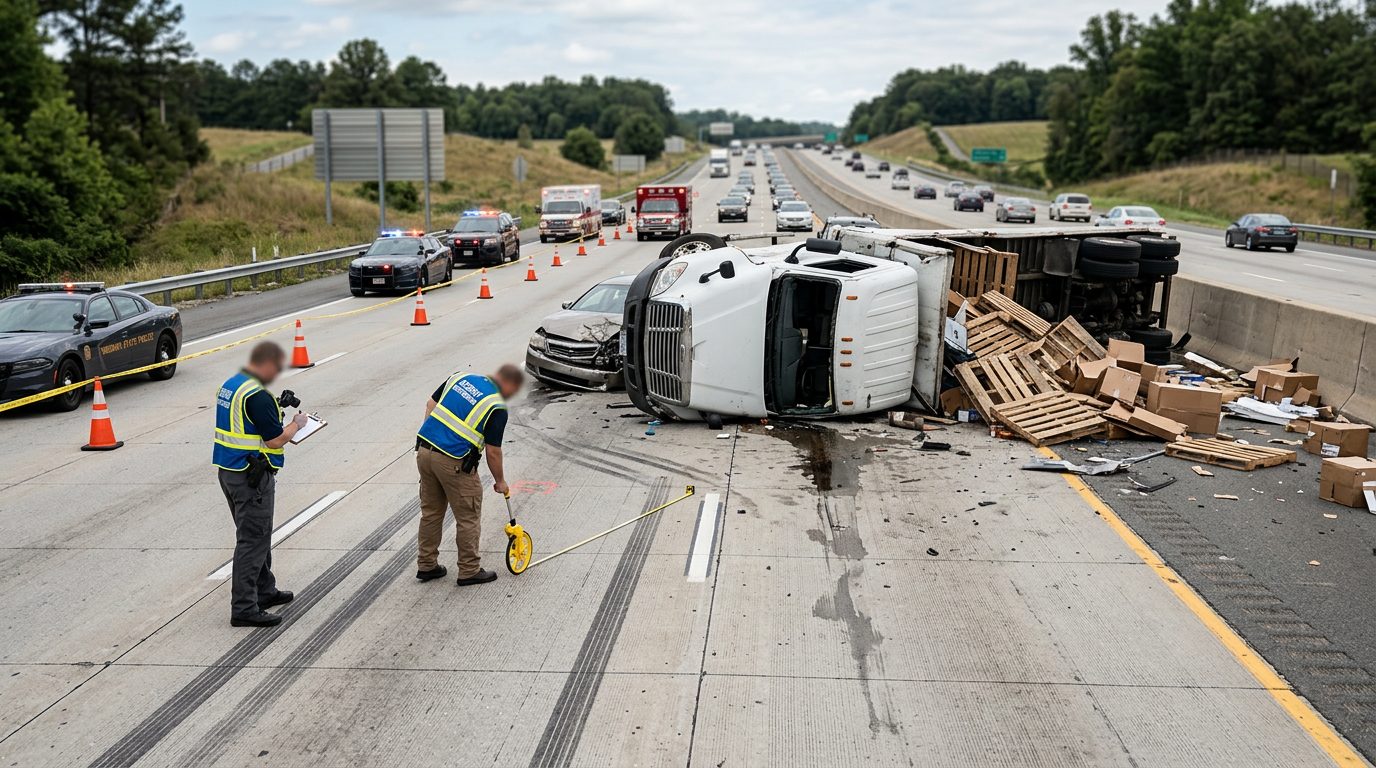
Truck Accident Claims in Virginia
How Long Does a Truck Accident Claim Take in Virginia?
Truck accident injury claims typically take several months to well over a year. Learn what affects the timeline and what to expect at each stage.
Published October 05, 2026
Truck accident injury claims in Virginia typically take several months to well over a year, depending on the severity of your injuries, how clear liability is, and how quickly medical treatment progresses. There’s no fixed timeline—each claim moves at its own pace based on the specific facts of your accident and how the insurance company responds.
The Truck Accident Claim Timeline: What to Expect
Most truck accident claims follow a predictable sequence, though the length of each stage varies widely. Understanding these stages helps you know what’s happening and why the process takes time.
The timeline begins immediately after the accident with evidence gathering and initial investigation. Medical treatment and documentation come next—and this stage often lasts the longest. Once your medical condition has stabilized, your attorney prepares a demand letter outlining your injuries, medical expenses, lost wages, and other damages. The insurance company then responds, negotiations begin, and either a settlement is reached or a lawsuit is filed. If litigation becomes necessary, the process can extend significantly through discovery, depositions, and trial preparation.
If you or a family member was seriously injured in a truck accident in Virginia, understanding your claim timeline is the first step—reach out to discuss your specific situation. Talk it through with our team — the first case evaluation is free, confidential, and carries no obligation.

How Injury Severity Affects Claim Duration
Minor injuries with clear liability may settle in weeks to a few months once medical treatment is complete. If the truck driver was obviously at fault and your injuries are straightforward, the claim moves faster.
Moderate injuries or disputed liability typically require several months to a year. Medical evidence must accumulate, and if fault is unclear, investigation takes longer. The insurance company needs time to review records and assess the claim’s value.
Severe or catastrophic injuries—including traumatic brain injuries, spinal cord injuries, or injuries requiring ongoing surgery and rehabilitation—often take a year or longer. These claims require extensive documentation of long-term care needs, lost earning capacity, and permanent disability. Insurance companies won’t settle until they understand the full scope of your future medical and life-care costs.
Truck accidents frequently result in catastrophic injuries because of the size and weight difference between commercial vehicles and passenger cars. A fully loaded commercial truck can weigh 80,000 pounds or more, while a typical car weighs 3,000 to 4,000 pounds. This disparity means truck accident injuries are often more severe, which directly extends your claim timeline.
Medical Treatment and Recovery Timeline
Insurance companies and the defendant’s legal team typically won’t finalize a settlement until you reach maximum medical improvement (MMI). MMI is the point at which your medical condition has stabilized and further treatment is unlikely to significantly improve your condition.
This is a crucial concept: the insurance company needs to know your full injury picture before it can calculate what your claim is worth. If you’re still undergoing treatment, they can’t accurately assess your future medical costs or permanent limitations.
Ongoing treatment, multiple surgeries, physical therapy, specialist consultations, and rehabilitation all extend this phase. Documenting all medical records, imaging studies, provider reports, and expert opinions takes time but is essential to support your claim’s value. The more complex your injury, the longer MMI takes to reach.
Clarity of Liability and Fault Investigation
Clear liability speeds up settlement negotiations. If the truck driver was obviously at fault—running a red light, speeding, or violating hours-of-service rules—the insurance company may be more willing to negotiate quickly.
Disputed liability requires a thorough investigation, which adds weeks or months. Your attorney or investigator will gather police reports, witness statements, accident scene photos, and may retain an accident reconstruction expert to analyze how the crash occurred.
Truck accident investigations are often more complex than car accidents because federal regulations apply. The Federal Motor Carrier Safety Administration (FMCSA) sets rules for commercial drivers’ hours of service, vehicle maintenance, cargo loading, and driver qualifications. Investigators must review the truck driver’s logbook, the trucking company’s maintenance records, the truck’s inspection history, and the driver’s safety record. Was the driver fatigued? Did the company fail to maintain the vehicle? Was the cargo improperly loaded? These questions require detailed investigation and expert analysis.
The more investigation needed, the longer your claim takes.
Insurance Company Cooperation and Negotiation
A responsive insurance company that acknowledges liability can move a claim forward quickly. Uncooperative insurers or those disputing fault can delay settlement through prolonged negotiations, multiple counteroffers, and requests for additional documentation.
Demand letters, responses, and back-and-forth discussions routinely add weeks or months to the process. If the insurance company’s offers remain far below what your claim is worth, settlement negotiations may stall entirely.
When a Lawsuit Becomes Necessary
If settlement negotiations fail, you may file a personal injury lawsuit in Virginia. Virginia’s filing deadline is generally two years from when the injury occurred, though notice requirements on some claims run sooner.
Once a lawsuit is filed, the litigation process begins. Discovery—the exchange of evidence between both sides—can take months. Both sides send written questions (interrogatories), request documents, and exchange expert reports. Depositions (recorded question-and-answer sessions) are scheduled for key witnesses and experts. Court scheduling, motion practice, and trial preparation add additional time.
Cases that proceed to trial take significantly longer than settled cases. A trial itself may last days or weeks, and the judge or jury’s decision may be appealed, extending the timeline further.
Not sure what your next step is?
Talk it through with our team — the first case evaluation is free, confidential, and carries no obligation.
The Stages of a Truck Accident Claim
Here’s a realistic breakdown of what to expect:
- Initial investigation and evidence gathering: weeks to months
- Medical treatment and reaching maximum medical improvement: weeks to months (or much longer for severe injuries)
- Demand package preparation and submission: weeks
- Insurance company response and negotiation: weeks to months
- Settlement or lawsuit filing: varies
- If litigation: discovery, depositions, trial preparation: months to years
How Commercial Truck Regulations Affect Timeline
Truck accident claims involve layers of complexity that car accident claims often don’t. Federal regulations govern commercial drivers and trucking companies, and violations of those regulations can establish liability or increase damages.
Obtaining and reviewing commercial driver records, logbooks, maintenance records, and safety inspection reports takes additional time. Determining whether the trucking company or driver violated federal safety standards may require expert review. This added complexity typically lengthens the claim process compared to standard car accidents.

Getting Answers About Your Specific Claim
Your timeline depends on your injury, the facts of your accident, and how quickly liability and damages can be established. No two claims are identical, and predicting an exact settlement date isn’t possible—but understanding the factors that affect your timeline helps you plan ahead.
An attorney familiar with truck accident claims in Virginia can review your situation and give you a realistic sense of what to expect. Early legal guidance can also help you avoid delays and ensure that critical evidence—such as the truck’s maintenance records, the driver’s logbook, and eyewitness statements—is properly preserved before it’s lost or destroyed.
If you or a family member was seriously injured in a truck accident in Virginia, understanding your claim timeline is the first step. The sooner you discuss your specific situation with someone familiar with these claims, the sooner you can begin moving forward.
No attorney’s fee unless we win. Clients may remain responsible for costs accrued in the case.
This article is educational and does not constitute legal advice. The information reflects Virginia law as of the date of publication. Consult a Virginia personal injury attorney about your specific circumstances.
Related practice areas
- Truck Accident Lawyer in Virginia | Correll Law Firm
- Types of Spinal Cord Injuries from Truck Accidents