
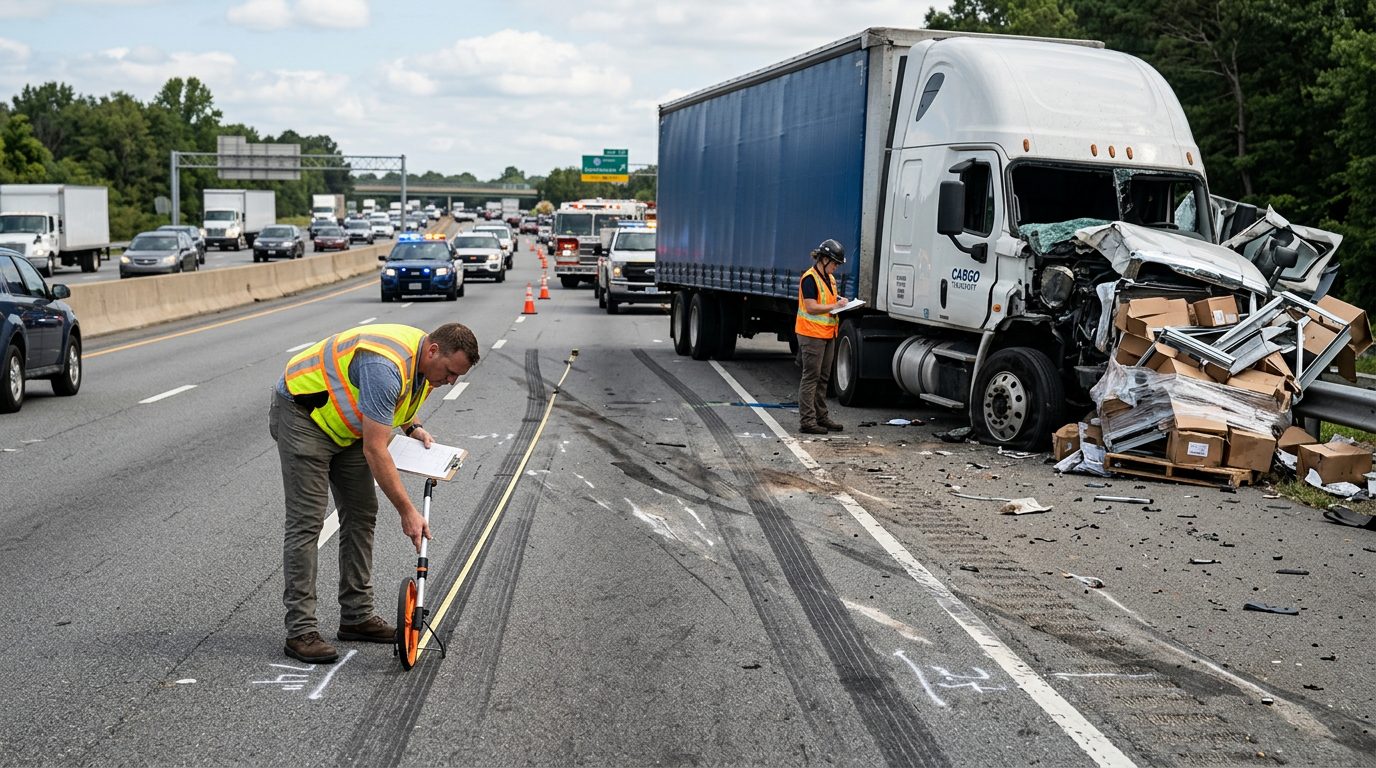
Virginia Car and Truck Accidents | Shenandoah Valley, Richmond and Henrico County
Virginia Car and Truck Accident Claim Rules, Explained Plainly
Clear answers on how Virginia crash claims work, from the first steps after a collision to the questions families ask about wrongful death, for people across the Shenandoah Valley and the Richmond area.
Published October 21, 2026
Virginia gives people hurt in car and truck crashes a limited time to file a lawsuit. The state’s fault rules can also decide whether a claim moves forward at all. This guide explains the main rules in plain language so you can see what may apply to your situation. It is general information, not advice about your own facts.
Correll Law Firm handles car accidents, truck accidents, commercial vehicle accidents, catastrophic injuries, traumatic brain injury, spinal cord injury and wrongful death claims. The firm has offices in Winchester and Harrisonburg. It represents people from the Shenandoah Valley to Richmond and Henrico County, and it also serves people throughout the northern Shenandoah Valley.
How Long Do You Have to File a Virginia Injury Lawsuit?
Virginia generally allows two years from the date of injury to file a personal injury lawsuit (Va. Code § 8.01-243(A)); the clock runs from the date of injury, not the date of discovery, with narrow exceptions.
Some claims carry notice requirements that run out sooner. That means a short notice period can pass while the two-year window still looks far away. Do not assume the full two years is available for every type of claim.
Many injured people focus on medical care first, and that makes sense. Still, the calendar keeps moving during surgery, rehabilitation and conversations with insurance adjusters. Writing down the date of the crash and the date of each medical visit keeps the timeline clear. A solid claim can still be lost if the date is missed, so the deadline deserves attention early.
Not sure what your next step is?
Talk it through with Correll Law Firm — we can walk you through how a situation like yours is usually handled and what your options are.

Does Being Partly at Fault Stop a Virginia Claim?
Partial fault can decide the outcome in Virginia. Virginia follows contributory negligence: if you are found even partly at fault, you may be barred from recovering, with limited exceptions (Contributory negligence bars recovery in Virginia). Talk to a lawyer about your facts.
What Must a Driver Do After a Crash With Injuries?
Virginia requires a driver involved in a crash with injury or death to stop and report it to police immediately (Va. Code §§ 46.2-371, 46.2-894). The two-year period is the deadline to file a lawsuit, not to report a crash (Va. Code § 8.01-243).
Crash records are kept by the Virginia Department of Motor Vehicles, which explains who may submit an accident report and which forms apply. You can review those rules directly through the Virginia DMV crash records page.
Keep the police report number, the names of any witnesses, photos of the vehicles and the road, and a list of every medical visit. Insurance companies may ask for a recorded statement soon after a crash. You may wish to speak with a lawyer before you give one, especially if you are still in pain or unsure what happened.
How Do You Prove Who Caused a Crash?
The injured person carries the burden of showing each of these pieces.
There can be more than one proximate cause of the same injury.
Crash claims often turn on the sequence of events: speed, following distance, road conditions, signals and what each driver did in the seconds before impact. Proof usually comes from several sources. Police reports, witness statements, photos, vehicle damage and medical records that connect the injury to the crash all help build a clear picture.
Can a Trucking Company Be Held Responsible?
It can be, when the company’s own conduct contributed to the crash. Truck crashes add a layer that most car crashes do not have, because the companies that hire, dispatch and load trucks may play a role in what happened.
It does not decide how any particular truck case will turn out. Commercial vehicle crashes can also involve trucking safety rules, and the records behind those rules can matter to a claim.
What Makes Brain and Spinal Cord Injury Claims Different?
These claims often involve long-term medical needs, and the full effects can take time to show. A head or spinal injury can affect memory, movement, work and daily life in ways that are not obvious right away.
Early symptoms may change over weeks or months. Early insurance offers may come before the full picture is known. Keeping a daily log of symptoms, appointments, and tasks that have become harder at work or at home can help show how the injury affects you.
The firm handles catastrophic injury, traumatic brain injury and spinal cord injury claims, and it works with the medical records that document each stage of recovery.
Not sure what your next step is?
Talk it through with Correll Law Firm — we can walk you through how a situation like yours is usually handled and what your options are.
How Does a Virginia Wrongful Death Claim Work?
A Virginia wrongful death action is filed by the decedent’s personal representative within two years of the death (Va. Code §§ 8.01-50(C), 8.01-244(B)), on behalf of the family members the statute protects.
Virginia wrongful death damages cover the family’s sorrow, mental anguish and loss of the decedent’s companionship, guidance and care; lost income and services; medical expenses from the injury; funeral expenses; and, for willful or wanton conduct, punitive damages (Va. Code § 8.01-52).
Families dealing with a death are often also handling funeral plans and paperwork. Knowing who files the claim and when it must be filed can reduce some of that uncertainty. The firm handles wrongful death claims for families in the region.
When Can Punitive Damages Apply in Virginia?
Virginia allows punitive damages for actual malice, or for willful or wanton conduct or recklessness showing a conscious disregard for the safety of others, capped at $350,000 (Va. Code § 8.01-38.1).
The Supreme Court of Virginia has applied this framework in personal injury cases. Virginia allows punitive damages for actual malice, or for willful or wanton conduct or recklessness showing a conscious disregard for the safety of others, capped at $350,000 (Va. Code § 8.01-38.1).
Ordinary carelessness does not meet this standard. Punitive damages are a separate question from the basic negligence claim, and they depend on proof of the conduct itself.
What Mistakes Can Make an Injury Claim Harder to Prove?
Long delays, gaps in medical care and early statements about the crash can make a claim harder to prove. Each of these gives the other side something to question.
Gaps in treatment can lead an insurer to question how serious the injury was. Social media posts about activities, travel or the crash can also be used as evidence. Giving a recorded statement before understanding the questions can create confusion later.
Each case depends on the facts, so the timing and proof in your situation may differ from the examples here. Writing down what you remember soon after the crash, while details are fresh, is a practical first step.

Frequently Asked Questions
Can a trucking company be sued along with the driver?
Yes, when the company’s own negligence contributed to the crash.
Where can I get a Virginia crash report?
Crash-report records come from the Virginia Department of Motor Vehicles, which lists the forms that apply. Check the DMV crash records page for current requirements.
Does the two-year rule apply to wrongful death?
Yes, a wrongful death action has its own two-year period, measured from the date of death. The personal representative of the person who died files it for the family.