
Truck Accidents in Virginia
What to Do After a Truck Accident
Immediate steps to protect yourself and your family after a serious crash
Published October 02, 2026
What to Do After a Truck Accident in Virginia
If you’ve just been in a serious truck accident, your immediate priorities are safety, medical care, and evidence preservation. The steps you take in the first hours and days after a truck accident can protect your health, your legal rights, and your ability to recover if you pursue a claim.

Not sure what your next step is?
Talk it through with our team — the first case evaluation is free, confidential, and carries no obligation.
Immediate Safety: Move to a Safe Location and Call 911
Call 911 immediately if anyone is injured—do not delay. Emergency responders will dispatch police, paramedics, and fire rescue to secure the scene and provide medical care.
If your vehicles are drivable and traffic is moving, move them to the shoulder or a safe location away from oncoming traffic, but only if it’s safe to do so. Turn on your hazard lights. If you cannot move the vehicles safely—because they’re too damaged, traffic is heavy, or you’re too injured—stay inside with your seatbelt fastened, hazard lights on, and wait for emergency personnel to arrive.
Do not attempt to direct traffic or leave the scene. Remaining at the scene is required by law, and leaving can result in serious criminal charges.
Accept Medical Evaluation and Document Your Injuries
Allow paramedics to assess you at the scene, even if you feel fine. Adrenaline and shock can mask serious injuries immediately after an accident. Traumatic brain injury symptoms may not appear for hours or days after impact, even when you feel okay in the moment.
If paramedics recommend transport to the hospital, go. Do not refuse care to avoid inconvenience or cost. Spinal cord injuries and internal bleeding may not be obvious without medical imaging and professional evaluation.
Seek medical attention within 24 hours even if you declined transport at the scene. Keep all medical records, bills, imaging reports, and treatment notes in one place. Report all pain, numbness, headaches, dizziness, or other symptoms to your doctor, no matter how minor they seem. Early documentation of your injuries creates a medical record that protects your health and your legal position.
Gather Information at the Scene
Collect the truck driver’s name, phone number, address, and driver’s license number. Record the trucking company name, address, and phone number—usually printed on the side of the truck or in the driver’s paperwork.
Get the truck’s license plate number and vehicle identification number (VIN). Note the insurance company name and policy number from the driver’s insurance card. Ask for the names and contact information of any passengers in the truck.
If other vehicles were involved, collect the same information from those drivers. Write everything down by hand if you have pen and paper, or use your phone’s notes app to record the details while they’re fresh.
Collect Witness Information
Ask anyone who saw the accident for their name, phone number, and email address. Note their relationship to you (stranger, friend, family member). Ask what they saw and, if possible, write down their account in their own words.
Take a photo of each witness with their permission, if safe to do so. Do not pressure witnesses to stay; get their information and let them go. Witness testimony is often the most credible evidence in a truck accident claim.
Preserve Evidence at the Scene
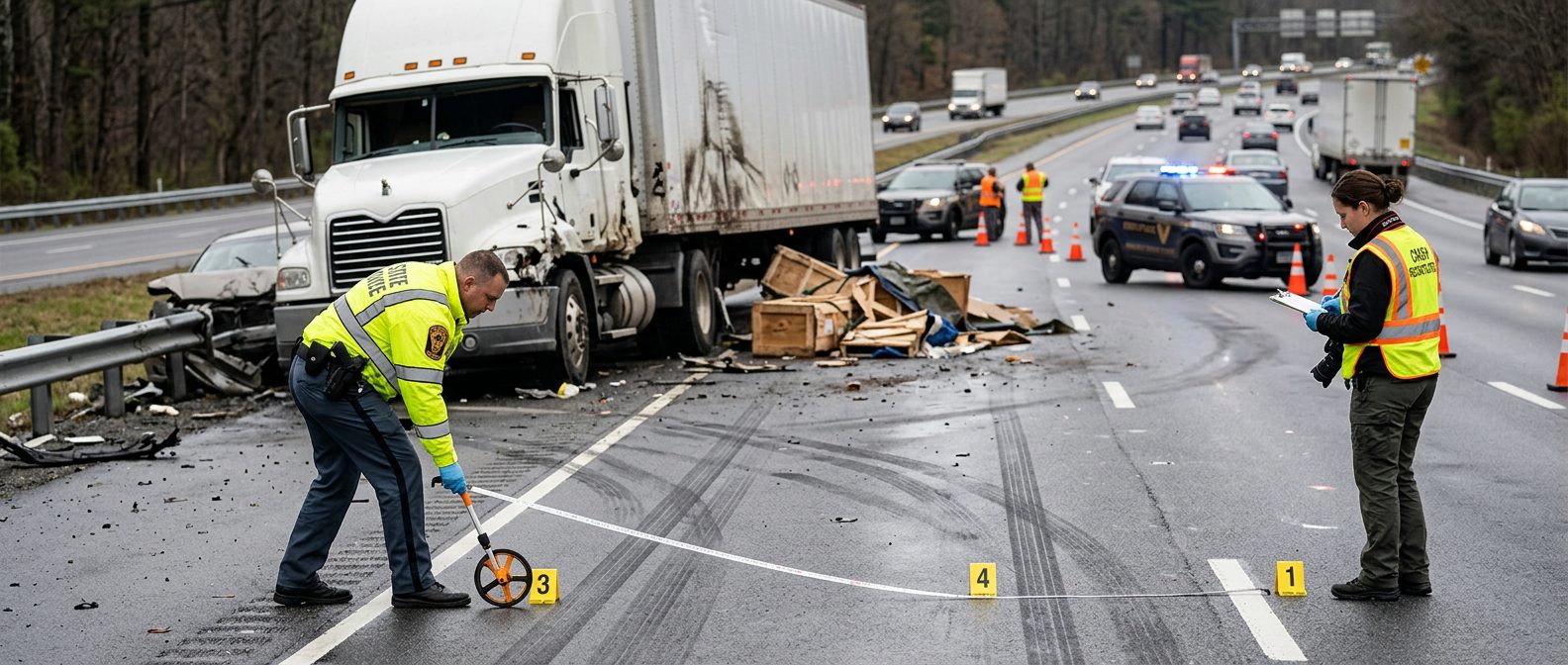
Take photos and video of the accident scene from multiple angles: the overall scene, vehicle damage, road conditions, traffic signals, and any debris. Photograph the truck’s cargo if visible and any spilled materials. Note the time of day, weather conditions, and lighting.
If safe, photograph skid marks, vehicle positions, and the road surface. Do not move vehicles or debris unless instructed by law enforcement. If you have a smartphone, use the camera’s timestamp feature so each photo is dated and timed.
Evidence collected at the scene—photos, witness statements, and details about road conditions—becomes harder to recover the longer you wait. Preserve everything now.
Have questions about what happened?
Ask our team directly. The first conversation is free, confidential, and there is no obligation to continue.
Note Key Details About the Truck and Driver
Record the truck’s make, model, color, and any company logos or markings. Note the truck’s condition: was it well-maintained, did it have visible damage before the accident, were lights working?
Observe the driver’s appearance and behavior: did they seem alert, drowsy, impaired, or distressed? Note the time of day and whether the driver may have been fatigued (early morning, late night, long shift). If the truck was carrying hazardous materials, note any warning labels or placards.
Record the truck’s speed and direction of travel before the collision, based on what you observed or what witnesses describe.
Report the Accident to Law Enforcement
Wait for police or state police to arrive and file an official accident report. Provide a factual account of what happened; do not speculate or admit fault. Virginia law requires that accidents involving injury or significant property damage be reported to police as soon as possible.
Ask the officer for the report number and the agency handling the case. Request a copy of the police report; you may need to request it later through the Virginia Department of Motor Vehicles if it’s not available immediately. Note the officer’s name, badge number, and agency.
Do not sign anything other than the police report unless you fully understand what you are signing.
What Should You Not Do After an Accident?
Do not admit fault or apologize for the accident, even if you think you may have caused it. Liability is determined by investigation, not by what you say at the scene. Under Virginia’s contributory-negligence rule, even partial fault on your part can affect your ability to recover.
Do not accept a settlement offer or sign any documents from the trucking company or its insurance without legal review. Do not post about the accident on social media, and ask family members not to do so either. Insurance companies and defense attorneys routinely use social media posts against injured people.
Do not discuss the accident with the other driver’s insurance company without legal representation. Do not leave the scene before police arrive unless instructed to do so by emergency personnel. Do not delete photos, videos, or text messages related to the accident. Do not delay seeking medical care, even if you feel fine.
How Long After an Accident Does It Need to Be Reported?
Virginia law requires a driver involved in a crash that causes injury to stop immediately, as close to the scene as possible, and report it forthwith to the State Police or local law enforcement. Notify your own insurance company promptly; a policy’s requirement to give notice “as soon as practicable” can be an enforceable condition of coverage.
Preserve all evidence and documentation immediately; the longer you wait, the more details fade and the harder evidence becomes to recover. If you were transported to the hospital, report the accident to your insurance company as soon as you are able.
In Virginia, a personal-injury lawsuit must generally be filed within two years after the injury occurs. That deadline moves quickly, and early action protects your rights.
What Happens When a Truck Driver Gets in an Accident?
The truck driver is required to remain at the scene and cooperate with law enforcement. The driver’s employer (the trucking company) will be notified and may send a representative to the scene.
Federal regulations require the driver to submit to drug and alcohol testing after certain accidents. The driver’s commercial driving record and safety history will be reviewed. The trucking company’s insurance company will begin an investigation.
The driver may face disciplinary action from their employer, up to and including termination. If the driver was negligent or violated federal trucking regulations, both the driver and the company may be held liable for injuries and damages.
Medical Care Matters, Even If You Feel Okay
Adrenaline and shock can mask pain and serious injuries immediately after an accident. Traumatic brain injury symptoms may not appear for hours or days after impact. Spinal cord injuries may not cause immediate pain but can result in permanent disability if not treated promptly.
Internal bleeding and organ damage may not be obvious without medical imaging. Delayed medical care can complicate your recovery and may be used against you if you later pursue a claim. Seek evaluation from a physician, not just a paramedic, within 24 hours of the accident.
Want to know where you stand?
Tell us what happened and our team will walk you through the options available to you, at no cost.
Preserve Documentation for the Future
Keep all medical records, bills, and receipts in a folder or digital file. Save all photos and videos from the accident scene with their original timestamps. Keep the police report and any follow-up correspondence from law enforcement.
Document any lost wages, time off work, or other expenses related to the accident. Write down your own account of the accident while details are fresh, including what you remember about the other driver’s actions and the road conditions. Save all communications with insurance companies, the trucking company, and medical providers.
Do not discard anything related to the accident without legal advice.
When to Reach Out for Legal Guidance
If you or a family member suffered serious injury—broken bones, spinal cord injury, traumatic brain injury, or any injury requiring hospitalization—you may wish to reach out to a personal injury attorney. In catastrophic-injury cases, early legal guidance often protects your interests and ensures evidence is preserved correctly.
If the trucking company or its insurance company contacts you directly, that is a signal to seek legal advice before responding. If you are unsure whether you have a claim or what your rights are, a free case evaluation can help clarify your situation and your options.
If the accident involved a commercial truck (not a pickup truck), the legal landscape is more complex. Trucking companies carry different insurance, operate under federal regulations, and often have teams of lawyers working to limit their liability. Early legal guidance can protect your interests.

FAQ
What’s the most important thing to do right after a truck accident?
Call 911 immediately if anyone is injured, and then seek medical evaluation even if you feel fine—hidden injuries like traumatic brain injury or spinal cord damage may not be obvious for hours or days.
Should I talk to the truck driver’s insurance company?
No; do not discuss the accident with the other driver’s insurance company without legal representation, as anything you say can be used against you.
How long do I have to file a lawsuit after a truck accident in Virginia?
A personal-injury lawsuit in Virginia must generally be filed within two years after the injury occurs, so early action is important.
What if I was partially at fault for the accident?
Virginia’s contributory-negligence rule is strict: if your own negligence contributed to the injury in any degree, you may not be able to recover unless narrow exceptions apply, so legal review of your situation is important.
Should I accept the first settlement offer from the trucking company’s insurance?
No; do not accept a settlement or sign any documents without legal review, as early offers are often far below what your claim is actually worth.
What evidence should I collect at a truck accident scene?
Photos of vehicle damage, the scene, road conditions, and the truck’s cargo; witness names and contact information; the driver’s license and insurance information; and the trucking company’s name and phone number.
If you or someone you care for was seriously hurt in a truck accident—with broken bones, head injury, spinal damage, or injuries requiring hospitalization—people in that situation often reach out to discuss what comes next. Schedule a free case evaluation with our team to understand your rights and options. We serve people throughout the Shenandoah Valley, Richmond, Henrico County, and beyond.
Immediate Steps After a Truck Accident
Check for Injuries & Call 911
If anyone is hurt, call 911 immediately. Seek medical evaluation even if you feel fine—serious injuries like traumatic brain injury or spinal cord damage may not show symptoms right away.
Move to Safety
If it's safe to do so and your vehicle is drivable, move out of traffic. Turn on hazard lights and stay in your vehicle if you cannot move safely to the roadside.
Document the Scene
Take photos of vehicle damage, road conditions, traffic signs, and the truck's position. Note the date, time, and weather. Get the truck driver's name, company, phone number, and insurance information.
Gather Witness Information
Ask other drivers or bystanders for their names and phone numbers. Do not discuss fault or details of the accident with anyone except police and medical personnel.
Do Not Speak to the Truck Company's Insurance
Do not give a statement to the truck driver's insurance company, sign documents, or discuss the accident with them. Anything you say can be used against you. Let the police report speak for itself.
What to Do in the Days After
Seek Medical Care Promptly
Visit your doctor or an emergency room even if you delayed seeking care. Document all injuries, symptoms, and treatment. Keep records of all medical visits, prescriptions, and therapy.
Report to Your Insurance
Notify your own insurance company of the accident. Provide factual information only—do not admit fault or speculate about what happened.
Preserve Evidence
Keep your damaged vehicle, medical records, receipts, pay stubs, and any photos or video. Do not repair or discard your vehicle without consulting an attorney.
Consider Legal Counsel
Truck accidents often involve serious injuries and complex liability. You may wish to speak with an attorney who handles these cases before speaking further with insurance companies.
Why Truck Accidents Require Special Attention
Catastrophic Injuries Are Common
The size and weight of commercial trucks mean collisions often result in severe injuries—traumatic brain injury, spinal cord damage, and other life-altering harm.
Complex Liability & Insurance
Truck accidents involve multiple parties: the driver, the trucking company, the vehicle owner, and sometimes manufacturers. Insurance claims can be complicated and disputed.
Evidence Disappears Quickly
Trucks are often repaired or removed from the scene. Witness memories fade. Early preservation of evidence and documentation is critical.
Time Matters
Virginia law sets deadlines for filing claims. Acting promptly protects your rights and ensures nothing is overlooked.
Hidden Injuries May Develop Over Time
Traumatic brain injury and spinal cord injury can take hours or days to become apparent. Symptoms may include headaches, confusion, numbness, weakness, or pain that worsens. Seek immediate medical attention if you experience any of these signs after a truck accident.