
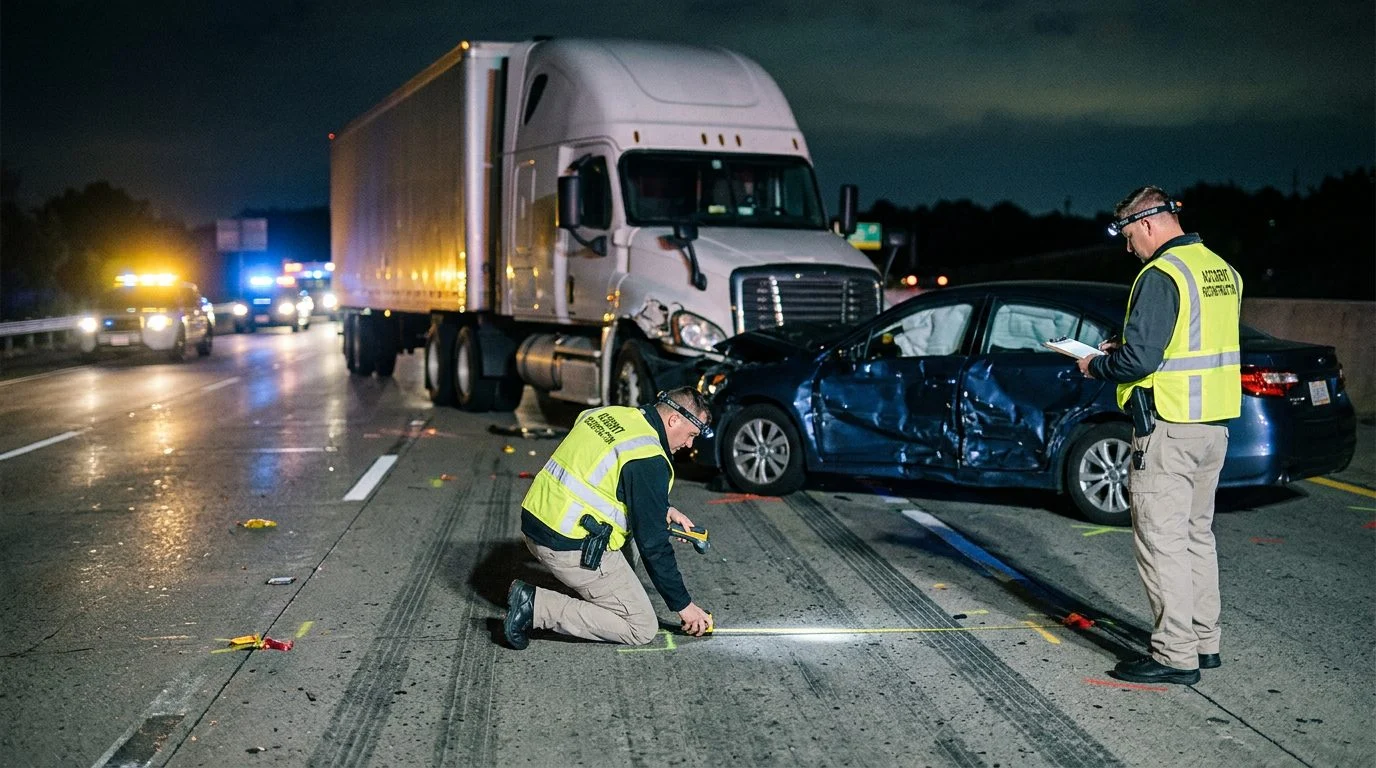
Wrongful Death Car Accidents | Winchester, Harrisonburg and the Shenandoah Valley
When a Car Crash Takes a Loved One, Know Who May File
Plain-language guidance for families across the Shenandoah Valley, Richmond and Henrico County from Correll Law Firm, which has served the region from its Winchester and Harrisonburg offices.
Published October 27, 2026
A Virginia wrongful death action is filed by the decedent’s personal representative within two years of the death (Va. Code §§ 8.01-50(C), 8.01-244(B)), on behalf of the family members the statute protects. If someone you love died in a wrongful death car accident or a commercial truck crash, that rule raises many questions. This page explains who may bring the claim, what the family shares, and what the law covers.
Who May Bring a Wrongful Death Claim in Virginia
The personal representative brings the claim, not each grieving relative. A spouse or parent may reasonably assume they can file on their own. Virginia law names the personal representative as the person who brings the action, in that person’s name (Va. Code § 8.01-50).
The personal representative is usually the person the estate process appoints to manage the decedent’s affairs. How that appointment works is a court question. The representative acts for the people the statute protects, so the family’s role matters even though the family does not file.
For a broader look at this kind of case, read the firm’s page on wrongful death after a car or truck crash.
If your family is facing a loss from a car or truck crash, Correll Law Firm may be able to help you understand your options. You do not have to face these questions alone. Talk it through with Correll Law Firm — we can walk you through how a situation like yours is usually handled and what your options are.

What Family Members Share in the Recovery
Family members do not file the wrongful death action. They share in whatever is recovered.
Va. Code § 8.01-54 reads: “The remainder of the amount recovered shall thereafter be distributed by the personal representative, as specified in subsections A and B above, to the beneficiaries set forth in § 8.01-53; provided that any distribution made to any such beneficiaries shall be free from all debts and liabilities of the decedent.” The statute lists beneficiaries in a set order. If there is no surviving spouse, child, or grandchild, it reaches parents, brothers, sisters and certain relatives primarily dependent on the decedent who share the household (Va. Code § 8.01-53).
Virginia treats the injured person’s own claim differently. Under Va. Code § 8.01-25, a claim for injury generally continues after the injured person’s death rather than ending with it.
How a family divides any recovery depends on that family’s facts.
What Wrongful Death Damages Cover in Virginia
Virginia sets out wrongful death damages by statute. Virginia wrongful death damages cover the family’s sorrow, mental anguish and loss of the decedent’s companionship, guidance and care; lost income and services; medical expenses from the injury; funeral expenses; and, for willful or wanton conduct, punitive damages (Va. Code § 8.01-52).
The statute lets the jury or court award damages that seem fair and just. So the list describes damages the law allows, but the statute says the award may not be limited to them, and it does not say what any family will receive. The statute also says expenses for care, treatment, hospitalization and funeral costs must be specifically stated in the award. Expert testimony can help prove lost income and services.
Under Virginia law, a jury may award punitive damages where it finds that the defendant acted with actual malice, or with willful or wanton conduct or recklessness showing a conscious disregard for the safety of others. Virginia allows punitive damages for actual malice, or for willful or wanton conduct or recklessness showing a conscious disregard for the safety of others, capped at $350,000 (Va. Code § 8.01-38.1). In a wrongful death action, Va. Code § 8.01-52 provides that punitive damages may be recovered for willful or wanton conduct, or such recklessness as evinces a conscious disregard for the safety of others. A lawyer reviews which categories fit the facts. Punitive damages may be recovered for willful or wanton conduct, or such recklessness as evinces a conscious disregard for the safety of others (Va. Code § 8.01-52).
The Two-Year Filing Deadline and the Duty to Report the Crash
A driver involved in a crash with injury or death has a duty to report it right away. The two-year period is a different rule, and it covers the lawsuit.
Virginia requires a driver involved in a crash with injury or death to stop and report it to police immediately (Va. Code §§ 46.2-371, 46.2-894).
That includes taking the person to a doctor or hospital when treatment is apparent or requested (Va. Code § 46.2-894). If injuries keep the driver from reporting right away, the driver must report as soon as reasonably possible.
A police report is not the same as a lawsuit. The crash report is a duty for the driver involved, not a deadline for the family to sue. For a practical overview of how timing works in a car accident claim, see how long you have to file a car accident claim in Virginia.
What a Wrongful Death Lawsuit Involves
Litigation means the formal court process for a claim.
Next comes discovery, when each side exchanges documents and information and may take sworn testimony. A case may end before trial, or a judge or jury may decide it. Each stage varies by case.
Fault is often a central issue in a crash case. Virginia follows contributory negligence: if you are found even partly at fault, you may be barred from recovering, with limited exceptions. Talk to a lawyer about your facts.
When It May Be Worth Talking With a Lawyer
You may wish to talk with a lawyer if a loved one died in a car or commercial truck crash and you have questions about who may file. Questions about who may file, what the family may share in, and which deadlines apply often come up early. Getting answers early can help you plan.
Correll Law Firm handles car accidents, truck accidents, commercial vehicle accidents, catastrophic injuries and wrongful death. The firm represents people from the Shenandoah Valley to Richmond and Henrico County. The firm’s locations are in Winchester and Harrisonburg. Readers in Richmond can review the firm’s Richmond wrongful death page for local context.
Frequently Asked Questions
Where can I learn more about timing?
Read the firm’s guide on how long you have to file a car accident claim in Virginia.