
Truck Accident Claims | Winchester, Virginia
Commercial Truck Accident Claims in Virginia: How They Differ
A crash involving a commercial truck can involve more parties, more insurance and more paperwork than a standard car claim. Here is what to know, from a firm that handles car and truck crash claims across the Shenandoah Valley.
Published November 2, 2026
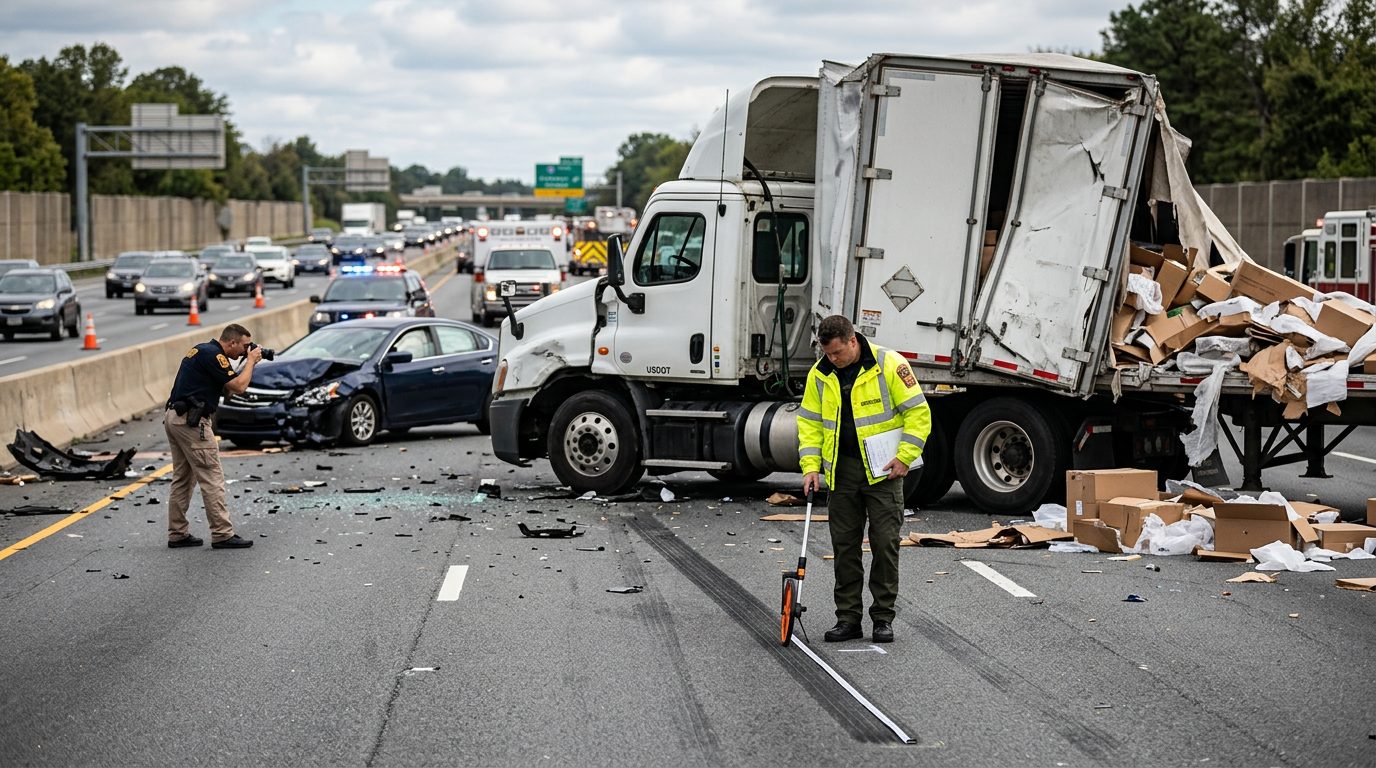
A crash involving a commercial truck can bring in more people and more insurance than a typical car crash. Correll Law Firm, which has an office in Winchester and an office in Harrisonburg, handles car and truck crash claims for people across the Shenandoah Valley, Richmond and Henrico County. This guide explains how commercial truck accident claims in Virginia differ from standard car claims.
How do commercial truck or rideshare crash claims in Virginia differ from standard car accident claims in terms of defendants and insurance coverage?
A standard car claim usually names the at-fault driver and that driver’s auto insurer. A commercial truck or rideshare crash claim may name several parties and may draw on business or commercial policies.
The at-fault driver is still a possible defendant. The employer or motor carrier, and sometimes others, may also be named, depending on the facts. The policy that responds may be a business policy instead of a personal auto policy, and its terms can differ from a personal policy. Each party may carry its own coverage, so one claim can involve several sources of insurance. Knowing every insurer and policy early helps organize the claim from the start. For background, read about wrongful death in car and truck crashes.
If a commercial truck or rideshare crash has left you with questions about who may be responsible, we can talk through the facts with you. Talk it through with Correll Law Firm — we can walk you through how a situation like yours is usually handled and what your options are.
Which parties may be named in a commercial vehicle crash claim?
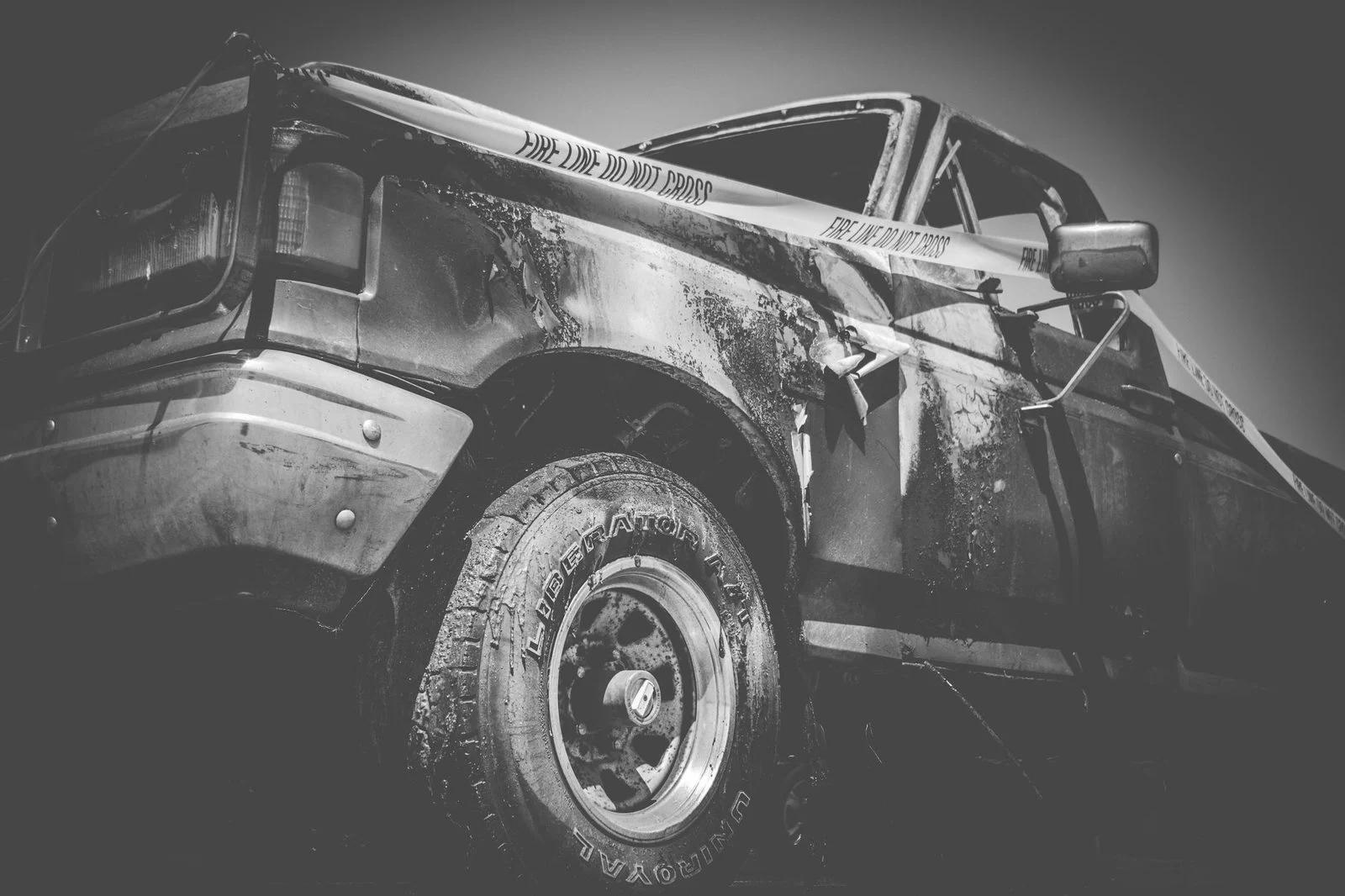
Possible parties include the driver, the motor carrier or employer, and the vehicle owner or leasing company. Whether any of them is responsible turns on the facts of the crash.
Whether a company answers for a driver’s work-related conduct depends on what the driver was doing for the company at the time. Questions about the driver’s assignment, route, and dispatch often matter. Other claims may focus on how the company chose the driver, through theories such as negligent hiring, negligent retention, or negligent entrustment.
Rideshare and delivery crashes can involve the driver, the app company that dispatched the trip or delivery, and that company’s insurance. Those roles depend on the app’s terms and the circumstances at the time of the crash.
Why does insurance coverage look different in truck and commercial vehicle crashes?
Commercial carriers often carry business auto liability coverage, and one crash may involve more than one policy. A driver’s personal auto policy may or may not apply when the driver was working at the time.
Virginia requires owner’s policies to insure the named insured and any other person using or responsible for the use of the vehicle with the named insured’s permission. For owner’s policies effective on or after January 1, 2025, the minimum limits are $50,000 per person, $100,000 per accident for two or more people, and $25,000 for property damage. See Va. Code § 46.2-472.
Federal rules set higher minimum financial responsibility amounts for many interstate trucks. For example, 49 C.F.R. § 387.9 lists $750,000 for for-hire carriage of nonhazardous property in interstate or foreign commerce, for vehicles of 10,001 pounds or more.
Virginia requires a driver involved in a crash with injury or death to stop and report it to police immediately (Va. Code §§ 46.2-371, 46.2-894). See Va. Code § 46.2-371 and Va. Code § 46.2-894.
Keep the carrier’s name, the driver’s details, and any policy information. Then review the car accident injury claim process to see how a claim typically moves.
What evidence tends to matter in commercial truck and vehicle claims?
Trucking companies keep records that can matter in these claims. Many are held by the carrier and its insurer, not the injured person.
See 49 C.F.R. § 391.51.
See 49 C.F.R. § 395.8.
See 49 C.F.R. § 396.11.
Records held by the carrier and insurer can make the claim move on a different timeline than a standard car claim. For how insurers often handle claims, see the adjuster timeline guide. Medical treatment also affects when an injury claim can be evaluated. Read about medical treatment and claim timing.
How can punitive damages and filing deadlines affect a commercial truck claim?
Two rules can shape a commercial truck claim: when punitive damages may be available, and how long a lawsuit can be filed.
See Va. Code § 8.01-38.1.
Virginia generally allows two years from the date of injury to file a personal injury lawsuit (Va. Code § 8.01-243(A)); the clock runs from the date of injury, not the date of discovery, with narrow exceptions. See Va. Code § 8.01-243.
Some claims carry notice requirements that run out sooner. The two-year period is the deadline to file a lawsuit, not to report a crash (Va. Code § 8.01-243).
In short, a commercial truck claim may involve more parties, more policies, and more records than a standard car claim. Those differences can change who is named and how the file moves.
Related practice areas
- Virginia Car Accident Contributory Negligence Explained