
Virginia Car Accident Guide
Non-Reportable Accident on Your Record? What Virginia Drivers Should Know
Plain-language answers about crash reports, police involvement and what to keep after a crash in Winchester, Harrisonburg, the Shenandoah Valley and beyond.
Published October 22, 2026
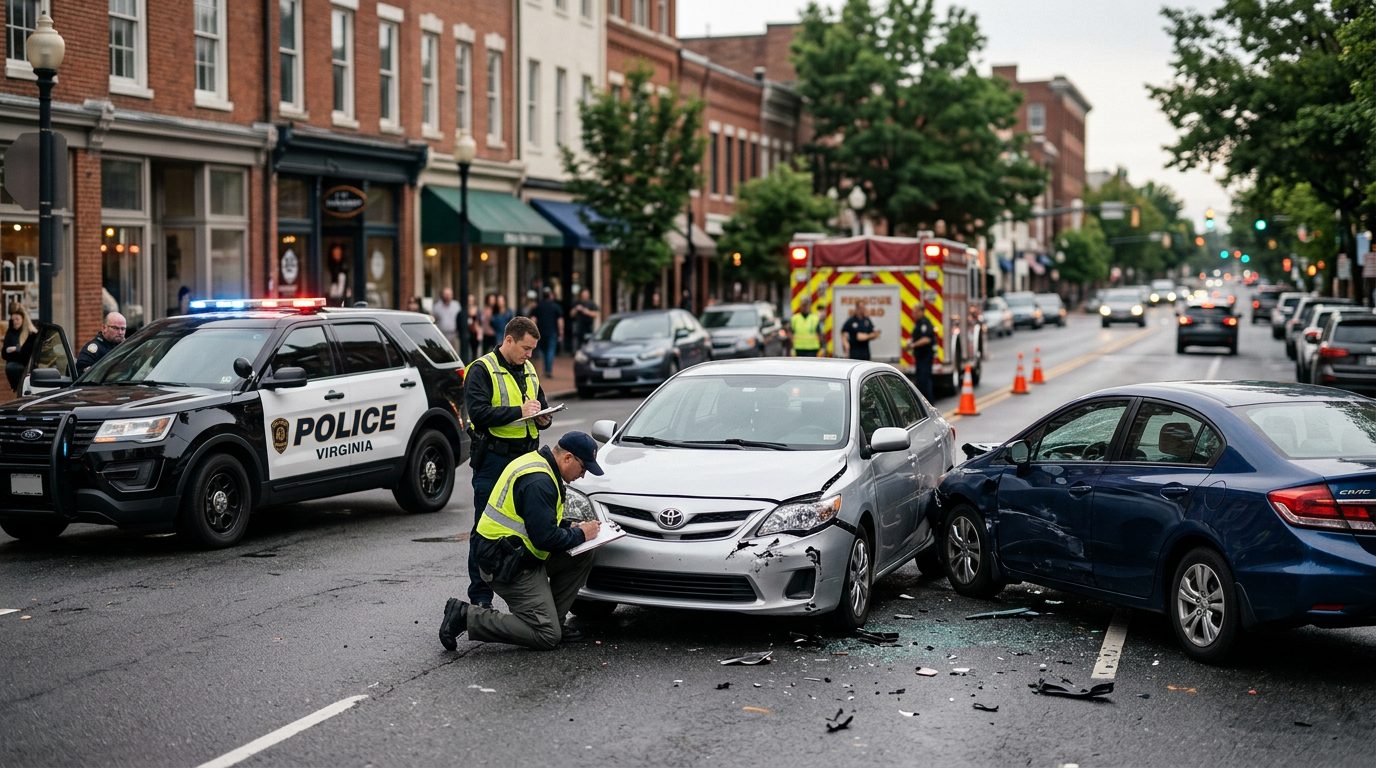
Does a non-reportable accident go on your record? Not in one simple way. Whether a minor crash shows up on a record depends on the kind of record and how the crash was handled. This guide separates three things people often mix up: the legal duty to stop and report, police or DMV paperwork, and insurance and medical records that can matter later.
What Does “Non-Reportable” Mean in a Virginia Crash?
A non-reportable accident is casual shorthand for a minor crash that nobody reported to police. The phrase is not a legal category, so it does not decide whether a crash had to be reported. The stop-and-report duty applies to a crash in which someone is killed or injured, or in which attended property is damaged.
Virginia requires a driver involved in a crash with injury or death to stop and report it to police immediately (Va. Code §§ 46.2-371, 46.2-894). Under Va. Code § 46.2-894, the driver of a vehicle involved in an accident in which a person is killed or injured must immediately stop as close to the scene as possible without obstructing traffic, and report the driver’s name, address, driver’s license number, and vehicle registration number to the State Police or local law-enforcement agency, or to the injured person if that person can understand and retain the information, or to the other vehicle’s driver or occupant or the owner of damaged property.
The same statute sets penalties that depend on whether the crash caused injury, death or property damage.
The two-year period discussed later is a deadline to file a lawsuit (Va. Code § 8.01-243). It is not a deadline to report a crash.
Not sure what your next step is?
Talk it through with Correll Law Firm — we can walk you through how a situation like yours is usually handled and what your options are.

Does a Crash Without Injuries Get a Police Report?
Not always. A police report usually comes from a police response at the scene, and some minor crashes never get one. Drivers sometimes exchange information and leave without calling police.
To check, ask the agency that covers the area where the crash happened whether it has a report. If an officer came out, ask whether a report number was given, and keep that number. If the first check finds nothing, you can ask again later.
The Virginia DMV’s crash page explains crash-report records and who may submit an accident report. See Virginia DMV crash reporting.
A missing police report does not mean the crash did not happen. Photos, witness names and your own notes can still show what happened. Without a report, those details matter more, so write them down early.
Can a Minor Accident Appear on a Driving Record?
Possibly, but three different records are often confused. They are police crash reports, DMV driving records and insurance claim history. The answer changes with the record you mean.
A police crash report comes from the agency that handled the scene. A driving record is kept by the DMV. Insurance claim history is kept by insurers, and it is a separate file from both.
If the other driver reported the crash and you did not, their report may describe it differently than you remember. Compare your notes with any report you receive.
Do you get points if you have an accident?
How long do accidents stay on your record?
Keep your own notes of the date, place and other driver’s details. Those notes are not an official record, but they help you answer questions later.
Why Injuries Can Show Up Days or Weeks Later
Some injuries are not obvious at the scene, and symptoms can appear days or weeks later. Some people feel fine on the drive home and notice pain or stiffness the next day. Stress can also show up later, including trouble sleeping or fear of driving.
Get a medical evaluation after any crash, even one that seemed minor. A visit creates a record of what you reported and when.
Tell the provider how the crash happened, so the visit notes describe it accurately. Write down any new symptom, however small, with the date you noticed it.
That record can matter later. Insurers may ask when you first reported symptoms, so keep those dates in one place.
How a Crash Record Can Affect an Injury Claim
The records made around a crash are often used to show what happened. Useful records include photos of the vehicles and scene, witness names and addresses, medical records, repair estimates and letters from insurers.
Virginia follows contributory negligence: if you are found even partly at fault, you may be barred from recovering, with limited exceptions (Contributory negligence bars recovery in Virginia). Talk to a lawyer about your facts.
Notes written close to the crash can help tell the story later. Stick to facts you saw and heard, and avoid guessing in writing about who caused the crash. Photos taken the same day show damage before repairs, so keep the originals and their dates.
Medical records often describe how you say the crash happened, so accurate history matters. Insurance letters are worth keeping too, because they show what was said and when.
For a broader view, the firm’s main topic pages on car accidents, truck accidents and wrongful death cover how these claims work.
How Long Do You Have to File a Claim in Virginia?
Virginia generally allows two years from the date of injury to file a personal injury lawsuit (Va. Code § 8.01-243(A)); the clock runs from the date of injury, not the date of discovery, with narrow exceptions. Under Va. Code § 8.01-243, every action for personal injuries, whatever the theory of recovery, shall be brought within two years after the cause of action accrues, unless otherwise provided in that section or by other statute.
A two-year window can pass quickly while symptoms, repairs and insurance talks continue. Keep track of dates from the day of the crash onward.
Not sure what your next step is?
Talk it through with Correll Law Firm — we can walk you through how a situation like yours is usually handled and what your options are.
What to Do Next if You Are Unsure About a Crash
Start by writing down what you remember while it is fresh, and keep every record you receive. Useful details include:
- The date, time and exact location
- The other driver’s name, insurer and plate number
- Photos of the vehicles, the scene and any damage
- Witness names and addresses
- Repair estimates, medical visit notes and insurance letters
Ask the investigating agency whether a report was filed. Keep copies of any paperwork you receive, and store everything in one place so the dates line up.
Does a non-reportable accident go on your record in Virginia?
That term is informal, not a legal category. Whether a crash appears on a record turns on the record type and how the crash was handled.
Can a minor crash still affect an injury claim?
It can. Photos, witness details and medical notes often help show what happened after a crash.