
Car Accidents | Richmond and Henrico County
Evidence After a Car Crash in Richmond: What to Keep for Your Injury Claim
Photos, a police report, medical records and witness names each show a different part of what happened. Here is how to protect them while you recover.
Published November 2, 2026
After a crash, the proof you gather can shape how well an injury claim is supported later. Evidence after car crash Richmond cases usually falls into four groups: the police or crash report, medical records and bills, photos and physical evidence, and witness and insurance information. This guide explains what each one shows and why it matters.
What evidence should be collected after a Richmond-area car crash to support an injury claim, such as police reports, medical records, and photos?
The core categories are the police or crash report, medical records and bills, photos and physical evidence, and witness and insurance information. Each one proves a different part of the claim.
Police reports show how and when the crash happened and who was involved. Medical records show what injuries were found and how they were treated. Photos show the damage and the scene. Witness and insurance details fill gaps when people remember events differently.
Virginia requires a driver involved in a crash with injury or death to stop and report it to police immediately (Va. Code §§ 46.2-371, 46.2-894).
Reporting a crash and filing a lawsuit are separate steps. For an overview of how the firm handles these matters, see car and truck accident claims.
Talk it through with Correll Law Firm — we can walk you through how a situation like yours is usually handled and what your options are.
Why does the police report matter after a crash in Virginia?
A police crash report is the official record of the crash. It often gives the first neutral account of what happened.
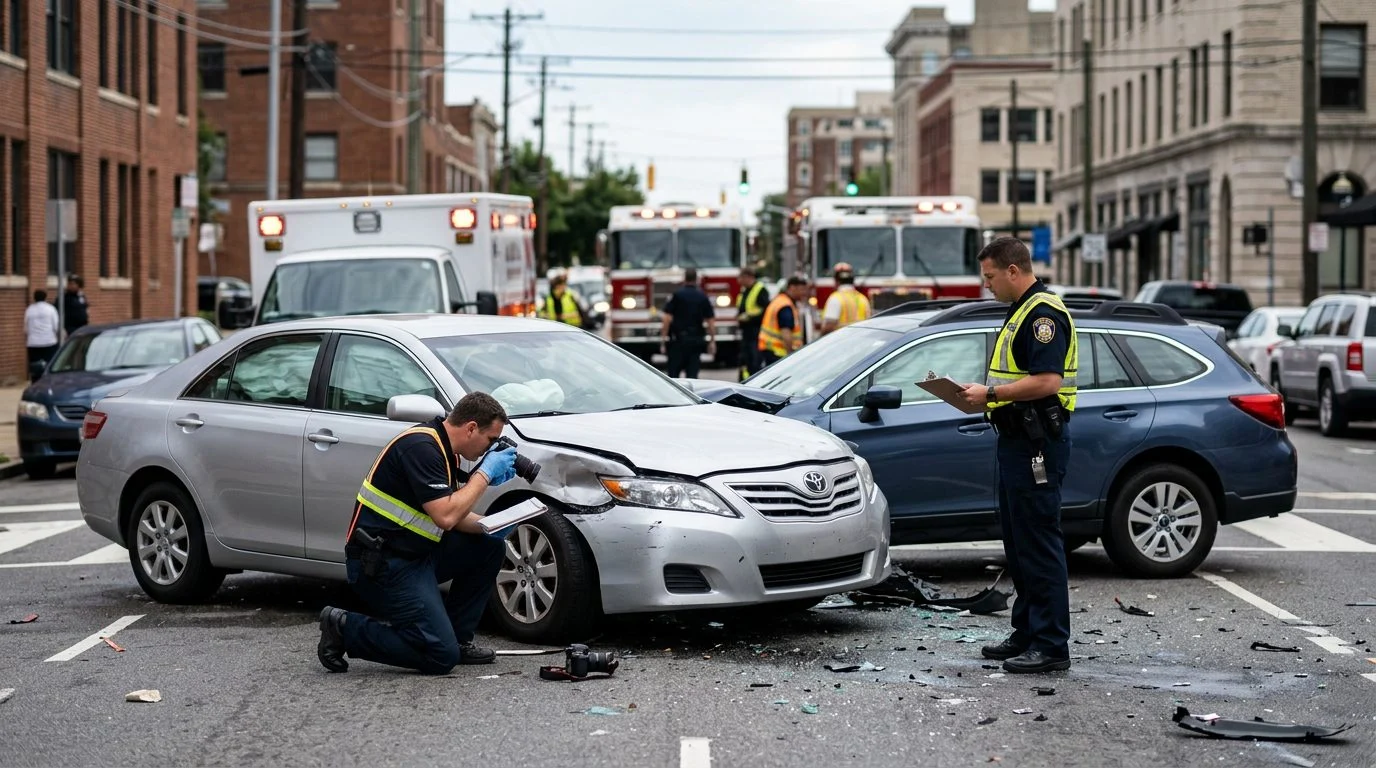
Reports usually list the date, time, and location. They record the vehicles, the drivers, and any passengers or injuries the officer noticed. They also note road conditions and any citations issued.
The report is one record among several. It does not replace medical records or photos. An officer may not see how the crash unfolded, so the report may reflect only what the officer saw and what people said at the scene.
Keep every copy you receive. Write down any detail that differs from your memory while it is fresh, such as the signal color or where the vehicles came to rest. Those notes help if the report and your account do not match.
How do medical records and treatment documentation support an injury claim?
Medical records link your injuries to the crash. They also show how those injuries were treated over time.
Start with the first visit. Ambulance and emergency department notes often record how you felt right after the crash, what tests were done, and what diagnoses were made. Imaging, such as X-rays or scans, can document injuries that are not visible.
Follow-up care matters too. Therapy notes, specialist visits, and referrals show whether treatment continued. Gaps in care or missed appointments can make it harder to connect an injury to the crash.
Brain injuries need careful records. The Virginia Department of Health’s EMS office describes a concussion as a trauma-induced change in mental status that may occur with or without loss of consciousness (Virginia EMS concussion guidance). Tell providers about every symptom, even minor ones.
Neck and spine injuries also need documentation. The same EMS office explains how providers decide whether cervical-spine imaging is needed (Virginia EMS cervical-spine guidance). Keep every imaging report.
Some providers may have a lien, for a just and reasonable charge for treating personal injuries caused by the alleged negligence of another, on the claim of the injured person or of his personal representative against the person, firm, or corporation whose negligence is alleged to have caused such injuries, capped at $2,500 for a hospital or nursing home, $750 for each physician, nurse, physical therapist, or pharmacy, and $200 for each emergency medical services provider or agency (Va. Code § 8.01-66.2). A lien requires written notice before it takes effect, unless the attorney for the injured party knew that medical services were either provided or paid for by the Commonwealth (Va. Code § 8.01-66.5). Keep bills and any lien letters together.
Which photos, video, and physical evidence should be preserved?
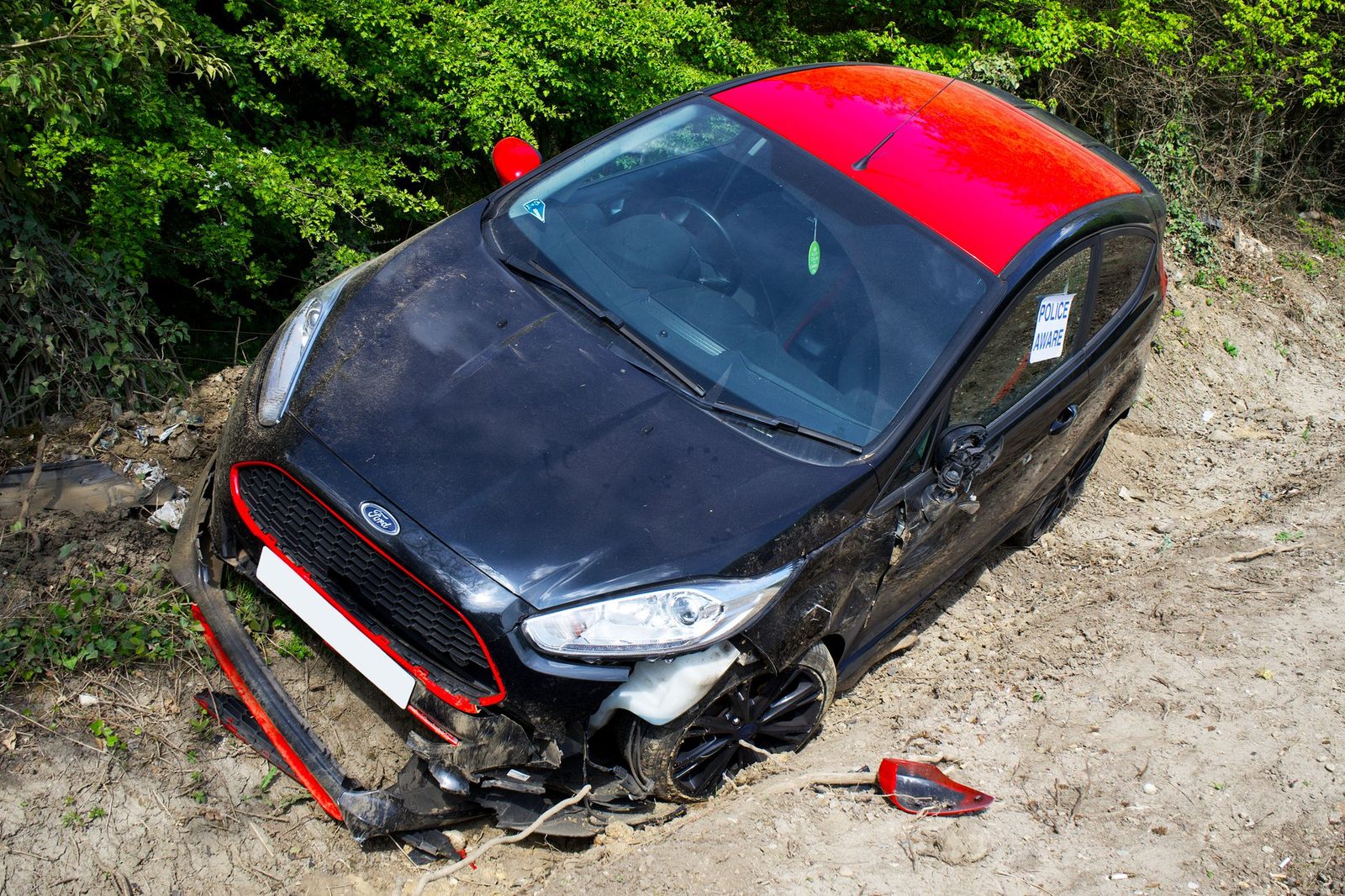
Photos, video, and the vehicles themselves are often the most direct proof of how a crash happened. They also show how hard the impact was.
Take photos of vehicle damage from several angles. Also photograph the scene, skid marks, debris, traffic signals, road and weather conditions, and any visible injuries. Take them as soon as it is safe to do so.
Damage photos can show the direction and force of impact. A damaged vehicle is also evidence. Ask before it is repaired or sold.
Dashcam footage can record the moments before a crash. Ask nearby businesses early about camera footage, since it is not always kept. Phone and ride-share records can help confirm the time of the crash.
Keep original files with their date information intact. Do not edit them. Edited copies can raise questions later.
How do witness statements and fault disputes affect the evidence you collect?
Witness names and contact details matter most when drivers disagree about what happened. A neutral witness can confirm the signal, the speed, or the lane.
Write down each witness’s name, phone number, and a short summary of what they saw. Ask them to stay and talk with the officer if you can.
Virginia follows contributory negligence: if you are found even partly at fault, you may be barred from recovering, with limited exceptions. Talk to a lawyer about your facts.
Record the other driver’s insurance company and policy number. Write down what the other driver says, but avoid guessing about fault in writing. Stick to facts you saw and heard.
How long should you keep evidence, and what timing rules apply?
Virginia generally allows two years from the date of injury to file a personal injury lawsuit (Va. Code § 8.01-243(A)); the clock runs from the date of injury, not the date of discovery, with narrow exceptions.
Some claims carry notice requirements that run out sooner. That makes early evidence gathering important.
For how to organize these records, see organizing crash documentation. For why early offers deserve review, read early settlement risks in Virginia. For the risks of settling before serious injuries are fully known, see quick settlement risks.
Not sure what your next step is?
Talk it through with Correll Law Firm — we can walk you through how a situation like yours is usually handled and what your options are.

Frequently asked questions
Can photos replace a police report?
No. Photos and a police report show different things. Neither replaces the other, and medical records add proof of injury.
What if I did not take photos at the scene?
Medical records, witness names, and the crash report can still help show what happened. Write down your own account while you still remember it.