
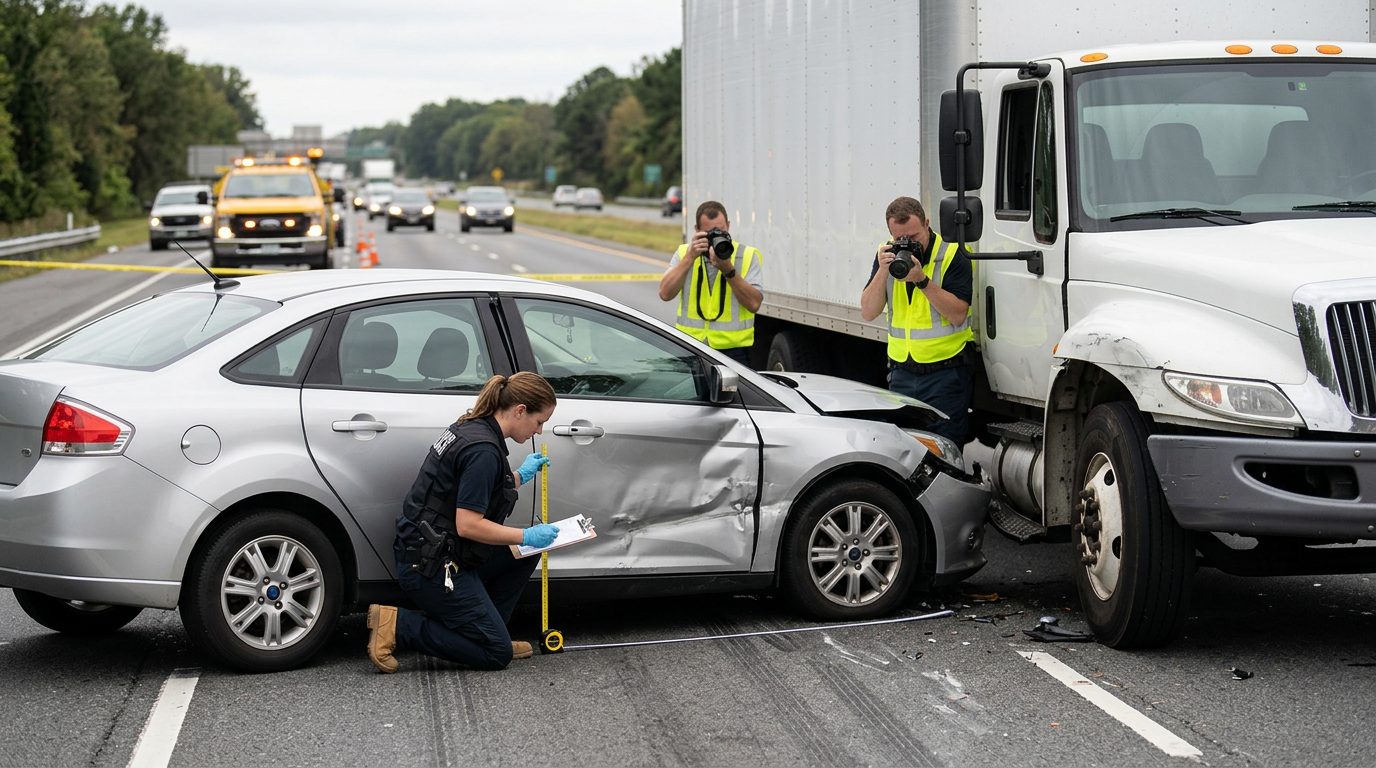
Car Accidents | Virginia
Hit Your Head in a Crash? A Plain-Language Guide for Virginia Readers
Head injuries after a car or truck crash can be hard to understand. Correll Law Firm offers free case evaluations for people in the Shenandoah Valley, Richmond and Henrico County.
Published October 14, 2026
A head trauma car accident injury can range from a minor bump to a serious brain injury, and the full extent may not be clear right away. This guide explains common terms, warning signs that call for emergency care, how doctors check for injury, and how a head injury may relate to a possible claim in Virginia.
What Head Trauma Means After a Car or Truck Crash
A traumatic brain injury (TBI) is damage to the brain from a hit, fall or object, according to Cleveland Clinic. Crashes are one way that kind of hit can happen.
NINDS says diffuse axonal injury (DAI) commonly happens in auto accidents. DAI can disrupt communication among nerve cells in the brain.
A person may not know the full extent of a head injury right away. That is one reason a medical check matters, even when the injury looks small.
Crashes involving commercial trucks can differ from car crashes in size and force. The firm handles car accidents, truck accidents and commercial vehicle accidents. Medical questions after a truck crash are much the same as after a car crash. If you are reading this for someone else, the same warning signs apply.
If a crash left you or a family member with a head injury and questions about what comes next, the firm offers a free case evaluation, and you can reach out whenever you are ready. Talk it through with Correll Law Firm — we can walk you through how a situation like yours is usually handled and what your options are.

When to Go to the ER After Hitting Your Head
Go to an emergency room right away if warning signs appear after a head trauma car accident. NINDS lists these warning signs that call for emergency care:
- A headache that gets worse
- Repeated vomiting
- Confusion or increasing restlessness
- Slurred speech
- Weakness or numbness
- Seizures
- Pupils of different sizes
Call 911 or get to the nearest emergency room if you notice any of these signs. Do not wait to see whether they pass.
If someone seems confused, stay with them and call for help. Do not drive yourself if you feel confused or unsteady.
Talk with a doctor about any blow to the head, even if you feel okay at the scene. A doctor can decide what testing is needed.
Write down when symptoms started and how they change. Bring those notes to every medical visit.
Mild Concussion Symptoms and What They Can Look Like
Concussion symptoms can be physical, mental or emotional, and they vary from person to person. Cleveland Clinic describes traumatic brain injury symptoms in those three groups.
Physical symptoms can include headache and dizziness. Mental symptoms can include trouble concentrating or remembering things. Emotional changes, such as irritability, can also happen.
Some people notice changes in sleep, and those changes are worth mentioning too. Symptoms can change over time, so tell your doctor about any new or worsening problem.
If symptoms seem to ease, keep track anyway, since notes can help a doctor compare changes. A doctor can help sort out which symptoms relate to the crash and which may have other causes. Avoid guessing on your own.
How Doctors Evaluate a Head Injury
Doctors may start with a neurological exam, which checks how the brain and nerves are working. They may also order imaging such as a CT scan or MRI, as Cleveland Clinic describes in its overview.
Test results and symptoms are both part of the picture. A doctor may follow up over several visits.
Bring a list of your medicines and any notes about the crash to each visit. That gives the care team the full picture.
Keep copies of your medical records, follow-up visits and test results. Family members can help by noting changes they see.
Can You Fully Recover From a Brain Injury?
No one can say from the outside how a particular person will recover. Medical sources such as NINDS describe effects that vary from person to person.
Your medical team is the right place to ask about your own outlook. Ask your doctor which symptoms to watch for and when to return.
Some people work with physical, occupational or speech therapists as part of their care. Whether therapy helps, and how much, depends on the person and their doctor.
No lawyer can predict a medical outcome. Your doctor is the right person to discuss what to expect.
How a Head Injury May Relate to a Possible Claim
A head trauma car accident may become part of a possible claim, and a lawyer can review the facts.
Virginia generally allows two years from the date of injury to file a personal injury lawsuit (Va. Code § 8.01-243(A)); the clock runs from the date of injury, not the date of discovery, with narrow exceptions.
Virginia requires a driver involved in a crash with injury or death to stop and report it to police immediately (Va. Code §§ 46.2-371, 46.2-894).
A lawyer may review medical records and crash details when looking at a possible claim. Keep a copy of any crash report you receive, so it is available for that review.
Not sure what your next step is?
Talk it through with Correll Law Firm — we can walk you through how a situation like yours is usually handled and what your options are.
Head Trauma and Wrongful Death: When a Family Is Affected
When a crash causes a death, the family’s situation differs from an injured person’s claim. Each family’s situation is different, and a lawyer can review the facts of yours.
A Virginia wrongful death action is filed by the decedent’s personal representative within two years of the death (Va. Code §§ 8.01-50(C), 8.01-244(B)), on behalf of the family members the statute protects.
Virginia wrongful death damages cover the family’s sorrow, mental anguish and loss of the decedent’s companionship, guidance and care; lost income and services; medical expenses from the injury; funeral expenses; and, for willful or wanton conduct, punitive damages (Va. Code § 8.01-52).
Losing someone in a crash is painful, and questions can arrive at the same time as grief. Families may have many questions about the crash, medical records and filing deadlines.
Frequently Asked Questions About Head Trauma in Car Accidents
When should I go to the ER after hitting my head in a car accident?
Go right away if warning signs such as a worsening headache, repeated vomiting or seizures appear.
Can you fully recover from a brain injury?
Recovery varies from person to person, and no one can predict it from the outside. Your medical team can discuss your own outlook.
What are the symptoms of a mild concussion?
Symptoms can be physical, mental or emotional, such as headache, dizziness or trouble concentrating. A doctor can sort out which ones relate to the crash.
What can happen when you hit your head in a car accident?
The warning signs and medical checks above apply after any head impact. Discuss any symptoms with a doctor promptly.

Questions to Consider Before Speaking With a Lawyer
If a crash left you or a family member with a head injury, you may still be working out symptoms, medical steps and what they mean. You do not need to sort it all out at once, and it is reasonable to read first and decide later.