
Wrongful Death | Virginia
When a Virginia Family Loses Someone in a Crash
Plain-language answers for families in the Shenandoah Valley, Richmond and Henrico County about who files a wrongful death claim and what the law covers.
Published October 30, 2026
A Virginia wrongful death claim is brought by the decedent’s personal representative, for the family members the law protects. This guide covers what families should know about Virginia wrongful death claims, in plain language.
Who Files a Wrongful Death Claim in Virginia
The personal representative files the claim, not each relative. A Virginia wrongful death action is filed by the decedent’s personal representative within two years of the death (Va. Code §§ 8.01-50(C), 8.01-244(B)), on behalf of the family members the statute protects.
Lawyers call them statutory beneficiaries. They do not file the case themselves: the case must be brought by and in the name of the personal representative of the person who died, within the time limits specified in § 8.01-244.
Under Va. Code § 8.01-53, a surviving spouse and children generally come first. Other relatives may share depending on who survives. The beneficiaries are fixed when the verdict is entered, or when the judgment is rendered if the court sets the distribution.
In plain terms, the damages awarded are distributed to the family members the statute protects, under § 8.01-53. Each family’s situation is different, so the question of who serves in this role is worth raising early.
If your family lost someone in a crash, you do not have to sort out these questions alone. The firm can talk with you about your situation. Talk it through with Correll Law Firm — we can walk you through how a situation like yours is usually handled and what your options are.

The Filing Deadline and Notice Requirements
For a wrongful death claim, the main clock starts on the date of death. The general two-year rule for injury lawsuits is worded differently. Virginia generally allows two years from the date of injury to file a personal injury lawsuit (Va. Code § 8.01-243(A)); the clock runs from the date of injury, not the date of discovery, with narrow exceptions.
That rule covers personal injury suits.
Some claims carry notice rules that run out sooner. A claim against a county, city or town for negligence needs a written statement filed within six months after the claim accrues (Va. Code § 15.2-209). Va. Code § 15.2-209 reads: “Failure to provide such statement shall not bar a claim against any county, city, or town, provided that the attorney, chief executive, or mayor of such locality, or any insurer or entity providing coverage or indemnification of the claim, had actual knowledge of the claim, which includes the nature of the claim and the time and place at which the injury is alleged to have occurred, within six months after such cause of action accrued.” Va. Code § 15.2-209 reads: “Every claim cognizable against any county, city, or town for negligence shall be forever barred unless the claimant or his agent, attorney, or representative has filed a written statement of the nature of the claim, which includes the time and place at which the injury is alleged to have occurred, within six months after such cause of action accrued.” The statute also has narrow exceptions based on actual knowledge. Because this notice clock is separate from the lawsuit deadline, families should not assume the full two years is always available for every claim.
Steps Families Take After a Fatal Crash
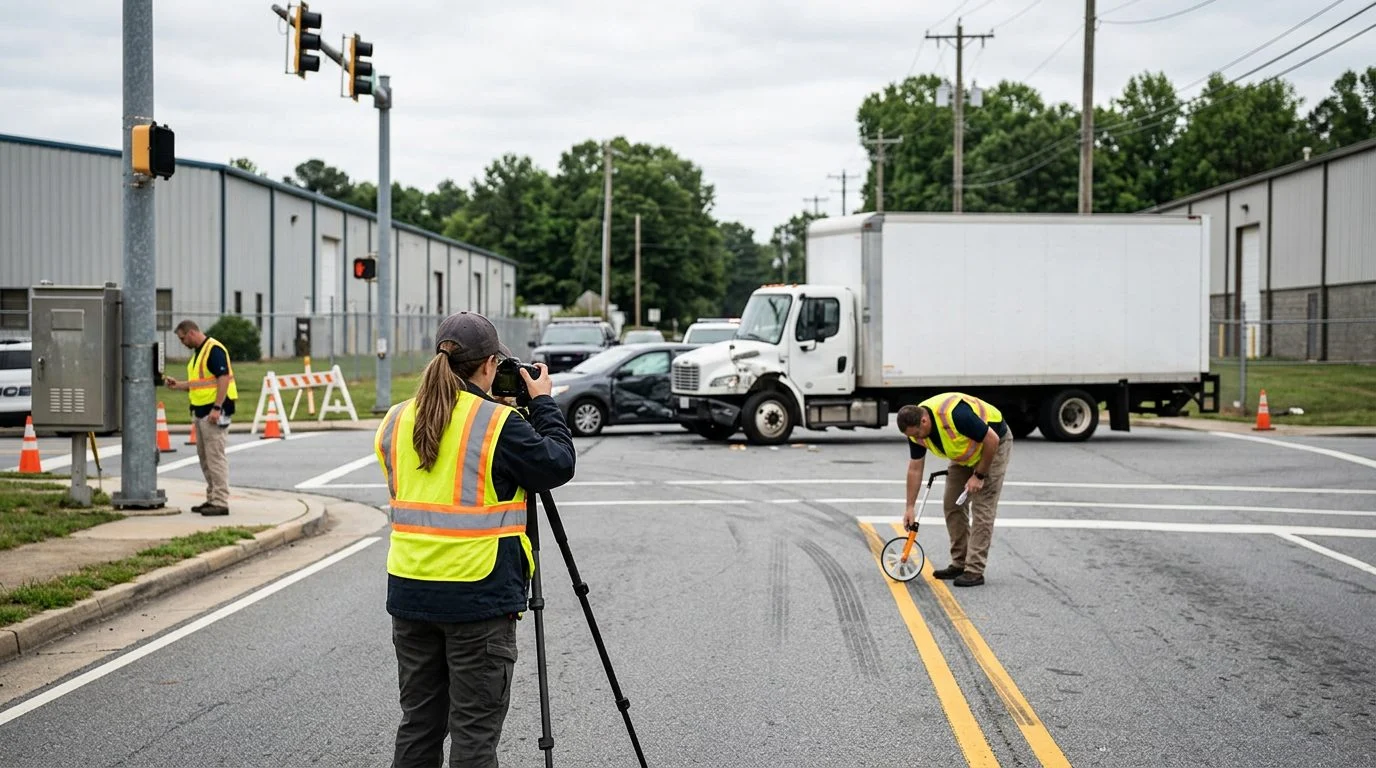
Early records matter most, so start with the police report and the names of any witnesses. Virginia requires a driver involved in a crash with injury or death to stop and report it to police immediately (Va. Code §§ 46.2-371, 46.2-894). The two-year period is the deadline to file a lawsuit, not the deadline to report a crash.
Families should gather the police crash report, witness names and contact details, photographs, emergency and medical records, funeral and burial bills, and records of the decedent’s income and work history. Keep originals when you can.
Truck and commercial vehicle crashes add more records. Federal rules require motor carriers to keep certain logs and maintenance files, but only for set periods. Under 49 C.F.R. § 395.8, a carrier keeps duty-status records for at least six months from receipt. Under 49 C.F.R. § 396.3, maintenance records are kept one year where the vehicle is housed, and six months after it leaves the carrier’s control.
Timing is the practical problem. A written request to preserve records early helps prevent their loss.
What Damages a Virginia Wrongful Death Claim May Cover
Virginia wrongful death damages cover the family’s sorrow, mental anguish and loss of the decedent’s companionship, guidance and care; lost income and services; medical expenses from the injury; funeral expenses; and, for willful or wanton conduct, punitive damages (Va. Code § 8.01-52).
Some categories are money losses. These include the decedent’s expected lost income, medical bills from the injury, and reasonable funeral costs. Other categories are human losses, such as sorrow, mental anguish, companionship, and the guidance and advice the decedent gave.
The statute requires the jury or the court to state separately the care, treatment and hospital costs, the funeral costs, and any punitive damages. The statute does not set a dollar value for the family’s losses. The amount depends on the facts and on what the jury or court decides.
Keep receipts, bills and pay records. They help show the money side of the claim.
Punitive Damages and the Standard the Jury Must Apply
Punitive damages are not added to every wrongful death claim.
Virginia allows punitive damages for actual malice, or for willful or wanton conduct or recklessness showing a conscious disregard for the safety of others, capped at $350,000 (Va. Code § 8.01-38.1).

How Partial Fault Can Affect a Wrongful Death Claim
Partial fault can change the outcome of a claim, so it matters early. Virginia follows contributory negligence: if you are found even partly at fault, you may be barred from recovering, with limited exceptions. Talk to a lawyer about your facts.
Police reports, witness statements and vehicle data help show how a crash happened. For a broader overview of these claims, read the wrongful death overview. Families across the Shenandoah Valley, Richmond and Henrico County face the same Virginia rules.