
Car Accidents in Virginia
Car Accident Lawsuits in Virginia: What Makes a Claim Harder to Prove
A plain-language look at the factors that shape a Virginia car accident lawsuit, from proof and fault to injuries and insurance talks.
Published November 14, 2026
After a crash, you may be wondering whether a lawsuit is worth pursuing and how hard it would be to win.
The honest answer is that it depends on the facts. A car accident claim often raises two practical questions: who was responsible for the crash, and what harm it caused the people involved. No lawyer can promise a particular result. The factors below explain what makes these claims harder or easier to prove.
What Winning a Car Accident Lawsuit Means
A car accident claim can end in a settlement or in a trial verdict.
A settlement is a negotiated agreement that resolves the claim. A verdict is a decision a judge or jury reaches after trial. Which path applies turns on the crash, the injuries, and how the other side responds.
In plain terms, winning means the injured person reaches a resolution in their favor, through agreement or a court ruling.
First, another person acted carelessly, and that carelessness caused the crash. Proof of both points often decides how hard a claim is.
If you were hurt in a crash, the firm is glad to talk through your situation and whether you may have a claim. Talk it through with Correll Law Firm — we can walk you through how a situation like yours is usually handled and what your options are.

What Makes Fault and Injury Hard to Prove
Disputed fault is one of the biggest sources of difficulty. When each driver tells a different story, the evidence has to settle the question.
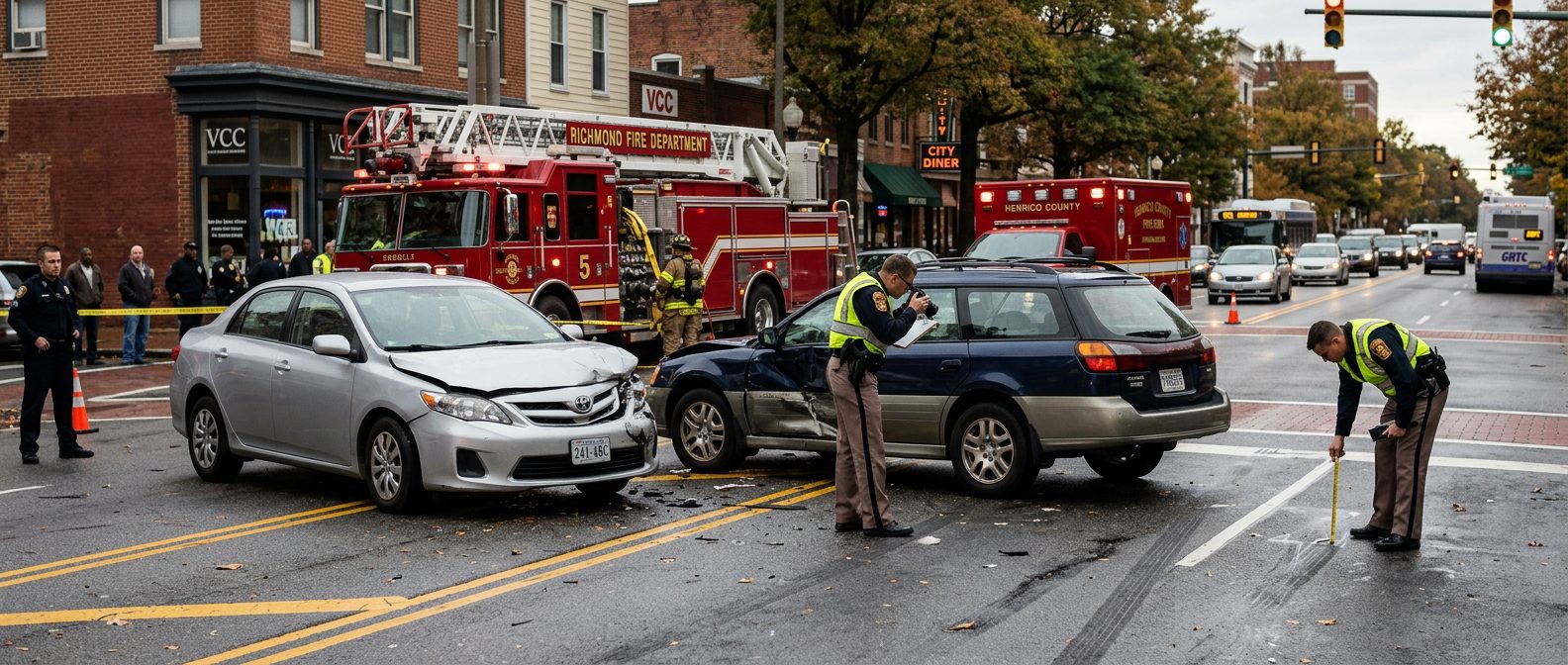
Useful evidence usually includes the police report, photographs of the scene and vehicles, witness statements, and medical records that tie the injuries to the crash. Damage to the vehicles can also show how the impact happened.
Virginia requires a driver involved in a crash with injury or death to stop and report it to police immediately (Va. Code §§ 46.2-371, 46.2-894).
Medical care in the first days matters too. A record made soon after the crash helps link symptoms to the collision. Gaps in treatment can make it harder to show that an injury came from the crash.
Keep copies of the police report number, your photos, and every medical bill. An organized file makes the timeline easier to follow.
What Happens If the Injured Person Is Partly at Fault
Partial fault raises its own question, and Virginia’s rule is strict.
Virginia follows contributory negligence: if you are found even partly at fault, you may be barred from recovering, with limited exceptions. Talk to a lawyer about your facts.
Consider a simple example. A driver pulls out of a parking lot without looking. The other driver was going too fast for the road. Each insurer may argue the other driver caused the crash, and the evidence decides which story holds up.
If the case goes to trial, a judge or jury weighs that evidence, so clear proof matters.
How the Filing Deadline Affects a Car Accident Claim
The main deadline for a car accident lawsuit comes from Virginia’s personal injury statute.
Virginia generally allows two years from the date of injury to file a personal injury lawsuit (Va. Code § 8.01-243(A)); the clock runs from the date of injury, not the date of discovery, with narrow exceptions.
Some claims carry notice rules that run out sooner. Va. Code § 15.2-209 reads: “Failure to provide such statement shall not bar a claim against any county, city, or town, provided that the attorney, chief executive, or mayor of such locality, or any insurer or entity providing coverage or indemnification of the claim, had actual knowledge of the claim, which includes the nature of the claim and the time and place at which the injury is alleged to have occurred, within six months after such cause of action accrued.” Va. Code § 15.2-209 reads: “Every claim cognizable against any county, city, or town for negligence shall be forever barred unless the claimant or his agent, attorney, or representative has filed a written statement of the nature of the claim, which includes the time and place at which the injury is alleged to have occurred, within six months after such cause of action accrued.” Courts read that statute strictly.
Wrongful death follows a different timeline. A Virginia wrongful death action is filed by the decedent’s personal representative within two years of the death (Va. Code §§ 8.01-50(C), 8.01-244(B)), on behalf of the family members the statute protects.
The firm’s wrongful death page for car and truck crashes covers family claims in more detail.
How Settlement Talks With Insurers Work
Many car accident claims are resolved through negotiation with insurance companies.
The length of those talks varies with the injuries, the medical records, and the number of parties involved. Some injuries take time to understand, so talks can stretch on.
An early settlement offer can arrive before anyone knows how an injury will heal. An injured person may want the full medical picture in view before weighing any offer.
Written replies to an insurer can shape the record, so it helps to think carefully before responding.
If talks do not resolve the claim, a lawsuit may be filed. Talks can continue after a lawsuit is filed.

Why Truck Crashes and Location Can Change the Picture
Truck and commercial vehicle crashes often involve more parties and more records. The driver, the company that employs the driver, and the vehicle’s owner may each hold evidence.
Federal rules add another layer. The Federal Motor Carrier Safety Administration describes the drug and alcohol testing that applies to commercial drivers.
Under 49 C.F.R. § 382.303, when an occurrence involving a commercial motor vehicle operating on a public road in commerce causes bodily injury to a person who, as a result of the injury, immediately receives medical treatment away from the scene, the employer’s duty to test a surviving driver applies only if that driver also receives a citation for a moving traffic violation arising from the accident: within 8 hours of the occurrence for alcohol testing, or within 32 hours for controlled substances testing. The rule sets other conditions for other types of occurrences. If an alcohol test is not given within two hours, the employer must record why.
Those short windows mean early records can matter. Where the crash happened and where each person lives can also affect how records are gathered.
The firm has offices in Winchester and Harrisonburg and represents people across the Shenandoah Valley, Richmond and Henrico County. Readers in those areas can review the Richmond car accident page and the Henrico County car accident page.
Fault, injury proof, shared blame, deadlines, and insurer talks each shape how hard a car accident lawsuit is to win. For broader background on commercial crashes, see the truck accidents page.
Frequently asked questions
Does the firm handle truck accident claims?
The firm handles car accident, truck accident, and commercial vehicle accident claims, along with catastrophic injury and wrongful death matters.