
Virginia Crash Claims | Winchester and Harrisonburg
Commercial Truck and Rideshare Crashes: What Virginia Claims Can Involve
For injured people and families in the Shenandoah Valley, Richmond and Henrico County, a crash with a large commercial vehicle or a rideshare vehicle can bring unfamiliar questions. Here is how these claims can differ from a typical car accident.
Published November 9, 2026
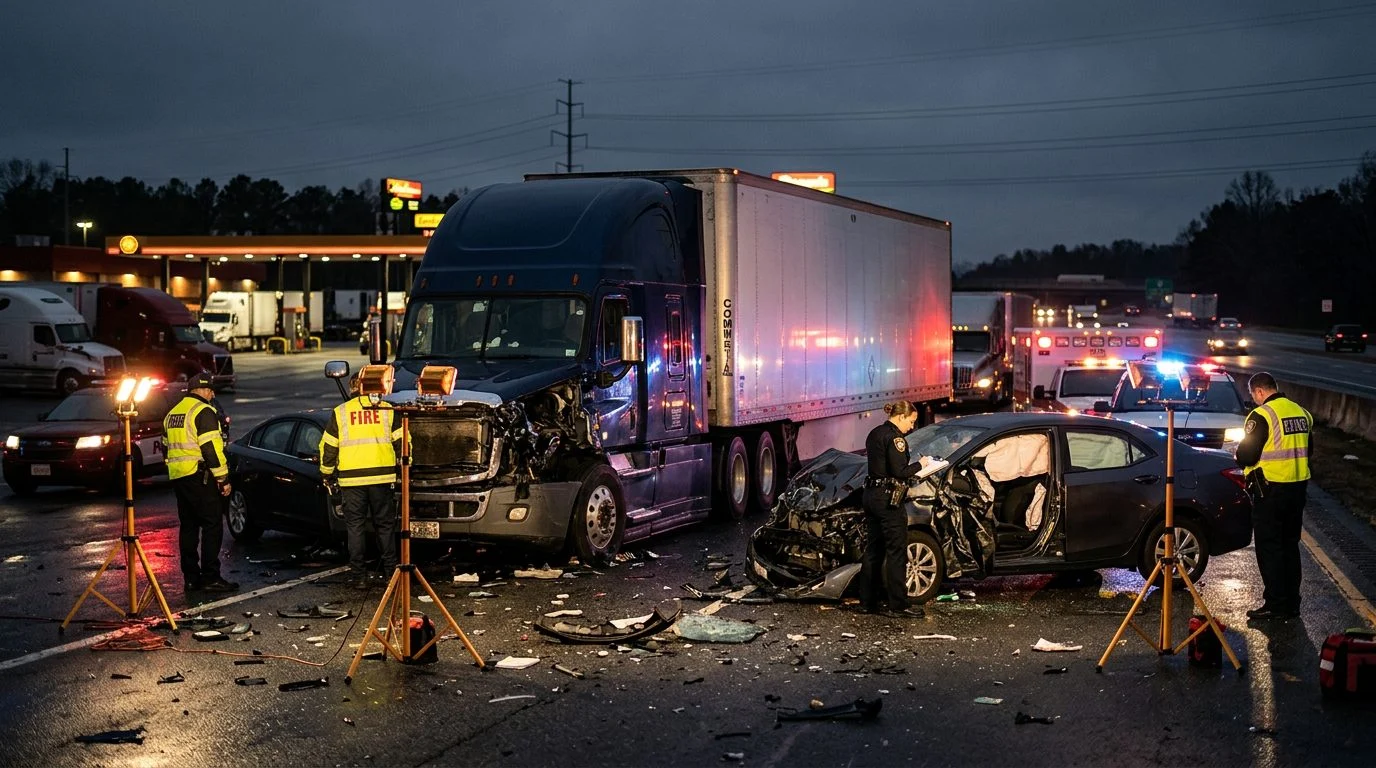
A crash with a commercial truck or a rideshare vehicle can raise questions that a standard car crash does not.
This page explains how commercial truck and rideshare crash claims in Virginia can differ, along with the Virginia rules that apply to every crash.
How do commercial truck or rideshare crash claims in Virginia differ from standard car accident claims in terms of defendants and insurance coverage?
Commercial truck and rideshare crash claims in Virginia often involve more potential defendants and more than one insurance policy than a standard car claim does. A standard car claim often centers on the other driver and that driver’s own auto policy. A truck or rideshare claim may also look at the businesses behind the trip and the policies they carry.
Injured people often focus on the driver at the scene. The parties and policies behind that driver often take longer to identify, which is why starting early matters.
The firm handles car accidents, truck accidents, commercial vehicle accidents and wrongful death claims. The firm’s Winchester and Harrisonburg locations serve people across the Shenandoah Valley, Richmond and Henrico County. The sections below cover who may be named, how insurance can differ, the records that matter, and the Virginia rules that apply to every crash.
If a commercial truck or rideshare vehicle was involved in a crash that hurt you or someone you love, you may have a claim, and the firm is glad to talk through your situation. Talk it through with Correll Law Firm — we can walk you through how a situation like yours is usually handled and what your options are.
Who can be a defendant in a commercial truck or rideshare crash?
In a standard car crash, the other driver is usually the main defendant. In a truck or rideshare crash, other parties may also be relevant, depending on the facts. Who may be named in a crash claim depends on the facts of each crash.
In a rideshare crash, a key question is often whether the driver was on a trip, waiting for a request, or off the app. Which of these applies can change who is relevant.
The injured person does not have to choose only one party.
Why can insurance coverage look different in a truck or rideshare crash?
Commercial trucks are often insured through business policies rather than personal auto policies. Federal rules set minimum financial responsibility for motor carriers that haul property. For a for-hire carrier hauling nonhazardous property in interstate or foreign commerce in a vehicle with a gross vehicle weight rating of 10,001 or more pounds, the federal schedule lists $750,000 for public liability, according to 49 C.F.R. § 387.9. That figure is a required minimum, not a measure of what any claim is worth. The broader federal requirement appears in 49 U.S.C. § 31139.
A rideshare driver may have a personal policy, a company policy, or both. Which one applies can depend on whether the app was on and whether a trip was accepted at the time of the crash. Each insurer may ask different questions. Identifying every policy early helps the injured person and family understand what coverage may be available.
What evidence matters more in a commercial truck or rideshare crash?
Commercial cases often depend on records that a private driver does not keep. Federal rules require motor carriers, except private motor carriers of passengers (nonbusiness), to require each driver to record the driver’s duty status for every 24-hour period, according to 49 C.F.R. § 395.8. Those rules generally require electronic logging devices, with listed exceptions.
Other useful records may include dispatch and trip records, maintenance files, and rideshare app data showing the driver’s status. Photos of the vehicles and the scene, witness names and medical records also matter. These records can be lost or overwritten. A common mistake is waiting before anyone asks the company to keep its files. No record can promise what it will show, but it can answer questions that memory cannot.
What must a driver do after a crash with injury or death in Virginia?
Virginia requires a driver involved in a crash with injury or death to stop and report it to police immediately (Va. Code §§ 46.2-371, 46.2-894). Under Va. Code § 46.2-894, the driver must report his name, address, driver’s license number, and vehicle registration number forthwith to the State Police or local law-enforcement agency, or to the person struck and injured if such person appears to be capable of understanding and retaining the information (or to the driver or other occupant of the vehicle collided with, or to the custodian of other damaged property); the rule that someone acting for the driver may give notice is in Va. Code § 46.2-371. A willful failure to make that report is a Class 4 misdemeanor under Va. Code § 46.2-371. Under Va. Code § 46.2-894, a violation is a Class 5 felony when the crash results in injury or death or more than $1,000 of property damage, and a Class 1 misdemeanor when it results in $1,000 or less of property damage.
Reporting the crash in the moment also creates an early record that the crash happened. The reporting duty is separate from the deadline to file a lawsuit, which is covered below.
How does fault affect a truck or rideshare claim in Virginia?
Fault is often disputed after a commercial crash. Virginia follows contributory negligence: if you are found even partly at fault, you may be barred from recovering, with limited exceptions. Talk to a lawyer about your facts.
In a truck or rideshare crash, each driver or company may point at the others. The fault investigation can therefore be more detailed, and the records described above often become central.
Not sure what your next step is?
Talk it through with Correll Law Firm — we can walk you through how a situation like yours is usually handled and what your options are.
What are the filing deadlines for these claims in Virginia?
Virginia generally allows two years from the date of injury to file a personal injury lawsuit (Va. Code § 8.01-243(A)); the clock runs from the date of injury, not the date of discovery, with narrow exceptions. The statute is at Va. Code § 8.01-243.
Some claims carry notice requirements that run out sooner, so it’s wise to look at timing early. Serious injuries often take the first weeks for medical care, and timing questions are easy to miss during that period. Starting the review early also leaves more time to gather the records described above. Wrongful death deadlines follow a different rule, covered below.
How do wrongful death claims from truck or rideshare crashes work in Virginia?
A Virginia wrongful death action is filed by the decedent’s personal representative within two years of the death (Va. Code §§ 8.01-50(C), 8.01-244(B)), on behalf of the family members the statute protects. The statutes are Va. Code § 8.01-50 and Va. Code § 8.01-244.
Virginia wrongful death damages cover the family’s sorrow, mental anguish and loss of the decedent’s companionship, guidance and care; lost income and services; medical expenses from the injury; funeral expenses; and, for willful or wanton conduct, punitive damages (Va. Code § 8.01-52). The damages statute is Va. Code § 8.01-52.
Family members do not file the case themselves. They share in any recovery. Va. Code § 8.01-53 sets the order of beneficiaries, starting with the surviving spouse and children of the deceased. Families facing this situation can learn more on the firm’s wrongful death page.

When can punitive damages be part of a truck or rideshare claim in Virginia?
Virginia allows punitive damages for actual malice, or for willful or wanton conduct or recklessness showing a conscious disregard for the safety of others, capped at $350,000 (Va. Code § 8.01-38.1). The cap is set in Va. Code § 8.01-38.1, and the jury is not told about it.
Punitive damages are a separate question from compensation for injuries, and they are not automatic in any crash. The jury must find that the conduct met this standard. Ordinary negligence alone does not meet it.
Can I sue the trucking company as well as the driver in Virginia?
It may be possible, depending on the facts.