
Wrongful Death | Virginia
Proving Fault in a Virginia Wrongful Death Car Accident
When a loved one dies in a crash, understanding how fault is proven—and what evidence matters—can help you move forward with clarity and confidence.
Published October 04, 2026
When a loved one dies in a car accident, one of the first questions families ask is: who was at fault? Understanding how fault is proven in a wrongful death case—and what evidence matters—can help you make sense of what happened and decide what steps to take next.
What Does “Fault” Mean in a Virginia Wrongful Death Car Accident?
Fault in a wrongful death car accident is about negligence—whether the other driver failed to exercise reasonable care and caused the fatal crash.
Under Virginia law, negligence requires proof of four elements: duty, breach of duty, causation, and damages.
Duty. Every driver on a Virginia road has a legal duty to operate their vehicle safely and obey traffic laws. This duty is automatic—it exists the moment someone gets behind the wheel.
Breach. A breach occurs when a driver violates that duty. Common examples include speeding, running a red light, driving under the influence, texting while driving, failing to yield, or driving recklessly. Failing to exercise reasonable care is a breach, and a traffic law violation can be evidence of it, though a violation does not, by that fact alone, make a driver negligent.
Causation. The breach must have directly caused the fatal crash. In other words, but for the driver’s negligent conduct, the death would not have occurred. This is the link between what the driver did wrong and the fatal outcome.
Damages. In a wrongful death case, damages are the death itself and the losses suffered by the family—loss of income, loss of companionship, funeral expenses, and other harms.
Not sure what your next step is?
Talk it through with our team — the first case evaluation is free, confidential, and carries no obligation.
Is It Hard to Prove a Wrongful Death Lawsuit?
Proving fault in a wrongful death case requires solid evidence, but it is not impossible.
The strength of a claim depends on three things: the facts of the accident, the evidence available, and the conduct of the driver at fault. Clear violations of traffic law—such as running a red light or driving under the influence—can make fault easier to establish. Cases involving ambiguous circumstances or shared fault require more investigation and analysis. Each case is unique, and the outcome depends on the specific facts and evidence.
A thorough investigation early on—gathering police reports, witness statements, and scene evidence—can make a significant difference in how clearly fault can be proven.
What Evidence Is Used to Prove Fault in a Fatal Car Accident?
Proving fault relies on multiple types of evidence, each of which tells part of the story of what happened.
Police accident report. This document is often the foundation of a fault investigation. The responding officer records their observations, statements from witnesses and drivers, road and weather conditions, and any citations issued. In a Virginia civil case, evidence that the other driver pled guilty or nolo contendere to a traffic infraction, was found guilty in absentia, or suffered a forfeiture can be admissible.
Witness statements. People who saw the crash can testify to what they observed—which vehicle had the light, who was speeding, whether a driver was distracted. Eyewitness testimony can be decisive in establishing fault.
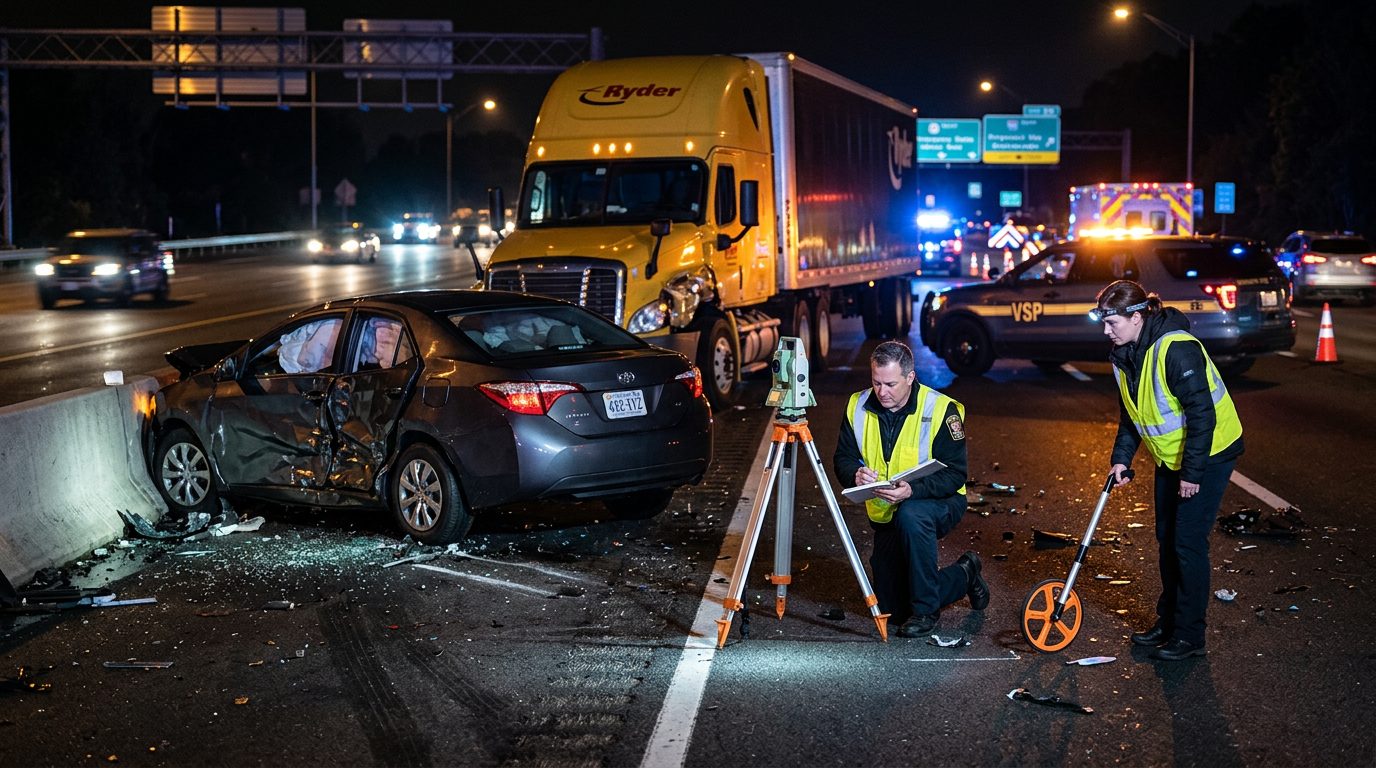
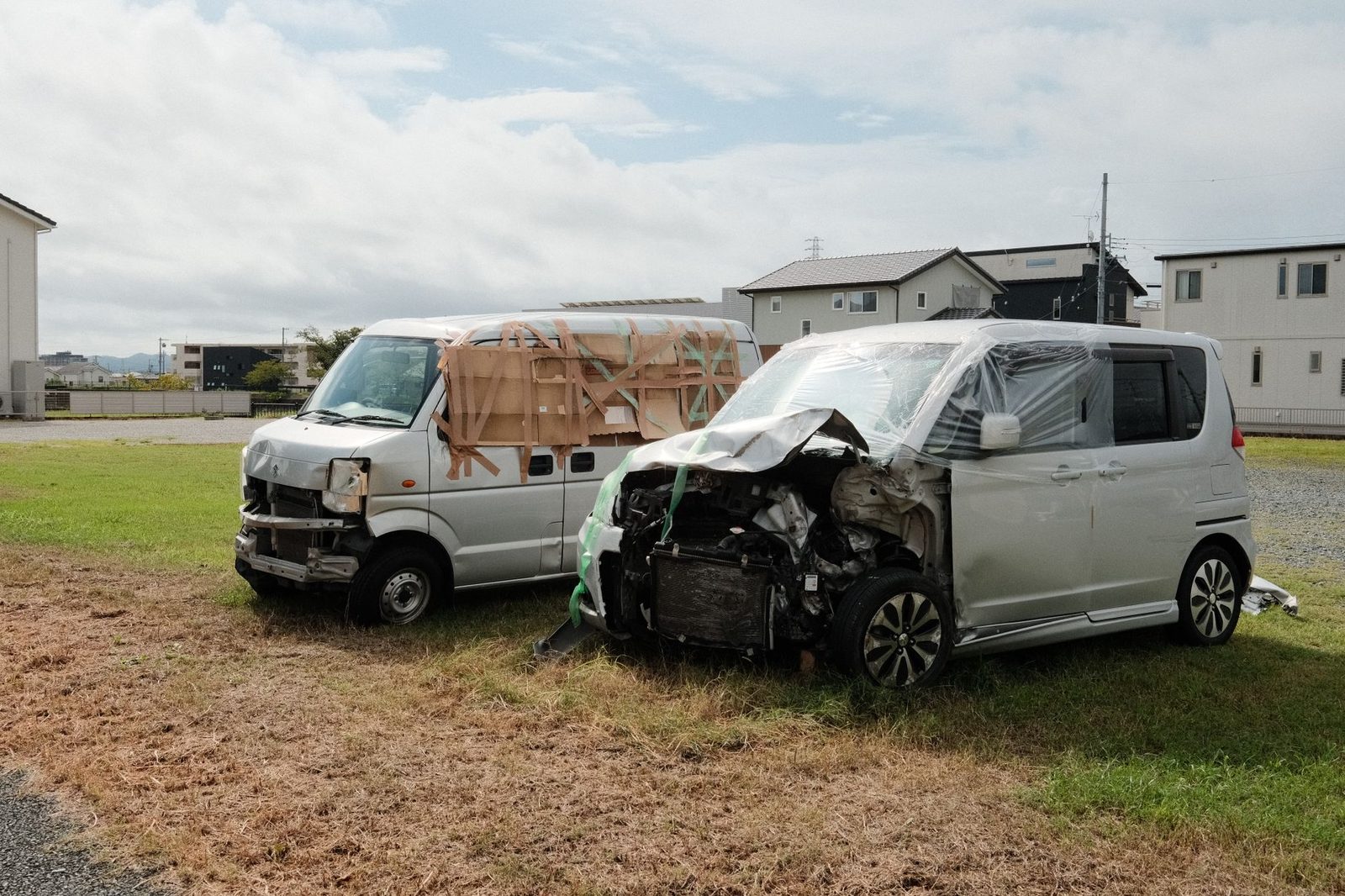
Vehicle damage. The location and severity of damage to both vehicles can indicate the point of impact and the direction of travel. This physical evidence often tells a clear story about how the crash occurred.
Photographs and video. Images from the accident scene, traffic cameras, or dashcam footage provide visual evidence of vehicle positions, road conditions, traffic signals, and other facts. Video evidence can be particularly powerful.
Toxicology reports. If impairment is suspected, blood alcohol or drug test results are critical evidence. These tests can establish whether the driver was under the influence at the time of the crash.
Cell phone records. Records may show whether the driver was texting, using their phone, or otherwise distracted at the time of the crash.
Accident reconstruction. Experts can analyze the physics of the crash—vehicle damage patterns, skid marks, point of impact, and vehicle speeds—to determine how the accident occurred and who was at fault.
The Role of Expert Witnesses in Proving Fault
Expert testimony often plays a crucial role in wrongful death cases, especially when fault is not obvious from the evidence alone.
Accident reconstruction experts analyze the crash using physics, vehicle damage, scene evidence, and other data to determine vehicle speeds, the point of impact, and how the accident happened. Their analysis can establish whether the other driver’s conduct caused the fatal collision.
Medical experts may testify about the cause of death and whether the fatal injuries resulted directly from the crash. This testimony links the accident to the death itself.
These experts provide opinions that help a judge or jury understand complex technical or medical facts. Their testimony can be the difference between a clear case of fault and an ambiguous one.
How Does Virginia Law Handle Fault in Wrongful Death Cases?
Virginia law gives families the right to pursue a wrongful death claim when a death is caused by another person’s negligence. Under Virginia Code § 8.01-50, a wrongful death action may be brought whenever a death is caused by the wrongful act, neglect, or default of any person or corporation.
Virginia follows contributory negligence: if you are found even partly at fault, you may be barred from recovering, with limited exceptions (Contributory negligence bars recovery in Virginia). Talk to a lawyer about your facts. No two accidents are identical, and the outcome of any individual case depends on what the evidence shows.
The person or family member bringing the claim must prove that the other driver’s negligence caused the death.
The personal representative of the deceased has the right to pursue damages for the death and related losses, bringing the action by and in the personal representative’s name.
What Happens If the Person at Fault Dies in a Car Accident?
If the at-fault driver dies in the crash, a wrongful death claim can still be pursued.
Instead of suing the driver directly, the claim would be brought against the deceased driver’s personal representative. Insurance coverage may still apply even if the at-fault driver is deceased. The process is similar to other wrongful death claims, but the defendant is the estate rather than a living person.
This is an important point for families to understand: the death of the at-fault driver does not eliminate your right to pursue a claim for the loss of your loved one.
Not sure what your next step is?
Talk it through with our team — the first case evaluation is free, confidential, and carries no obligation.
How Hard Is It to Prove Fault in a Car Accident?
Proving fault depends on the clarity of the evidence and the circumstances of the crash.
If the other driver violated a traffic law or was cited by police, fault may be straightforward to establish. If the accident involved unclear circumstances, multiple contributing factors, or conflicting witness accounts, proving fault requires more investigation and analysis.
Witness testimony, physical evidence, expert analysis, and the police report all work together to build a picture of what happened. A thorough investigation early on—before evidence is lost or memories fade—can strengthen your ability to prove fault and support your claim.
What Are the Odds of Winning a Wrongful Death Lawsuit?
The outcome of a wrongful death case depends entirely on the facts, evidence, and circumstances of the accident. No two cases are identical, and predicting the result of any individual case is not possible.
Strong evidence of negligence—such as a traffic citation, clear witness testimony, or video of the crash—improves the likelihood of a favorable outcome. Cases with weaker evidence or disputed facts may take longer to resolve and carry more uncertainty.
An experienced attorney can review your specific situation, examine the evidence, and discuss what the facts suggest about your claim. This conversation can help you understand your options and what the evidence shows about fault in your case.
Next Steps: Understanding Your Wrongful Death Claim
If you have lost a family member in a car accident in Virginia, you likely have questions about fault, liability, and what happens next. A thorough investigation of the accident—including police reports, witness statements, scene evidence, and expert analysis—is the foundation of proving fault and building a strong claim.
Understanding how negligence is proven and what evidence matters can help you make informed decisions about your claim. Many families find it helpful to discuss the facts of their accident with a lawyer who understands Virginia law and can explain what the evidence shows.
If you’ve lost a family member in a car accident and are trying to understand what happened and what your options are, many families in your situation have found it helpful to talk through the facts with a lawyer who knows Virginia law. Correll Law Firm represents families throughout the Shenandoah Valley, Richmond, and Henrico County in wrongful death cases.
Every wrongful death case is unique, and the outcome depends on the specific facts and evidence. If you have lost a loved one in a car accident, you may wish to speak with a Virginia personal injury attorney about your rights and options.
Related practice areas
- Wrongful Death Claims from Car and Truck Accidents in Virginia
- Wrongful Death Semi-Truck Accident Claim Virginia