
Wrongful Death | Winchester, Harrisonburg and the Shenandoah Valley
When a Crash Takes a Loved One, Families Deserve Clear Answers
Published October 21, 2026
The typical grounds for a wrongful death claim in Virginia are a death caused by another person’s wrongful act, neglect or default. Families often ask what are the typical grounds for a wrongful death claim after a sudden or preventable loss. Va. Code § 8.01-50 allows the claim when that conduct would have let the injured person sue had they lived.
Understanding Wrongful Death in Virginia
A wrongful death claim arises when a death follows another party’s negligence, recklessness, or intentional wrongdoing. Virginia law has the decedent’s personal representative bring the case for the family, not the relatives themselves.
The legal reasoning matches other injury cases. Someone owed a duty of care, broke it, and caused harm. In a wrongful death case, the harm is the death. Car crashes, commercial truck crashes, and catastrophic brain or spinal cord injuries are common settings for these claims. Correll Law Firm handles car and truck crash matters, catastrophic injuries, and wrongful death claims. The firm has offices in Winchester and Harrisonburg.
Talk it through with Correll Law Firm — we can walk you through how a situation like yours is usually handled and what your options are.

The Core Elements Required for a Wrongful Death Claim
A wrongful death claim builds on it, with the death as the harm.
Breach. The driver fails that duty through careless, reckless, or intentional conduct. Speeding, distracted driving, and impaired driving are common examples.
Causation. The breach must be a proximate cause of the death. Ford Motor Co. v. Boomer uses that test. Under Ford Motor Co. v. Boomer, the proximate cause of an event is that act or omission which, in natural and continuous sequence, unbroken by an efficient intervening cause, produces that event, and without which that event would not have occurred.
Those losses are explained below.
Common Scenarios That Give Rise to Wrongful Death Claims
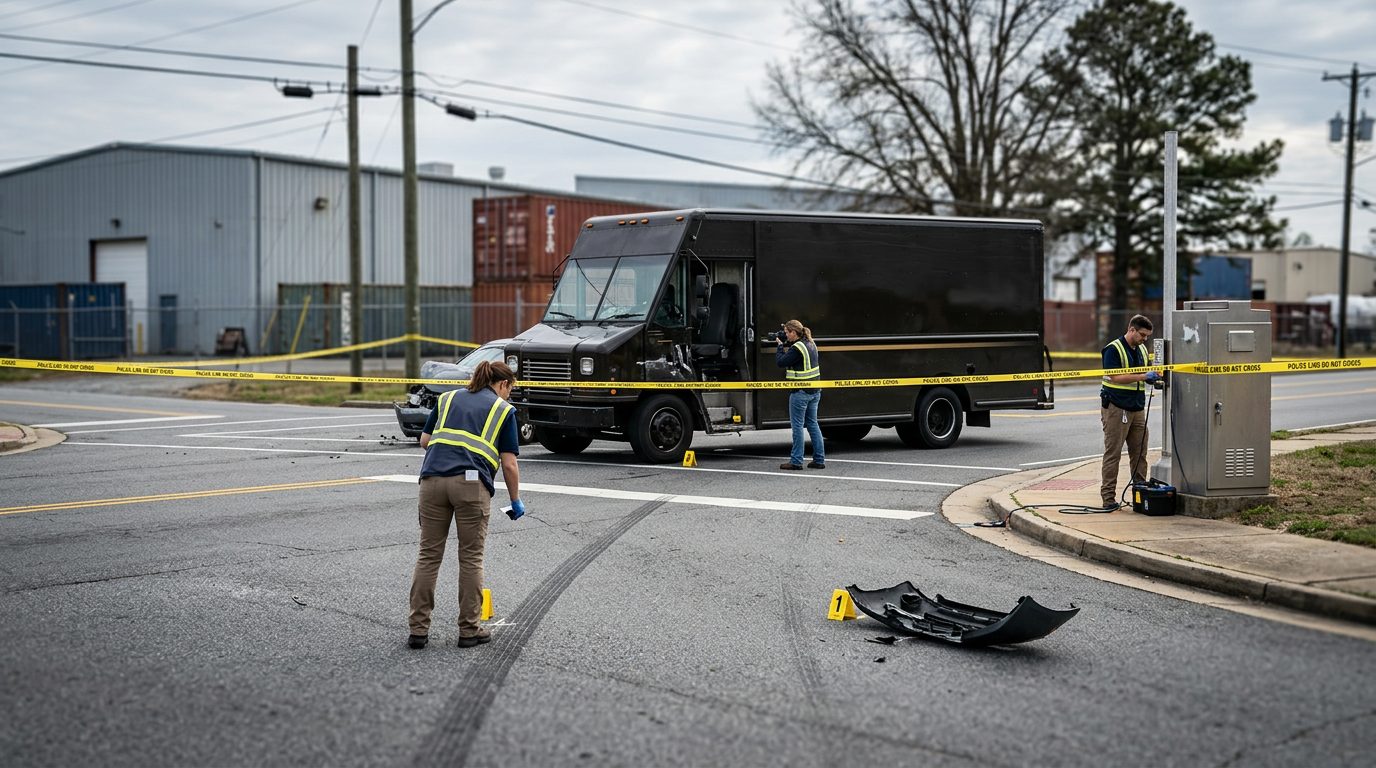
Car crashes and commercial truck crashes are common sources of these claims. A catastrophic brain or spinal cord injury that later causes death can also support a claim.
Under Va. Code § 8.01-44.5, in an action arising from the operation of a motor vehicle, the finder of fact may, in its discretion, award punitive damages if the evidence proves the defendant acted with malice toward the plaintiff or the defendant’s conduct was so willful or wanton as to show a conscious disregard for the rights of others. Where a defendant has unreasonably refused a test of blood alcohol content, that conduct is deemed sufficiently willful or wanton when the evidence proves that the defendant was intoxicated when the incident occurred, knew or should have known his ability to operate a motor vehicle was impaired, and his intoxication was a proximate cause of the injury or death.
Truck crashes add federal rules. 49 C.F.R. § 395.3 limits driving to 11 hours within a 14-hour period that follows 10 consecutive hours off duty. Other rules cover fatigue, texting, and vehicle maintenance: § 392.3, § 392.80, and § 396.3.
A safety rule violation does not decide a case alone. Parker v. Carilion Clinic lists those elements.
Some deaths involve conduct that goes beyond carelessness.
Is It Hard to Prove a Wrongful Death Lawsuit?
Proving a wrongful death claim takes evidence on each element. The personal representative must present that evidence.
Evidence often includes witness statements, medical records, police reports, and accident reconstruction. In truck cases, inspection and maintenance records can matter. 49 C.F.R. § 396.3 requires those records to be retained for a period of 1 year and for 6 months after the vehicle leaves the motor carrier’s control.
Causation is often disputed. The other side may argue a medical condition or a separate event caused the death. The key question is whether the defendant’s conduct produced the death in natural and continuous sequence. Whether a claim is strong depends on the facts.
What Happens If the Decedent Was Partly at Fault?
Partial fault can bar a wrongful death claim in Virginia. Virginia follows contributory negligence: if you are found even partly at fault, you may be barred from recovering, with limited exceptions (Contributory negligence bars recovery in Virginia). Talk to a lawyer about your facts.
In a death case, the defense asks whether the person who died contributed to the crash.
What Damages Can Be Recovered in a Wrongful Death Case?
Virginia wrongful death damages cover the family’s sorrow, mental anguish and loss of the decedent’s companionship, guidance and care; lost income and services; medical expenses from the injury; funeral expenses; and, for willful or wanton conduct, punitive damages (Va. Code § 8.01-52).
Lost income is measured by what the decedent could reasonably have been expected to earn. The same applies to the services, protection, care and assistance the decedent provided.
Punitive damages are separate from the family’s losses. They may be recovered for willful or wanton conduct, or for recklessness that evinces a conscious disregard for the safety of others. The jury must find that the conduct met this standard, and the jury or court must state those damages separately.
Not sure what your next step is?
Talk it through with Correll Law Firm — we can walk you through how a situation like yours is usually handled and what your options are.
Common Reasons a Judge Might Dismiss a Wrongful Death Claim
A judge reviews the same typical grounds for a wrongful death claim before a case moves forward.
The most direct reason is missing proof of one element: duty, breach, causation, or damages.
A break in the causal chain is another. If an independent event, rather than the defendant’s conduct, produced the death, causation may fail. Virginia asks whether an efficient intervening cause broke the natural sequence from the breach.
Timing and standing also matter. A suit filed after the two-year deadline may be dismissed. Under Va. Code § 8.01-50, every such action shall be brought by and in the name of the personal representative of the deceased person.
The Role of the Personal Representative
A Virginia wrongful death action is filed by the decedent’s personal representative within two years of the death (Va. Code §§ 8.01-50(C), 8.01-244(B)), on behalf of the family members the statute protects.
They share in the recovery.
Under Va. Code § 8.01-53, the surviving spouse and children come first. Va. Code § 8.01-53 sets out the order in which wrongful death damages are distributed among the surviving spouse, children, children of a deceased child, parents, siblings and certain other relatives. Some relatives qualify only under specific conditions: for example, a parent shares alongside the decedent’s children or grandchildren only if, within 12 months before the death, the parent regularly received support or services from the decedent for necessaries. Under Va. Code § 8.01-53(A) (https://law.lis.virginia.gov/vacode/8.01-53/), when a surviving spouse, children, or children of a deceased child exist, the decedent’s parents may share only if they regularly received support or services from the decedent within 12 months before death; when the decedent leaves a surviving spouse and parents but no child or grandchild, the award is distributed to the spouse and those parents; and when none of those survivors exist, parents, brothers and sisters, and any other relative who is primarily dependent on the decedent for support or services and is also a member of the same household may share, except that no parent whose parental rights and responsibilities have been terminated by a court of competent jurisdiction or pursuant to a permanent entrustment agreement with a child welfare agency shall be eligible as a beneficiary under this section.
See Va. Code § 8.01-55.

Why Timing Matters
Timing matters because early evidence can disappear. Crash scenes change, and vehicles get repaired.
Virginia requires a driver involved in a crash with injury or death to stop and report it to police immediately (Va. Code §§ 46.2-371, 46.2-894). Virginia generally allows two years from the date of injury to file a personal injury lawsuit (Va. Code § 8.01-243(A)); the clock runs from the date of injury, not the date of discovery, with narrow exceptions. Some claims carry notice requirements that run out sooner.
Correll Law Firm handles car and truck crash matters, catastrophic injuries, and wrongful death claims for families in the Shenandoah Valley, Richmond, and Henrico County. The firm has offices in Winchester and Harrisonburg.
Frequently Asked Questions
What are the typical grounds for a wrongful death claim?
Grounds usually involve negligence, recklessness, or intentional conduct that caused a death. Virginia also requires proof of duty, breach, causation, and damages.
Who can file a wrongful death lawsuit in Virginia?
The personal representative of the deceased person brings the action, on behalf of the family members the statute protects. The family members the statute protects share in the recovery.
Does a wrongful death claim always involve a crash?
No. Claims can also arise from catastrophic brain or spinal cord injuries, or from intentional or reckless conduct.