
Car Accidents | Virginia
Hurt by a Driver With No Insurance? Know Your Options.
Published October 27, 2026
The Short Answer: An Uninsured Driver Does Not Always End Your Claim
What happens if the other driver has no insurance in Virginia? You may still have options. Your own auto policy may include uninsured motorist coverage. The other driver may also still be personally responsible for the harm they caused.
Many people assume that no insurance means no claim. That assumption can waste time. Some steps have short clocks, and each path has its own steps. The outcome depends on the crash, the policies involved and the injuries, and no one can promise a particular result.
Serious crashes often raise questions beyond the other driver’s insurance. The firm focuses on car accidents, truck accidents, commercial vehicle accidents, catastrophic injuries, traumatic brain injury, spinal cord injury and wrongful death. For the wider picture, read the firm’s wrongful death and car accident pages.
Not sure what your next step is?
Talk it through with Correll Law Firm — we can walk you through how a situation like yours is usually handled and what your options are.
What Uninsured Motorist Coverage Is
Your policy may include uninsured motorist coverage. It may pay for your injuries when the other driver has no insurance. The State Corporation Commission’s Virginia auto insurance guide explains that some optional auto coverage may pay an insured’s own injuries regardless of fault.
Liability coverage works differently. Under Va. Code § 46.2-472, owner’s policies effective on or after January 1, 2025 must carry bodily injury liability limits of $50,000 per person and $100,000 per accident, plus $25,000 for property damage. Those limits cover harm the policyholder causes to others, not the policyholder’s own injuries.
Limits matter when several people are hurt. A sample uninsured motorist endorsement states that coverage is subject to the policy’s stated maximum limit for all damages from one accident, regardless of the number of insureds, claims or covered vehicles. In plain terms, one limit may need to cover more than one injured person.
Coverage varies by policy, so check your own declarations page and endorsements. Whether a passenger or pedestrian has coverage depends on the policy wording and who it covers. Ask the insurer to show that wording in writing.
Can You Make a Claim Under Your Own Policy?
Yes, many injured people make a claim with their own insurer under uninsured motorist coverage. The policy sets the basic terms, and each insurer has its own forms and timelines.
Report the crash and your injuries to your insurer promptly. Ask for a claim number, and put every request in writing. Keep copies of the policy, the claim number and every letter you receive.
Whether the insurer pays is decided by the policy’s terms and the facts of the crash. An insurer may dispute the claim, the link between the crash and an injury, or the size of the losses. Before you accept any offer, you may wish to read the policy language closely and understand what you would be agreeing to.
Virginia law also addresses insurers that refuse to pay in bad faith. A court may find that a denial, refusal or failure to pay a property damage, medical expense or loss of income benefit claim under a motor vehicle policy was not made in good faith. For property damage, medical expense, or loss of income claims under a motor vehicle policy, the statute sets out a remedy when the insurer’s denial or failure to pay was not made in good faith (Va. Code § 8.01-66.1).
Suing the At-Fault Driver Personally
Yes, an injured person may file a lawsuit against the at-fault driver personally, even when that driver has no insurance. That lawsuit runs against the driver, not an insurance company.
Collecting a judgment can be hard. A driver with few assets may not be able to pay a judgment in full. That practical problem is one reason many injured people look at their own coverage first.
Both paths can run side by side. A claim under your own policy and a lawsuit against the driver are not always an either-or choice. Because the order of steps matters, you may wish to speak with a lawyer early.
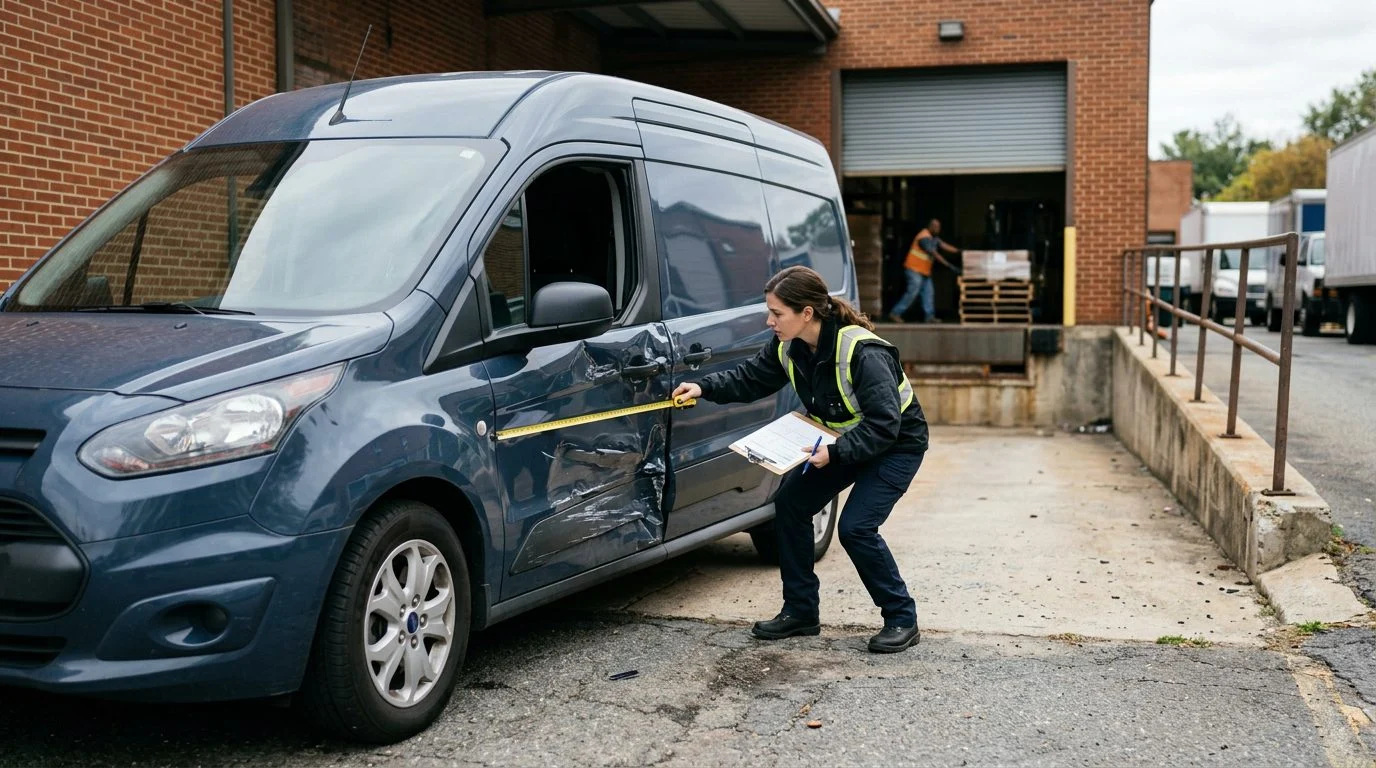
Expect disputes about how the crash happened. Early, clear records help answer them. Photos, the police report and witness statements all help show who caused the crash. The filing deadline is covered in a later section.
Hit-and-Run and Unidentified Drivers
When the other driver leaves the scene or cannot be identified, your own uninsured motorist coverage may become the main source of a claim. The duty to report falls on the driver. Virginia requires a driver involved in a crash with injury or death to stop and report it to police immediately (Va. Code §§ 46.2-371, 46.2-894). You can read the full section at Va. Code § 46.2-894.
If you were hurt and the driver fled, report the crash to police as soon as you can. Ask for the crash report number. Write down what you remember about the other vehicle, including color, make, model, any part of the plate and the direction it went.
Gather photos of the scene and vehicles. Get names and contact details of any witnesses, and note the time and location.
One point is easy to mix up. Reporting to police happens right away.
Deadlines and Notice Requirements
Some notice steps can run out sooner than the lawsuit deadline. Virginia generally allows two years from the date of injury to file a personal injury lawsuit (Va. Code § 8.01-243(A)); the clock runs from the date of injury, not the date of discovery, with narrow exceptions. The full statute is at Va. Code § 8.01-243.
Some claims carry notice requirements that run out sooner. Before making a demand under Va. Code § 8.01-66.1, a claimant must give the insurer 45 days’ notice. That notice must come with information and documents that let the insurer assess liability and damages.
Your own policy may set its own notice terms too. Read them early and report promptly.
Keep a dated list of every contact with your insurer. Dates often matter when a deadline is in question. Don’t assume one clock covers everything, because a lawsuit deadline and a notice step are separate questions.
Not sure what your next step is?
Talk it through with Correll Law Firm — we can walk you through how a situation like yours is usually handled and what your options are.
How Partial Fault Can Affect an Uninsured Claim
Shared blame can change a claim in Virginia, so the details of the crash matter. Virginia follows contributory negligence: if you are found even partly at fault, you may be barred from recovering, with limited exceptions. Talk to a lawyer about your facts.
Insurers and courts look at what each driver did before and during the crash. Describe what you remember accurately. Don’t guess about speed, distance or who had the light. Saying “I don’t know” is better than a guess.
Get medical care even if you feel fine at the scene. Symptoms can appear later, and a record made soon after the crash helps link an injury to the crash. Keep your account of the crash consistent across the police report, your insurer and your doctors.
When a Crash With an Uninsured Driver Results in a Death
When the crash causes a death, the claim follows a different path. A Virginia wrongful death action is filed by the decedent’s personal representative within two years of the death (Va. Code §§ 8.01-50(C), 8.01-244(B)), on behalf of the family members the statute protects. The deadline rules are in Va. Code § 8.01-244.
Family members do not file the case.
Virginia wrongful death damages cover the family’s sorrow, mental anguish and loss of the decedent’s companionship, guidance and care; lost income and services; medical expenses from the injury; funeral expenses; and, for willful or wanton conduct, punitive damages (Va. Code § 8.01-52). Under Va. Code § 8.01-52, the jury, or the court when a case is tried without a jury, may award such damages as seem fair and just, including but not limited to the categories the statute lists. Any damages for the decedent’s care, treatment and hospitalization, for funeral expenses, or punitive damages must be specifically stated. The statute lists examples of damages, but the list is not limited to those.
Families often weigh two questions. One is what the decedent’s own policy may provide. The other is what the at-fault driver may owe personally. Each needs a careful review of the policies and the crash facts.
Timing and paperwork can be hard when a family is grieving. Families may wish to speak with a lawyer early. For more on these claims, see the firm’s wrongful death page.

Steps to Take After a Crash With an Uninsured Driver
Start with medical care, then document the scene and notify your own insurer. The steps below help keep the record clear.
- Get medical care, even if injuries seem minor.
- Report the crash to police and ask for the report number.
- Exchange information with every driver involved, and note details about any driver who left.
- Photograph the scene, the vehicles and your injuries.
- Notify your own insurer and ask for a claim number in writing.
- Keep records of medical bills, missed work and other expenses.
Medical records and bills help show what happened and what care was needed. They support any later claim, though no outcome can be promised.
If you are wondering what happens if the other driver has no insurance in Virginia, these steps are a good place to start. Correll Law Firm serves people from its Winchester and Harrisonburg locations and across the Shenandoah Valley, Richmond and Henrico County.
Common questions
Can I make a claim under my own policy if the other driver had no insurance?
You may, if your policy includes uninsured motorist coverage. Check its limits and terms.
Does Virginia require auto insurance?
Virginia sets minimum auto insurance requirements, and the Virginia DMV explains them.
If a driver with no coverage hurt you or someone you love, you may wish to learn how the firm handles uninsured motorist claims.