
Wrongful Death & Catastrophic Brain Injury
When a Crash Causes Death or Severe Brain Injury
Families in Virginia facing loss deserve answers about their legal rights. Correll Law Firm helps families in the Shenandoah Valley, Richmond, and beyond understand what happened and what comes next.
Published October 03, 2026
Wrongful Death and Catastrophic Brain Injury: When a Crash Causes Death
When a crash results in a fatal or catastrophic brain injury, families face not only grief but urgent legal questions. A wrongful death claim may be available if negligence or recklessness caused the crash and the resulting brain injury led to death. Understanding what the law covers in Virginia, how these injuries differ from survivable brain trauma, and what steps to take early can help families move forward during an impossible time.
If your family lost someone in a crash and brain injury was involved, you're not alone—many families in your situation reach out to understand their options. Talk it through with our team — the first case evaluation is free, confidential, and carries no obligation.
Understanding Catastrophic Brain Injury in Fatal Crashes
A catastrophic brain injury is damage to the brain so severe that it results in death, permanent unconsciousness, or irreversible loss of brain function. These injuries differ fundamentally from survivable traumatic brain injuries (TBIs). While some people recover from moderate or even severe TBIs with treatment and rehabilitation, catastrophic brain injuries often leave no path to recovery—the damage is too extensive for the brain to heal.
In fatal crash scenarios, catastrophic brain injuries typically result from extreme force at impact. The brain moves violently inside the skull, tearing nerve fibers and blood vessels. High-speed collisions, multi-vehicle crashes, and unrestrained occupants create the conditions for these injuries. Commercial truck crashes pose particular danger because of the weight and speed involved; a passenger vehicle struck by a fully loaded truck experiences forces far beyond what human tissue can withstand.
What Is Considered a Catastrophic Brain Injury?
Medical professionals classify catastrophic brain injuries by the type and extent of damage. Common patterns include:
Diffuse axonal injury (DAI). The brain’s nerve fibers tear throughout the brain due to violent rotation or deceleration. This injury often occurs without visible bleeding on initial scans, yet it causes widespread, irreversible damage.
Brainstem injury. Damage to the brainstem—the part of the brain controlling breathing, heart rate, and consciousness—is almost always fatal or results in permanent vegetative state.
Severe intracranial hemorrhage. Bleeding inside the skull creates pressure that crushes brain tissue. If bleeding is extensive and rapid, death can occur within minutes or hours despite emergency surgery.
Penetrating injuries. Objects that pierce the skull and brain tissue cause immediate, catastrophic damage.
In the immediate aftermath of a crash, emergency room doctors use CT scans, MRI imaging, and neurological exams to assess severity. A Glasgow Coma Scale score (a standard measure of consciousness) of 3 to 8 typically indicates severe or catastrophic injury. Medical teams also look at pupil response, brainstem reflexes, and signs of herniation—when brain tissue is pushed into spaces where it doesn’t belong—to determine whether recovery is possible. When the prognosis is grave, families face agonizing decisions about life support while also confronting the legal reality that someone else’s negligence caused this tragedy.
How Crashes Cause Fatal Brain Injuries
Not every crash causes catastrophic brain injury. The mechanism of injury—how the crash happens—determines risk.
High-speed collisions create extreme forces. A vehicle traveling at high speed that strikes a fixed object or another vehicle head-on subjects occupants to sudden deceleration forces. The brain, suspended in fluid inside the skull, cannot move as fast as the skull itself. It lags behind, then crashes forward, tearing tissue.
Multi-vehicle crashes multiply this danger. A person hit from behind while stopped, then thrown forward into a third vehicle, experiences multiple impacts in rapid succession. Each impact adds injury.
Unrestrained occupants are at extreme risk. Without a seat belt and airbag system, a person’s head may strike the windshield, steering wheel, or dashboard at full speed. Ejection from the vehicle—being thrown from the car—almost always results in catastrophic injury.
Commercial truck crashes carry disproportionate risk. A fully loaded commercial truck can weigh 80,000 pounds or more. A passenger vehicle weighs roughly 4,000 pounds. When these collide, the physics are one-sided. The truck’s mass and momentum transfer enormous force to the smaller vehicle. Occupants of the passenger vehicle experience crushing forces and extreme acceleration that cause catastrophic brain injuries at rates far higher than car-to-car collisions.
In the Shenandoah Valley and surrounding regions—Winchester, Front Royal, Harrisonburg, Richmond, and Henrico County—truck traffic on Interstate 81 and regional highways creates ongoing risk. Truck driver fatigue, mechanical failure, and negligent operation have caused fatal crashes in these areas.
Wrongful Death Claims When Brain Injury Causes Death
In Virginia, a wrongful death action is a lawsuit over the death of a person caused by another’s negligence or wrongful act, and it is brought by and in the name of the personal representative of the person who died. When a crash causes fatal brain injury, a wrongful death claim may be available if:
- The defendant (the driver, trucking company, or other party) owed a duty of care to the deceased (all drivers owe a duty to operate vehicles safely);
- The defendant breached that duty (drove recklessly, was impaired, was speeding, failed to maintain the vehicle, or committed some other negligent act);
- The breach caused the crash; and
- The crash caused the fatal brain injury.
Virginia Code § 8.01-244(B) provides that a wrongful death action shall be brought by the personal representative of the deceased. Surviving family members, such as the spouse and children, share in any recovery rather than filing the action themselves.
Proving causation—that the crash directly caused the fatal brain injury—requires medical evidence and often accident reconstruction. A medical examiner or forensic pathologist will review autopsy findings and imaging to establish that the brain injury was the cause of death. An accident reconstruction expert will analyze vehicle damage, debris patterns, and physics to show how the crash occurred and what forces were involved. Together, these experts connect the negligent act to the fatal injury.
What Compensation Can Families Seek?
Virginia law allows families to recover two types of damages in a wrongful death action: economic and non-economic.
Economic damages include quantifiable financial losses: – Medical and emergency care expenses incurred before death – Funeral and burial costs – Lost income the deceased would have earned – Loss of financial support the deceased provided to dependents
Non-economic damages address intangible losses: – Loss of companionship and society – Loss of parental guidance (if the deceased was a parent) – Mental anguish and grief of surviving family members
Where the conduct was willful or wanton, or showed such recklessness as evinces a conscious disregard for the safety of others, Virginia law allows punitive damages, and Virginia Code § 8.01-38.1 caps them at $350,000 total. Punitive damages are meant to punish the defendant and deter similar conduct, not to compensate the family.
The total compensation a family can recover depends on the specific facts: the age and earning capacity of the deceased, the number of dependents, the severity of the defendant’s conduct, and whether the defendant had insurance or other assets. No two cases are identical. Families should not rely on “average” settlement figures found online, as these do not account for Virginia law or individual circumstances.
Not sure what your next step is?
Talk it through with our team — the first case evaluation is free, confidential, and carries no obligation.
Proving Negligence in a Fatal Brain Injury Case
Establishing negligence in a fatal brain injury crash requires proof of four elements:
Duty. Every driver has a legal duty to operate their vehicle safely, obey traffic laws, and avoid harming others.
Breach. The defendant failed to meet that duty. Examples include speeding, running a red light, driving under the influence, distracted driving, or in the case of a commercial driver or trucking company, violating hours-of-service rules, failing to maintain the vehicle, or hiring an unqualified driver.
Causation. The breach caused the crash. Accident reconstruction experts analyze vehicle damage, skid marks, traffic signals, and witness statements to establish how the crash occurred.
Damages. The crash caused injury and death. Medical evidence—autopsy reports, imaging studies, and expert testimony from pathologists and neurologists—proves that the fatal brain injury resulted from the crash.
In Virginia, fault is not always clear-cut. Virginia follows contributory negligence: if you are found even partly at fault, you may be barred from recovering, with limited exceptions. Talk to a lawyer about your facts. If the deceased was partly at fault for the crash, the outcome depends on the specific facts and circumstances. Families should discuss their situation with a lawyer who understands Virginia law.
The Immediate Steps After a Fatal Brain Injury Crash
In the days and weeks following a fatal crash, families should:
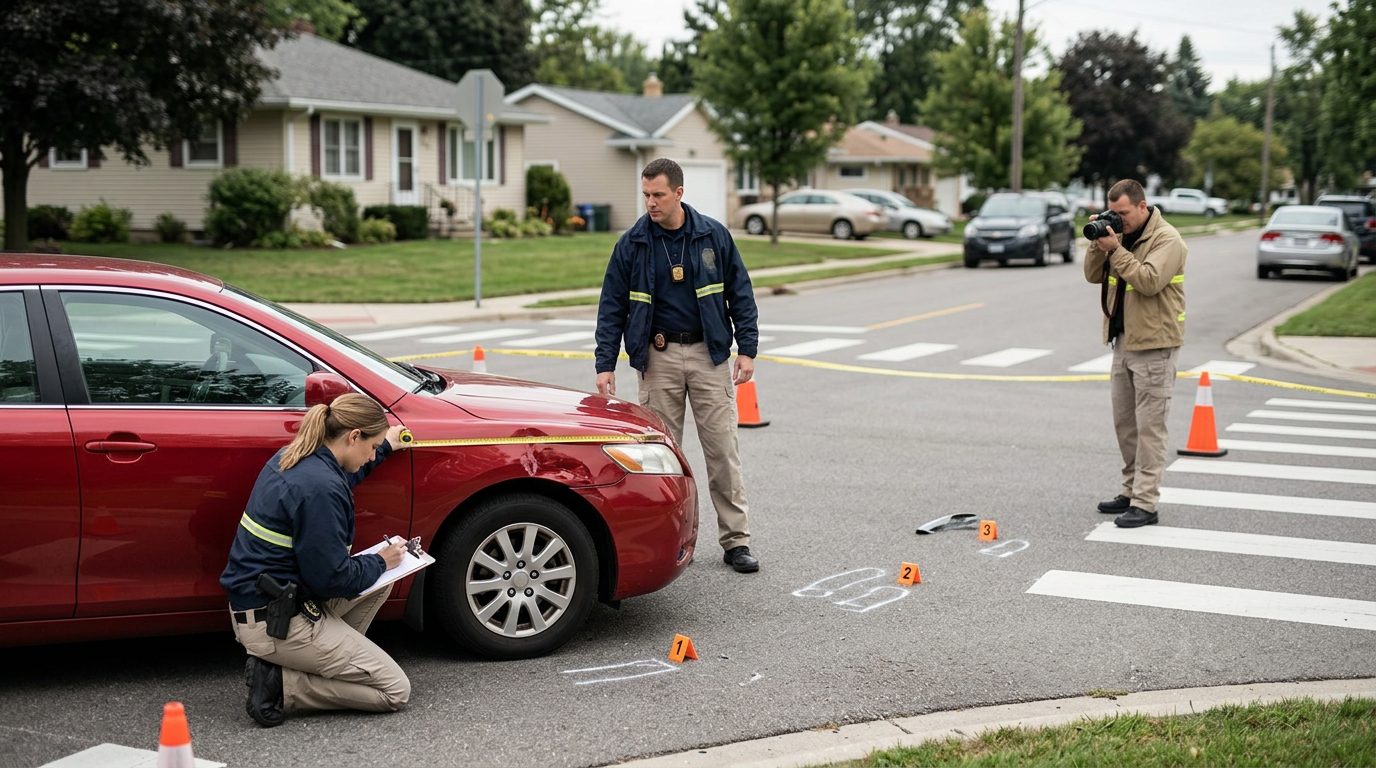
Preserve evidence. Photographs of vehicle damage, debris at the scene, and road conditions should be documented before the vehicles are moved or destroyed. Police reports capture initial observations. Request copies from the investigating agency.
Obtain medical records. Hospital records, emergency room notes, imaging studies, and the autopsy report are essential. These documents establish the nature and extent of the brain injury and confirm it as the cause of death.
Gather witness information. Bystanders, other drivers, and emergency responders may have observed the crash. Their statements can corroborate how the accident occurred.
Consult with a lawyer early. Evidence can be lost, memories fade, and defendants may take steps to limit liability. Early legal guidance helps preserve evidence and ensures the family understands their rights and options.
When to Reach Out for Guidance
Families often wonder whether they have a wrongful death claim and what steps to take. The answer depends on the specific circumstances of the crash and the applicable law.
In Virginia, wrongful death claims must generally be brought within two years from the date of death. This deadline is firm. Waiting too long can bar a claim entirely, even if negligence is clear.
If your family lost a loved one in a crash and brain injury was involved—whether the death was immediate or occurred after a period in the hospital—you may have a wrongful death claim. These situations are profoundly difficult, and families often don’t know where to begin.
Many families in the Shenandoah Valley, Winchester, Front Royal, Harrisonburg, Richmond, and Henrico County have faced this loss. Understanding what the law allows, what evidence matters, and what compensation may be available can help you move forward while honoring your loved one’s memory.
If your family lost someone in a crash and brain injury was involved, you’re not alone—many families in your situation reach out to understand their options. Correll Law Firm handles wrongful death claims arising from car and truck crashes in Virginia. If you’d like to discuss what happened and explore whether a claim may apply, we invite you to schedule a free case evaluation. No attorney’s fee unless we win. Clients may remain responsible for costs accrued in the case.