
Catastrophic Injury Claims | Virginia
Paralysis After a Car or Truck Crash in Virginia
Correll Law Firm handles serious spinal cord and catastrophic injury claims from car and commercial truck crashes, working with injured people and families from the Shenandoah Valley to Richmond and Henrico County.
Published November 3, 2026
Paralysis after a car or truck crash can change how a person moves, works and lives at home. A paralysis injury lawyer in Virginia can review the crash facts, the medical picture and the deadlines that apply. This guide explains what paralysis means, how these claims work and which Virginia rules matter most.
What Paralysis After a Crash Means
Paralysis is a loss of movement, sensation or both. It happens when a crash damages the nerves or the spinal cord that carry signals between the brain and the body. The loss can be partial, where some movement or sensation remains, or complete, where none remains.
Doctors describe paralysis by the part of the body it affects. Paraplegia affects the legs and trunk. Tetraplegia affects the arms, trunk and legs. A treating medical team makes the diagnosis, and that picture can change as the team learns more.
Recovery can take months. Some change in movement or sensation may happen over time as treatment continues. Medical professionals, not a lawyer, decide what the long-term picture looks like.
This guide is written for injured people and for the spouses, parents and adult children who help them. Paralysis can happen alongside other injuries, such as traumatic brain injury.
If paralysis changed your life after a crash, you do not have to face the next steps alone. Talk it through with Correll Law Firm — we can walk you through how a situation like yours is usually handled and what your options are.

How Paralysis Injuries Happen in Car and Truck Crashes
A crash can injure the spine in several ways. A high-speed impact, a rollover, a sudden braking event or a direct blow to the head and neck can each damage the spinal cord. Seat belts and airbags reduce many injuries, but they do not prevent every one.
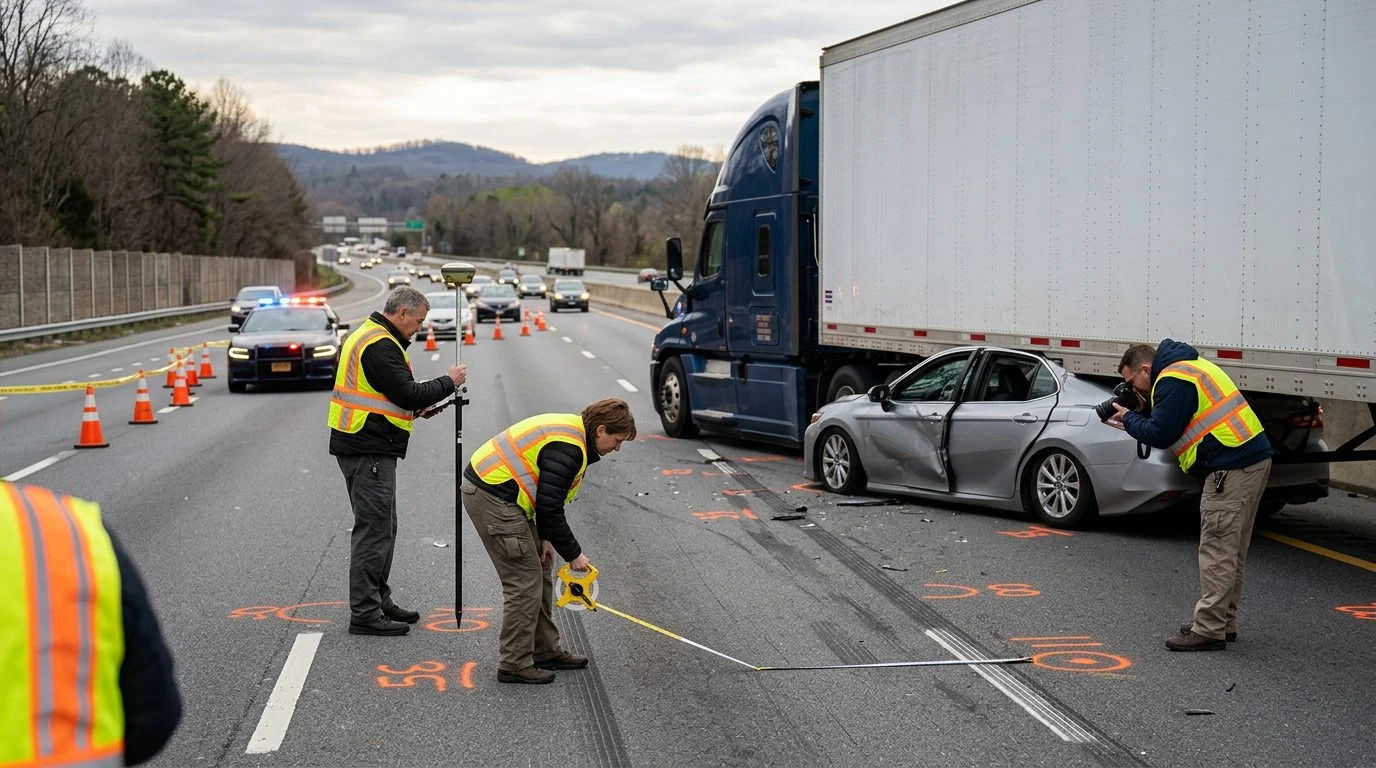
Truck and commercial vehicle crashes often carry more force. A loaded truck weighs far more than a passenger car and needs more distance to slow down. That extra weight can turn a collision into a more severe impact for people in the smaller vehicle.
Lower-speed crashes can also cause serious harm. Some spinal and brain injuries do not show right away. Photos, vehicle damage and the crash report can help show how the force reached the body, so keep them.
What a Paralysis Claim Can Cover
A paralysis claim seeks compensation for losses the injury caused. Claims often include:
- Past and future medical care
- Rehabilitation and therapy
- Medical equipment and mobility devices
- Home and vehicle changes, such as ramps or lifts
- Lost wages and reduced ability to earn
- Loss of mobility and independence
Lost income has its own rule under Virginia law. Provable damages for lost income are not reduced because another source reimbursed that income, and that reimbursement is not admitted into evidence (Va. Code § 8.01-35).
The value of any claim depends on the facts. Those facts include the medical records, the level of injury and the medical outlook. No one can predict the amount of a claim, and the firm does not promise a number. Outside medical professionals often give opinions on future care needs, and those opinions help shape the claim.
Truck and Commercial Vehicle Paralysis Claims
Truck and commercial vehicle cases often involve more than one party and more paperwork. Federal safety rules can apply to both the driver and the trucking company.
The Federal Motor Carrier Safety Regulations apply to employers, employees and commercial motor vehicles that transport property or passengers in interstate commerce (49 C.F.R. § 390.3T). Carriers must also require drivers to record their duty status for each 24-hour period (49 C.F.R. § 395.8).
More than one party may share responsibility. In a truck case, that group can include the driver, the trucking company, the vehicle owner and maintenance providers.
Records that often matter include driver logs, maintenance and inspection files, load records, electronic data and the crash report. Early requests help make sure those records are preserved.
Steps to Take After a Paralysis Crash
Medical care comes first. Records come next, and they help the injured person and family stay organized.
Virginia requires a driver involved in a crash with injury or death to stop and report it to police immediately (Va. Code §§ 46.2-371, 46.2-894).
Keep a simple file with these items:
- Medical bills and therapy notes
- Work absence records and pay stubs
- Photos of the scene and the vehicles
- A daily log of symptoms and daily limits
Be careful with recorded statements to insurers before the injuries are understood. Keep copies of everything sent and received.
A family member may need to act for the injured person. The Virginia DMV crash records page covers crash-report records, including who may submit an accident report.
Fault, Filing Deadlines and Notice Rules
Fault and deadlines decide whether a claim can move forward, so they belong early in any plan.
Virginia follows contributory negligence: if you are found even partly at fault, you may be barred from recovering, with limited exceptions. Talk to a lawyer about your facts.
Virginia generally allows two years from the date of injury to file a personal injury lawsuit (Va. Code § 8.01-243(A)); the clock runs from the date of injury, not the date of discovery, with narrow exceptions.
Some claims carry shorter notice rules. A claim against a county, city or town for negligence can be barred unless a written statement of the claim, including the time and place of injury, is filed within six months after the claim accrued. If the claimant did not file the written statement, the bar does not apply if the attorney, chief executive or mayor of that locality, or any insurer or entity providing coverage or indemnification of the claim, had actual knowledge of the claim, including its nature and the time and place of injury, within that six-month period; and if the claimant was under a disability when the cause of action accrued, the tolling provisions of § 8.01-229 apply (Va. Code § 15.2-209).
Crash reporting and filing deadlines are separate rules.
Not sure what your next step is?
Talk it through with Correll Law Firm — we can walk you through how a situation like yours is usually handled and what your options are.
How the Firm Handles Paralysis Matters
The firm represents people seriously hurt in car and commercial truck crashes, and families in wrongful death cases. It focuses on serious injury matters, including:
- Car accidents
- Truck accidents
- Commercial vehicle accidents
- Catastrophic injuries
- Traumatic brain injury
- Spinal cord injury
- Wrongful death
The firm has offices in Winchester and Harrisonburg. It serves people across the Shenandoah Valley, Richmond and Henrico County.
A paralysis injury lawyer Virginia families work with will typically review the medical records, treating providers and outside professionals when a case needs them. During that step, the firm reviews the crash facts, the medical picture and the deadlines that may apply.

Questions Families Ask About Paralysis Claims
Can a claim start before the full extent of paralysis is known?
Medical recovery can take months. The Virginia deadline still runs from the date of injury, so early records help.
Is a truck crash paralysis claim different from a car crash claim?
Often, yes. More parties and federal rules may apply, and records such as duty-status logs can matter.
What if the injured person cannot speak for themselves?
A family member may need to act. The right person depends on the facts and the injured person’s situation.
Does a spinal cord injury always mean permanent paralysis?
Not always. Outcomes vary by injury and medical course, and medical professionals assess the prognosis.