
Truck Crash Injuries | Winchester, Harrisonburg and the Shenandoah Valley
After a Truck Crash Fire, Good Records Protect Your Family's Story
Burn injuries can change daily life quickly. Here is how to keep the records that matter most while your family focuses on recovery.
Where the firm works
Virginia
Serving the Shenandoah Valley, Front Royal, Richmond and Henrico County
Published November 22, 2026
If a truck crash started a fire and left you or someone close to you with burns, the days after can feel overwhelming. The short answer is to document the scene, the burn and its treatment, and how the injury changes daily life, all with dates. Start early, because burns change over time.
This page walks through each record type, where it comes from, and why it matters for a burn injury claim in Virginia.
Why Truck Crash Fires Leave Burn Injuries That Need Careful Records
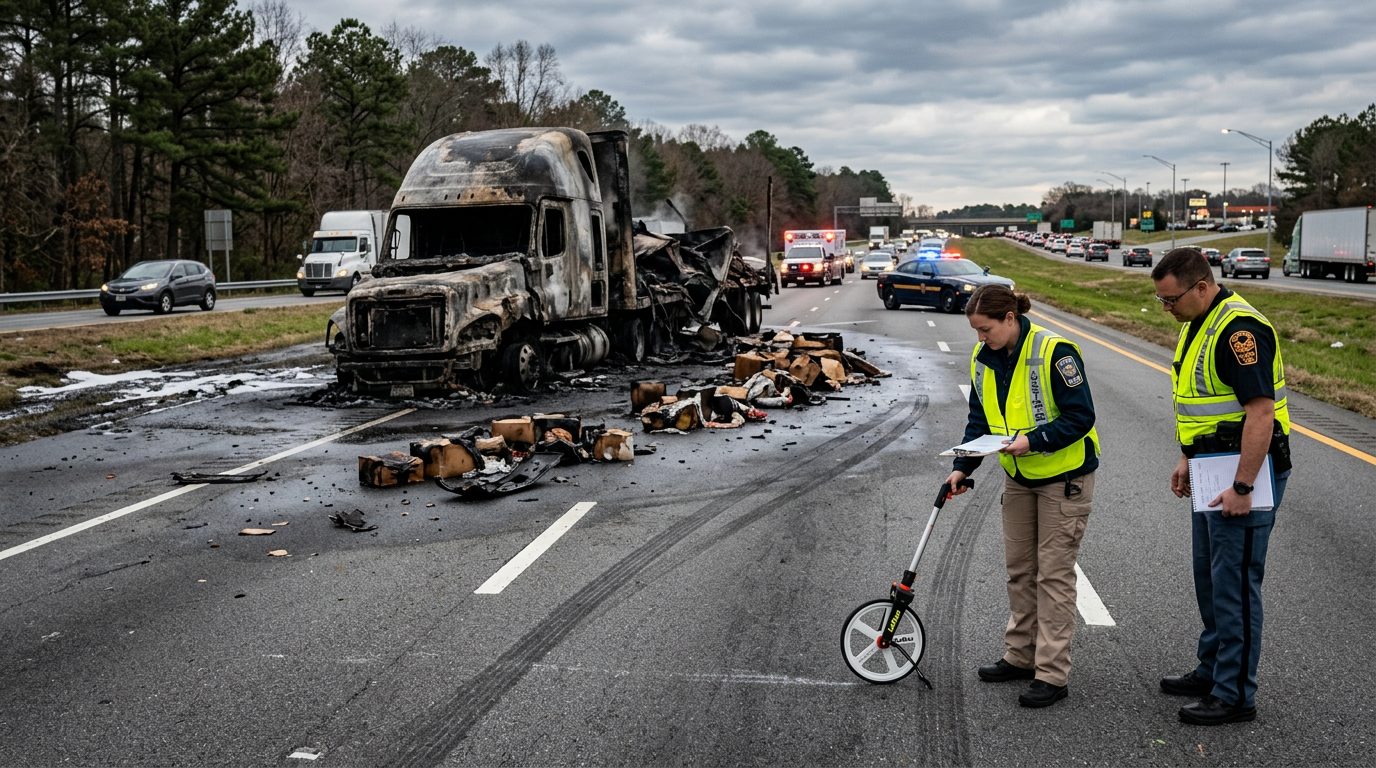
Fire after a truck crash can start from spilled fuel, diesel or cargo. The scene can change within hours as crews clear the road and move the vehicles. That is why the first photos and notes matter.
Burns also change over time. Swelling, infection and changes in the skin can show up days or weeks after the crash. Early notes may miss details that only appear later, so the record should stay open for as long as treatment continues.
The firm handles truck and commercial vehicle crash claims for people in the Shenandoah Valley, Richmond and Henrico County. For the wider picture, read the firm’s guide to commercial vehicle crash claims in Virginia.
A common mistake is waiting until the case feels settled to start a file. By then, photos may be lost, witnesses hard to reach, and vehicles repaired or moved. Starting in the first days is far easier.
If a truck crash fire left you or someone you love with burns, you do not have to sort through the records alone, and the firm is glad to talk through your situation. Talk it through with Correll Law Firm — we can walk you through how a situation like yours is usually handled and what your options are.

How Doctors Describe Burn Depth and Why It Matters for Documentation
Doctors describe a burn by how deep it goes and how much skin it covers. Those details belong in the medical chart, and the chart’s wording should be kept exactly as written.
Providers often use three terms. A superficial burn, sometimes called first-degree, affects only the outer layer of skin. A partial-thickness burn, or second-degree burn, reaches deeper layers. A full-thickness burn, or third-degree burn, goes through the full depth of the skin.
Depth can be revised as the wound heals or after a procedure. Early notes may describe one depth, and later notes may describe another once the wound is clearer. Both versions belong in the file, with their dates and the provider’s explanation.
Keep the words the chart uses for location and area, such as arms, hands, face or back. A simple list of body areas, written by the injured person and dated, can help match photos to the chart. Ask each provider for a complete copy, not only a summary, so the wording is preserved.
What to Photograph and Note at the Scene and in the First Days
Take photos of the scene, the vehicles and any visible injuries when it is safe and when the injured person is able. Photos of the fire area, road markings, debris and fuel on the pavement help show what happened.
Note the date, time and location on each photo. Keep the original files from the phone or camera. Edited copies or screenshots are harder to verify, so keep the originals even if copies were shared.
Write down the names and phone numbers of witnesses and of anyone who helped at the scene. Also note which fire and police personnel responded and their agency or unit. A written note made soon after the crash helps keep these details straight.
Keep burned clothing, gloves, helmets, phones and other personal items. Do not throw them away, even if they seem ruined. Damaged items can later help show how heat and flame reached the person.
A common mistake is deleting photos to free up space on a phone. Back them up somewhere else as soon as possible.
Medical Records to Keep After a Burn Injury
The medical record is the main written proof of how a burn was treated. Request complete copies from every provider who treated the injury, including imaging and lab reports.
Records that tend to matter include emergency department notes, transfer records to a burn unit, operative reports for skin grafts or debridement, dressing-change notes and follow-up visit notes. Therapy and rehabilitation notes show how movement and daily function changed over time.
Pharmacy slips and wound-care supply lists help show the course of treatment, including what was prescribed and when. Keep the paper and digital copies together so they are easy to compare.
Keep a dated symptom and pain journal in the injured person’s own words. Write down pain, itching, tight skin, scarring, sleep trouble and changes in mood. A few lines a day is enough. Entries made close to the event are easier to rely on than memories written months later.
Documenting the Truck, the Carrier and the Crash Report
Write down what you can see of the truck. Note the company name on the door or cab, the USDOT number if it is visible, the trailer number, the cargo type and any hazardous materials placards.
Cargo changes what matters. The firm’s guide to hazardous materials in truck crashes explains why placards and cargo details deserve extra attention.
Virginia requires a driver involved in a crash with injury or death to stop and report it to police immediately (Va. Code §§ 46.2-371, 46.2-894). Under Va. Code § 46.2-371, the driver of any vehicle involved in any accident resulting in injury to or death of any person, or some person acting for him, shall immediately give notice of the accident to a law-enforcement officer. A willful failure to make the report required in this section shall constitute a Class 4 misdemeanor. Virginia generally allows two years from the date of injury to file a personal injury lawsuit (Va. Code § 8.01-243(A)); the clock runs from the date of injury, not the date of discovery, with narrow exceptions. Some claims carry notice requirements that run out sooner, and that lawsuit timeline is separate from the duty to report a crash, which arises immediately.
Request the police crash report and any fire department report. Compare them with your photos and witness notes. If the reports differ from what you remember, write that down with the date rather than changing your original notes.
Commercial driver testing records are a separate topic. The firm’s page on post-crash drug and alcohol testing covers that issue after a commercial driver crash.
Recording How the Burn Affects Daily Life and Work
Keep a running log of time away from work, changes to duties and any help needed at home. This record shows effects of the injury that a medical chart may not describe.
Note each missed workday and each shift that was changed or reduced. Ask the employer for a letter that states the dates away and any change in duties. Keep the letter with your work records.
Record help needed at home, such as dressing changes, errands, childcare and household tasks. Write down who helped, what they did and for how long. Family and friends can add short, dated notes in their own words.
Keep a simple log of trips to appointments, with dates and miles driven. Also list medical equipment and supplies you used, such as special dressings or a bed rail. Write entries as things happen, because small details fade quickly.
Not sure what your next step is?
Talk it through with Correll Law Firm — we can walk you through how a situation like yours is usually handled and what your options are.
Keeping the Evidence Organized Over Time
Keep one master folder, paper or digital, with dated subfolders for photos, medical records, crash documents, work records and the symptom journal. A consistent system makes the file easy to follow later.
Add a written timeline of key dates. List the crash, the first treatment, each procedure, the start and end of time off work, and each follow-up visit. A timeline shows how the injury and treatment unfolded.
Some records sit with the trucking company, its insurer or a third party. These may include driver logs and maintenance files. Ask for them in writing, since a written request creates a dated record. FMCSA guidance on records of duty status says motor carriers must keep these records for six months, so send requests early.
Federal rules also allow legible copies to stand in for originals in a carrier’s files. Ask for complete, legible copies rather than partial pages. Under 49 C.F.R. § 390.31, copies that accurately reflect the required information may be kept in place of originals. 49 C.F.R. § 390.31 reads: “Except as otherwise provided, copies that are legible and accurately reflect the information required to be contained in the record or document may be maintained in lieu of originals.”
When a Truck Crash Fire Results in a Death
When a crash fire causes a death, the family needs many of the same records, plus the death certificate, the medical examiner report and funeral records. The records guide for families after a truck crash death lists the full set.
A Virginia wrongful death action is filed by the decedent’s personal representative within two years of the death (Va. Code §§ 8.01-50(C), 8.01-244(B)), on behalf of the family members the statute protects. The statutes are Va. Code § 8.01-50 and Va. Code § 8.01-244. Family members do not file the action themselves; they share in any recovery. Virginia law also sets which family members share, under Va. Code § 8.01-53.
Virginia wrongful death damages cover the family’s sorrow, mental anguish and loss of the decedent’s companionship, guidance and care; lost income and services; medical expenses from the injury; funeral expenses; and, for willful or wanton conduct, punitive damages (Va. Code § 8.01-52). The damage categories are set out in Va. Code § 8.01-52.
Common Questions
Is a burn injury claim the same as a wrongful death claim?
No. The records overlap, but the two claims are different and may be brought by different people.
Should I keep records that seem unimportant?
Yes, keep them for now. Someone reviewing the file can decide later which items matter.