
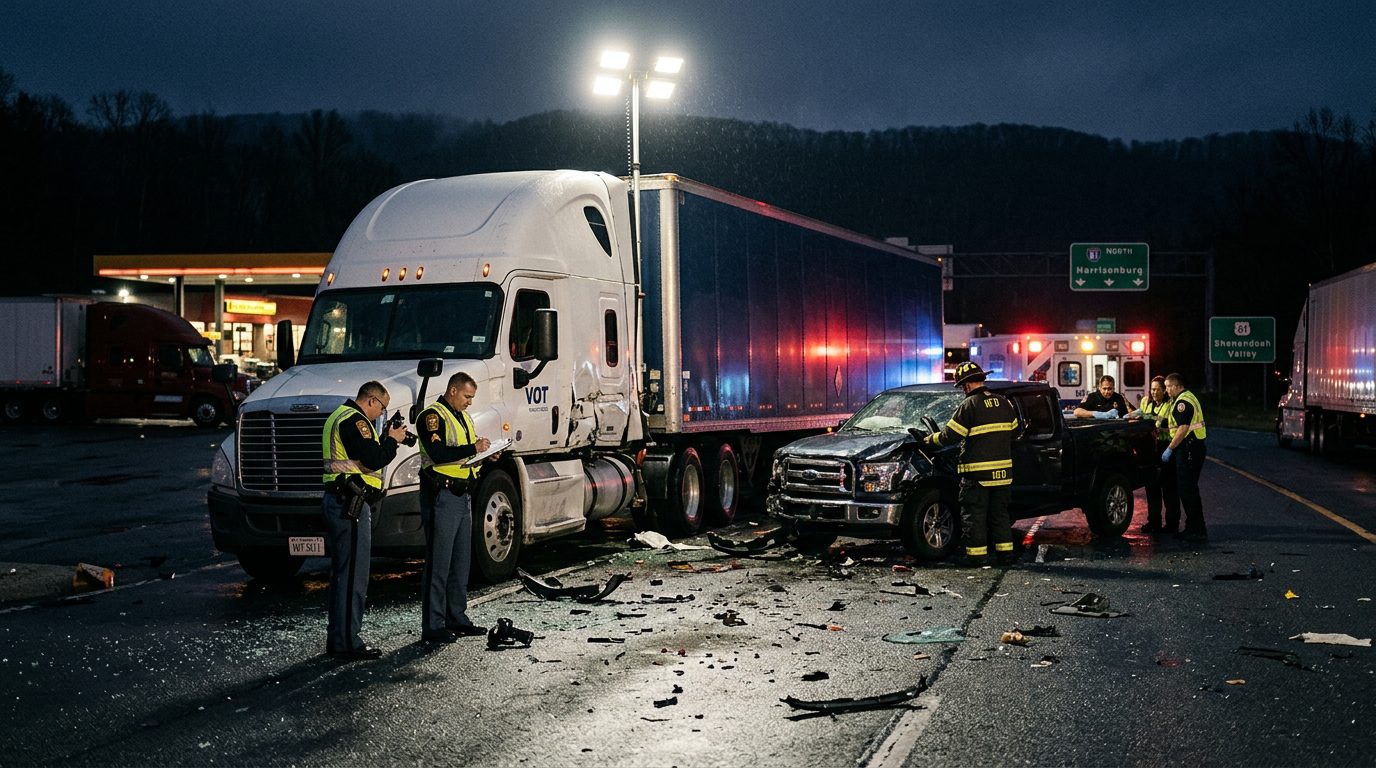
Truck Accidents | Winchester, Harrisonburg and the Shenandoah Valley
Hit by a Truck in Virginia? Here Is How a Claim Can Work
Commercial trucks operate under their own set of federal and state rules, and those rules can shape what a claim looks like. Here is a plain-language overview to help you think through your next steps.
Published November 21, 2026
A crash with a large truck can leave you hurt, shaken and unsure what comes next. After a crash, it is natural to wonder how the driver’s role in what happened affects your options.
The short answer: a claim against the driver may be possible
A claim against the driver may be possible when the driver’s careless conduct caused the crash and your injuries. Whether a particular claim is viable depends on the facts of the crash, the injuries and the evidence. Crash investigations often look at factors such as speed, following distance and whether a driver was paying attention to the road.
This page covers who can be named, how Virginia’s partial-fault rule works, when the crash-reporting duty and the filing deadline apply, and how wrongful death claims differ. For the broader picture, read the commercial vehicle accident guide for Virginia.
The firm’s offices are in Winchester and Harrisonburg. It represents people hurt in crashes from the Shenandoah Valley to Richmond and Henrico County.
Not sure what your next step is?
Talk it through with Correll Law Firm — we can walk you through how a situation like yours is usually handled and what your options are.
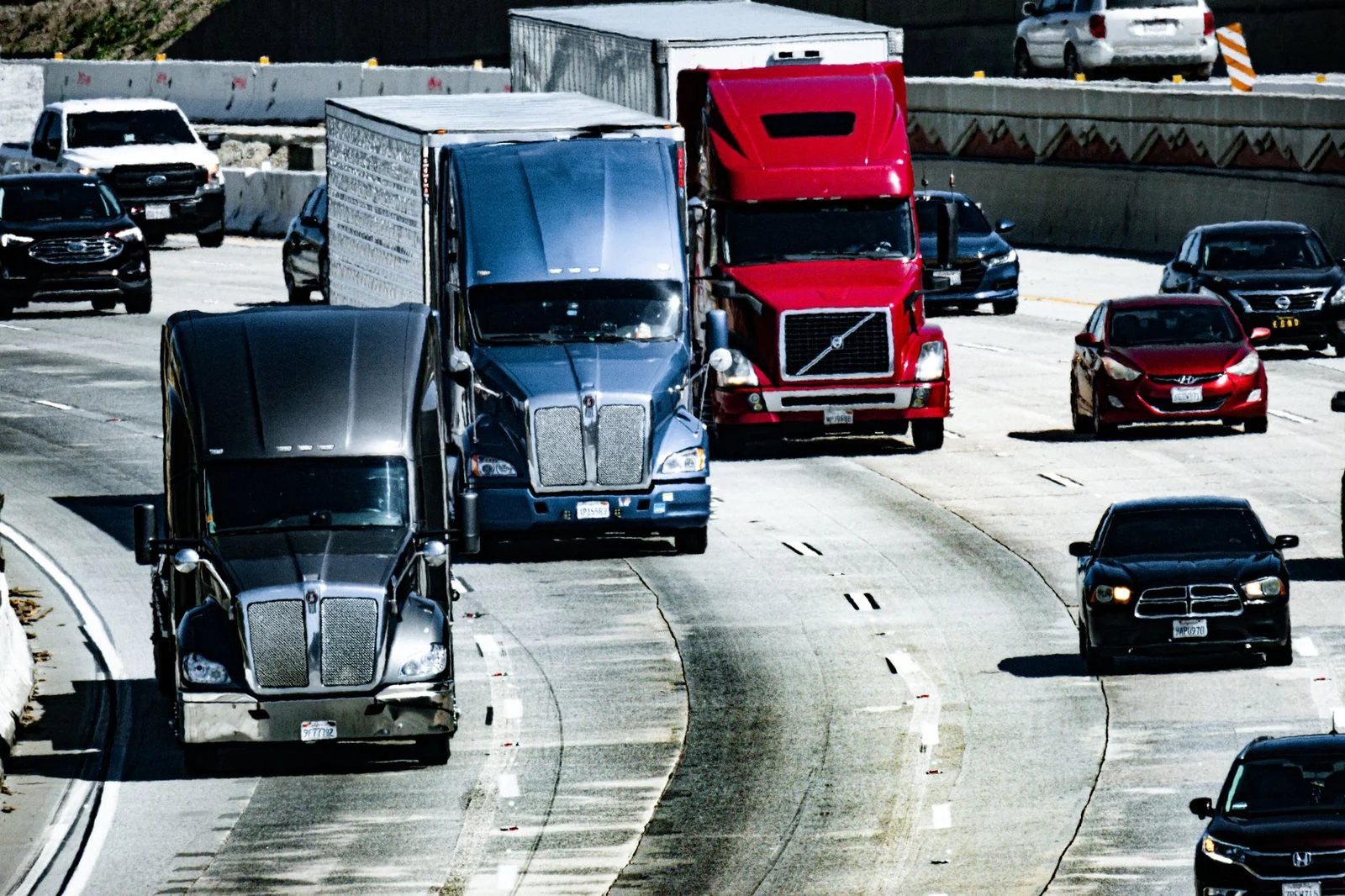
Who can be named when a truck driver causes the crash
The driver whose conduct caused the crash is one person a claim can be brought against, and a claim for a death may also be brought against any person or corporation whose wrongful act, neglect, or default caused it. The trucking company question has its own page.
Not every commercial vehicle is a large rig. Work and delivery vans raise similar questions, and the delivery van crash guide covers them.
Records that often matter include the truck’s registration and ownership papers, and documents showing who employed the driver that day. These records help show which parties may be responsible.
How partial fault can affect a claim
Your own share of blame can affect whether a claim goes forward. Virginia follows contributory negligence: if you are found even partly at fault, you may be barred from recovering, with limited exceptions. Talk to a lawyer about your facts.
Fault is usually sorted out by looking at what each driver did, the road and weather conditions, and whether either driver could have avoided the crash.
Details such as lane position, signals and speed often shape that answer.
When the truck driver leaves the scene or does not report the crash
A driver who leaves the scene may still be a possible defendant if the driver can be identified and the facts support a claim. Virginia requires a driver involved in a crash with injury or death to stop and report it to police immediately (Va. Code §§ 46.2-371, 46.2-894).
The driver must also stop as close to the scene as possible and give reasonable help to an injured person (Va. Code § 46.2-894). Punitive damages may be awarded in a personal injury or death action where the conduct is a felony violation of that section (Va. Code § 8.01-44.5:1).
The two-year period discussed below is the deadline to file a lawsuit, not the deadline to report a crash (Va. Code § 8.01-243). Note the vehicle details, the driver’s description and the names of any witnesses while they are still clear in your mind.
Filing deadlines for a truck crash claim
For most injury lawsuits, the filing window is two years. Virginia generally allows two years from the date of injury to file a personal injury lawsuit (Va. Code § 8.01-243(A)); the clock runs from the date of injury, not the date of discovery, with narrow exceptions.
Some claims carry notice requirements that can run out sooner than the lawsuit deadline. Because timing varies with the facts, the reader may wish to have the dates reviewed early, while records and witness memories are still available.
Wrongful death, serious injury and conduct beyond ordinary negligence
When a crash causes death, a family’s claim follows different rules. A Virginia wrongful death action is filed by the decedent’s personal representative within two years of the death (Va. Code §§ 8.01-50(C), 8.01-244(B)), on behalf of the family members the statute protects. The filing rule appears in Va. Code § 8.01-244.
Family members do not file the action; they share in any recovery. Who shares is set by a priority order of beneficiaries (Va. Code § 8.01-53).
Virginia wrongful death damages cover the family’s sorrow, mental anguish and loss of the decedent’s companionship, guidance and care; lost income and services; medical expenses from the injury; funeral expenses; and, for willful or wanton conduct, punitive damages (Va. Code § 8.01-52).
Virginia allows punitive damages for actual malice, or for willful or wanton conduct or recklessness showing a conscious disregard for the safety of others, capped at $350,000 (Va. Code § 8.01-38.1). The total against all defendants found liable may not exceed that amount (Va. Code § 8.01-38.1).
The jury must find that the conduct met this standard. It treats certain drunk driving as meeting that standard, such as driving with a blood alcohol concentration of 0.15 percent or more while knowing, or when the driver should have known, that driving ability was impaired, where the intoxication caused the injury or death (Va. Code § 8.01-44.5).
For the injury side of serious crashes, read the spinal injury guide for truck crashes.
Does a police report decide who was at fault?
No single record decides fault. A police report is one piece of evidence that a claim may examine.
Can federal rules show what a truck driver was doing?
Driver fatigue can be one of the facts examined. Federal rules govern commercial drivers’ operating hours (Hours of Service of Drivers).