
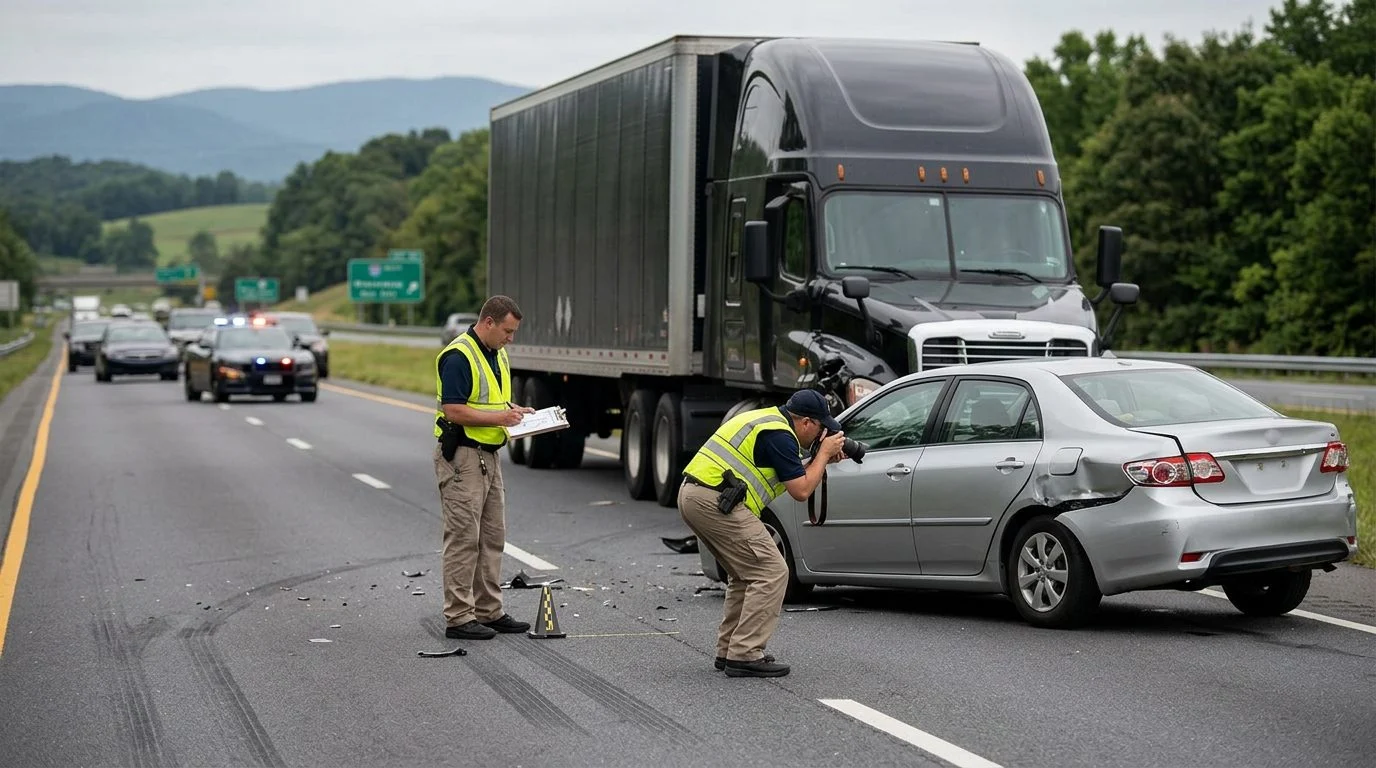
Harrisonburg | Commercial Truck Crashes | Spinal Cord Injury
Spinal Cord Injuries From a Commercial Truck Crash: Guidance for Harrisonburg Families
A crash with a large commercial truck can change a family's daily life in an instant. Here is how to think through the medical, practical and legal steps ahead.
Published November 20, 2026
A spinal injury from a truck crash can change your work, your income and your daily life all at once.
After a truck crash that causes a spinal injury, a claim in Virginia may be possible, and more than one party may share responsibility.
What a Spinal Injury From a Truck Crash Involves
A spinal injury from a truck crash is harm to the spinal cord or to the bones, discs and ligaments that protect it. A spinal cord injury damages the nerves that run through the spine. A fracture, herniated disc or ligament injury harms the structures around those nerves, and it can be serious too.
Both can cause pain, numbness, weakness or trouble moving. The type of injury shapes the treatment plan and how the claim is documented.
Truck crashes can cause serious spine injuries because a large truck weighs far more than a passenger vehicle. Sudden impact forces can bend, twist or compress the spine. A peer-reviewed study looks at disc injury and spine loads in low-to-moderate-severity frontal crashes.
Symptoms can take days or weeks to fully appear. Early and ongoing medical follow-up protects your health and builds the record of your injury.
Brain and spine injuries can happen in the same crash. According to the Administration for Community Living, automobile crashes can cause traumatic brain injuries. If you also hit your head, read about head injuries after a crash. The firm’s commercial vehicle accident guide gives a wider overview.
If a truck crash left you with spinal pain or limits, you don't have to sort out the questions alone. The firm is ready to talk through your situation with you. Talk it through with Correll Law Firm — we can walk you through how a situation like yours is usually handled and what your options are.

Who May Be Responsible in a Truck Crash
A truck crash claim can name the driver, the trucking company or other parties whose negligence contributed to the crash.
The key legal idea is proximate cause. It is an act or omission that, in a natural and continuous sequence unbroken by an efficient intervening cause, produces the injury.
Records help show who was responsible. Useful records include the crash report, the driver’s logs, and the truck’s inspection and maintenance files.
Whether to name the driver, the company or both is a separate question, covered in who to name in a truck crash claim. Whether the driver was on the job also matters. See the driver’s work status at the crash article.
What a Spinal Injury Claim Can Include
A spinal injury claim can include medical treatment, lost income, reduced ability to work and changes to daily life.
- Treatment: visits, imaging, therapy and any surgery.
- Lost income: Virginia law says provable lost income is not reduced because another source reimbursed it (Va. Code § 8.01-35).
- Work limits: records of restrictions and reduced ability to work.
- Daily life: ongoing limits, future care needs and loss of independence, documented by treating providers.
Medical Records and Documenting a Spinal Injury
Records from your treatment are the core evidence in a spinal injury claim. Getting checked promptly and following your treatment plan comes first, for your health. Records that support a claim include:
- Imaging results and test reports
- Treatment and therapy notes
- Work restrictions from your providers
- Prescription records
- A dated, written history of symptoms and limits, such as a daily journal
Virginia requires a driver involved in a crash with injury or death to stop and report it to police immediately (Va. Code §§ 46.2-371, 46.2-894). The driver must also give reasonable help to an injured person, including taking that person to a physician or hospital when treatment is apparent or requested (Va. Code § 46.2-894).
The two-year period discussed below applies to filing a lawsuit.
Insurance Adjusters and Recorded Statements
An insurance adjuster works for the insurer, and may ask you for a recorded statement or a signed medical authorization early on. A few habits can help:
- Stay factual. Describe what you saw and felt, and say when you don’t know.
- Avoid guessing about speed, fault or how serious the injury is.
- Describe symptoms honestly, including ones that come and go.
- Keep a written log of each call, with the date, the caller’s name and what was said.
- Read any release or form carefully before signing, and ask what it covers.
Limit discussion of crash details to people helping with your claim. Avoid posting about the crash online.
Fault Rules and Deadlines in Virginia
Being partly at fault can affect a Virginia claim, and filing deadlines apply.
Virginia follows contributory negligence: if you are found even partly at fault, you may be barred from recovering, with limited exceptions. Talk to a lawyer about your facts.
Virginia generally allows two years from the date of injury to file a personal injury lawsuit (Va. Code § 8.01-243(A)); the clock runs from the date of injury, not the date of discovery, with narrow exceptions.
Some claims carry notice requirements that run out sooner, so you may wish to talk with a lawyer about your timing.
Not sure what your next step is?
Talk it through with Correll Law Firm — we can walk you through how a situation like yours is usually handled and what your options are.
How the Firm Handles These Claims From Harrisonburg
The firm handles truck accidents, commercial vehicle accidents and spinal cord injury claims, with offices in Winchester and Harrisonburg.
It serves people across the Shenandoah Valley, Richmond and Henrico County. The firm also focuses on catastrophic injuries, traumatic brain injury and wrongful death.
A discussion of a crash often covers the injuries, the medical records and the crash report.
To prepare, gather what you have:
- The crash report
- Photos of the scene and vehicles
- Hospital discharge papers and treatment bills
- Employer information and pay records
- Any letters from insurers
Bring what you have, even if some items are incomplete.

Frequently Asked Questions
These are common questions about spinal injuries from truck crashes in Virginia.
Can I sue a truck driver for hitting me?
Yes. A claim may name the driver, the trucking company or others, and which parties apply depends on the facts of the crash.
Can you sue for pain and suffering in Virginia?
Pain and daily limits show up in medical records and treating providers’ notes. Those records are how these effects are documented in a claim.
Does a spinal injury from a truck crash always need surgery?
Not always. Treatment varies with the injury, and the treating providers decide the plan.
Is a truck crash claim different from a car accident claim?
Truck crashes can involve more parties and more records, such as driver logs and maintenance files.