
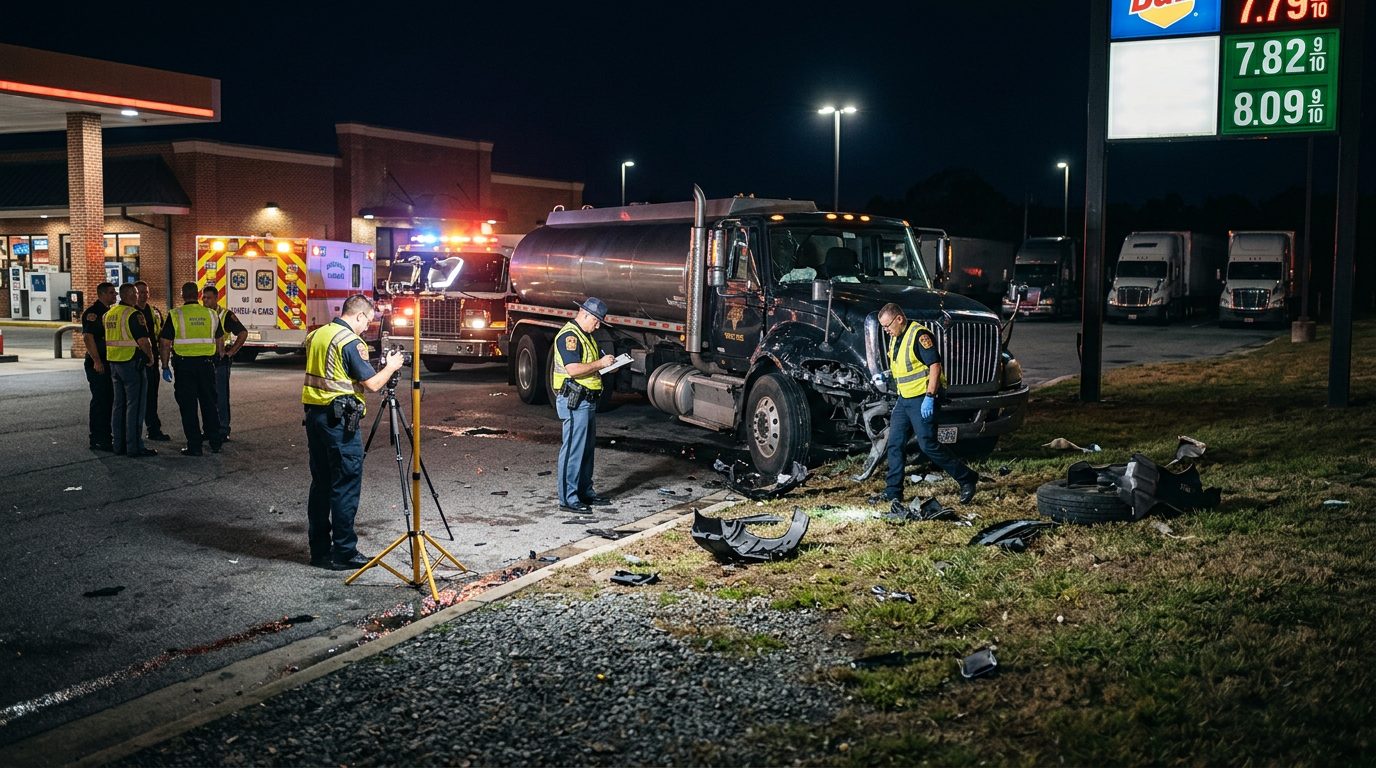
Commercial Truck Accidents | Virginia
After a Tanker Truck Crash, Clear Answers Help You Move Forward
Tanker trucks carry fuel, chemicals and other hazardous loads, so a crash can raise questions that a typical car accident does not. Here is what people in the Shenandoah Valley, Richmond and Henrico County often need to understand.
Published November 16, 2026
If a tanker truck crash hurt you or someone you love, the questions can come fast. Here is how these claims generally work in Virginia.
A tanker truck crash claim seeks compensation for harm from a crash involving a truck that hauls liquid or gas in bulk, such as fuel or chemicals. Each claim turns on its own facts, and cargo adds issues that ordinary truck crashes often do not.
What a tanker truck crash claim is and who may bring one
Injured people may bring an injury claim. After a death, a wrongful death claim may be brought by and in the name of the personal representative of the deceased person.
An injury claim belongs to the person who was hurt. A wrongful death claim arises when a wrongful act, neglect, or default causes a death and would, if death had not ensued, have entitled the injured party to maintain an action. Family members share in any recovery rather than filing the case themselves.
The firm handles car accidents, truck accidents, commercial vehicle accidents, catastrophic injuries, traumatic brain injury, spinal cord injury and wrongful death. Its offices are in Winchester and Harrisonburg. It serves people from the Shenandoah Valley, Richmond and Henrico County.
If a tanker truck crash changed your life or your family's, you may have a claim, and the firm is glad to talk through what happened with you. Talk it through with Correll Law Firm — we can walk you through how a situation like yours is usually handled and what your options are.
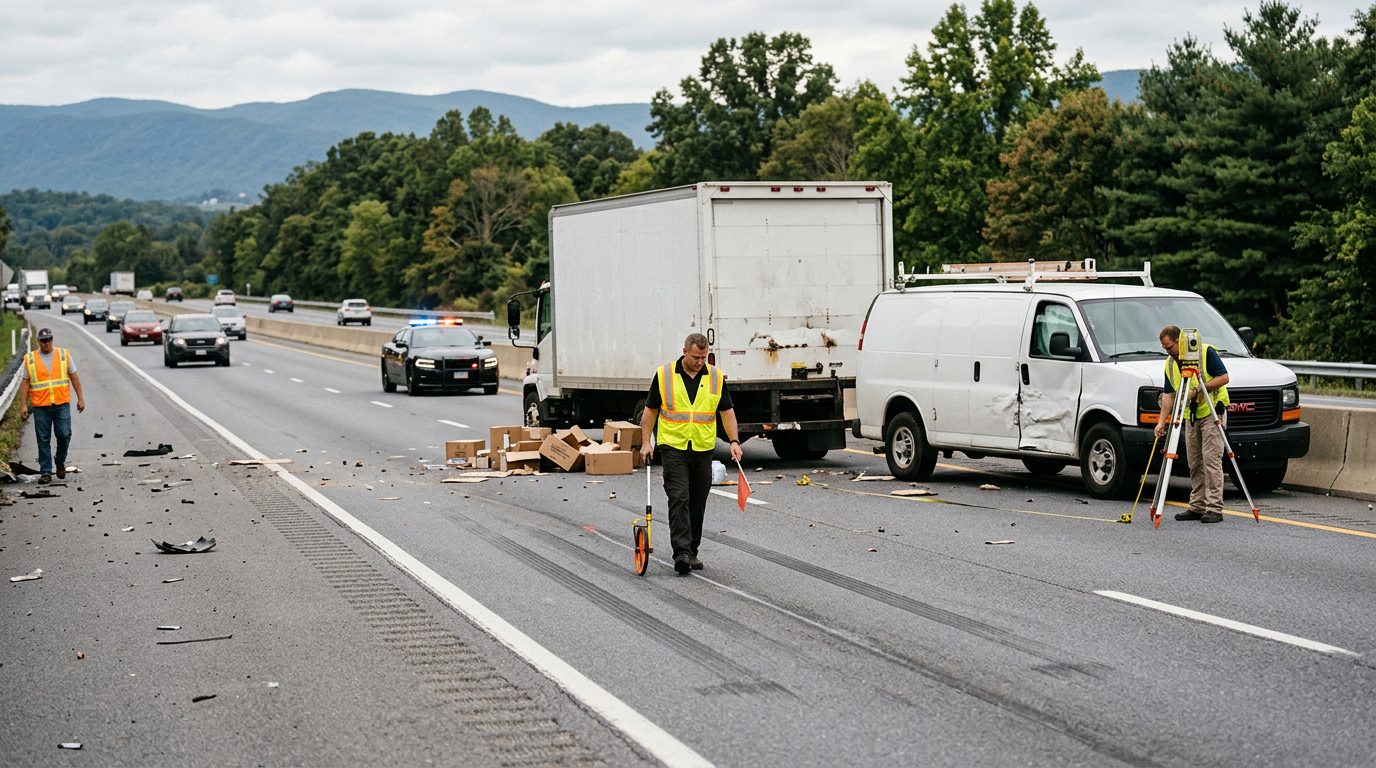
Why tanker crashes raise different issues
Tanker crashes differ mainly because of the cargo. The cargo can change how a crash happens and what it leaves behind.
- Liquid moves inside the tank. That movement can affect braking, turns and rollovers.
- A spill can cause fire, chemical exposure and road closures. Injuries may include burns and harm from smoke or chemicals.
- Hazardous loads come with shipping papers and placards. These records can show what was carried and how it was labeled.
- Burn, chemical and crush injuries often need detailed medical evaluation. Outside medical or accident reconstruction experts may be needed to explain them.
Who may be responsible in a tanker truck crash
More than one party may share responsibility, and the driver is only one possibility.
- The driver, whose conduct on the road is central to most crash claims.
-
- The trucking company that employs or contracts with the driver, depending on its relationship with the driver and its role in the trip.
- The company that loaded or shipped the cargo, where loading or securing the load may have played a role.
- Maintenance providers and equipment makers, if their work or products played a role.
Each party may have its own insurer, so a claim can involve several insurance companies.
Evidence to preserve after a tanker truck crash
The strongest evidence is usually gathered early, before records are lost or changed.
Virginia requires a driver involved in a crash with injury or death to stop and report it to police immediately (Va. Code §§ 46.2-371, 46.2-894).
- Police and emergency response reports, including any hazardous materials response records.
- Photos and video of the vehicles, the cargo area, placards, skid marks, road conditions and any spill.
- Names and contact details for witnesses, since independent accounts often matter.
- Driver logbook and duty status records. Federal rules require duty status to be recorded for each 24-hour period and bar drivers and motor carriers from tampering with electronic logging devices so that the device does not accurately record and retain required data (49 C.F.R. § 395.8).
- Signs of fatigue or illness in the driver. Federal rules bar a driver from operating a commercial vehicle, and bar motor carriers from requiring or permitting it, while the driver’s ability or alertness is so impaired, or so likely to become impaired, through fatigue, illness, or any other cause, as to make it unsafe to operate the vehicle, except in a grave emergency where compliance would increase the hazard to occupants or other highway users, in which case the driver may continue to the nearest place where that hazard is removed (49 C.F.R. § 392.3).
- Carrier records.
- Hazmat endorsement records.
- Medical records, bills and a dated log of symptoms, appointments and missed work.
Damages Virginia law addresses in these claims
Injury claims seek the losses the injury causes. Virginia law sets out the damages available in a wrongful death case.
The amount depends on the facts of each case.
Virginia wrongful death damages cover the family’s sorrow, mental anguish and loss of the decedent’s companionship, guidance and care; lost income and services; medical expenses from the injury; funeral expenses; and, for willful or wanton conduct, punitive damages (Va. Code § 8.01-52).
Deadlines and how fault is evaluated
Some claims may have earlier notice rules.
Virginia generally allows two years from the date of injury to file a personal injury lawsuit (Va. Code § 8.01-243(A)); the clock runs from the date of injury, not the date of discovery, with narrow exceptions.
Under Va. Code § 8.01-243, every action for personal injuries must generally be brought within two years after the cause of action accrues, unless otherwise provided in that section or by other statute, such as for certain malpractice claims (Va. Code § 8.01-243).
A Virginia wrongful death action is filed by the decedent’s personal representative within two years of the death (Va. Code §§ 8.01-50(C), 8.01-244(B)), on behalf of the family members the statute protects.
Virginia follows contributory negligence: if you are found even partly at fault, you may be barred from recovering, with limited exceptions. Talk to a lawyer about your facts.
Not sure what your next step is?
Talk it through with Correll Law Firm — we can walk you through how a situation like yours is usually handled and what your options are.
How a tanker truck claim typically unfolds
A claim usually moves through evidence gathering, investigation, medical documentation, insurance talks and, if needed, a lawsuit.
- Preserve evidence. Request records early, including logs, cargo papers and maintenance files.
- Investigate. Review the crash, the driver’s records, the cargo paperwork and the maintenance history.
- Document medical care. Gather treatment records and, where needed, input from outside medical or accident reconstruction experts.
- Talk with insurers. Negotiations can continue for months.
- File if needed. If a fair resolution is not reached, a lawsuit must be filed within the deadlines above. Discovery, mediation or trial may follow.
The timing varies from claim to claim, and some stages overlap. Road scenes are cleared quickly and cargo is moved, so waiting can make evidence harder to gather.
Common questions about tanker truck crash claims
The questions below cover what people ask most often after a tanker truck crash.
What should I avoid saying after a tanker truck crash?
Stick to what you saw, heard and felt. Avoid guessing about fault or the cause of an injury.
Should I give a recorded statement to the trucking company’s insurer?
Anyone may wish to speak with a lawyer before giving a recorded statement to an insurer.
Does a tanker crash differ from other truck crashes in a lawsuit?
The core legal rules are largely the same. The cargo, any spill and the hazardous materials paperwork add evidence that needs early attention.