
Truck Crash Guidance | Virginia
Saw a Truck Crash? Here Is How a Witness Can Help
Clear, calm steps for the people who were on the road when a commercial truck crash happened, from the Shenandoah Valley to Richmond.
Published November 13, 2026
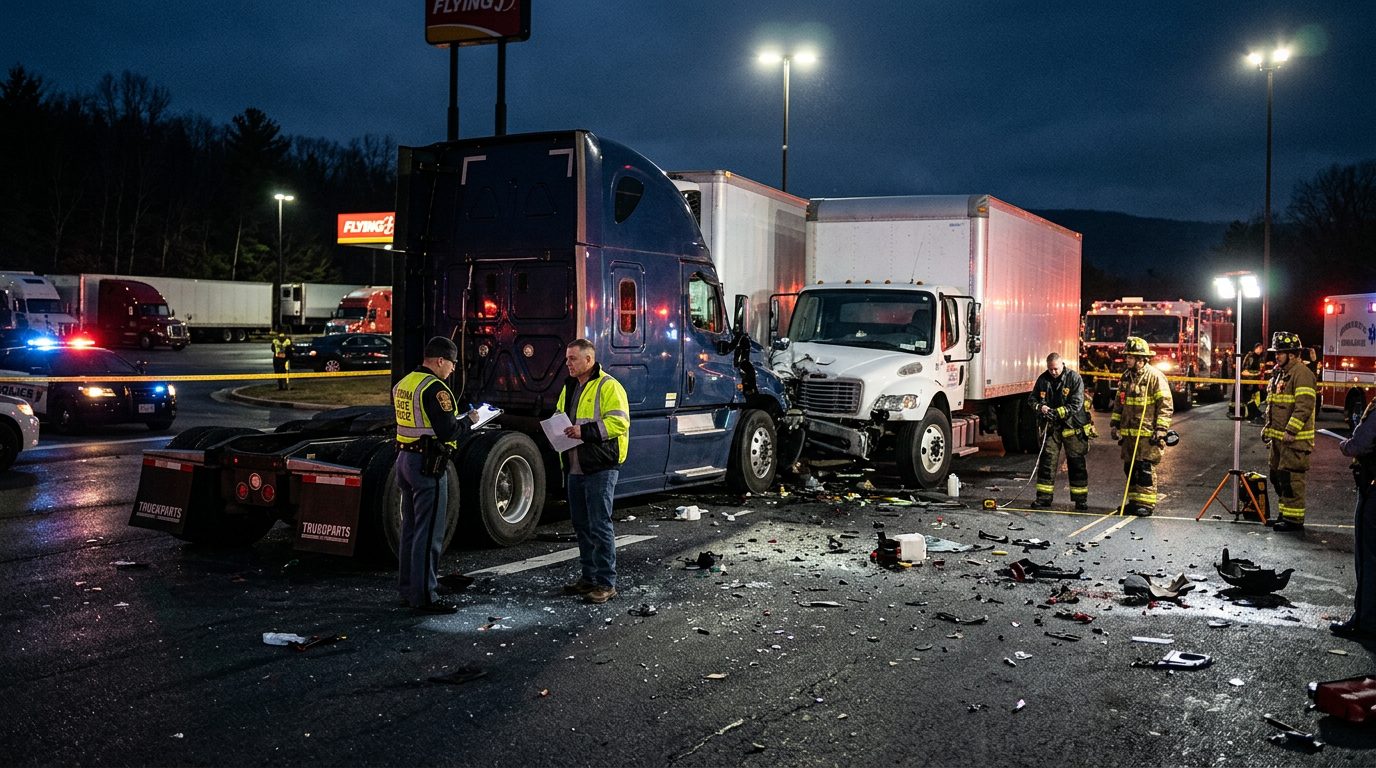
Seeing a truck crash can leave you shaken and unsure what to do next. In short, a witness can write down what they saw, share their details with police, keep any photos safe, and think carefully before giving anyone a statement. Here is what witnesses can do after a truck crash in Virginia, and why each step can matter later.
Each step is simple. Together, they help preserve details that fade fast after a crash.
Why Witness Information Matters After a Truck Crash
Witness information can fill gaps when a truck crash is hard to piece together. Commercial truck crashes often involve large vehicles, several drivers, company records and events that unfold in seconds. Drivers in a crash tend to focus on their own lane and their own safety, so a bystander may have seen the sequence from a different angle. Memories fade quickly, and company records are not in a bystander’s hands. Whether the crash happened near Winchester, Harrisonburg, Richmond or Henrico County, the same basic steps apply.
For the bigger picture on how these cases unfold, read the firm’s guide to commercial vehicle accidents in Virginia. A witness account is one piece of that picture. It works alongside police reports, photographs, vehicle records and medical records.
Not sure what your next step is?
Talk it through with Correll Law Firm — we can walk you through how a situation like yours is usually handled and what your options are.

Write Down What You Saw While It Is Fresh
Write down what you saw as soon as you safely can. Start with the date, the time and the approximate location. Note the weather, the road surface, the lighting and the traffic you noticed.
Describe the truck and other vehicles in plain terms. Include the color, the make if you know it, any trailer or cargo markings, a company name and any DOT number you can read. Note which direction each vehicle was traveling.
Next, write the sequence of events in order. Separate what you saw and heard from what you assumed, and say so when you were unsure. If you noticed a driver who seemed exhausted, write down exactly what you observed. Federal hours-of-service rules set limits on driving time and required rest breaks for commercial drivers.
Keep the notes dated and do not edit them later. A simple, accurate record helps more than a polished one. Write them in your own words.
Collect Contact Information and Names at the Scene
Get the names and phone numbers of other witnesses before they leave. People leave the scene quickly, and they can be hard to find later. Ask the others who saw the crash for their name and a way to reach them. A name and a number give investigators a way to follow up, even weeks later.
Note the driver’s name and any identifying details the driver shares, including the trucking company’s name. Where it is safe, write down license plate numbers on the trucks and other vehicles.
Also record which responders arrived, such as police, fire or EMS crews. If you learn an officer’s name or badge number, write it down.
Safety comes first. Do not step into traffic or get in the way of emergency workers to collect any of this.
Share What You Saw With Police
Tell the investigating officer what you saw, clearly and honestly. Virginia requires a driver involved in a crash with injury or death to stop and report it to police immediately (Va. Code §§ 46.2-371, 46.2-894). That duty applies to drivers. The two-year period is the deadline to file a lawsuit, not to report a crash (Va. Code § 8.01-243).
As a witness, you can describe what you saw and heard. Say when you are not certain. Give the officer a way to reach you, in case they need to follow up. Officers rely on what people tell them, so accuracy matters more than detail you cannot confirm.
Ask the officer how to get a copy of the crash report once it is ready. Then compare your notes with the report when you get it.
Preserve Photos, Video and Other Evidence
If you took photos or video, back them up right away. Keep the original files with their date and time information intact. Do not crop, filter or edit them, since edited copies can be questioned later. Store copies in a second place, such as a separate folder or device.
If it is safe, photograph the scene from several angles. Useful shots include vehicle positions, debris, skid marks, traffic signals and road signs. Stay out of the way of responders while you do.
Think carefully before you post about the crash online. Posts can reach people involved in the crash and may be read out of context.
For a closer look at how evidence is gathered after a serious crash, see the firm’s guide to the fatal truck crash investigation timeline in Virginia.
Thinking Carefully About Statements and Fault
Insurance adjusters or company representatives may contact a witness after a crash. You may wish to speak with a lawyer before you give a recorded or written statement. You can also limit what you say until you understand the process. Keep in mind that a statement can be read later by people you do not know.
Witness accounts can bear on who was at fault. Virginia follows contributory negligence: if you are found even partly at fault, you may be barred from recovering, with limited exceptions. Talk to a lawyer about your facts.
Stick to what you personally saw rather than guessing at the cause.
Virginia generally allows two years from the date of injury to file a personal injury lawsuit (Va. Code § 8.01-243(A)); the clock runs from the date of injury, not the date of discovery, with narrow exceptions.
Not sure what your next step is?
Talk it through with Correll Law Firm — we can walk you through how a situation like yours is usually handled and what your options are.

Witnesses to a Fatal Truck Crash
When a truck crash causes a death, a witness’s notes can help a family understand the timeline. Those details can matter for the family as the case moves forward.
A Virginia wrongful death action is filed by the decedent’s personal representative within two years of the death (Va. Code §§ 8.01-50(C), 8.01-244(B)), on behalf of the family members the statute protects. Family members do not file; they share in the recovery. The statute names who shares, starting with the surviving spouse and children of the deceased (Va. Code § 8.01-53).
Notes gathered early, with dates and contact details, can help families and their lawyers keep the timeline straight. Family members who want to understand the crash can read the firm’s page on motorcycle and commercial truck wrongful death cases in Virginia.