
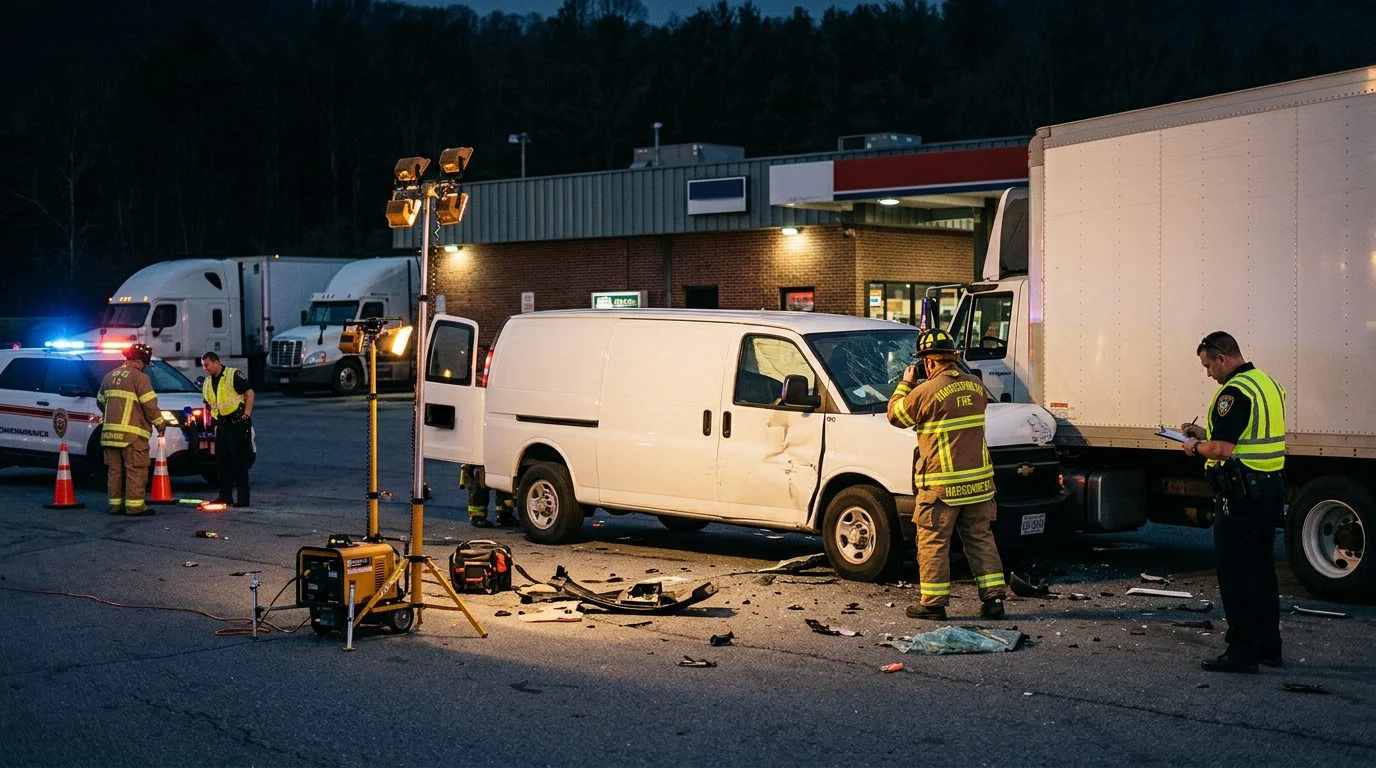
Harrisonburg | Commercial Vehicle Accidents
Hurt in a Work Van Crash? Learn Who May Be Responsible
A crash involving a company van can involve more than the driver in front of you. Here is how the facts can point to the people and businesses that may be answerable.
Published November 15, 2026
If a work van hit you or someone you love, one of the first questions is who is responsible. The answer can include the driver, the business that owns or directs the van, and other parties whose conduct helped cause the crash.
This guide explains how these claims differ from a crash with a personal car. It covers Virginia deadlines and fault rules, the evidence to protect, and what the process can involve. The facts of each crash decide how these rules apply.
What is a work van accident claim, and who is it for?
A work van accident claim is a personal injury or wrongful death claim that arises from a crash involving a van used for work. Examples include delivery vans, service vans, contractor vehicles and company-owned vans.
A van used for business raises questions a personal car usually does not. Who owned the van? Who was driving it? Was the driver working at the time? The answers shape who may be liable.
These claims may come from people hurt as drivers, passengers or pedestrians. Families of people killed in a crash may bring a wrongful death claim, covered below.
If a work van crash left you or a family member hurt, the firm is glad to talk through who may be responsible and what options may apply. Talk it through with Correll Law Firm — we can walk you through how a situation like yours is usually handled and what your options are.
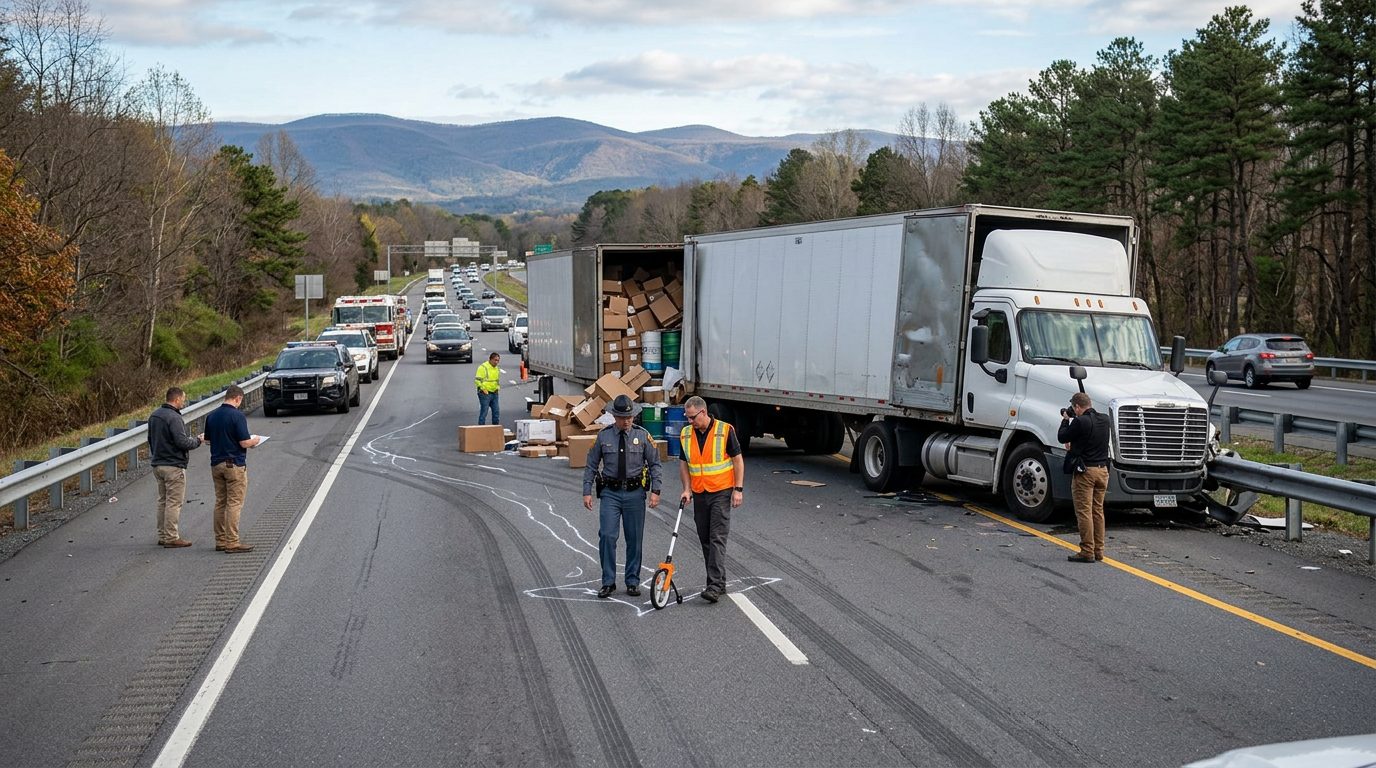
Who may be responsible when a work van crashes?
More than one party may be responsible, and the driver is only the starting point.
- The driver. A driver whose negligence caused the crash may be liable.
- The business. The company that owns, leases or directs the van may face a claim. A key question is whether the driver was acting within the scope of work at the time.
- Other contributors. A maintenance contractor, a vehicle maker or someone who loaded the van improperly may have played a part.
Company records often shape these cases. Dispatch logs, driver schedules, maintenance history and training files can show what happened before the crash. Companies subject to federal records rules must keep certain records for the minimum periods in appendix A to 49 C.F.R. part 379; after those periods, the records may be destroyed at the company’s discretion, but this does not excuse compliance with any other governmental body’s longer retention requirements (49 C.F.R. § 379.3). Requesting records early helps protect them.
What injuries and losses are common in work van crashes?
Van crashes can cause fractures, internal injuries, traumatic brain injury and spinal cord injury. Some of these injuries are catastrophic, meaning they can change a person’s life for the long term.
Serious injuries often need ongoing medical care, rehabilitation and an assessment of future needs. Brain and spinal cord injuries may not be fully clear right after a crash. Symptoms can appear or shift over days and weeks, so regular medical follow-up matters for both health and the claim record.
Losses fall into two groups:
- Economic losses: medical bills, lost wages and reduced ability to earn in the future.
- Non-economic losses: pain, emotional distress and a lower quality of life.
A common mistake is skipping a medical check because symptoms seem minor. Keep every record and bill from the start.
What should you do after a work van crash?
Get medical care, report the crash, and write down what you saw while it’s fresh.
- Get checked. Seek medical evaluation even if symptoms seem minor, and keep every record.
- Report the crash. Virginia requires a driver involved in a crash with injury or death to stop and report it to police immediately (Va. Code §§ 46.2-371, 46.2-894). The two-year period is the deadline to file a lawsuit, not to report a crash (Va. Code § 8.01-243).
- Document the scene. Photograph vehicle positions, damage, road conditions and the van’s company name or logo. Write down witness names and the driver’s name and employer if you know them.
- Keep a timeline. Record symptoms, missed work and daily tasks you can no longer do.
- Be careful with insurers. An insurer may ask for a recorded statement soon after a crash. You may wish to speak with a lawyer before giving detailed statements about fault.
What Virginia deadlines and fault rules shape a van crash claim?
Two Virginia rules often decide whether a claim moves forward: the filing deadline and the fault rule.
Virginia generally allows two years from the date of injury to file a personal injury lawsuit (Va. Code § 8.01-243(A)); the clock runs from the date of injury, not the date of discovery, with narrow exceptions. Some claims carry notice requirements that run out sooner.
Virginia follows contributory negligence: if you are found even partly at fault, you may be barred from recovering, with limited exceptions. Talk to a lawyer about your facts.
Early steps matter. Vehicles get repaired, scenes change and memories fade. Early requests for the crash report, witness names and the driver’s records help show how the crash happened.
How do punitive damages and wrongful death claims work after a van crash?
Punitive damages are limited to certain kinds of conduct, and wrongful death claims follow their own filing rules.
Virginia also limits the amount of punitive damages that can be awarded.
Virginia allows punitive damages for actual malice, or for willful or wanton conduct or recklessness showing a conscious disregard for the safety of others, capped at $350,000 (Va. Code § 8.01-38.1).
A Virginia wrongful death action is filed by the decedent’s personal representative within two years of the death (Va. Code §§ 8.01-50(C), 8.01-244(B)), on behalf of the family members the statute protects.
Virginia wrongful death damages cover the family’s sorrow, mental anguish and loss of the decedent’s companionship, guidance and care; lost income and services; medical expenses from the injury; funeral expenses; and, for willful or wanton conduct, punitive damages (Va. Code § 8.01-52).
Not sure what your next step is?
Talk it through with Correll Law Firm — we can walk you through how a situation like yours is usually handled and what your options are.
How does Correll Law Firm handle work van accident matters?
Correll Law Firm focuses on people hurt in car and commercial vehicle crashes and on families in wrongful death cases. The firm handles work van accident claims for people in Harrisonburg and across the Shenandoah Valley.
The firm has offices in Winchester and Harrisonburg. It serves people from the Shenandoah Valley, Richmond and Henrico County.
Work van matters often follow these steps:
- An initial review of the crash facts and injuries.
- Requests for the crash report and business records.
- Steps to preserve evidence, such as vehicle data and company files.
- Communication with insurers.
- If needed, filing a lawsuit within Virginia deadlines.
The firm handles claims against businesses and commercial vehicle owners. It works with medical providers to document injuries and treatment. Outcomes depend on the specific facts, and no one can promise a particular result.
Common questions about work van accident claims
Quick answers to common questions about these claims follow.
Can I bring a claim if the driver was a coworker or contractor?
Possibly. The claim may involve the driver, the business and other parties, depending on the facts.
Does a delivery van count as a commercial vehicle?
It can. How the van is used and registered affects the answer, so the facts decide it.
Does the crash location matter, such as on a rural road near Harrisonburg?
Location can affect where a case is filed and which facts are investigated. The firm reviews the specific crash.