
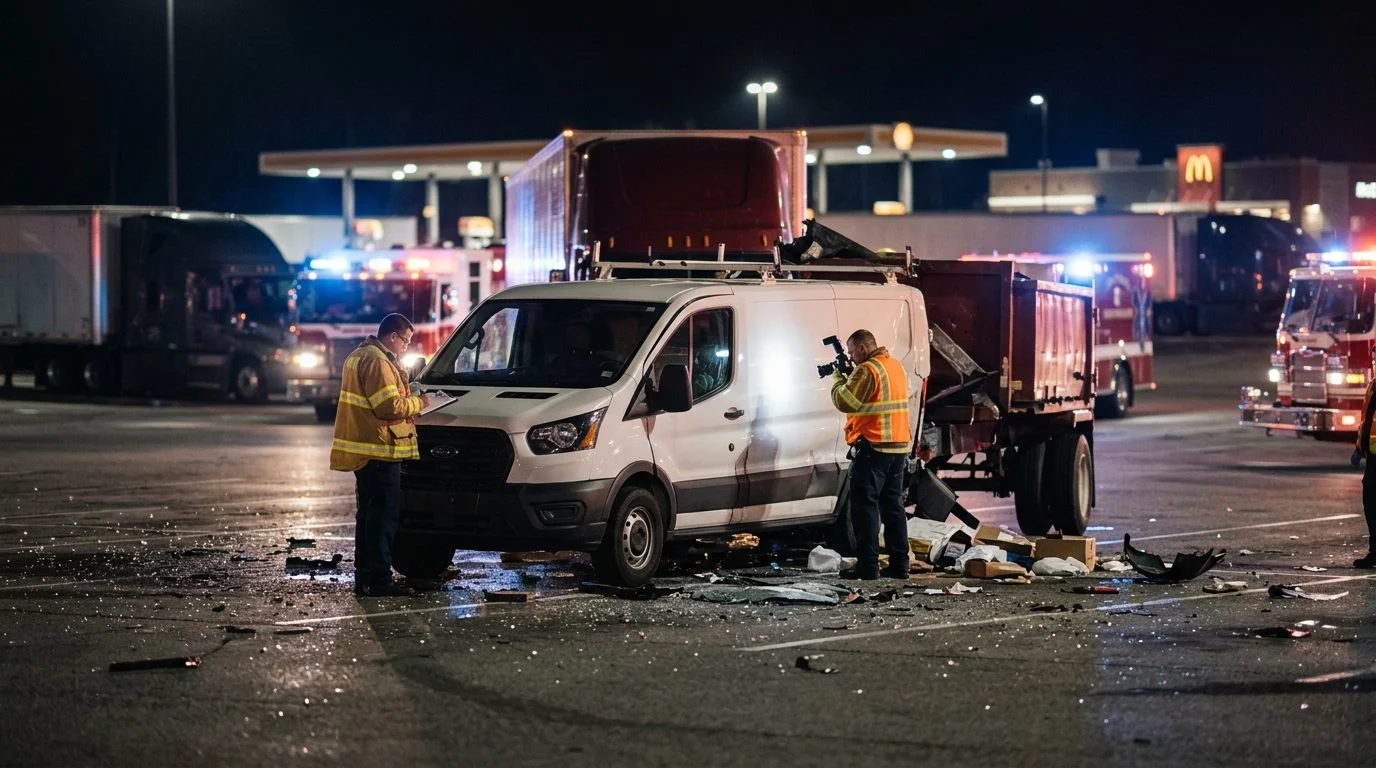
Work van crashes | Richmond and Henrico County
Hurt in a Work Van Crash? Start With Clear Answers
Work vans share busy roads with cars and trucks, and the people hurt in these crashes often face questions before they have answers. Here is how the firm approaches them, from the Shenandoah Valley to Richmond.
Published November 13, 2026
A work van crash can turn an ordinary workday into a medical emergency. If you or a family member was hurt in one in Richmond or Henrico County, you may be wondering who can be held responsible.
The short answer: a work van crash may support a claim against the driver who caused it, and sometimes against the business that used the van. Whether that applies depends on how the crash happened. This guide covers the basics, the steps that protect evidence, and the Virginia rules that affect timing.
What a Work Van Crash Claim Involves
A work van crash claim is a personal injury claim that arises from a crash involving a van used for work. That can mean a delivery van, a trade or service van, or a van that carries crews, tools, or equipment.
These crashes can look like ordinary car crashes from the outside. The legal questions behind them often differ. Who was driving, who owned the van, and why the driver was on that road can all matter.
This page is written for several groups:
- Drivers and passengers hurt in a work van, whether or not the van was theirs.
- Pedestrians and cyclists struck by a work van.
- Family members of someone killed in a work van crash.
Some commercial vehicles fall under federal safety rules. A summary of the general federal regulations appears in the FMCSR Part 390 general regulations. Those rules reach only certain vehicles, so the type of van matters.
If a work van crash left you or someone you love hurt, you do not have to face the questions alone, and the firm is glad to talk through your situation. Talk it through with Correll Law Firm — we can walk you through how a situation like yours is usually handled and what your options are.

Who May Be Responsible After a Work Van Crash
More than one person or business may be responsible for a work van crash. Who is responsible depends on how the crash happened and who controlled the van.
The other driver may be responsible if that driver’s carelessness caused the crash. The work van’s driver may also be responsible for how that person operated the van.
Questions like these often come up:
- Was the driver running a route under a delivery deadline?
- Was cargo or equipment loaded and secured?
- Was the van known to have a maintenance problem?
These examples raise questions. They do not predict how any claim will turn out. The van’s owner and the business that used it can be different companies, so leases, dispatch records, and trip logs can show who controlled the van. A work van accident lawyer in Richmond or Henrico County reviews these questions against the facts of each crash.
Injuries Common in Work Van Crashes
Work van crashes can cause serious injuries, including traumatic brain injury and spinal cord injury. Vans often carry heavy tools, racks, and loose cargo, and that load can add to the force of an impact.
Some injuries are obvious at the scene. Others are not. Symptoms of a brain injury, such as headache, dizziness, confusion, or memory trouble, can appear hours or days after a crash. Neck and back pain can also take time to appear.
That is why an early medical evaluation matters, even when an injury seems minor. A doctor records what was found and when, and those records become part of the story of the crash.
The firm’s practice includes catastrophic injuries, traumatic brain injury, and spinal cord injury cases. Catastrophic injuries are serious harms that can change a person’s life for years or permanently.
Steps to Take After a Work Van Crash
Get medical care first, then report the crash to police right away. Virginia requires a driver involved in a crash with injury or death to stop and report it to police immediately (Va. Code §§ 46.2-371, 46.2-894). The two-year period below is the deadline to file a lawsuit, not the deadline to report a crash (Va. Code § 8.01-243).
Other steps help protect your evidence:
- Get medical care, and keep every follow-up appointment.
- Photograph the vehicles, the cargo, the road, and any skid marks or road signs.
- Write down the names and contact details of witnesses.
- Note the driver’s name, the employer’s name, the van’s plate and identification numbers, and the insurance details.
- Write down the driver’s account of the crash as soon as possible.
- Keep a written log of symptoms, appointments, and missed work.
- Be careful with recorded statements to insurance companies.
Virginia Deadlines and Fault Rules to Know
Virginia generally allows two years from the date of injury to file a personal injury lawsuit (Va. Code § 8.01-243(A)); the clock runs from the date of injury, not the date of discovery, with narrow exceptions.
Some claims carry notice requirements that run out sooner.
Virginia follows contributory negligence: if you are found even partly at fault, you may be barred from recovering, with limited exceptions. Talk to a lawyer about your facts.
The rule is strict. The details of how the crash happened matter for that reason.
Damages and Wrongful Death in Work Van Cases
A Virginia wrongful death action is filed by the decedent’s personal representative within two years of the death (Va. Code §§ 8.01-50(C), 8.01-244(B)), on behalf of the family members the statute protects.
Damages awarded in a wrongful death case are distributed to beneficiaries under Va. Code § 8.01-53, which sets out who the beneficiaries are.
Virginia wrongful death damages cover the family’s sorrow, mental anguish and loss of the decedent’s companionship, guidance and care; lost income and services; medical expenses from the injury; funeral expenses; and, for willful or wanton conduct, punitive damages (Va. Code § 8.01-52).
Families often find the early weeks hard to sort through. Keeping the medical records, wage records, and funeral records in one place can make later questions easier to answer.
Not sure what your next step is?
Talk it through with Correll Law Firm — we can walk you through how a situation like yours is usually handled and what your options are.
How the Firm Handles Work Van Crash Cases
The firm’s offices are in Winchester and Harrisonburg, and it serves people from Richmond, Henrico County, and the Shenandoah Valley. Its work covers car accidents, truck accidents, commercial vehicle accidents, catastrophic injuries, traumatic brain injury, spinal cord injury, and wrongful death.
A typical matter moves through a few stages:
- An initial conversation about the crash, the injuries, and the people involved.
- Requests for the police report and insurance information.
- Preservation of evidence, such as vehicle data, photographs, and witness statements.
- Review of medical records and the work details tied to the crash.
- Negotiation with insurers, or a lawsuit where needed.
Timelines vary from one claim to the next, and insurers set their own response times. Early evidence matters because some of it, such as vehicle data and witness memories, can be lost over time.

Common Questions About Work Van Accident Claims
Here are short answers to common questions about work van crash claims in Virginia.
Can I make a claim against the driver of a work van that hit me?
A claim may be possible against the driver whose carelessness caused the crash. Whether one exists depends on the facts.
Is an employer always responsible when its van driver causes a crash?
What if I was partly at fault for the crash?
The partial-fault rule above applies, so the details of how the crash happened matter.
How long do I have to act?
Generally two years from the date of injury for a lawsuit (Va. Code § 8.01-243). Some notice requirements run out sooner.
Should I give a recorded statement to an insurer?
You may wish to speak with a lawyer before giving one.