
Commercial Vehicle Accidents | Shenandoah Valley
Injured in a Commercial Vehicle Crash? The Firm Can Help You Understand Your Options
Published October 29, 2026
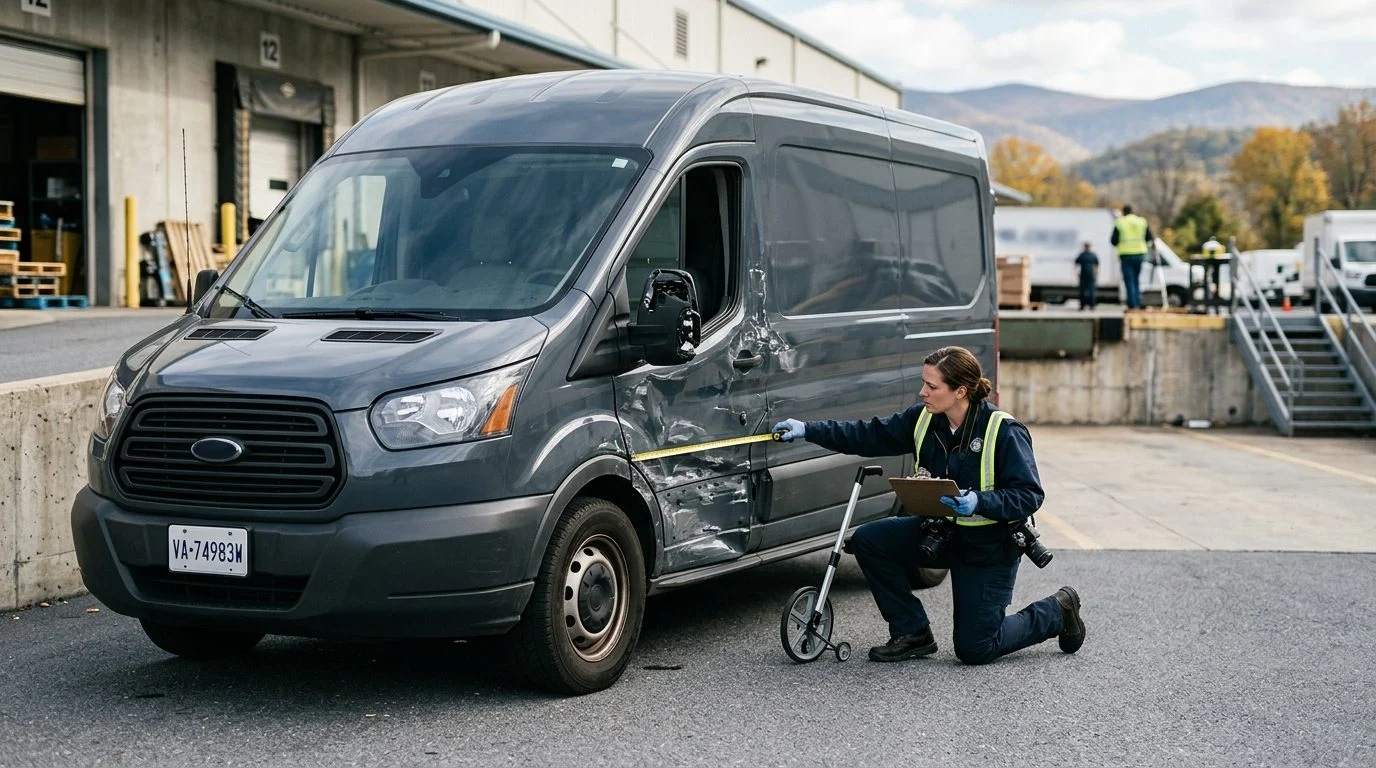
A commercial vehicle accidents law firm in the Shenandoah Valley can explain how these cases differ from ordinary car crashes. Trucks, buses and delivery vehicles raise questions about more parties and more records. This guide covers those differences in plain language, along with Virginia’s filing rules and what a claim usually involves.
What the Firm Handles in Commercial Vehicle Accident Cases
The firm handles commercial vehicle accidents, truck accidents and car accidents. It also handles catastrophic injuries, traumatic brain injury, spinal cord injury and wrongful death. A commercial vehicle is any vehicle used for work or business, such as a tractor-trailer, box truck, delivery truck or bus.
This page is written for three kinds of readers:
- Drivers and passengers hurt in a crash with a work vehicle.
- Pedestrians and bicyclists struck by a commercial vehicle.
- Families of people killed in these crashes.
The firm’s offices are in Winchester and Harrisonburg. It serves people from Shenandoah County and across the Shenandoah Valley. It also serves people in Richmond and Henrico County.
If a commercial vehicle crash hurt you or someone you love, you may have a claim, and the firm can talk through your facts with you. Talk it through with Correll Law Firm — we can walk you through how a situation like yours is usually handled and what your options are.

Why Commercial Crashes Involve More Parties and Records
A commercial crash can involve several companies and people, and the records can be harder to collect. Each party may hold part of the story, so the file often grows larger than in a car case.
Several parties can be connected to one crash. These may include the driver, the employer or carrier, the vehicle owner, a maintenance provider or the company that loaded the cargo.
Federal rules add another layer. Federal driving-hour limits apply to drivers of property-carrying commercial motor vehicles and control how long such a driver may drive and be on duty. Drivers also keep driver duty status records. Driver logs, electronic logging device data, dispatch messages, maintenance files and drug and alcohol test results can all matter.
Time matters too. Federal rules require carriers, other than private passenger carriers (nonbusiness), driveaway-towaway operations, or carriers operating only one commercial motor vehicle, to keep driver vehicle inspection reports for three months from the date they are prepared. That short window is why early requests to preserve records can matter. Commercial carriers have insurers and claims staff working for them, so the injured person’s side needs careful documentation.
Catastrophic Injuries, Brain and Spinal Cord Injuries, and Wrongful Death
Catastrophic injuries are serious injuries that can cause lasting impairment. Crashes involving large trucks can cause them.
A traumatic brain injury can affect memory, mood, concentration, work and daily tasks. Some symptoms are not obvious at the scene. Report every symptom to a doctor, even small ones, so the medical record shows what changed after the crash.
A spinal cord injury can cause paralysis and long-term medical needs. Those needs shape how a claim is documented, including treatment plans, work limits and daily care.
Wrongful death claims cover a family’s losses after a death, not the person’s own pain. A Virginia wrongful death action is filed by the decedent’s personal representative within two years of the death (Va. Code §§ 8.01-50(C), 8.01-244(B)), on behalf of the family members the statute protects. Virginia wrongful death damages cover the family’s sorrow, mental anguish and loss of the decedent’s companionship, guidance and care; lost income and services; medical expenses from the injury; funeral expenses; and, for willful or wanton conduct, punitive damages (Va. Code § 8.01-52).
First Steps After a Commercial Vehicle Crash
Start with medical care, then report the crash, then document what happened. Getting checked promptly, even when injuries seem minor at the scene, creates a record that links symptoms to the crash.
Virginia requires a driver involved in a crash with injury or death to stop and report it to police immediately (Va. Code §§ 46.2-371, 46.2-894). The two-year period is the deadline to file a lawsuit, not to report a crash.
When it is safe, document the scene. Useful details include:
- Photos of the vehicles, the scene, skid marks and road conditions
- Names and contact details of witnesses
- The commercial vehicle’s company name, unit number and DOT number, if visible
- The date and time of the crash
Keep a written journal of symptoms, treatment, missed work and daily limits. Save bills and receipts too. Think before giving a recorded statement to an insurance adjuster, because what you say can be used later.
How the Process Works for Commercial Vehicle Claims
A commercial vehicle claim usually moves through five steps, from first review to a lawsuit if one is needed.
- First case evaluation. The firm reviews the crash facts, injuries and available records with the injured person or family. It also identifies which parties may be involved.
- Evidence requests. The firm may send preservation letters and ask for logs, maintenance files, inspection reports and crash reports.
- Medical documentation. The firm works from treatment records. Where needed, it brings in outside medical and accident reconstruction professionals whose opinions can support the claim.
- Claim presentation. The firm communicates with insurers and other parties on the client’s behalf and reviews options with the client.
- Litigation, if needed. If a fair resolution is not reached, a lawsuit may be filed within the time limits that apply.
The timeline depends on the facts. Injury severity, the number of parties and how quickly records are produced all matter.
Virginia Deadlines and Fault Rules That Affect Your Claim
Virginia’s filing deadlines and fault rules can decide whether a claim moves forward. Virginia generally allows two years from the date of injury to file a personal injury lawsuit (Va. Code § 8.01-243(A)); the clock runs from the date of injury, not the date of discovery, with narrow exceptions.
Some claims have filing deadlines that run out sooner: unless otherwise provided in this section or by other statute, an action for personal injuries must be brought within two years after the cause of action accrues, so an early review helps.
Virginia follows contributory negligence: if you are found even partly at fault, you may be barred from recovering, with limited exceptions. Talk to a lawyer about your facts. The Virginia Court of Appeals has described this defense in Williams v. Harrison, 255 Va. 272 (1998).
Virginia allows punitive damages for actual malice, or for willful or wanton conduct or recklessness showing a conscious disregard for the safety of others, capped at $350,000 (Va. Code § 8.01-38.1). Commercial cases may involve driver fatigue, impairment or unsafe equipment. Those facts can bear on whether the conduct meets that standard.
Not sure what your next step is?
Talk it through with Correll Law Firm — we can walk you through how a situation like yours is usually handled and what your options are.
Where the Firm Works in the Shenandoah Valley
Interstate 81 runs through the Valley, and crashes on that route or on local roads can involve commercial traffic. A claim may draw on police reports, medical records and witness accounts from the area where the crash happened.

Frequently Asked Questions About Commercial Vehicle Accident Claims
How is a commercial vehicle claim different from a car accident claim?
It can involve more companies, federal safety rules and carrier records. Those details often shape who may be responsible.
Is a minor injury worth getting checked after a truck crash?
Yes. Some injuries, including brain injuries, may not show right away, so an early medical check creates a record.
Does the firm handle wrongful death cases from truck crashes?
Yes, the firm handles wrongful death matters. Family members share in any recovery, and a personal representative files the case for them.
Can the employer be part of a claim?
It can be. A carrier or employer may be named, depending on how the crash happened.