
Commercial Vehicle Accidents | Virginia
Police Crash Report for Commercial Vehicle Crash in Virginia
After a collision with a commercial truck or other commercial vehicle, the official crash report is often one of the first records people ask about. Here is how to think about it.
Published November 12, 2026
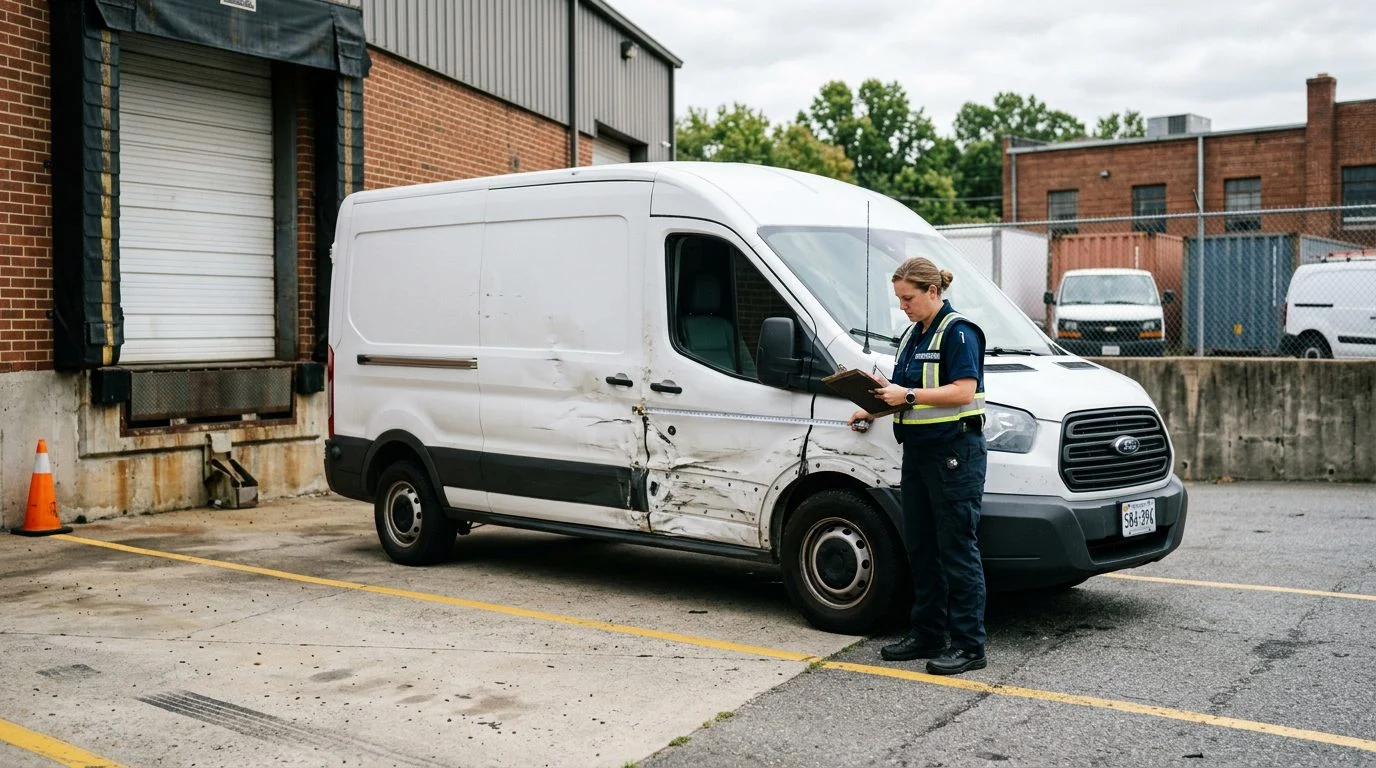
After a crash with a commercial vehicle, the official crash report is often the first record people need. To learn how to get a police crash report for a commercial vehicle crash in Virginia, start with the agency that responded to the scene and ask for the crash report by name.
This guide explains how to find that agency, gather the details it will ask for, request the report, and check it once it arrives.
What a Police Crash Report Is
A police crash report is the official record an agency prepares after an officer responds to a crash. People often call it a police report or an accident report, and the terms usually mean the same document. Some agencies use other names, so ask for the crash report by its formal name.
Do not confuse it with an incident or offense report. That is a separate record, and it may leave out the crash details you need.
A typical crash report lists the date, time, and location. It also lists each vehicle and driver, any passengers and witnesses, a diagram, and the officer’s notes. The report is a useful starting point because it records the basic facts close to the time of the crash.
If a commercial vehicle crash has left you or someone you love hurt, you do not have to sort out the paperwork alone. Talk it through with Correll Law Firm — we can walk you through how a situation like yours is usually handled and what your options are.

Why Commercial Vehicle Crashes Involve More Records
A crash involving a commercial vehicle usually creates more records than a crash between two cars. The police report is only one of them. A trucking or bus company may keep its own files, such as driver logs, dispatch records, inspection and maintenance history, and vehicle details.
The police report is one piece of the file, not the whole file. Keep it with your photos, medical records, and notes from the scene. For more on these crashes, read the commercial vehicle accidents guide.
Step 1: Identify the Agency That Responded
The agency that responded to the scene is the one that wrote the crash report. In Virginia, that is usually the Virginia State Police, a county sheriff’s office, or a town or city police department.
To tell which agency came, look for clues. Check the officer’s vehicle markings, the exchange-of-information card if one was handed out, and any case or incident number written down at the scene. If you are unsure, the other driver may remember the agency’s name.
Step 2: Gather the Details You Will Need
Gather the crash date, the exact location, and the names of the drivers before you request the report. A records unit can find a report faster with these details. Helpful items include:
- The crash date and time
- The exact location or nearest intersection
- The names of the drivers
- The plate numbers of the vehicles
- Any report or case number
Commercial vehicles carry identifying marks too. 49 C.F.R. § 390.21T sets marking rules for self-propelled commercial vehicles. Look for a USDOT number on the cab or door, since it can help identify the carrier. Write down the officer’s name and badge number if one was given.
Step 3: Request the Report
Request the report from the agency that responded. Most agencies take requests through an online portal, by mail, or in person at the records unit. For information on police crash reports, see the Virginia DMV police crash report request.
A request usually asks for the report number, the crash date, and proof of identity. Some agencies also ask how you are related to the people involved. Ask the records unit how long processing takes, because the time varies by agency.
Keep a copy of your request and any receipt or confirmation. Write down the date you asked and the name of the person who handled the request.
Step 4: Review the Report Carefully
Check the report against what you remember and what you wrote down at the scene. Start with the names, vehicle information, date, time, and location. A wrong plate number or street name can cause confusion later, so a quick check now helps.
Next, read the diagram, any citations, and the witness statements. If something is wrong or missing, raise it with the agency that wrote the report. Keep a written record of what you asked and when.
Also ask whether a supplemental report exists. An investigation can continue after the first report, and a later report can add details. A common mistake is assuming the first report is final.
Not sure what your next step is?
Talk it through with Correll Law Firm — we can walk you through how a situation like yours is usually handled and what your options are.

Reporting Duties and Deadlines to Keep in Mind
The reporting duty and the lawsuit deadline are separate questions. The first is about telling police about a crash. The second is about filing a case in court.
Virginia requires a driver involved in a crash with injury or death to stop and report it to police immediately (Va. Code §§ 46.2-371, 46.2-894).
Virginia generally allows two years from the date of injury to file a personal injury lawsuit (Va. Code § 8.01-243(A)); the clock runs from the date of injury, not the date of discovery, with narrow exceptions. Va. Code § 8.01-243 provides that, unless otherwise provided in that section or by other statute, every action for personal injuries, whatever the theory of recovery, must be brought within two years after the cause of action accrues.
One should not delay the other.
Frequently Asked Questions
Is a police report the same as an accident report?
Usually yes. The terms often refer to the same record, so ask for the crash report by name.
Can I get the crash report online?
Some agencies offer an online portal. Others take written or in-person requests.
Is a supplemental report the same as the first report?
No. A supplemental report can add details after the investigation continues.