
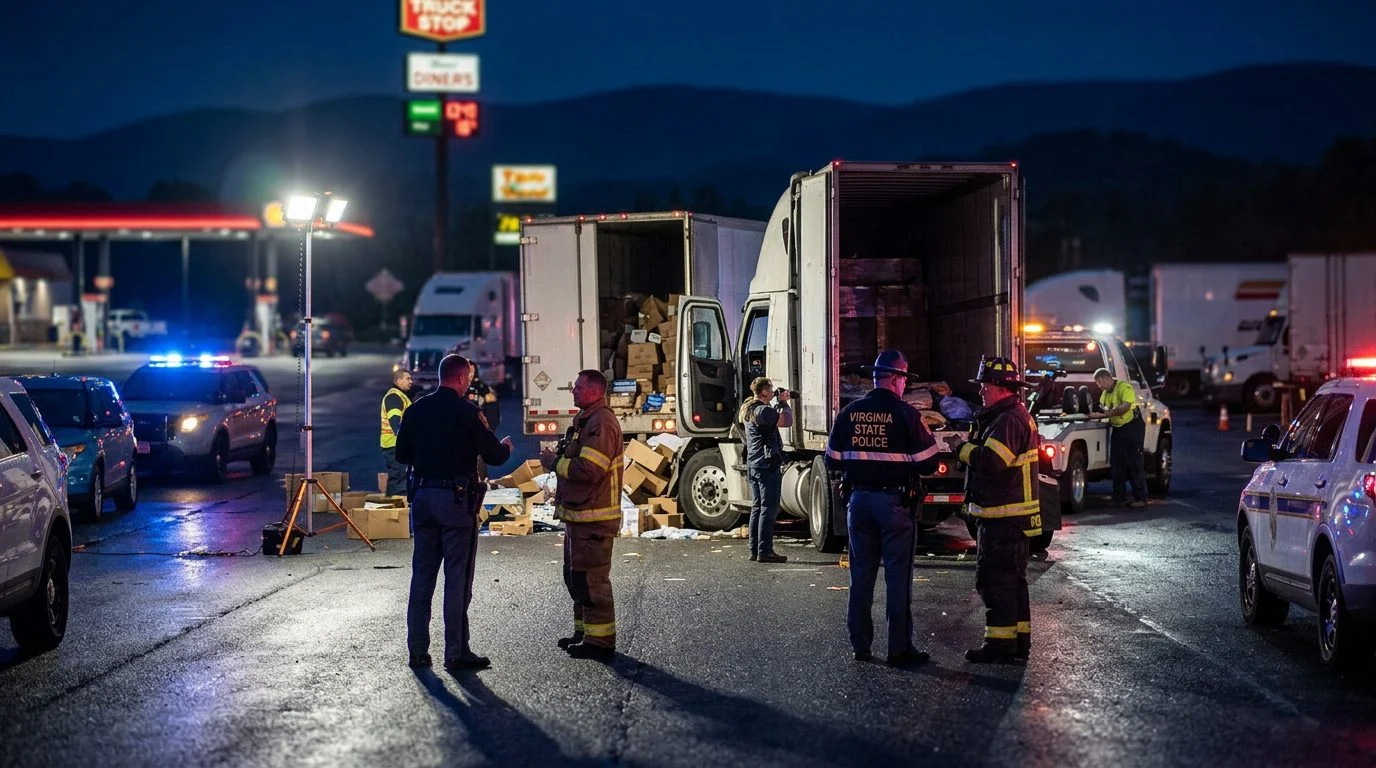
Truck Accidents | Virginia
Loose Cargo Truck Crashes: The Rules and Questions to Ask
A load that comes off a truck can turn an ordinary drive into a crash in seconds. Here is how these cases are framed in Virginia and what to bring to the first conversation.
Published November 15, 2026
A load that shifts or falls off a truck can cause a serious crash in seconds. If that happened to you or someone in your family, you may have many questions about what went wrong.
In short, federal rules require commercial trucks to keep cargo from spilling, blowing or falling off the vehicle. When a loose cargo truck crash happens in Virginia, the facts show who loaded, drove and operated the truck, and those facts shape who may be responsible. This page explains the rules in plain words.
What counts as loose cargo in a truck crash
Loose cargo is any load that shifts, slides, rolls, bounces or falls from a truck or trailer while it moves. Common examples include pallets of building materials, machinery, equipment, shipping containers, drums and bagged bulk goods. Items can also come loose from a tailgate, a door or a tarp that was not fastened.
Why would a load leave the truck while the truck is still on a highway? Trucks brake, turn, climb hills and hit bumps on every trip. Each of those forces pushes on the cargo. If nothing holds the load in place, it can slide or tip, and then it can fall into traffic.
Weight matters too. A heavy item that breaks loose can move into other lanes before the driver can react. Smaller items can still cause a crash if they land under a car’s tires.
If a loose load hurt you or someone in your family, you may have a claim, and the firm can talk through the facts with you. Talk it through with Correll Law Firm — we can walk you through how a situation like yours is usually handled and what your options are.
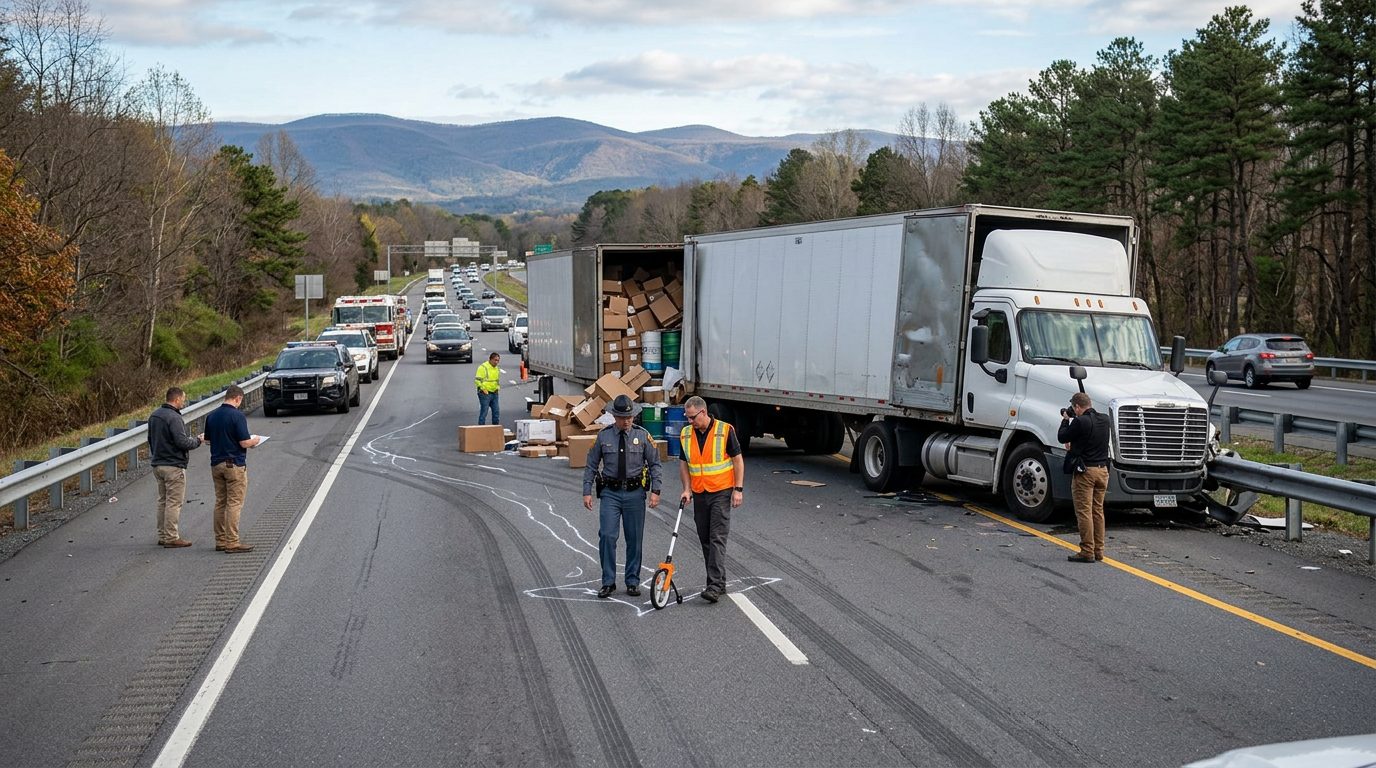
What the federal cargo securement rules require
Federal rules require that cargo on a commercial truck be secured so it does not leak, spill, blow or fall while the vehicle is on public roads. 49 CFR 393.100 states that its rules apply to trucks, truck tractors, semitrailers, full trailers, and pole trailers.
Cargo must be contained, immobilized or secured so it does not shift on or within the vehicle to an extent that hurts the vehicle’s stability or maneuverability.
The rules also explain how this is done. Under 49 CFR 393.106, cargo must be firmly immobilized or secured on or within a vehicle by structures of adequate strength, dunnage or dunnage bags, shoring bars, tiedowns or a combination of these, except bulk commodities that lack structure or fixed shape and are carried in a tank, hopper, box, or similar device that forms part of the vehicle. Items likely to roll must be restrained by chocks, wedges, a cradle or other equivalent means to prevent rolling, and those means must not be capable of becoming unintentionally unfastened or loose while the vehicle is in transit.
Performance criteria set the strength standards for straps, chains and other devices. In plain terms, the gear must hold up to the forces a truck creates when it brakes, turns and speeds up. For cargo not fully inside the truck’s structure, 49 CFR 393.102 requires a downward force of at least 20 percent of the article’s weight.
How a shifted or fallen load can lead to a crash
A loose load can cause a crash by blocking a lane, pulling a driver’s attention away from traffic or changing how the truck handles.
Objects in the road are the most direct danger. A driver who sees a box, pallet or metal piece ahead may brake hard, swerve or hit the debris. A sudden swerve can move a car into another lane or onto the shoulder.
Spilled liquids and loose material create other problems. Oil, paint, gravel or loose fill can reduce tire grip and make a lane slick. Debris can also block the view of other drivers.
A shift inside the trailer can change the truck itself. When cargo slides in a curve or during hard braking, the weight moves. The truck can then pull, sway or become harder to control.
Other people can be hurt too. Motorcyclists, pedestrians and other drivers may strike a fallen load or be struck by a driver who swerves. The truck is not the only vehicle in the picture.
Who might be responsible for securing a load
More than one party may share responsibility, because several people often handle a load before it reaches the road.
The federal rules speak to the driver and the motor carrier directly. A driver may not operate a commercial motor vehicle unless the cargo is properly distributed and adequately secured, and a motor carrier may not require or permit that driver to do so. See 49 CFR 392.9. A shipper or loader may also have packed the load, so the facts show who did what.
Injured people also ask how their own driving affects a claim. Virginia follows contributory negligence: if you are found even partly at fault, you may be barred from recovering, with limited exceptions. Talk to a lawyer about your facts.
Evidence people often ask about after a loose cargo crash
Photos, the police report and records about the load are often the first evidence people ask about.
Photos of the cargo, the roadway debris, the vehicles and the scene can show what came off the truck and where it landed. If the straps, chains, tiedowns or chocks are still in place, or have broken, that can also matter.
Trip records may matter too. Under 49 CFR 392.9, a driver of a truck or truck tractor must inspect the cargo and its securement devices within the first 50 miles after beginning a trip, except as provided in paragraph (b)(4), which excludes a sealed vehicle the driver has been ordered not to open and a vehicle loaded so that inspection of its cargo is impracticable. The driver must also reexamine them whenever duty status changes, after 3 hours of driving, or after 150 miles, whichever comes first.
Records often requested include bills of lading or shipping papers, driver logs and inspection records, when they are available.
Virginia requires a driver involved in a crash with injury or death to stop and report it to police immediately (Va. Code §§ 46.2-371, 46.2-894).
Injuries that loose cargo crashes can cause
Loose cargo crashes can cause broken bones, traumatic brain injury and spinal cord injury, depending on how the load and vehicles strike.
A falling item may hit a person in a car, on a motorcycle or on foot. A car that hits debris at highway speed can also spin, roll or strike a barrier. Occupants can be thrown against the interior or against each other.
Some injuries are not obvious at the scene, and symptoms can appear later. Records of each medical visit, symptom and treatment can help show the full picture. Many people also keep a simple log of time missed from work and the bills they receive.
Related information on documenting injuries is available on the firm’s spinal cord injury and traumatic brain injury pages.
Not sure what your next step is?
Talk it through with Correll Law Firm — we can walk you through how a situation like yours is usually handled and what your options are.
Deadlines and wrongful death questions
Virginia generally allows two years from the date of injury to file a personal injury lawsuit (Va. Code § 8.01-243(A)); the clock runs from the date of injury, not the date of discovery, with narrow exceptions.
Some claims carry notice requirements that run out sooner.
When a loose cargo truck crash causes a death, different rules apply. A Virginia wrongful death action is filed by the decedent’s personal representative within two years of the death (Va. Code §§ 8.01-50(C), 8.01-244(B)), on behalf of the family members the statute protects.
The action is brought by and in the name of the personal representative of the deceased person, but for a fetal death the natural mother brings it; if she dies or becomes a person under a disability as defined in § 8.01-2, the action may be initiated or maintained by the administrator of the natural mother’s estate, her guardian, or her personal representative qualified to bring such action. Each claim has its own timing rules, so avoid assuming one filing period covers every claim.
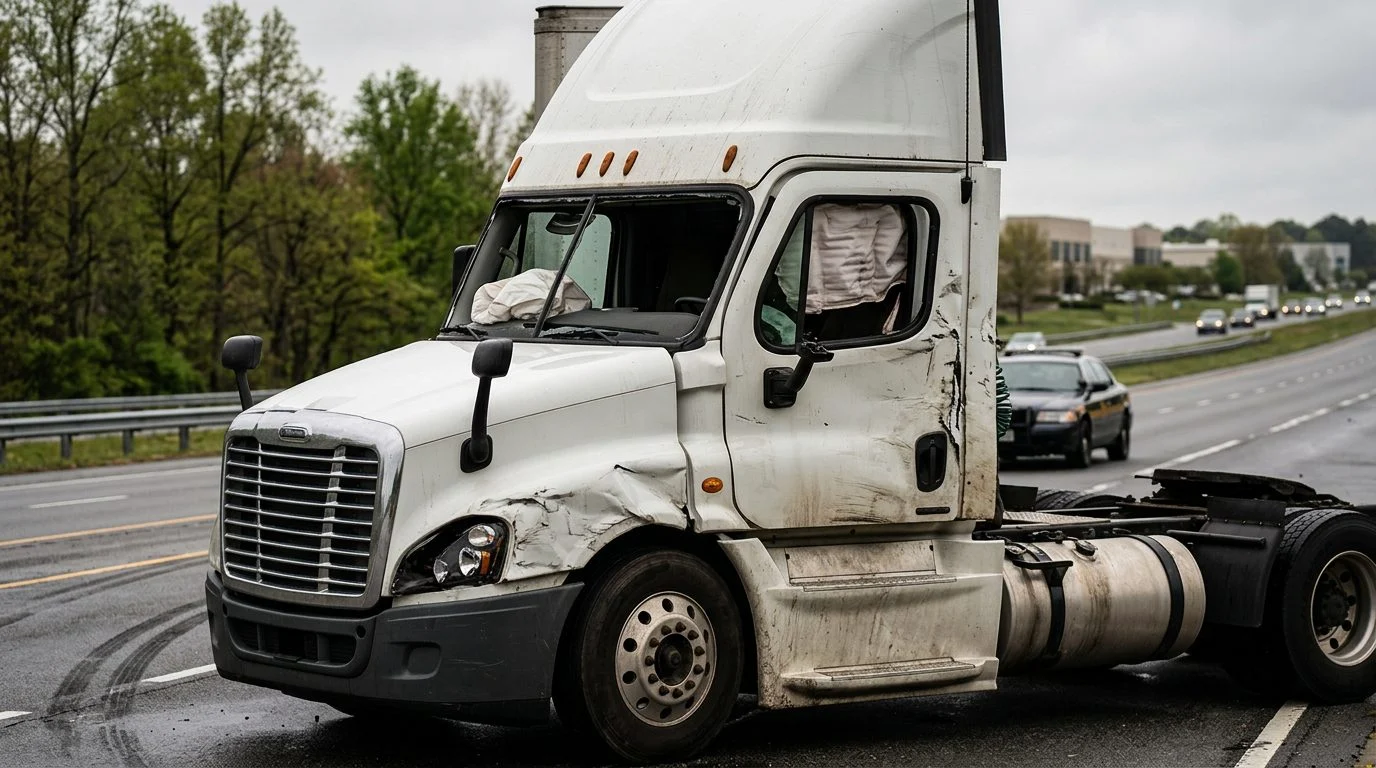
Common questions after a loose cargo crash
Keeping information from the day of the crash helps later review.
Keep photos and videos from your phone. Save text messages, emails and social media posts about the crash. Write down witnesses’ names and contact details while memories are fresh. Keep the police report number, medical bills, discharge papers and records of time away from work.
Photos of the lane, the debris and the truck’s markings or plate number can help. Notes about where objects landed can also help show how the load moved.
The firm handles truck accidents and commercial vehicle accidents for people in the Shenandoah Valley, Richmond and Henrico County, and it works from its Winchester and Harrisonburg locations. For broader background on truck crash claims and injury types, see the firm’s commercial vehicle accidents guide for Virginia.
Can debris from a truck cause a crash without a collision?
Yes. A driver may brake or swerve to avoid an object in the road, and that reaction can cause a crash with no direct contact with the truck.
Does a fallen item always mean the truck company was at fault?
Not always. A crash alone does not show who failed to secure a load, so the loading records and trip facts matter.