
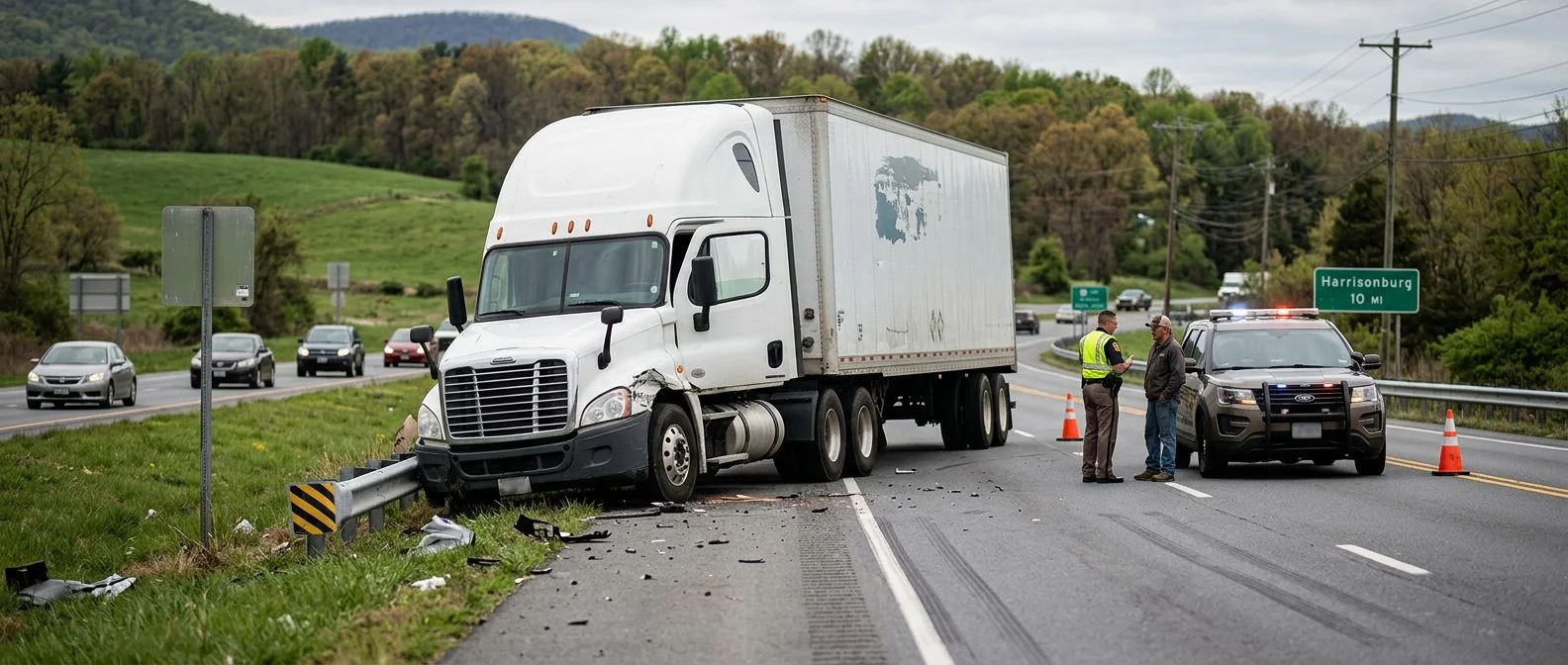
Truck Accidents | Winchester, Harrisonburg and Virginia
Who Runs the Truck? Understanding the Motor Carrier After a Virginia Crash
A commercial truck may have several companies tied to it. Here is how to tell which one operates the rig and why that name can matter.
Published November 11, 2026
After a crash with a large truck, many questions come fast. One of the most important is who actually ran the truck. A motor carrier is the business that operates commercial vehicles to move freight or passengers for pay.
The term is easy to confuse with the driver or the truck’s owner. Those can be different people or companies. This guide explains the term in plain words and why it matters for a claim.
What Is a Motor Carrier?
A motor carrier is a person or business that provides motor vehicle transportation for payment.
The term describes a business role. It is not a type of truck, and it is not a job title for a driver. A carrier can be a large company with a big fleet. It can also be a small fleet or one owner operating under a business name.
A broker is a different role. A broker arranges transportation by a motor carrier for pay, but it does not have to operate the trucks itself. Paperwork often uses both words, so read each name carefully.
Not sure what your next step is?
Talk it through with Correll Law Firm — we can walk you through how a situation like yours is usually handled and what your options are.
Driver, Owner and Carrier: Three Different Roles
In one crash, the driver, the vehicle owner and the motor carrier can be three separate parties. Each one has a different job.
The driver is the person operating the truck when the crash happens. The driver may work for a company, or may drive under a lease or contract.
The vehicle owner holds title to the truck. That owner may or may not be the company that runs the trucking operation.
The motor carrier runs the operation. It often dispatches loads, assigns drivers and decides which equipment goes on a trip.
One company can hold more than one role. A carrier may own its trucks outright. Or it may lease equipment from an owner. Federal lease rules require the lease to be made between the carrier and the equipment owner and signed by both parties (49 C.F.R. § 376.12). So the driver’s name alone does not tell you which company runs the operation.
Why the Motor Carrier Matters in a Claim
The motor carrier matters because federal rules place duties on it, not only on the driver. Under federal rules, it is the motor carrier’s duty to require drivers to observe the driver regulations (49 C.F.R. § 390.11).
Identifying the carrier early helps answer practical questions. Who holds the operating records? Who must produce them if asked? Federal rules require motor carriers to make accident records available to federal and state enforcement representatives and to authorized third-party representatives within the time a request specifies (49 C.F.R. § 390.15).
Commercial operations often create more paperwork than a private car trip. Trip records, maintenance files and driver records may all exist. How a claim is investigated depends on the facts. Naming the carrier does not, by itself, decide who is at fault.
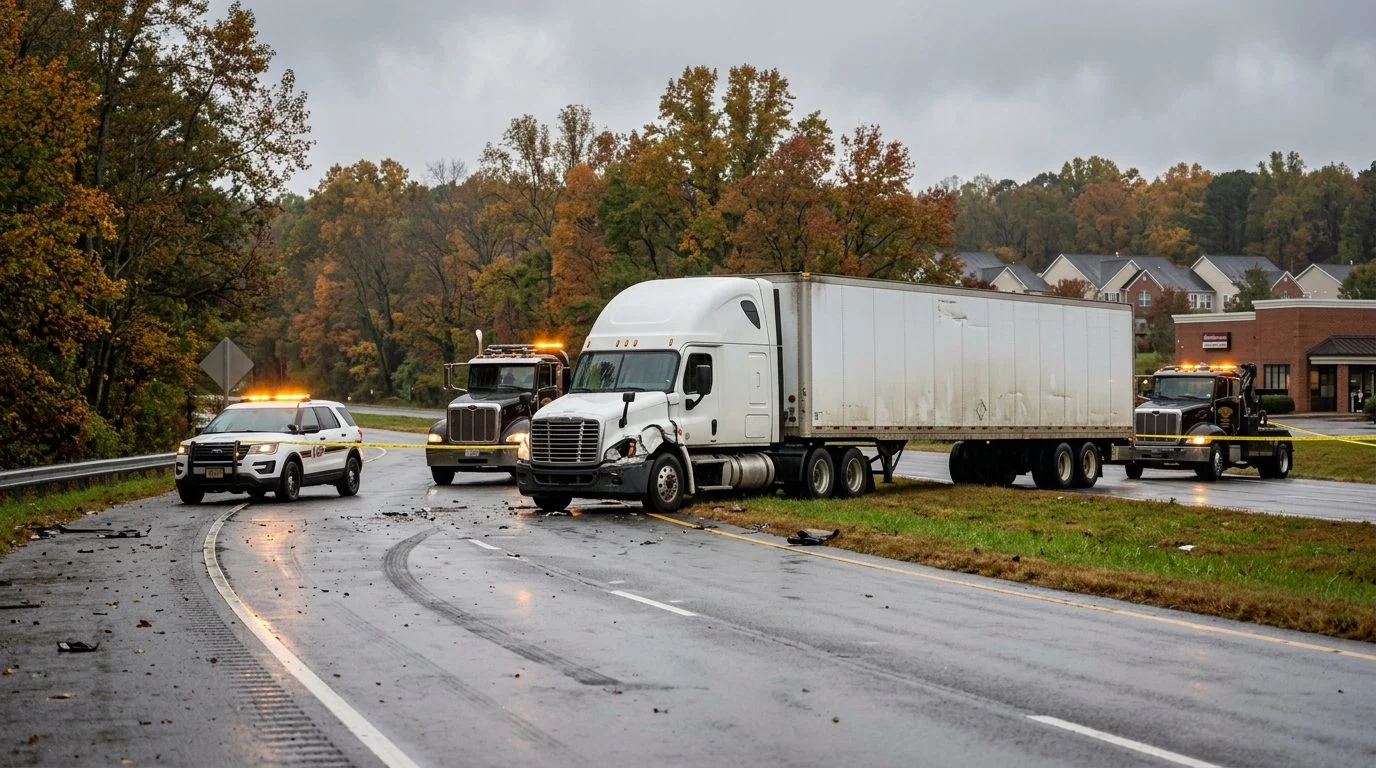
Where the Carrier’s Name Often Appears After a Crash
The carrier’s name often appears on the truck, in the driver’s paperwork and in the crash report. Each source can help confirm the picture.
Many commercial trucks show the company name on the cab or doors.
The driver may carry trip paperwork or shipping papers. These can show who the load was moving for and where it was headed. Police crash reports may list the vehicle owner, the carrier and identifying numbers, depending on what was recorded at the scene.
Carriers must also keep an accident register for three years after each accident. The register must contain at least the date, the city or town and State, the driver’s name, and the number of injuries and fatalities, whether hazardous materials were released (other than fuel spilled from the fuel tanks of the vehicle involved in the accident), and copies of accident reports required by State or other governmental entities or insurers (49 C.F.R. § 390.15). Details at the scene can be incomplete, and many can be confirmed later.
Timing and Why Early Records Matter
Virginia generally allows two years from the date of injury to file a personal injury lawsuit (Va. Code § 8.01-243(A)); the clock runs from the date of injury, not the date of discovery, with narrow exceptions.
Under Va. Code § 8.01-243(A), unless otherwise provided in that section or by other statute, every action for personal injuries, whatever the theory of recovery, must be brought within two years after the cause of action accrues. The timeline can matter before any lawsuit is filed.
Records have their own clock. Federal rules require motor carriers to keep records of duty status and supporting documents for at least six months from receipt (49 C.F.R. § 395.8). After that minimum period, those records may no longer be on file. Knowing the carrier’s name early helps identify which records to request before those periods pass.
Related Terms and Next Steps
A motor vehicle collision is the everyday phrase police and insurance paperwork use for a crash between vehicles. A road traffic accident, or RTA, is another term you may see in some reports and records for the same kind of event.
If a load shifted or was not secured, questions about cargo can point back to the carrier’s loading and operations. In fatal crashes, a medical examiner’s report may also be part of the file. The right next steps depend on the facts of each crash.
Is the motor carrier always the driver’s employer?
Not always. The carrier runs the operation, and the driver may work for a different company or under a lease.