
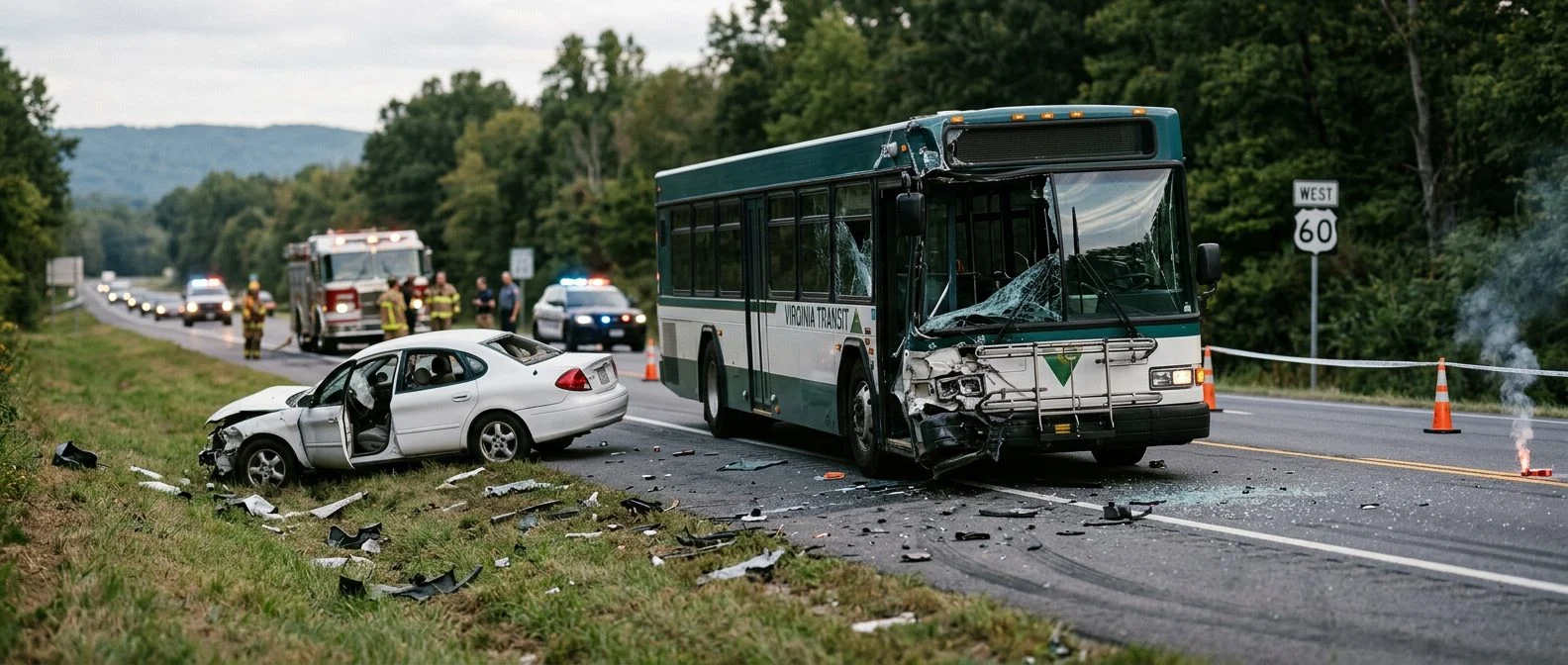
Virginia Commercial Vehicle Accidents | Bus Crash Injuries
Hurt in a Bus Crash? Know What Virginia Passengers Should Look For
Injuries from motorcoach and charter bus crashes can be serious and slow to show. Correll Law Firm, based in Winchester, represents people hurt in commercial vehicle crashes across the Shenandoah Valley, Harrisonburg, Front Royal, Richmond and Henrico County.
Published November 2, 2026
Bus crash injuries in Virginia can range from deep bruises to injuries that change a person’s life. Passengers, drivers, other motorists and pedestrians can all be hurt. This guide explains who may be affected, which injuries often follow, what records help, and how Virginia’s time limits work.
What Counts as a Motorcoach or Charter Bus Crash
A motorcoach or charter bus crash involves a large passenger bus that carries a group for a trip, tour or event. Motorcoaches, charter buses and tour buses are all part of the wider group of commercial vehicle accidents. The firm covers that broader category on its commercial vehicle accidents page.
A bus case often differs from a passenger car case. The bus is usually run by a company, and the driver works for that company. That can mean more people, more paperwork and more parties to review. Charter and tour trips often involve a booking company as well as a bus operator.
Buses travel long distances. Virginia’s major routes include Interstate 95 near Richmond and Interstate 81 through the Shenandoah Valley. A crash on a busy highway can involve many vehicles and many injured people at once.
Not sure what your next step is?
Talk it through with Correll Law Firm — we can walk you through how a situation like yours is usually handled and what your options are.
Who May Be Hurt in a Bus Crash
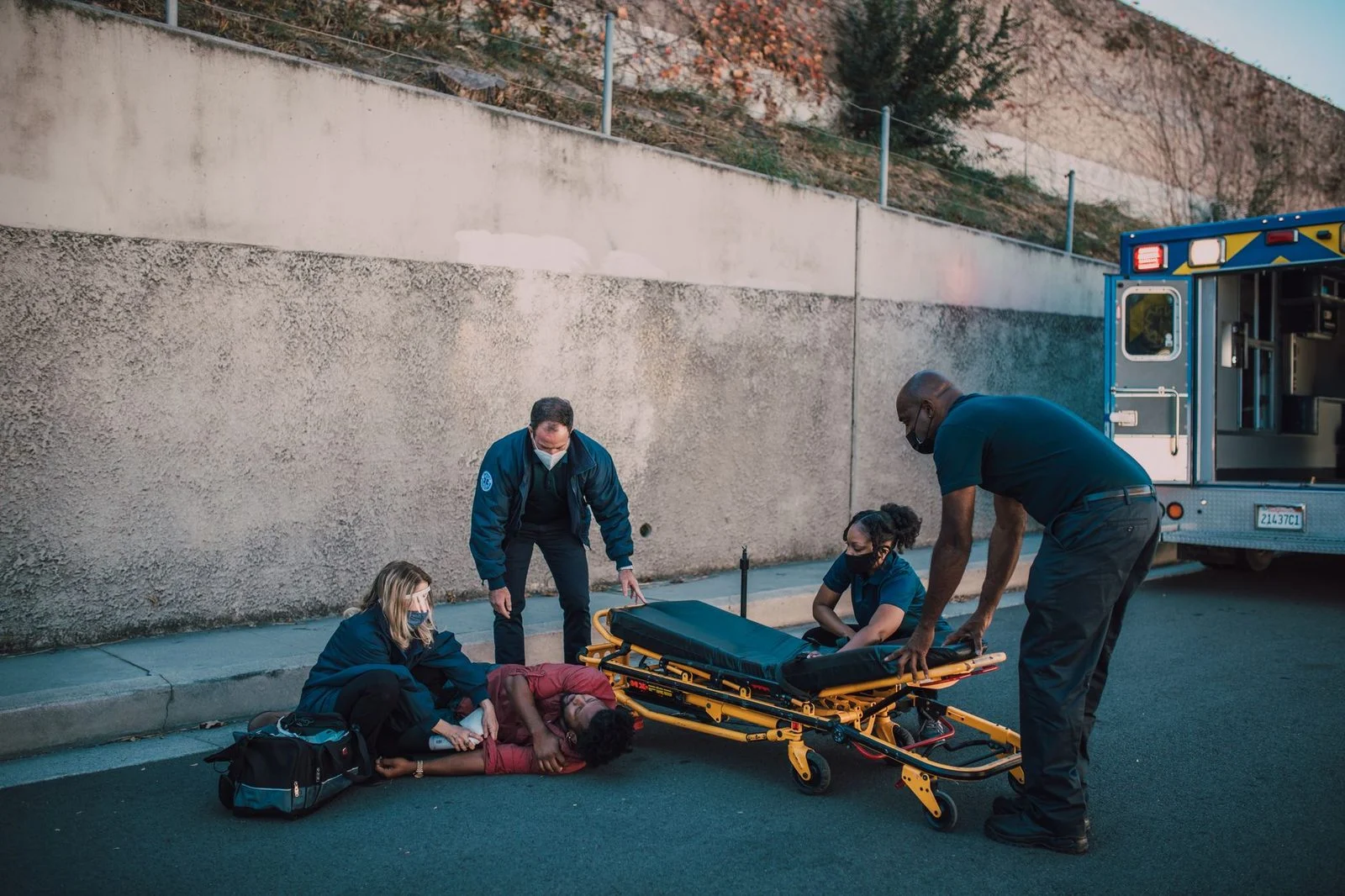
Anyone on or near a bus can be hurt when it crashes. Passengers are the most obvious group. People in seats, aisles and standing areas can all be injured. Those near the front or rear may experience the crash differently. A sudden stop or rollover can throw people into seats, windows and other passengers.
The bus driver can be injured too. The driver’s own conduct may also be reviewed after a crash, which is one reason the driver’s role matters in any review.
Other people are at risk as well. Drivers and passengers in smaller vehicles can be struck. Pedestrians and cyclists near a bus can be hit or pinned. Injuries can even reach people who never boarded the bus. A motorist on a highway may be hit by a bus that loses control. That is why a single crash can injure people in more than one place.
Injuries That Often Follow a Bus Crash
Traumatic brain injury and spinal cord injury are among the serious injuries that can follow a bus crash. A traumatic brain injury happens when a blow or jolt damages the brain. The Administration for Community Living notes that automobile crashes can cause traumatic brain injuries. Some symptoms may not show right away, so follow-up care matters. The firm’s traumatic brain injury page covers this in more detail.
Sudden stops, rollovers and hard impacts can also injure the spinal cord in the neck or back. Damage to the spinal cord can affect movement and feeling. The firm’s spinal cord injury page explains these injuries.
Bus crashes also cause broken bones, internal injuries, crush injuries and burns. People with several injuries may need care from more than one medical provider. Coordinated treatment helps track each injury and its care plan.
A passenger may feel fine at the scene and still need a medical evaluation. Adrenaline can mask pain for a while. When an injury is severe or long-lasting, the catastrophic injuries page describes what that can mean.
Why the Operator’s Identity Matters
The company whose name is painted on a bus may not be the company that ran the trip. A bus may be owned, leased or operated by different businesses. Each one may have its own records and insurance.
Useful details include the operating company’s name and address, the bus number or license plate, the driver’s full name, the trip or ticket number, and the charter or tour company that booked the trip. Photos of the bus’s exterior can capture these details quickly.
Knowing who operated the bus helps identify the records, insurers and people who may be part of the review of the crash. Identifying the operator is a step in understanding what happened. It is not a conclusion about who is at fault.
What Passengers and Drivers Should Write Down
Write down the basic facts of the crash as soon as it is safe to do so. Memories fade, and details disappear quickly after a crash.
- The date, time and exact location, plus the direction of travel.
- Weather, road conditions and the trip name or bus route.
- Your seat location and the names of the company and driver shown on tickets or signs.
- Contact details for other passengers, if they are willing to share them.
- Photos or video of the bus, the scene, damage, skid marks and visible injuries, with the date each was taken.
- The names, unit numbers and any incident number of responding officers.
Keep all medical records, bills, prescriptions, and receipts for travel and missed work. A written timeline of symptoms, kept day by day, can help show how injuries develop.
Reports, Company Records and Data That May Matter
Virginia requires a driver involved in a crash with injury or death to stop and report it to police immediately (Va. Code §§ 46.2-371, 46.2-894). The duty to report is separate from the deadline to file a lawsuit. The driver also must give reasonable help to injured people, including taking them to a physician, surgeon or hospital if it is apparent that medical treatment is necessary or if the injured person asks for it, under Va. Code § 46.2-894.
A police crash report, witness statements and scene photographs may help document how the crash happened. Early records often capture details that are hard to recreate later.
Company records can also matter. These may include driver schedules, trip records, maintenance logs, and training and inspection files. Electronic data on a bus may exist, and it may be lost if it is not preserved. Preservation requests should happen early, because records can be overwritten or discarded over time.
Not sure what your next step is?
Talk it through with Correll Law Firm — we can walk you through how a situation like yours is usually handled and what your options are.
Insurance Contact and Statements After a Bus Crash
The bus company’s insurer may contact passengers, drivers and families soon after a crash. This can happen before medical care is complete.
An insurance adjuster works for the insurer. The adjuster gathers information about the claim and may ask for a recorded statement or a signed release. Those documents can affect later steps, so they deserve careful review.
A person may wish to speak with a lawyer before giving a recorded statement or signing a release. Whether that makes sense depends on the facts of the situation.

Time Limits, Fault, and Wrongful Death Under Virginia Law
Virginia generally allows two years from the date of injury to file a personal injury lawsuit (Va. Code § 8.01-243(A)); the clock runs from the date of injury, not the date of discovery, with narrow exceptions. Some claims carry notice requirements that run out sooner. The statute appears in full at Va. Code § 8.01-243.
Fault can also change the outcome. Virginia follows contributory negligence: if you are found even partly at fault, you may be barred from recovering, with limited exceptions. Talk to a lawyer about your facts.
A Virginia wrongful death action is filed by the decedent’s personal representative within two years of the death (Va. Code §§ 8.01-50(C), 8.01-244(B)), on behalf of the family members the statute protects. Family members do not file the action. They share in any recovery. The filing rule is set out in Va. Code § 8.01-244.
Virginia wrongful death damages cover the family’s sorrow, mental anguish and loss of the decedent’s companionship, guidance and care; lost income and services; medical expenses from the injury; funeral expenses; and, for willful or wanton conduct, punitive damages (Va. Code § 8.01-52). The damages list appears in Va. Code § 8.01-52.
Virginia allows punitive damages for actual malice, or for willful or wanton conduct or recklessness showing a conscious disregard for the safety of others, and the total punitive award may not exceed $350,000 (Va. Code § 8.01-38.1). The firm’s wrongful death page covers these claims for families in more detail.