
Truck Accidents | Henrico County, Virginia
Rear-End Collisions With Semi Trucks in Henrico County
A rear-end impact with a loaded semi can leave families dealing with injuries, insurance letters and questions they never expected. Here is what makes these crashes different and how to think through the next steps.
Published November 16, 2026
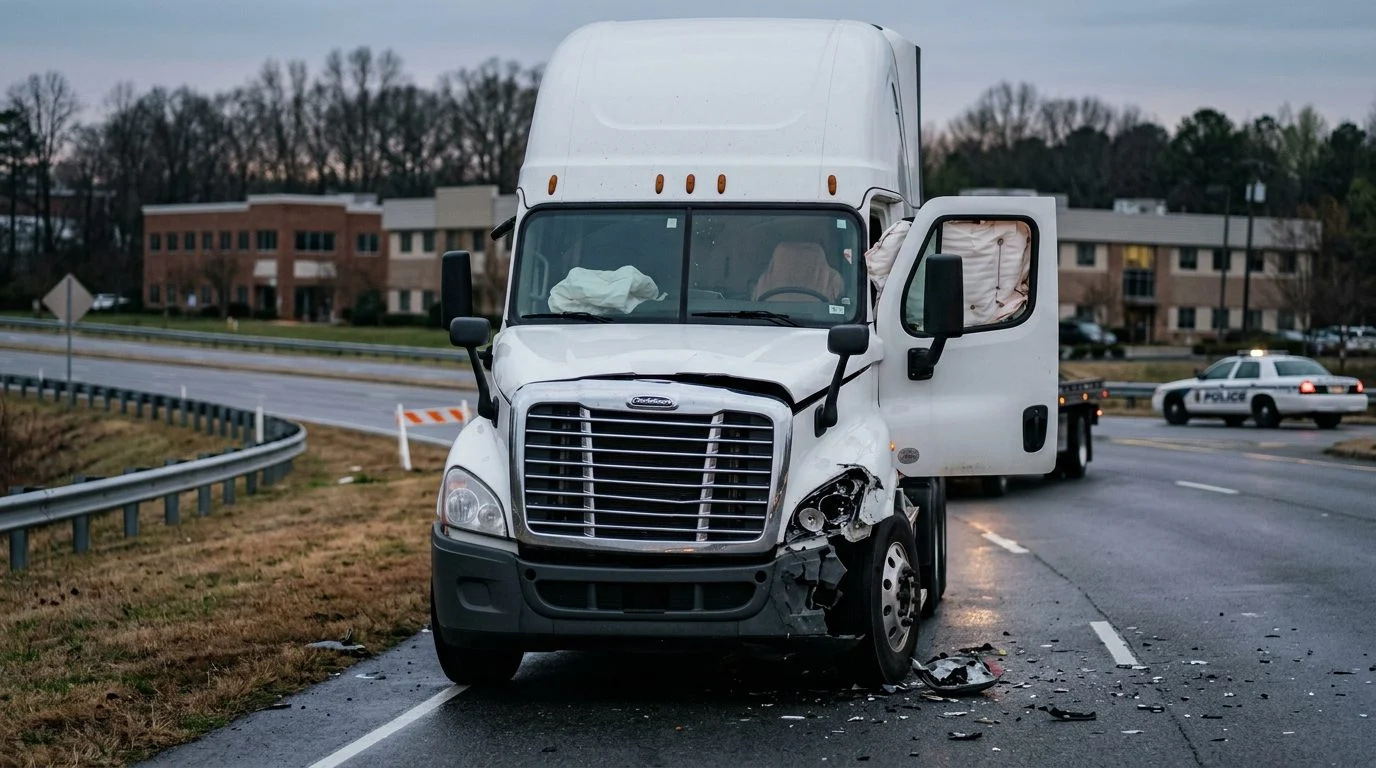
A rear end accident with a semi truck can change a family’s life in seconds. If a tractor-trailer hit you or someone you love from behind in Henrico County, you may have many questions about what comes next.
A claim after this kind of crash is usually a claim against the people or companies responsible. It may seek payment for medical care, lost income and other losses from the injury. Who is responsible and which deadlines apply depend on the facts of each crash. This guide explains what makes these crashes different and what steps help protect a claim.
What a Rear-End Collision With a Semi Truck Involves
A rear-end collision with a semi truck happens when a passenger vehicle hits the back of a tractor-trailer, or a truck hits a car from behind. On Henrico County roads and nearby highways, these crashes can happen when traffic slows suddenly.
A loaded truck weighs far more than a car and needs more distance to stop. Federal brake rules note that stopping distance is greatest for combinations of commercial vehicles (49 C.F.R. § 393.52). That is why the impact can be so severe.
This page is written for drivers, passengers, motorcyclists and families of people who were killed or seriously hurt. It explains general Virginia rules and the firm’s process.
If a semi truck struck you or a family member from behind in Henrico County, the firm can talk with you about whether you may have a claim. Talk it through with Correll Law Firm — we can walk you through how a situation like yours is usually handled and what your options are.
Common Causes of Rear-End Truck Crashes
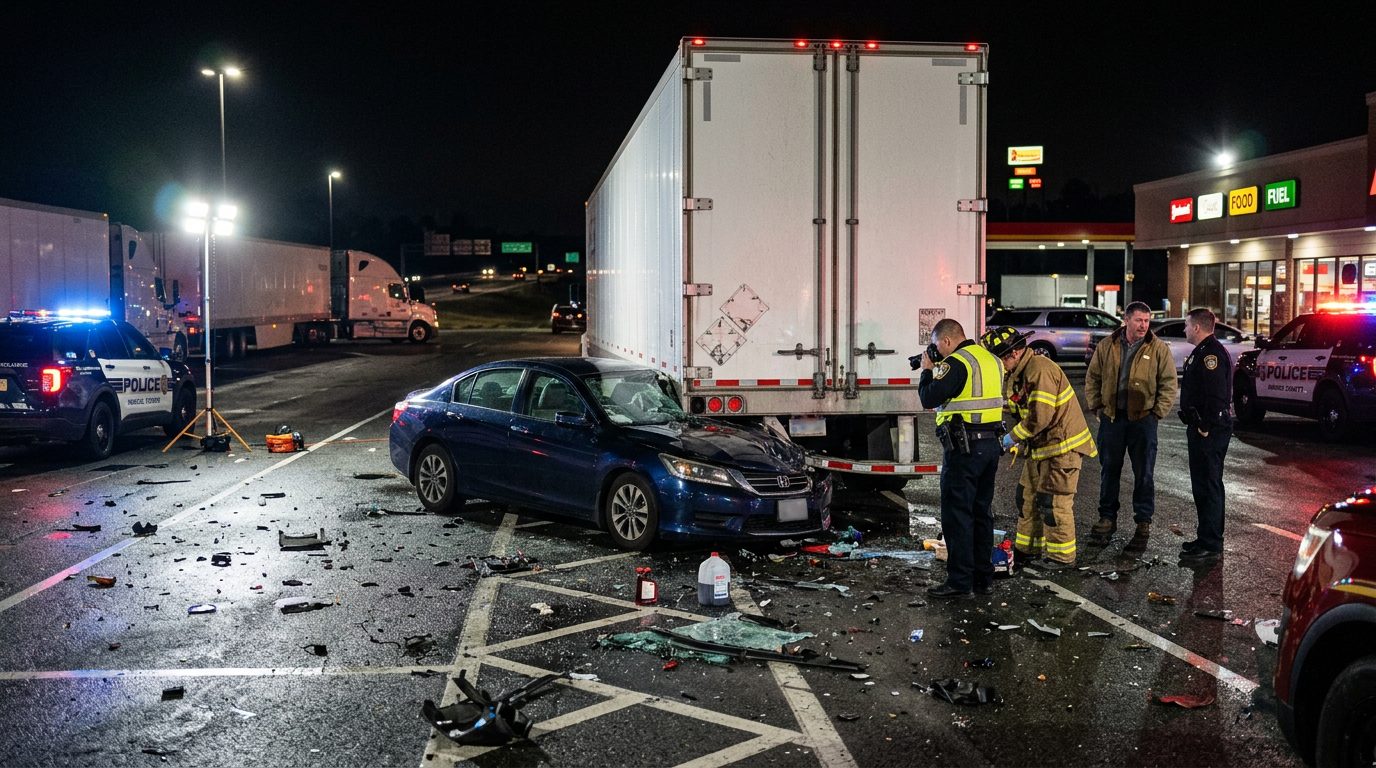
These crashes often trace back to a few common problems:
- Following distance: stopping too late or too fast in slowing traffic.
- Speed: driving too fast for wet pavement, low light or heavy traffic.
- Fatigue: federal hours-of-service rules limit driving time. A driver may not drive after 14 consecutive hours on duty that follows 10 consecutive hours off duty, and may drive a total of 11 hours in that period (49 C.F.R. § 395.3).
- Brakes: worn or poorly adjusted brakes that cannot stop the load in time.
- Distraction: phone use or inattention in the cab.
- Cargo and equipment: freight must be “firmly immobilized or secured” (49 C.F.R. § 393.106). Cargo and equipment: trailers with a gross vehicle weight rating of 10,000 pounds or more made after January 26, 1998 must have a rear impact guard, except pole trailers, pulpwood trailers, low chassis vehicles, special purpose vehicles, wheels back vehicles, road construction controlled horizontal discharge trailers, and trailers towed in driveaway-towaway operations (49 C.F.R. § 393.86).
Injuries and What a Claim May Cover
A claim may seek compensation for the losses an injury causes. Serious injuries in these crashes include traumatic brain injury, spinal cord injury, broken bones and internal injuries.
Some symptoms, including some brain injury symptoms, may not appear until days after a crash. Early medical records help connect the injury to the crash. Injury claims often look at medical treatment, lost income, earning capacity and pain and suffering.
When a crash causes a death, the damages are different. Virginia wrongful death damages cover the family’s sorrow, mental anguish and loss of the decedent’s companionship, guidance and care; lost income and services; medical expenses from the injury; funeral expenses; and, for willful or wanton conduct, punitive damages (Va. Code § 8.01-52).
Virginia allows punitive damages for actual malice, or for willful or wanton conduct or recklessness showing a conscious disregard for the safety of others, capped at $350,000 (Va. Code § 8.01-38.1).
Who May Be Responsible for a Truck Rear-End Crash
More than one person or company may share responsibility. The truck driver is only one possibility.
- The truck driver, for how the truck was driven, braked and kept at a safe distance.
- The trucking company, for how it managed the driver and the equipment.
- A maintenance shop or equipment owner, for brake, tire and lighting repairs.
- A shipper or loader, for freight that was not properly secured.
Federal rules require a motor carrier to keep driver duty-status records and supporting documents for at least 6 months from the date of receipt (49 C.F.R. § 395.8). The facts of each crash decide which parties the firm would look at.
Steps to Take After a Rear End Accident With a Semi Truck
Start with medical care and the required crash report. Then protect evidence and watch the filing deadlines.
- Get medical care right away, even if your injuries seem minor. Keep every record and bill.
- Report the crash. Virginia requires a driver involved in a crash with injury or death to stop and report it to police immediately (Va. Code §§ 46.2-371, 46.2-894). The two-year period is the deadline to file a lawsuit, not to report a crash (Va. Code § 8.01-243).
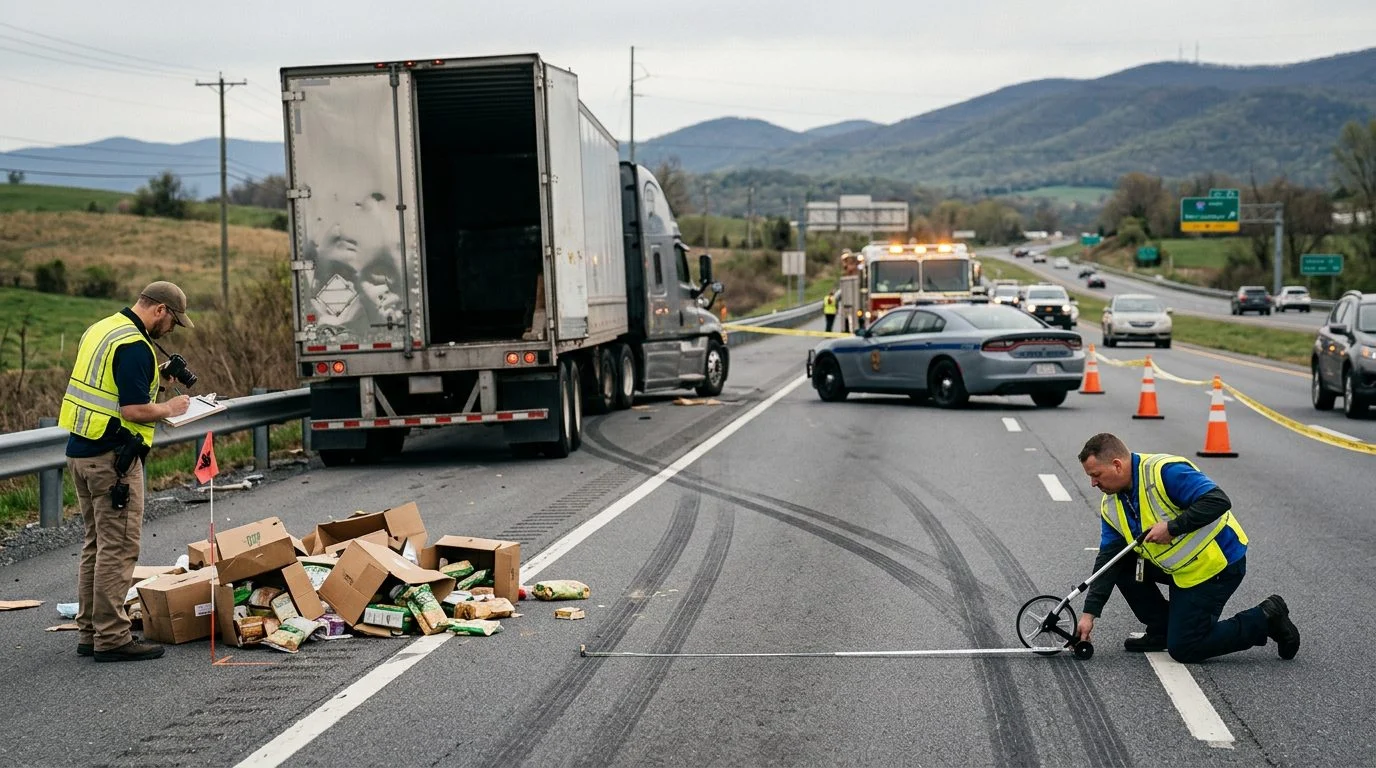
- Photograph the scene. Capture both vehicles, the truck’s rear, skid marks, lighting and road conditions. Collect witness names and contact details.
- Be careful with recorded statements. You may wish to speak with a lawyer before giving a recorded statement to a trucking company’s insurer.
- Ask in writing that the trucking company keep logs, dashcam footage, maintenance records and driver files. This evidence can be lost.
- Know the filing window. Virginia generally allows two years from the date of injury to file a personal injury lawsuit (Va. Code § 8.01-243(A)); the clock runs from the date of injury, not the date of discovery, with narrow exceptions. Some claims carry notice requirements that run out sooner.
How Fault Works in These Claims
Fault is often the central question in a rear-end crash. A trucking company may argue that the driver who was hit caused the crash, for example by braking suddenly or changing lanes.
Virginia follows contributory negligence: if you are found even partly at fault, you may be barred from recovering, with limited exceptions. Talk to a lawyer about your facts.
There can be more than one proximate cause.
Dashcam video, electronic logs and witness statements help test each side’s account.
Not sure what your next step is?
Talk it through with Correll Law Firm — we can walk you through how a situation like yours is usually handled and what your options are.
How the Firm Handles a Henrico County Truck Crash Claim
The firm starts with a confidential case evaluation that carries no obligation to continue. The steps below show what usually follows.
- First contact: a case evaluation to review the basic facts.
- Records review: the crash facts, medical records and any police report, plus early written requests to preserve evidence.
- Investigation: the truck, the driver’s records and the company’s policies. Accident reconstruction professionals or medical reviewers may be used when a case calls for them.
- Demand and negotiation: talks with insurers based on the documented injuries and losses.
- Lawsuit when needed: filing to protect the claim within the Virginia time limits described above.
Timing varies with injury severity, treatment and the insurer’s response. The firm’s offices are in Winchester and Harrisonburg. It serves people in Henrico County and Richmond, and the work is handled from those offices.
Support for Henrico County Families
The firm is based in Winchester, with an office in Harrisonburg. It handles car accidents, truck and commercial vehicle accidents, catastrophic injuries, traumatic brain injury, spinal cord injury and wrongful death claims.
The firm serves people across the Shenandoah Valley, throughout Virginia, and in Richmond and Henrico County.
The firm’s approach focuses on medical records, careful documentation of losses and keeping families informed at each step. Families facing a death often have many questions at once, and the firm explains each step in plain terms.
Frequently Asked Questions
How long do I have to file a claim after a rear-end truck crash in Virginia?
Most injury lawsuits in Virginia generally have a two-year filing window, and some claims carry shorter notice requirements. A wrongful death claim follows its own timing rule under Va. Code § 8.01-244.
What if the truck driver says I caused the crash?
Fault is often disputed in these cases. Dashcam video, electronic logs and witness statements help test each side’s account.
Should I give a recorded statement to the trucking insurer?
You may wish to speak with a lawyer before giving one. Being careful with what you say early can matter.
What injuries are the hardest to document?
Brain and spinal cord injuries often need detailed medical records gathered over time. What evidence is needed depends on the facts of each case.