

Truck Accidents | Winchester, Harrisonburg and the Shenandoah Valley
Spinal Cord Injury After a Truck Crash: Planning Ahead for What Comes Next
A plain-language guide to the medical, daily-life and legal questions that often follow a serious spinal injury in a commercial vehicle collision.
Published November 11, 2026
If you or someone you love was hurt in a truck crash, you may be facing many new questions at once. A spinal cord injury after a truck crash is damage to the nerves that carry signals between the brain and the body. What happens next depends on where the injury is, how complete it is, and the person’s overall health. This guide walks through what typically happens, from the first hospital days through rehabilitation and long-term care, and which records help document it.
What a Spinal Cord Injury Means After a Truck Crash
A spinal cord injury is damage to the bundle of nerves that carries messages between the brain and the rest of the body. The spinal cord runs inside the spine, protected by the bones of the back. A broken bone in the spine is a different problem. The bone can heal while the nerve tissue inside it does not heal in the same way.
Medical teams describe the level of injury. This means the highest point on the spine where nerve function is affected. The spine has three main regions: the cervical spine (neck), the thoracic spine (upper and middle back) and the lumbar spine (lower back). Movement and feeling are usually affected at and below the level of injury. A higher injury generally affects more of the body.
Doctors also describe an injury as complete or incomplete. A complete injury means no nerve signals pass through below the level of injury. An incomplete injury means some signals still get through. The medical team determines this through testing over time, not from the first scan alone. The VA Health Library explains that the level of injury and individual factors affect paralysis, daily activities and quality of life. It also notes that changes can occur over time.
Not sure what your next step is?
Talk it through with Correll Law Firm — we can walk you through how a situation like yours is usually handled and what your options are.

How Truck Crashes Cause Spinal Cord Injuries
Truck crashes often cause spinal cord injuries because the forces involved can be very large. A loaded commercial truck is far heavier than a passenger vehicle. In a collision, the body can be thrown forward, twisted or stopped suddenly. The head and neck can snap in ways that stretch or crush the cord.
Vertical compression is another common pattern. Force travels up through the spine from the lower body or from a hard impact on the head. This can fracture vertebrae or push them out of line, and the bone fragments can press on the cord.
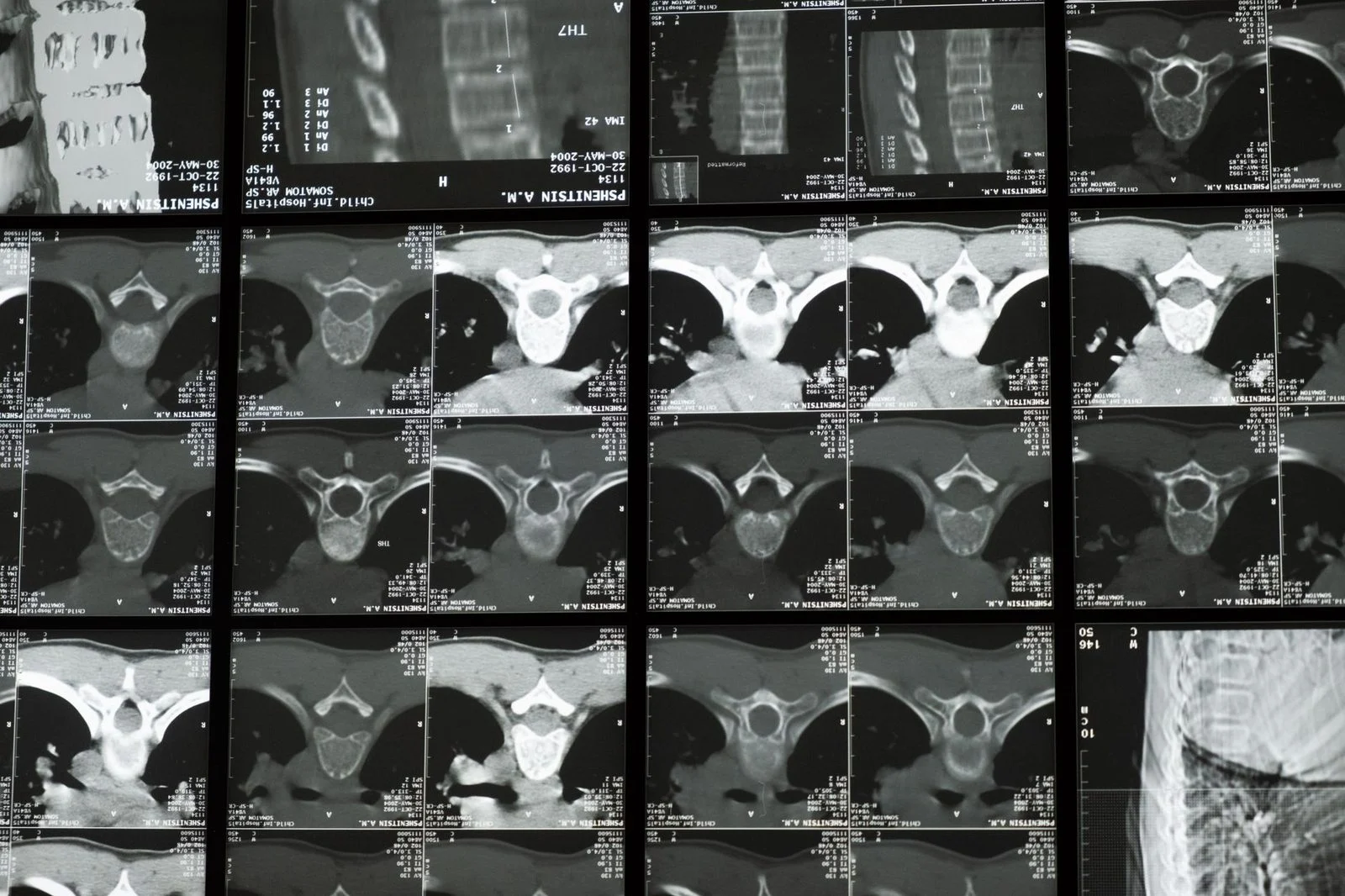
The way a crash happened helps doctors predict where damage is likely. A rollover, a rear-end impact and a side impact can each produce different patterns. Imaging, such as CT and MRI scans, then shows what the damage actually is. Car crashes can cause the same injuries. The size and weight difference between vehicles changes the forces involved, but no two crashes are alike.
The First Days: Emergency Care, Stabilization and Breathing
In the first days, the goals are to protect the spine and keep the person breathing. At the scene, responders keep the head and neck still. They move the person carefully on a backboard or other stabilizing device, so the spine is not twisted further.
At the hospital, the team usually orders CT and MRI scans. They also perform a neurological exam. This exam checks which movements and sensations are present or absent on each side of the body. Those findings become the baseline for every later exam.
Breathing is a special concern with neck injuries. Some nerves that control the diaphragm and chest muscles leave the spinal cord higher in the neck. A higher injury can weaken breathing. Medical teams may use a breathing machine for a period, and how long that lasts depends on the level and severity of the injury.
The first hospital charts, imaging reports and exam notes form the foundation for everything that follows. Keep copies of them from the start, and ask the medical team to explain any terms you do not understand.
Rehabilitation: What Recovery Can Involve
Rehabilitation is usually the main path to regaining function. It often begins in an inpatient setting, where a team works with the person every day. Physical therapy builds strength, balance and transfers, such as moving from a bed to a wheelchair.
Occupational therapy focuses on daily tasks like dressing, eating, bathing and writing. Speech therapy may help when swallowing or speaking is affected. Recovery often includes learning to use braces, wheelchairs, transfer boards or other equipment. Adapting the way a task gets done can be as important as regaining strength.
Improvement can occur over time for some people. The amount depends on the level and type of injury and on the person. Medical teams track progress through repeated testing, so the picture becomes clearer over weeks and months. Goals are usually set in small, concrete steps, such as sitting balance or self-care. The team reviews those goals regularly and changes them as needed.
Long-Term Care and Follow-Up Needs
Long-term care usually continues well after the hospital stay. Common ongoing needs include follow-up visits with physicians, pain management, bladder and bowel care, and skin care. Pressure injuries, also called bedsores, can develop when a person sits or lies in one position too long. Preventing them is a daily routine.
Many families talk with the medical team about changes at home. These may include ramps, bathroom modifications, adjustable beds or vehicle adaptations. Plans for these changes often take time, so starting the conversation early helps.
Complications can develop over time, even when a person feels stable. New numbness, new weakness, fever or trouble breathing should be reported to the medical team promptly. Keeping every appointment makes it easier to spot these changes early.
Long-term needs also shift. A plan of care that worked after the first year may need to change as the person’s condition changes. Revisiting the plan regularly is a normal part of this process.
Traumatic Brain Injury and Other Injuries That Occur With Spinal Damage
A truck crash can cause a traumatic brain injury along with a spinal cord injury. A traumatic brain injury is damage to the brain caused by a blow, jolt or penetrating force. It can happen even when the person never loses consciousness.
Symptoms such as memory problems, headaches, sleep changes or mood changes can appear later, not right away. That is one reason a brain injury can be missed in the first hours. Follow-up neurological testing helps catch these problems early, and it gives the medical team a fuller picture of recovery.
Fractures, internal injuries and soft-tissue damage also occur often in the same crash. Each one can add to the recovery process. Report every symptom to the medical team, including ones that seem minor. A small symptom can be an important clue.
Not sure what your next step is?
Talk it through with Correll Law Firm — we can walk you through how a situation like yours is usually handled and what your options are.
Keeping Records That Document the Injury
The most useful records show the injury and its effects over time. Keep hospital and rehabilitation charts, imaging reports, therapy notes, prescription records and receipts for medical travel. Ask for copies as each record becomes available.
Write a dated daily journal of pain levels, movement, sleep and daily activities. Use your own words and record what actually happened that day. Work records, wage statements and letters from an employer about missed time or changed duties show how the injury affected income and daily life.
Commercial trucks also generate records. Federal rules require some of them to be kept for set periods. Federal rules require the motor carrier, intermodal equipment provider, or other entity responsible for the inspection to keep the original or a copy of the periodic inspection report for fourteen months from the date of the inspection report (49 C.F.R. § 396.21). After the required period, records may be destroyed, so early requests matter.
Virginia has a reporting rule for crashes with injuries. Virginia requires a driver involved in a crash with injury or death to stop and report it to police immediately (Va. Code §§ 46.2-371, 46.2-894). The two-year period described below is the deadline to file a lawsuit, not to report a crash (Va. Code § 8.01-243). Virginia generally allows two years from the date of injury to file a personal injury lawsuit (Va. Code § 8.01-243(A)); the clock runs from the date of injury, not the date of discovery, with narrow exceptions.
Commercial Vehicle Crash Evidence and Why It Matters Early
Commercial trucks operate under federal and state safety rules, and those rules create paper trails. Driver logs, maintenance files and inspection reports may exist for a commercial vehicle. Drivers record their duty status, and federal rules prohibit false reports in connection with a duty status (49 C.F.R. § 395.8).
Records can still be lost or overwritten over time. That is one reason early preservation matters.
Photographs taken at the scene and the crash report can also help document how the crash happened. Keep any photos you or your family took, along with the names of anyone who saw the crash. For a broader view of how these claims are organized, read the commercial vehicle accidents guide.
If a Spinal Cord Injury Results in Death
A spinal cord injury can sometimes lead to death. When that happens, Virginia’s wrongful death rules apply, and the legal framework for the family changes. The rules are different from those for a personal injury claim.
Virginia wrongful death actions are filed by the personal representative of the person who died. The Virginia wrongful death action is filed by the decedent’s personal representative within two years of the death (Va. Code §§ 8.01-50(C), 8.01-244(B)), on behalf of the family members the statute protects.
Virginia wrongful death damages cover the family’s sorrow, mental anguish and loss of the decedent’s companionship, guidance and care; lost income and services; medical expenses from the injury; funeral expenses; and, for willful or wanton conduct, punitive damages (Va. Code § 8.01-52).
Family members share in any recovery, but they do not file the action themselves. Virginia distributes wrongful death damages to specified beneficiaries, beginning with the surviving spouse and the children of the deceased (Va. Code § 8.01-53).
Questions to Bring to the Medical Team
A short list of questions helps you track what the medical team is saying at each visit. Useful questions include what the level of injury is and whether it is classified as complete or incomplete. Ask what rehabilitation goals are set. Ask which symptoms should be reported right away, and what equipment or home changes the team advises.
Keep a running list of questions between appointments so none are forgotten. Ask for copies of records and imaging reports as they become available. Bring the journal and the list to each visit.
Each person’s path is different. Stabilization, rehabilitation, long-term care and careful documentation are the usual steps, but the timing and results of each step vary from one person to the next.
Common Questions
Can a person with a spinal cord injury from a truck crash walk again?
Improvement can occur over time for some people. The amount depends on the level and type of injury and on the person.
Can a spinal cord injury cause breathing problems?
Yes. Injuries higher in the neck can affect the nerves that control the diaphragm and chest muscles.
Can a traumatic brain injury happen with a spinal cord injury?
Yes. A truck crash can cause both injuries at the same time, so follow-up testing for each is important.