
Truck Accidents | Shenandoah Valley and Richmond
Hurt in a Tractor-Trailer Rear-End Crash?
A collision with a big rig can change a family's life in seconds. Correll Law Firm works with people across Virginia who are dealing with the injuries, the paperwork and the questions that follow.
Published November 13, 2026
A tractor-trailer crash can change a family’s life in seconds. If a big rig hit the back of your car, SUV or pickup in Virginia, you may be asking whether you can bring a claim.
Yes, a person hurt in a rear-end crash with a semi truck may be able to sue the parties responsible. Whether a claim exists depends on how the crash happened and what injuries followed. This guide explains the basics of a tractor trailer rear end accident claim under Virginia law and federal trucking rules.
What a Tractor-Trailer Rear-End Crash Claim Covers
A tractor-trailer rear-end claim seeks compensation for harm when a large truck strikes the back of a passenger vehicle. Injured drivers and passengers can bring these claims. When a crash causes a death, a wrongful death claim falls under Va. Code § 8.01-50 and must be brought by and in the name of the personal representative of the deceased.
A typical car crash often involves two drivers. A truck crash often involves more. The driver, the company that employs or contracts with the driver, the truck’s owner and sometimes a freight broker who arranged the load may each be involved. Each may hold records that matter.
Federal trucking rules add another layer. They set driving-time limits, post-crash testing duties and equipment standards for many commercial trucks. They also shape what evidence exists after a crash.
If a tractor-trailer struck you or someone you love, you do not have to sort out the facts alone, and Correll Law Firm can talk through what they may mean for you. Talk it through with Correll Law Firm — we can walk you through how a situation like yours is usually handled and what your options are.

Can You Sue After Being Rear-Ended by a Semi Truck?
Being hit from behind does not settle who was at fault. A truck may have stopped suddenly, lost its brakes, or been driven by someone who was tired. The real question is what caused the crash.
A Virginia lawyer can explain how these rules apply to the facts of your crash.
Who Is at Fault in a Rear-End Collision in Virginia?
Fault turns on what each driver did, not just on the order of the vehicles. Common causes in truck crashes include:
- Following too closely for traffic and road conditions
- Driving faster than conditions allow
- Distraction, including phone use
- Driving while fatigued
- Alcohol or drug impairment
- Brake failure or poor maintenance
Federal hours-of-service rules limit fatigue. A driver may not drive after 14 consecutive hours on duty, following 10 consecutive hours off duty. A driver may drive 11 hours in that period. Under federal hours-of-service rules, driving a property-carrying commercial motor vehicle is not permitted if more than 8 hours of driving time have passed without at least a consecutive 30-minute interruption in driving status, except for drivers who qualify for either of the short-haul exceptions in § 395.1(e)(1) or (2) (49 CFR 395.3).
Virginia follows contributory negligence: if you are found even partly at fault, you may be barred from recovering, with limited exceptions. Talk to a lawyer about your facts.
Why Rear-End Truck Crashes Often Cause Serious Injuries
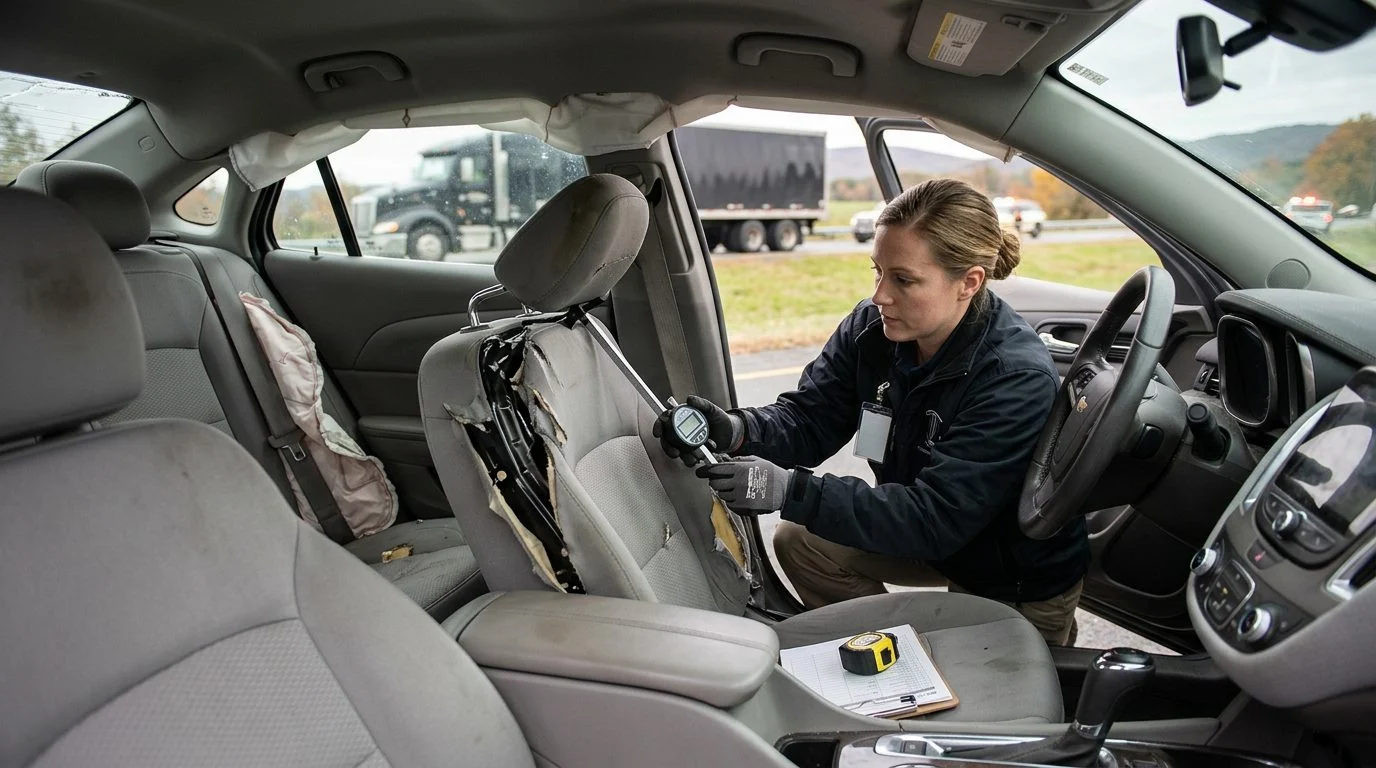
Rear-end truck crashes often cause serious injuries because a loaded tractor-trailer is far heavier than a passenger vehicle. Federal rules also set a safety standard for the rear of many trailers. With some exceptions, each trailer or semitrailer with a gross vehicle weight rating of 10,000 pounds or more, made on or after January 26, 1998, must have a rear impact guard that meets federal standards. The guard’s lower edge may not sit more than 22 inches above the ground (49 CFR 393.86).
A guard that is missing, damaged or set too high may not protect the passenger compartment of a car. Serious crash injuries can bring long-term medical bills, lost work and changes in daily life. Some symptoms show up later, so write down every change and keep every medical visit.
Evidence That Can Disappear Quickly After a Truck Crash
Trucking records are kept for set periods, so the early weeks after a crash matter. Federal rules require a motor carrier to keep records of duty status and supporting documents for at least six months from receipt (49 CFR 395.8). That is a minimum, and a request made late may come too late.
For controlled substances, attempts stop after 32 hours, and the reasons must be recorded (49 CFR 382.303).
Records that often matter include driver qualification files, hours-of-service logs, maintenance and brake records, cargo paperwork and testing records. Waiting to ask for them can leave a gap in the record.
Crash Reporting and the First Steps After the Crash
Virginia requires a driver involved in a crash with injury or death to stop and report it to police immediately (Va. Code §§ 46.2-371, 46.2-894). The lawsuit deadline covered in the FAQ below applies to filing a lawsuit. It is not a deadline for reporting a crash.
Useful first steps include:
- Get medical care and follow the treatment plan you are given.
- Keep a written log of symptoms, appointments and missed work.
- Photograph the scene and vehicles when it is safe to do so.
- Note the truck’s company name, unit number and any witnesses.
- Keep copies of every insurance letter and claim message.
Not sure what your next step is?
Talk it through with Correll Law Firm — we can walk you through how a situation like yours is usually handled and what your options are.
Who May Be Responsible and What Damages Can Include
More than one party may be responsible for a tractor-trailer crash. The driver, the company that employs or contracts with the driver, the truck owner and a broker who selected the carrier may each be involved. Maintenance or loading contractors may also play a role, based on the evidence.
Injured people may seek compensation for medical bills, lost income and other losses caused by the crash.
Wrongful Death Damages
Virginia wrongful death damages cover the family’s sorrow, mental anguish and loss of the decedent’s companionship, guidance and care; lost income and services; medical expenses from the injury; funeral expenses; and, for willful or wanton conduct, punitive damages (Va. Code § 8.01-52).
Why Correll Law Firm Handles These Claims
Correll Law Firm handles claims arising from tractor-trailer and commercial vehicle crashes in Virginia. The firm’s offices are in Winchester and Harrisonburg. It serves people from the Shenandoah Valley, Richmond and Henrico County.
The firm handles:
- Car accidents
- Truck accidents and commercial vehicle accidents
- Catastrophic injuries
- Traumatic brain injury
- Spinal cord injury
- Wrongful death
The firm reviews the crash facts, the injuries and the records in each matter.

Frequently Asked Questions
How do I know whether the driver or the trucking company is responsible?
Responsibility turns on the crash facts. Driver logs, maintenance records and testing records often help answer that question.
Can a trucking company be responsible for what its driver did?
In some situations, a company can be responsible for its driver’s negligence on the job. Hiring files and work records can help show that connection.
What is the deadline to file a personal injury lawsuit in Virginia?
Virginia generally allows two years from the date of injury to file a personal injury lawsuit (Va. Code § 8.01-243(A)); the clock runs from the date of injury, not the date of discovery, with narrow exceptions. Some claims carry notice requirements that run out sooner.
Who can bring a wrongful death claim in Virginia?
A Virginia wrongful death action is filed by the decedent’s personal representative within two years of the death (Va. Code §§ 8.01-50(C), 8.01-244(B)), on behalf of the family members the statute protects.