
Accident Guide | Winchester, Harrisonburg and Virginia
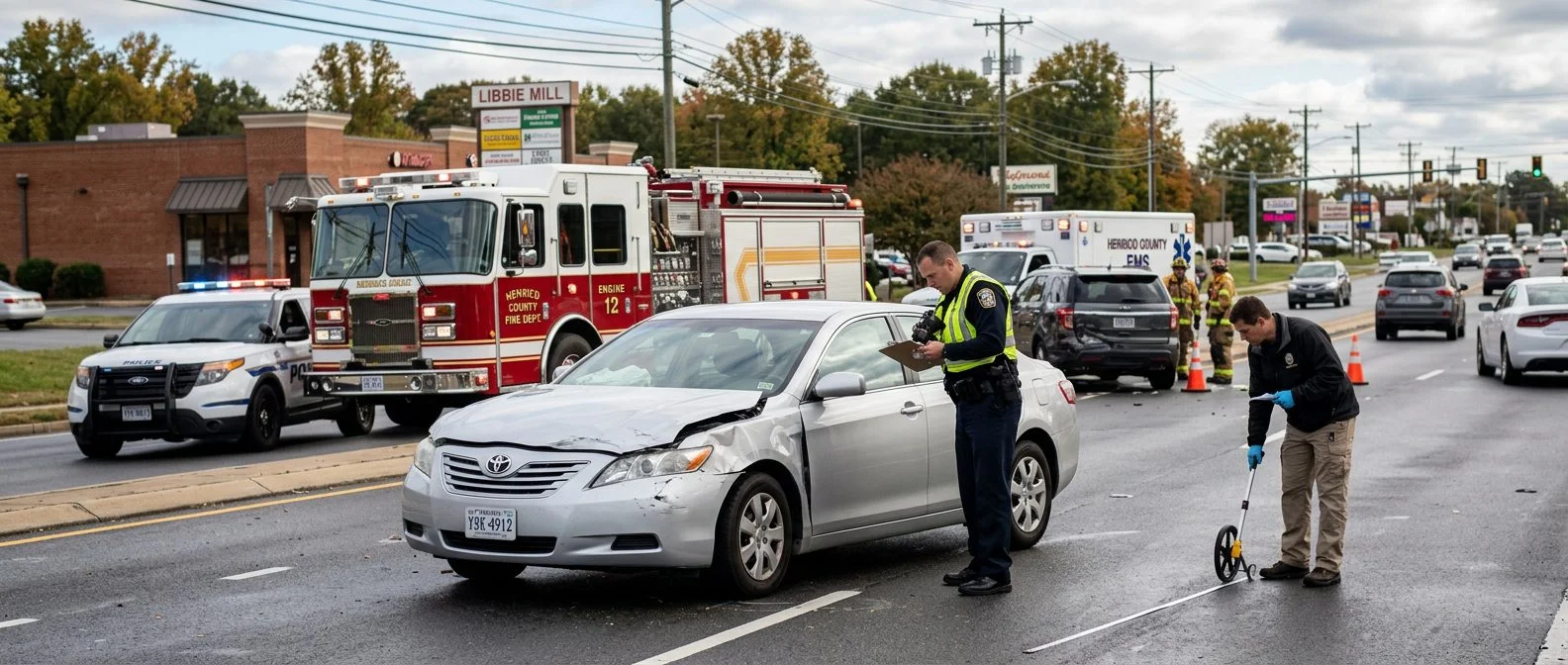
What to Do in the First Hours After a Crash
A calm, step-by-step plan for drivers, passengers and families across the Shenandoah Valley, Front Royal, Richmond and Henrico County.
Published November 22, 2026
A crash can leave you hurt, shaken and unsure what to do next. The 7 important steps to follow in an accident are: check for injuries and move to safety, report the crash to police, get a medical evaluation, document the scene, exchange information, notify your insurer and keep records, and track the time limits for a claim. Each step protects your health, your evidence or your options.
Why the order of these steps matters
The steps follow a practical order: safety and health come first, and evidence and deadlines come later.
In the first minutes, the goal is simple: stay safe and get medical help. Health comes first because some injuries are not obvious at the scene. Evidence comes next because details fade and road conditions change. The later steps protect the proof you may need, including the police report, photos and insurance records.
Some steps overlap. You might take photos while you wait for help, or exchange details while you watch for traffic. Use this list as a guide, not a script.
A crash with a commercial truck or bus can involve more parties and more records. The driver, the company that runs the vehicle and the insurers may each hold pieces of the story. The firm’s guide to commercial vehicle accidents in Virginia covers those cases in more depth.
Not sure what your next step is?
Talk it through with Correll Law Firm — we can walk you through how a situation like yours is usually handled and what your options are.

Step 1: Check for injuries and move to safety
Check yourself and your passengers for injuries first. Call 911 if anyone is hurt or the scene is unsafe.
Shock and adrenaline can hide pain, so a person may feel fine at first. Stay still if your neck or back hurts. Leave anyone who may have a neck or back injury where they are, unless staying put puts them at greater risk.
If you can move safely, turn on your hazard lights and get out of live traffic. Stay clear of vehicles that may be leaking fuel or smoking.
Picture a driver on a busy highway near Winchester. The driver feels fine but sees smoke under the hood. Moving away from the car and calling 911 is the safer choice, even before anything else happens.
Step 2: Stop and report the crash to police
Virginia requires a driver involved in a crash with injury or death to stop and report it to police immediately (Va. Code §§ 46.2-371, 46.2-894).
The stop-and-report duty is spelled out in Va. Code § 46.2-894. If injuries keep a driver from reporting right away, the statute says to report as soon as reasonably possible. The notice duty also appears in Va. Code § 46.2-371.
A police report creates an official record of the scene, the people involved and any injuries reported at the time. Ask the officer for the report number and write it down.
Keep one point clear: the two-year period discussed later is the deadline to file a lawsuit, not a deadline to report a crash (Va. Code § 8.01-243).
Step 3: Get a medical evaluation, even if you feel fine
Get a medical evaluation soon after the crash, even if you feel fine, because some symptoms appear later.
Adrenaline can mask injuries for hours. A case report on delayed headache after a collision says post-traumatic symptoms may develop or worsen after a crash. It also says a clinical exam alone may not be enough.
Seek prompt care for headache, confusion, dizziness, numbness, tingling, weakness, or changes in memory or mood. These signs deserve attention even if they seem mild.
Tell the provider exactly how the crash happened. Keep every visit summary, test result and discharge paper. Head injuries call for extra attention. The firm’s guide on brain injury symptoms after a truck crash explains common warning signs in more detail.
Step 4: Document the scene and the vehicles
Photograph and write down the scene while details are still fresh.
Take photos of every vehicle from several angles. Include the damage, license plates, skid marks, traffic signals, and road and weather conditions. Note where each vehicle came to rest.
Write down the time, the location, the direction of travel and what happened, in your own words. Collect witness names and contact details. Note any dash camera or nearby business camera that might have recorded the crash.
Commercial trucks carry more identifying marks. Federal rules require self-propelled commercial vehicles to display the USDOT number, preceded by the letters “USDOT” (federal USDOT marking rule). Note the company name, the USDOT number and any unit or trailer number. Federal rules also set out drug and alcohol testing for commercial drivers, including after some crashes. For local context on large trucks in the Richmond area, see the Henrico County truck crash guide.
Step 5: Exchange information and avoid discussing fault
Exchange basic information with the other driver, and avoid debating who caused the crash.
Get each driver’s name, address, phone number and driver’s license details. Also collect the insurer and policy number, and the vehicle owner’s name. Write these down or photograph the documents.
Avoid saying “I’m sorry” or guessing about fault at the scene. Early words can be repeated later, even when they were meant kindly. Describe what you saw and leave the question of blame to the investigation.
Do not sign anything from another driver or company beyond the basic exchange without reading it first. A signed form may contain terms you do not expect. Take time to read it, or ask for a copy to review later.
Not sure what your next step is?
Talk it through with Correll Law Firm — we can walk you through how a situation like yours is usually handled and what your options are.
Step 6: Notify your insurer and keep every record
Report the crash to your own insurer promptly, and stick to the facts you know.
Give the date, the place and the people involved. Do not guess about injuries you have not yet evaluated. Read the notice section of your policy, because each policy words its requirements in its own way.
A recorded statement given to an insurer can be used later. You may wish to talk with a lawyer before giving one.
Keep one folder, paper or digital. Include medical bills, prescription receipts, repair estimates, rental records, earnings records, a log of missed work, a daily symptom diary and all correspondence from insurers. A symptom diary can show how an injury affects daily life.
Step 7: Track the time limits and talk with a lawyer about your facts
Virginia generally allows two years from the date of injury to file a personal injury lawsuit (Va. Code § 8.01-243(A)); the clock runs from the date of injury, not the date of discovery, with narrow exceptions.
Under Va. Code § 8.01-243, every action for personal injuries, whatever the theory of recovery, must be brought within two years after the cause of action accrues, unless that section or another statute provides otherwise. Under Va. Code § 15.2-209, a claim against a county, city, or town for negligence is subject to a six-month written-notice requirement: a written statement of the nature of the claim, including the time and place of the injury, must be filed within six months after the cause of action accrued. A missing statement does not bar the claim if the locality’s attorney, chief executive or mayor, or any insurer or entity covering the claim, had actual knowledge of it within that six-month period, and the tolling provisions of § 8.01-229 apply if the claimant was under a disability when the cause of action accrued. You may wish to review the deadlines with a lawyer early.
A crash that causes a death follows a different path. A Virginia wrongful death action is filed by the decedent’s personal representative within two years of the death (Va. Code §§ 8.01-50(C), 8.01-244(B)), on behalf of the family members the statute protects. The time limit is set out in Va. Code § 8.01-244. Family members do not file the action.

Common questions after a crash
Here are short answers to three follow-up questions that often come up after the first steps are done.
How does insurance work when the crash was not your fault?
A claim may involve the other driver’s insurer and your own insurer, and your records matter either way.
Virginia follows contributory negligence: if you are found even partly at fault, you may be barred from recovering, with limited exceptions. Talk to a lawyer about your facts.
How soon should you notify your insurance?
Report the crash promptly. Then read the notice terms in your own policy so you know exactly what it asks for.
What about a bus or van crash?
Buses and vans follow the same first steps, and they may involve more parties and more records. The firm’s guide to passenger commercial vehicle crashes covers what to know about these crashes.