
Car Accidents | Virginia
Car Accident Laws in Virginia: A Plain-Language Guide
A clear overview of the state rules that often come up after a crash, from the roadside to the courthouse.
Published November 15, 2026
If a car crash has left you hurt, or a family member has died in one, you likely have many questions. The laws regarding car accidents in Virginia cover reporting the crash, how fault is decided, how long you have to sue, and what damages may be recovered.
This page walks through those rules in the order most people face them. Some duties apply the day of the crash. Other deadlines run for years.
Reporting a Car Crash in Virginia
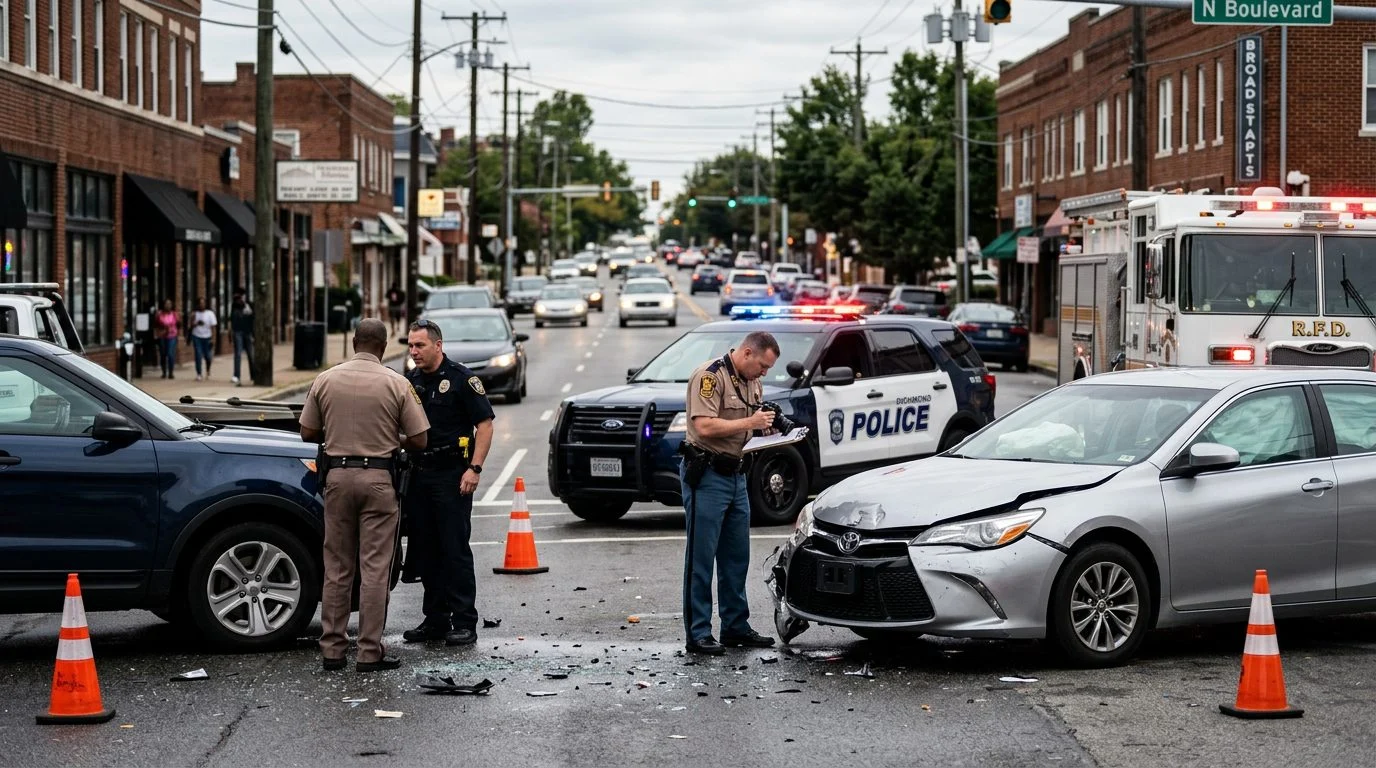
Virginia requires a driver involved in a crash with injury or death to stop and report it to police immediately (Va. Code §§ 46.2-371, 46.2-894).
If a person is hurt, the driver must give reasonable help, including taking that person to a doctor or hospital when treatment is apparent or requested.
A willful failure to report is a Class 4 misdemeanor under § 46.2-371.
The police report often becomes the first written record of who was involved and who saw what. Leaving the scene, even briefly, can make that record harder to build. The two-year period discussed later is the deadline to file a lawsuit, not the deadline to report a crash (Va. Code § 8.01-243). Readers whose crash involved a driver who fled should also review the firm’s hit-and-run information, referenced in the next section on fault.
Not sure what your next step is?
Talk it through with Correll Law Firm — we can walk you through how a situation like yours is usually handled and what your options are.
How Fault Works in Virginia
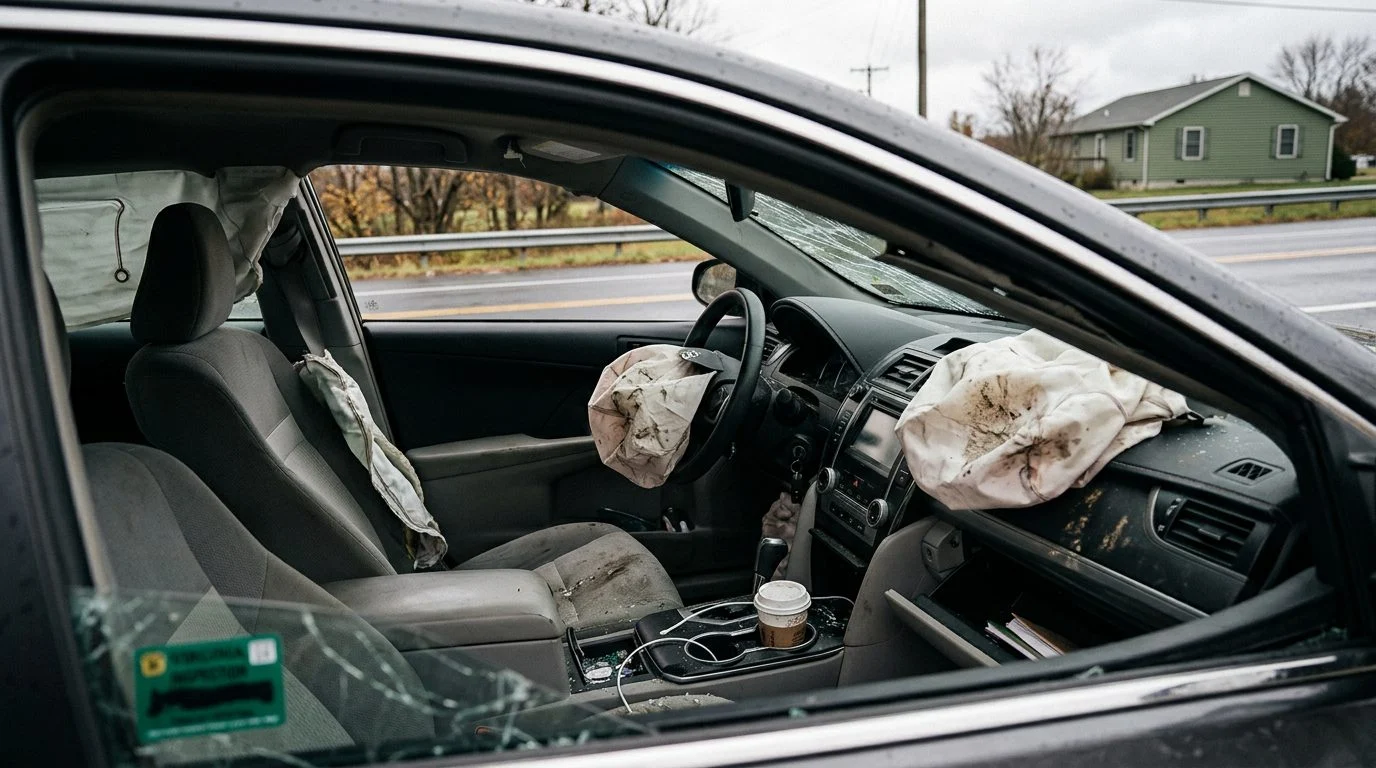
Fault decides most Virginia car crash claims. Virginia follows contributory negligence: if you are found even partly at fault, you may be barred from recovering, with limited exceptions. Talk to a lawyer about your facts.
Consider a common question: a driver brakes hard, and the car behind hits it. Who was at fault depends on the facts. Following distance, signals, road and weather conditions, and what each driver could see all matter.
Drivers sometimes argue a sudden emergency caused the crash.
How Long You Have to File a Lawsuit
Virginia generally allows two years from the date of injury to file a personal injury lawsuit (Va. Code § 8.01-243(A)); the clock runs from the date of injury, not the date of discovery, with narrow exceptions.
Many people ask whether someone can sue them for crashing their car. An injured person may bring a personal injury lawsuit against the driver who caused the crash within two years after the cause of action accrues.
When a Car Crash Results in Death
A Virginia wrongful death action is filed by the decedent’s personal representative within two years of the death (Va. Code §§ 8.01-50(C), 8.01-244(B)), on behalf of the family members the statute protects.
Under Va. Code § 8.01-50(A), a death caused by another’s wrongful act allows an action for damages against the party who would have been liable had death not occurred.
Va. Code § 8.01-53 sets the order in which the award is distributed. It starts with the surviving spouse and the children of the deceased, under priorities the statute lays out. Families who want more detail on the process can read the firm’s wrongful death and catastrophic injury pages, which are listed in the resources section below.
Damages Under Virginia Law
Virginia wrongful death damages cover the family’s sorrow, mental anguish and loss of the decedent’s companionship, guidance and care; lost income and services; medical expenses from the injury; funeral expenses; and, for willful or wanton conduct, punitive damages (Va. Code § 8.01-52).
It is handled under a separate survival action (Va. Code § 8.01-25).
Virginia allows punitive damages for actual malice, or for willful or wanton conduct or recklessness showing a conscious disregard for the safety of others, capped at $350,000 (Va. Code § 8.01-38.1). Punitive damages are available only if the jury finds that the conduct met that standard.
Company Vehicles, Commercial Trucks, and Buses
Crashes involving company vehicles, commercial trucks, or buses often raise questions about more than one party. The driver, the vehicle owner, and the employer may each have a role in the crash. The same fault and deadline rules above still apply.
Virginia sets minimum liability insurance that motor vehicle owners must carry. For policies from January 1, 2025, the minimum for bodily injury is $50,000 for one person and $100,000 for two or more persons (Va. Code § 46.2-472). Those minimums may not cover every injury, especially a serious one.
Whether to settle or file a lawsuit turns on the facts of each crash and on the rules described on this page. Readers can learn more in the firm’s commercial vehicle and commercial bus pages, referenced in the resources section.
Not sure what your next step is?
Talk it through with Correll Law Firm — we can walk you through how a situation like yours is usually handled and what your options are.
Where to Learn More About Your Crash
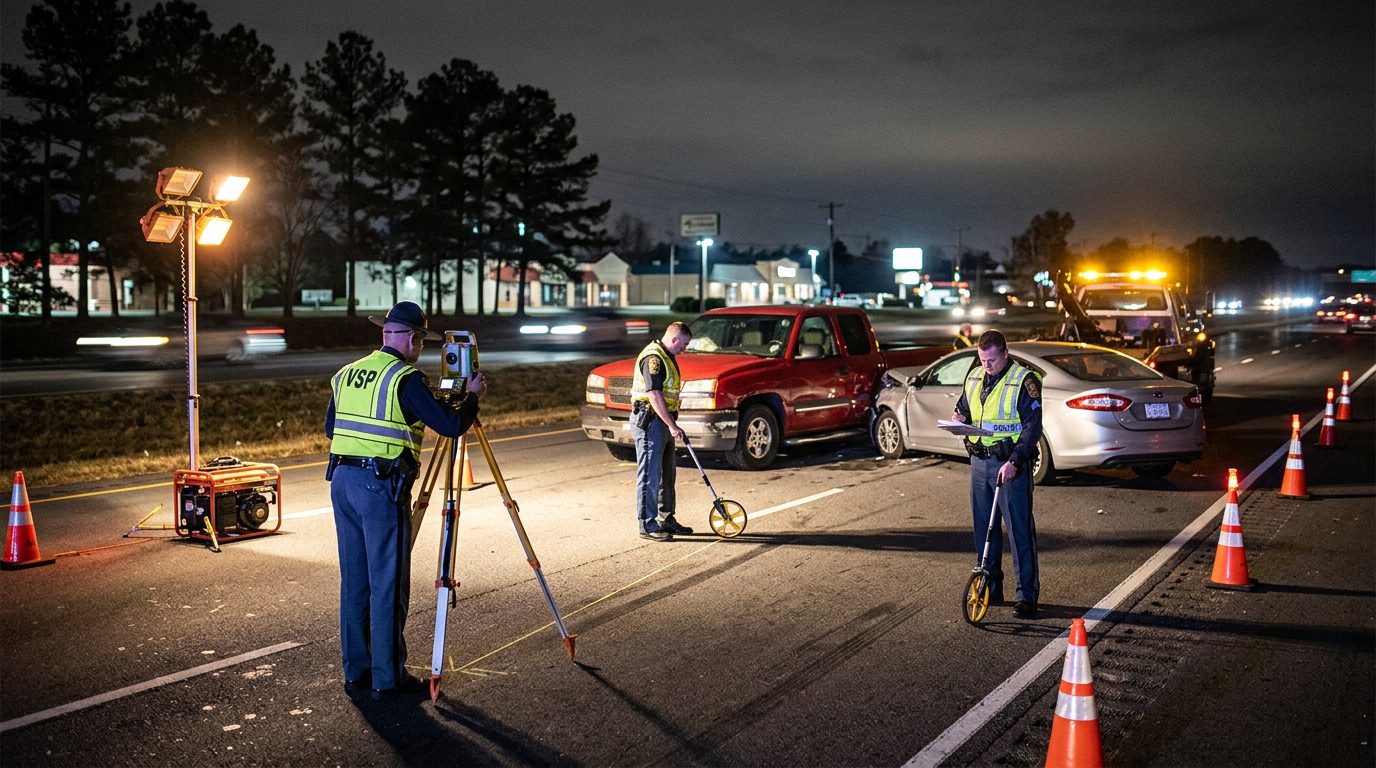
Five legal points matter most. Drivers in crashes that kill or injure someone, or damage an attended vehicle or other attended property, must immediately stop as close to the scene as possible without obstructing traffic, and must report their name, address, driver’s license number, and vehicle registration number forthwith to the State Police or local law-enforcement agency, or to the person struck and injured if such person appears to be capable of understanding and retaining the information, or to the other vehicle’s driver or occupant, or to the custodian of the damaged property. Fault is decided on the facts. The two-year lawsuit clock runs from the date of injury. A wrongful death action is filed by the personal representative, except that an action for fetal death is brought by the natural mother or, if she dies or is under a disability, by the administrator of her estate, her guardian, or her personal representative. Damages depend on the type of claim.
The firm’s commercial vehicle accident guide in Virginia covers these issues in more detail, and the firm’s truck accident and car accident pages address related questions.
How long do I have to file a car accident lawsuit in Virginia?
Virginia generally allows two years from the date of injury to file a personal injury lawsuit.
Who can file a wrongful death claim in Virginia?
The decedent’s personal representative files the claim for the family. Family members then share in any recovery under the statute.
Are punitive damages available in Virginia car accident cases?
They may be, but only for actual malice or for willful or wanton conduct or recklessness that shows a conscious disregard for the safety of others. Punitive damages are capped at $350,000 (Va. Code § 8.01-38.1).