
Commercial Bus Crash Claims | Virginia
Hurt in a Commercial Bus Crash? Start With a Clear Picture of Your Options
Plain-language guidance for passengers, drivers and families across the Shenandoah Valley, Richmond and Henrico County.
Published November 15, 2026
Being hurt in a commercial bus crash is frightening, and the questions come fast. Many injured people and families want to know whether they have a claim and what happens next.
In Virginia, a person hurt in a bus crash may have a claim against the bus operator, the driver, or another party whose conduct helped cause the crash. Deadlines, notice rules, and fault rules shape how a claim moves forward. This guide explains each one in plain terms.
Who Commercial Bus Crash Claims Are For
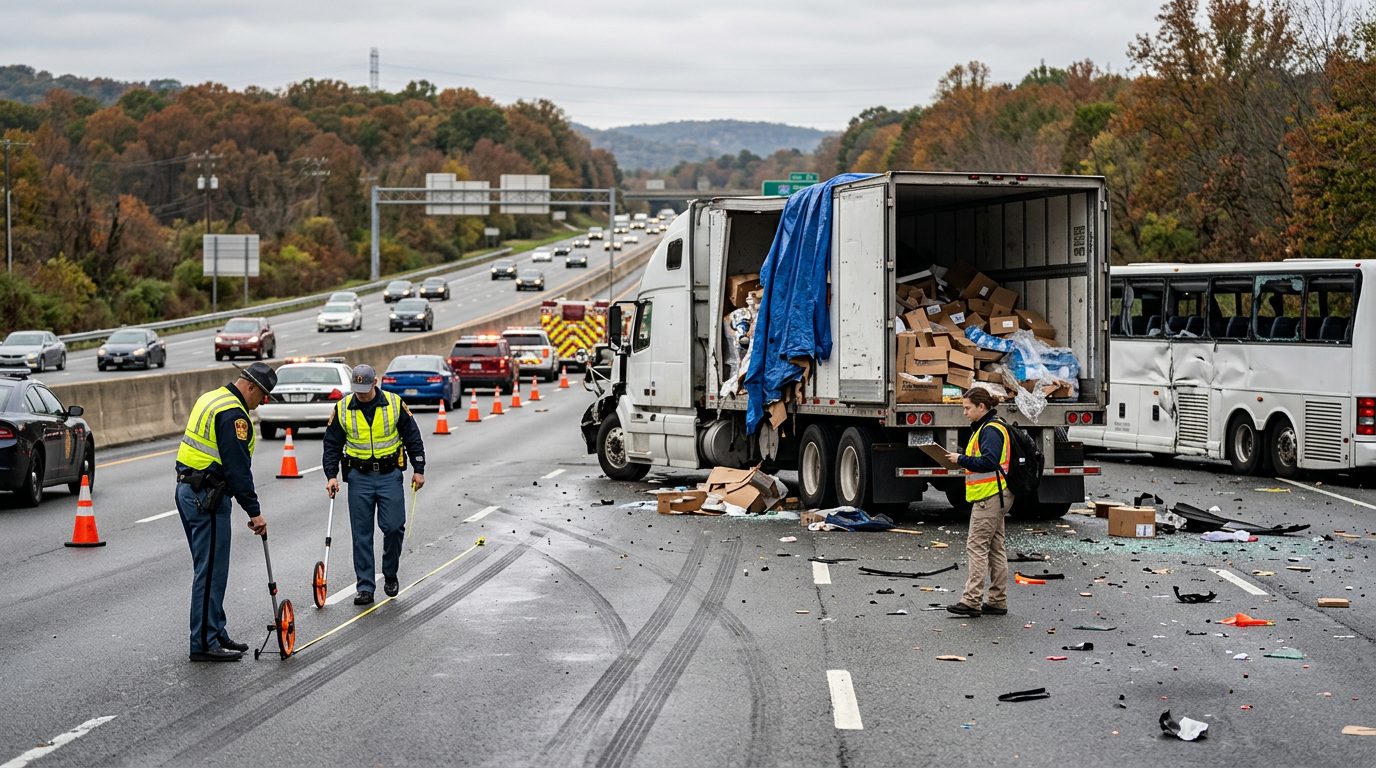
Commercial bus crash claims are for people hurt in a crash involving a bus operated for hire or as part of a business. Commercial buses include motorcoaches, charter and tour buses, intercity buses, and transit buses. School-related operations run by a business can also fall in this group.
People who may have a claim include:
- Passengers on the bus
- Pedestrians and cyclists struck by a bus
- Drivers and passengers in other vehicles hit by a bus
- Family members of someone killed in the crash
Bus crashes often involve more people, larger vehicles, and more company records than a typical car crash. That is one reason the firm treats them as commercial vehicle matters. For broader context, read the firm’s guide to commercial vehicle accident claims in Virginia.
If you were hurt in a commercial bus crash, you may have a claim, and you do not have to work through the next steps alone. Talk it through with Correll Law Firm — we can walk you through how a situation like yours is usually handled and what your options are.
What a Bus Crash Claim Can Cover
Each crash claim depends on its own facts, so the losses involved vary from case to case. Medical losses can include emergency care, surgery, rehabilitation, and future care the injury will need. Lost income can include time off work and a reduced ability to earn in the future.
Catastrophic injuries, such as traumatic brain injury, spinal cord injury, and amputation, often change daily life for years. Long-term care, home changes, and limits on work can all become part of the claim.
Virginia allows punitive damages for actual malice, or for willful or wanton conduct or recklessness showing a conscious disregard for the safety of others, capped at $350,000 (Va. Code § 8.01-38.1).
Who May Be Responsible After a Bus Crash
The bus operator, the driver, the vehicle’s owner, or another party whose conduct contributed to the crash may be responsible. Each one may face a different kind of claim.
-
- The operator or employer: how the company hires, trains, and schedules its drivers.
- The driver: speeding, distraction, fatigue, or failure to yield.
- The owner, lessor, or maintenance contractor: brake, steering, or tire problems that were not properly inspected or repaired.
- Other drivers or companies: anyone whose conduct helped cause the crash.
- Public transit agencies: government-run buses follow different procedures and notice rules.
Federal rules also apply to buses. 49 C.F.R. § 392.62 sets standards for bus operation, including that baggage and freight are stowed and secured so exits stay clear and occupants are protected from falling articles.
Maintenance logs, driver files, and inspection reports can help identify responsible parties.
Immediate Steps and Evidence After a Crash
The first duty after a crash is to stop and report it, and early evidence matters most. Virginia requires a driver involved in a crash with injury or death to stop and report it to police immediately (Va. Code §§ 46.2-371, 46.2-894). The same statute, Va. Code § 46.2-894, requires the driver to give reasonable help to an injured person.
That reporting duty is not the same as the filing deadline. The two-year period discussed below is the deadline to file a lawsuit, not the deadline to report a crash (Va. Code § 8.01-243).
Useful evidence includes:
- The police report number
- Photos of the scene, the vehicles, and any injuries
- Names and contact details for witnesses
- Medical records and bills
- The bus company’s name, vehicle number, and route or charter details
- A written journal of symptoms, treatment, missed work, and daily limits
Records can be lost, overwritten, or discarded. Early written requests help preserve what the bus company and others hold.
How a Bus Crash Claim Proceeds
A bus crash claim usually moves from a case review to investigation, medical review, negotiation, and, if needed, a lawsuit.
- Case review. The facts of the crash and the injuries are reviewed.
- Investigation. Police reports, medical records, company documents, and witness statements are gathered. Responsible parties and insurers are identified.
- Medical picture. Treatment and recovery need time to settle. Serious brain and spinal injuries often take longer before a claim can be fully valued.
- Demand and negotiation. The claim is presented to insurers or responsible parties.
- Lawsuit, if needed. A suit is filed when negotiation does not resolve the claim.
Timelines vary with the severity of the injuries, the number of parties, and whether a government entity is involved. The firm explains the stages that apply to a specific claim as it moves forward.
Deadlines and Fault Questions
Deadlines decide whether a claim can move forward, so timing matters early. Virginia generally allows two years from the date of injury to file a personal injury lawsuit (Va. Code § 8.01-243(A)); the clock runs from the date of injury, not the date of discovery, with narrow exceptions.
Some claims carry notice requirements that run out sooner. A claim against the Commonwealth or a transportation district is forever barred unless a written statement of the claim is filed within one year (Va. Code § 8.01-195.6); failure to file it does not bar the claim if the required officials had actual knowledge of the claim within that year. However, if the claimant was under a disability when the cause of action accrued, the tolling provisions of § 8.01-229 apply. A negligence claim against a county, city, or town is barred unless a written statement of the claim is filed within six months (Va. Code § 15.2-209); failure to file it does not bar the claim if the attorney, chief executive, or mayor, or any insurer or entity providing coverage or indemnification of the claim, had actual knowledge of the claim within that period. These rules can matter when a government-run bus is involved.
Fault is often the hardest question. Virginia follows contributory negligence: if you are found even partly at fault, you may be barred from recovering, with limited exceptions. Talk to a lawyer about your facts.
Video, witness accounts, and records often shape how fault is shown.
Not sure what your next step is?
Talk it through with Correll Law Firm — we can walk you through how a situation like yours is usually handled and what your options are.
Wrongful Death Claims After a Fatal Bus Crash
After a fatal bus crash, the family’s claim runs through a wrongful death action. A Virginia wrongful death action is filed by the decedent’s personal representative within two years of the death (Va. Code §§ 8.01-50(C), 8.01-244(B)), on behalf of the family members the statute protects. Family members share in the recovery rather than filing it themselves.
Virginia wrongful death damages cover the family’s sorrow, mental anguish and loss of the decedent’s companionship, guidance and care; lost income and services; medical expenses from the injury; funeral expenses; and, for willful or wanton conduct, punitive damages (Va. Code § 8.01-52). The damages list appears in Va. Code § 8.01-52. The class of beneficiaries is set by Va. Code § 8.01-53, which starts with the surviving spouse and children of the deceased.
Families often gather medical bills, funeral receipts, and employment information early. The firm handles wrongful death matters for families across the Shenandoah Valley and in Richmond and Henrico County.
Why the Firm Handles These Claims
The firm handles serious injury and commercial vehicle claims from its Winchester and Harrisonburg locations. It focuses on car accidents, truck accidents, commercial vehicle accidents, catastrophic injuries, traumatic brain injury, spinal cord injury, and wrongful death.
The firm serves people from the Shenandoah Valley, as well as Richmond and Henrico County. Bus crash claims can depend on company records, so the firm reviews those records alongside the police report and the medical file.
When a case needs them, the firm works with medical providers and outside professionals, such as accident reconstruction professionals.
Frequently Asked Questions About Bus Crash Claims in Virginia
Bus crash claims in Virginia depend on who was involved, what happened, and when the claim is filed.
Can I bring a claim if I was a passenger on a bus hit by another vehicle?
Yes, passengers may have claims against several parties, depending on how the crash happened.
Can I sue a public transit agency over a bus crash?
You may be able to, but notice deadlines for government claims can run out within one year or six months.
Do I need a police report for a bus crash claim?
A police report is one of the most useful records. It helps identify the parties and any witnesses.
What if I was partly at fault?
Partial fault can affect a claim in Virginia. The deadlines and fault section above explains how.