
Commercial Vehicle Crashes | Virginia
Commercial Driver Drug Tests After a Crash
How testing rules apply after a truck or bus crash, what a test result or a missing test can and cannot show, and how the records may matter to an injury claim.
Published November 15, 2026
A commercial truck or bus crash can leave you hurt, shaken, and full of questions. One of them is often whether the driver was tested for alcohol or drugs.
Short answer: federal rules require the employer to test the commercial driver for alcohol and for drugs only when the crash meets the conditions in 49 C.F.R. § 382.303, and these tests run on short time limits. The results are only part of the story.
What Post-Crash Drug and Alcohol Testing Means
Post-crash testing is an alcohol and drug test given to a commercial driver after a crash that meets federal criteria. It is different from a roadside stop or a random test, which is picked by a program rather than by a specific crash.
A post-crash test is tied to one crash. It is meant to show the driver’s condition at or near the time of that crash. Federal rules cover both the driver and the employer, so a test involves both.
A negative result does not settle what happened on its own. Crash data, the police report, witness accounts and medical records can add context. A missing result does not settle it either. Timing matters, so the time limits in the federal rules are covered below.
For the wider picture, read the firm’s commercial vehicle crash guide.
Not sure what your next step is?
Talk it through with Correll Law Firm — we can walk you through how a situation like yours is usually handled and what your options are.

Who Orders the Test and the Federal Rules Behind It
Under 49 C.F.R. § 382.103, the federal alcohol and controlled substances testing rules apply to service agents and to employers and drivers who operate a commercial motor vehicle in commerce in any State and are subject to the commercial driver’s license requirements of part 383, the Licencia Federal de Conductor (Mexico) requirements, or the commercial drivers license requirements of the Canadian National Safety Code, except for the exceptions listed in that section.
An employer who drives his or her own truck must follow both the employer rules and the driver rules. A large carrier and a single-truck owner both fall under these requirements.
Under 49 C.F.R. § 382.303, the employer must test each surviving driver for alcohol after a qualifying crash, where the driver received a citation within 8 hours for a moving traffic violation arising from the accident or, in a crash involving loss of human life, was performing safety-sensitive functions with respect to the vehicle. The employer must test each surviving driver for controlled substances under the same conditions, where the driver received a citation within 32 hours of the occurrence. Whether a crash triggers testing depends on its circumstances under 49 C.F.R. § 382.303.
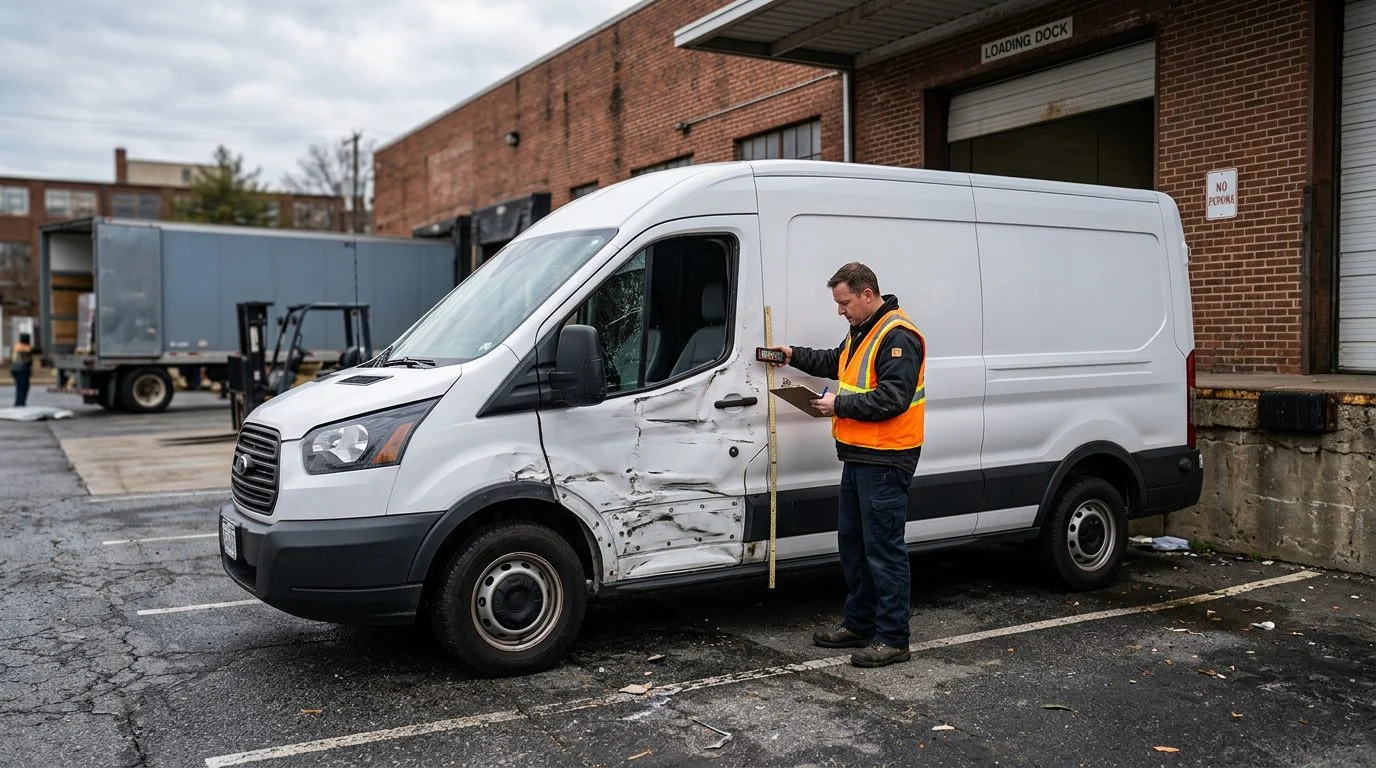
First, a driver who receives a citation within 8 hours for a moving traffic violation arising from the accident is tested for alcohol if a person is injured and immediately receives medical treatment away from the scene; for controlled substances, the citation window is 32 hours. Second, a driver who receives a citation within 8 hours for a moving traffic violation arising from the accident is tested for alcohol if one or more vehicles have disabling damage and must be towed away from the scene; for controlled substances, the citation window is 32 hours.
The rule has exceptions, such as crashes involving only cargo loading or unloading, so the facts of each crash matter. The Federal Motor Carrier Safety Administration explains the federal testing requirements for CDL drivers.
Federal testing rules do not block state criminal laws that punish reckless conduct leading to injury, death, or property loss, under 49 C.F.R. § 382.109.
Alcohol Tests Versus Drug Tests After a Crash
An alcohol test checks for recent alcohol use, and a drug test checks for controlled substances. Both are required after a qualifying crash, but each follows its own rules.
For alcohol, a driver may not perform safety-sensitive duties with an alcohol concentration of 0.04 or greater. Under 49 C.F.R. § 382.201, an employer that knows of such a result may not let the driver keep performing those duties.
After a crash, a driver required to take a post-accident alcohol test may not use alcohol for eight hours following the accident, or until the test is given, whichever comes first, under 49 C.F.R. § 382.209.
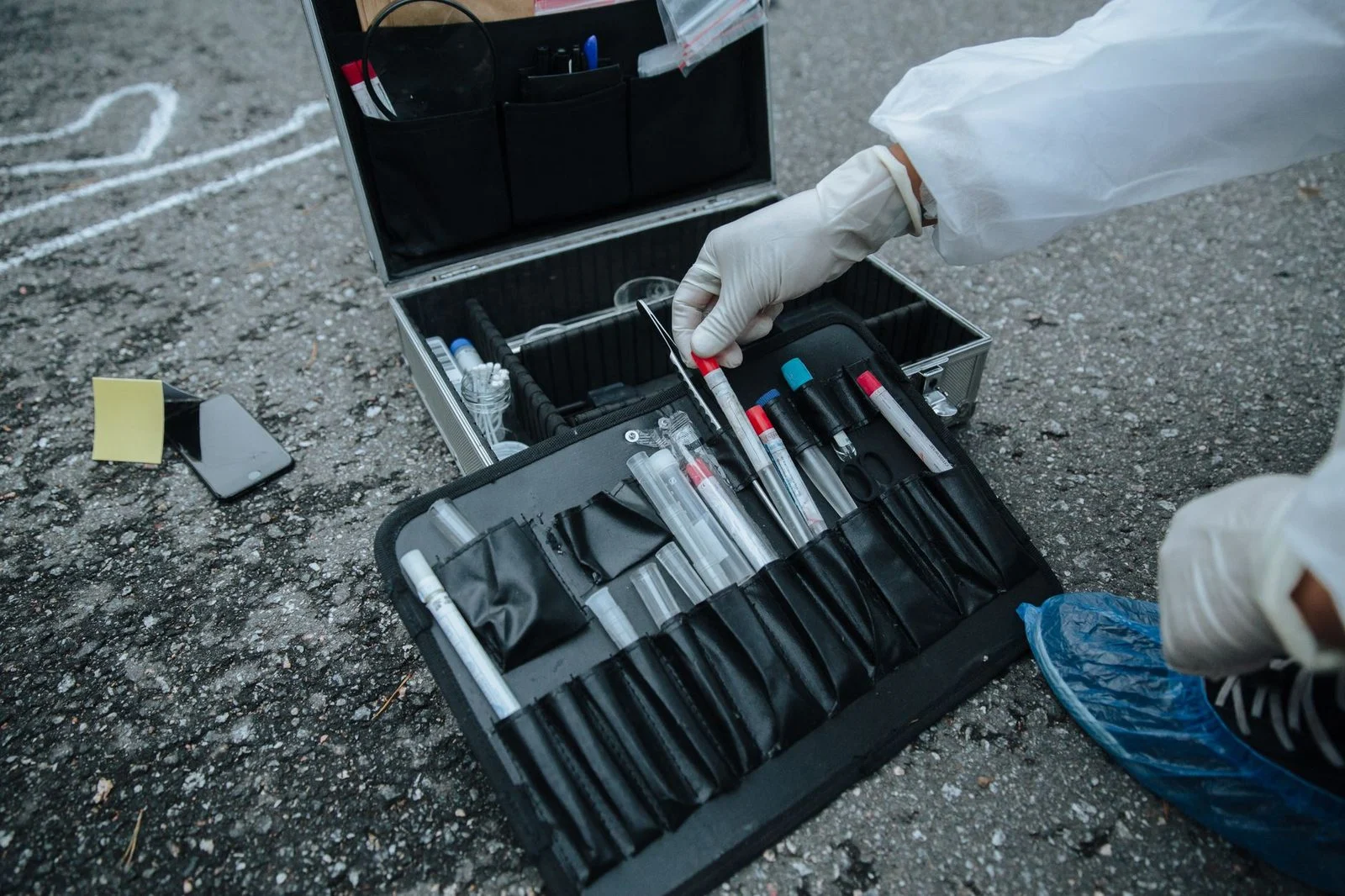
Alcohol tests are often breath tests. Employers must keep records of training for the technicians who give them, under 49 C.F.R. § 382.401.
On drug testing, the federal regulation says that a urine test for controlled substances done by Federal, State, or local law enforcement or public safety officials with independent authority for the test counts as meeting its requirements, if the test conforms to the applicable testing requirements and the employer obtains the results (49 C.F.R. § 382.303(g)(2)). Under 49 C.F.R. § 382.215, a driver who tests positive, or who has adulterated or substituted a test specimen for controlled substances, may not report for duty, remain on duty, or perform safety-sensitive functions.
Results move through a medical review officer. Under 49 C.F.R. § 382.407, that officer reports controlled substances results to the employer.
How Much Time the Carrier Has to Test, and What Happens When the Window Passes
Alcohol testing is due as soon as practicable, and attempts must stop after eight hours. For controlled substances, attempts stop after 32 hours.
These windows run from the time of the accident, under 49 C.F.R. § 382.303. If an alcohol test is not given within two hours, the employer must keep a record stating why it was not promptly given.
When the eight-hour alcohol window or the 32-hour drug window closes, the employer must stop trying. The employer must then keep the same kind of record of the reasons.
Those records are part of the paperwork trail. Under § 382.401, records must be made available within two business days after an FMCSA request.
Drivers have duties too. Under 49 C.F.R. § 382.303(e), a driver who is subject to post-accident testing shall remain readily available for such testing or may be deemed by the employer to have refused to submit to testing. Nothing in this section shall be construed to require the delay of necessary medical attention for injured people following an accident, or to prohibit a driver from leaving the scene of an accident for the period necessary to obtain assistance in responding to the accident, or to obtain necessary emergency medical care.
A record of a late or missed test is not the same as a positive result. Why a test ran late is often a question of the facts, and the written reasons are where those facts start.
How Testing Records Can Matter in a Virginia Injury or Wrongful Death Claim
Test records can be one piece of evidence in a claim.
Virginia requires a driver involved in a crash with injury or death to stop and report it to police immediately (Va. Code §§ 46.2-371, 46.2-894).
Virginia generally allows two years from the date of injury to file a personal injury lawsuit (Va. Code § 8.01-243(A)); the clock runs from the date of injury, not the date of discovery, with narrow exceptions. Some claims carry notice requirements that run out sooner.
A Virginia wrongful death action is filed by the decedent’s personal representative within two years of the death (Va. Code §§ 8.01-50(C), 8.01-244(B)), on behalf of the family members the statute protects.
In an injury or death claim, test records can help show what was done after the crash and whether the federal time limits were met. Electronic crash data may also matter, as covered in electronic crash data in Virginia.
Whether a record matters in a given claim depends on the facts of each crash. For who may be responsible, see truck owner and driver liability.
Records to Keep and Questions to Ask After a Crash
Records gathered early help most, while details are still fresh. Keep the police report number, photos of the scene and vehicles, names of witnesses, and medical records and visit notes.
If you can, note the company name and the truck’s number or plate. Keep any written notices you receive from the carrier or its insurer, and write down what you remember soon after the crash.
A family facing a fatal crash may find the fatal commercial truck crash checklist helpful for these early steps.
Useful questions include whether the crash involved injury requiring immediate treatment away from the scene or a vehicle that had to be towed from the scene, whether the driver received a citation within the time the regulation sets, and whether any test was delayed and why.
A testing record can show what was tested, when, and whether the federal time limits were met. It cannot, by itself, show how the crash happened or who was at fault.
Does a missing test mean the driver was impaired?
Not on its own. A missing test does not show what the driver had used, and the federal rules require a record of the reasons under 49 C.F.R. § 382.303.
Does a commercial driver get a drug test after every crash?
Not every crash. Under 49 C.F.R. § 382.303, the employer tests each surviving driver who was performing safety-sensitive functions after a crash involving the loss of human life. After a crash involving bodily injury that required immediate medical treatment away from the scene, or disabling damage that required a vehicle to be towed from the scene, testing applies when the driver receives a citation for a moving traffic violation arising from the crash within the period the rule sets.