
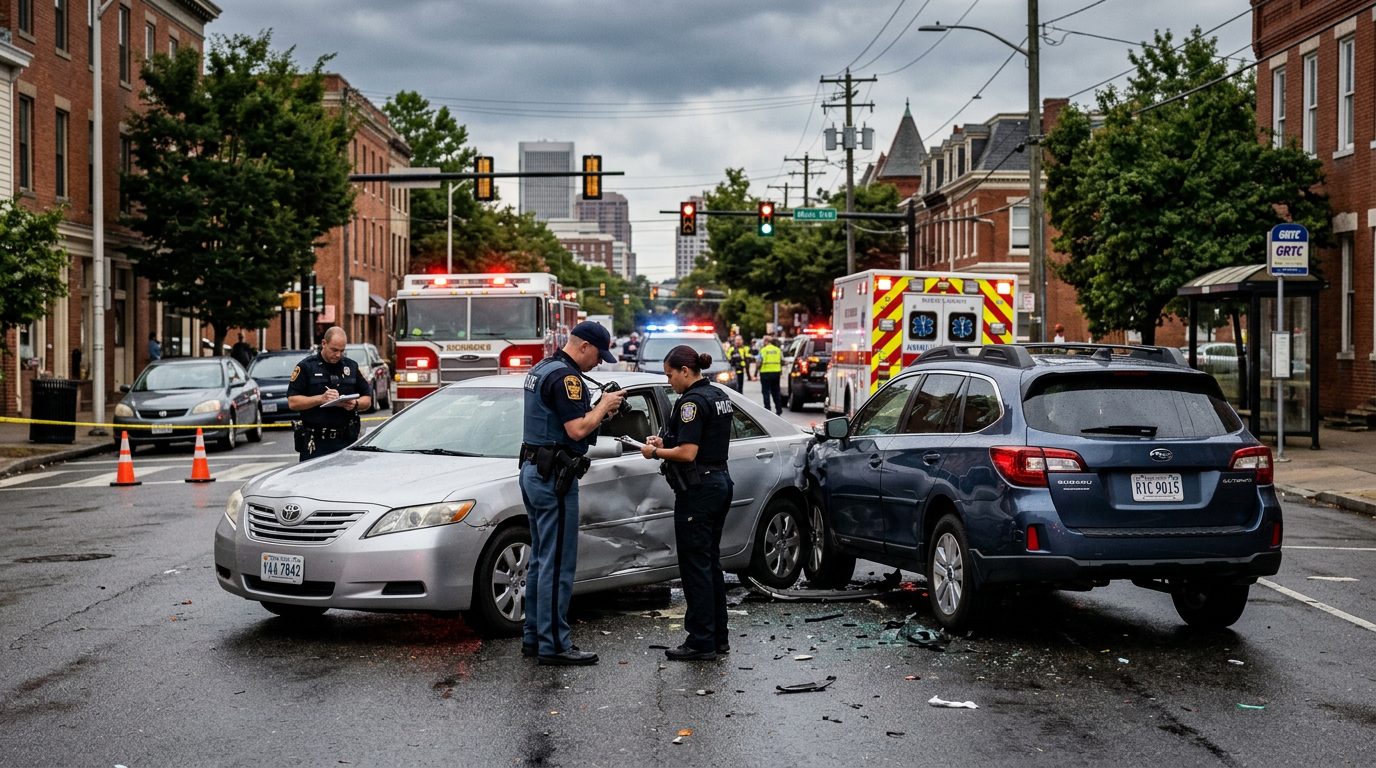
Car Accidents | Winchester, Harrisonburg and the Shenandoah Valley
Hurt as a Passenger in a Virginia Crash? Here Is What to Do Next
A crash can leave you injured and unsure who to turn to. These steps can help you protect your health and your options.
Published November 22, 2026
Being a passenger in a car accident can leave you shaken, sore, and unsure of what comes next. Here is the short answer: get to safety, get checked by a medical provider, write down what you saw, and tell your own insurer promptly. The steps below follow the order these questions usually come up after a crash.
Get to Safety and Report the Crash
Your first job is to get out of traffic and get help, if you can. If you can move, step away from moving cars and into a safe spot. Call 911 if anyone is hurt or the scene feels unsafe.
You may not have been the driver, but your actions in the first minutes still matter. They affect your health and your record of what happened.
Virginia requires a driver involved in a crash with injury or death to stop and report it to police immediately (Va. Code §§ 46.2-371, 46.2-894).
Keep two deadlines apart. For a crash resulting in injury or death, the report to police comes right away. The two-year period covered later in this guide is the deadline to file a lawsuit, not the deadline to report a crash (Va. Code § 8.01-243).
The firm has offices in Winchester and Harrisonburg. It handles car, truck and commercial vehicle crash cases for people from the Shenandoah Valley to Richmond and Henrico County.
For a fuller checklist, read the firm’s commercial vehicle accidents guide and its seven steps after an accident.
If you were riding in a vehicle involved in a crash, you may have a claim, and the firm offers a free case evaluation to talk through your situation. Talk it through with Correll Law Firm — we can walk you through how a situation like yours is usually handled and what your options are.

Get Medical Care, Even If Your Injuries Seem Minor
Get checked by a medical provider, even if you feel fine after the crash. Passengers sometimes feel okay at the scene and notice pain later. Some symptoms appear after a delay, and some serious injuries, including head and spinal cord injuries, may not be obvious at first.
When you see a provider, describe every symptom. Say when it started and how it changes over days and weeks. Vague notes like “a little sore” are hard to use later.
Keep simple records. Save appointment summaries, prescription lists, imaging reports and notes about missed work. A daily journal can track pain, sleep problems and everyday tasks you can no longer do.
Readers who wonder whether their crash counts as minor can read what is classed as a minor accident. A crash that looks minor from the seat can still cause a real injury.
Gather Information About the Vehicles, Drivers and Scene
Collect what you can while the details are still fresh. Ask for each driver’s name, phone number, insurance company and policy number. Write down the license plate and a short description of every vehicle involved.
Many passengers do not own the car they ride in. Ask both the driver and the vehicle owner for insurance details, and note which policy may apply.
Take photos when it is safe to do so. Useful shots include vehicle damage, the road, traffic signals, the weather and any visible injuries. Note the time, the direction each car was traveling, and the order of events.
Scenes break up quickly, and people leave. A list typed into your phone before you go can keep the details together.
Who Counts as a Witness in a Car Accident?
A witness is anyone who saw or heard the crash or what happened right after it. Witnesses can include other drivers, passengers, pedestrians and people working at nearby businesses.
Ask for each person’s name and contact details before they leave the scene. Then write down what each one says they saw, in their own words.
Police reports may list witnesses. Ask the investigating officer how to get a copy of the report.
Your own account matters too. Where you sat in the vehicle and what you could see through the windows can shape what you remember. Say what you remember, and say what you don’t know.
Notify Your Insurance Company Promptly
Tell your own insurer about the crash as soon as reasonably possible. Check your policy for notice requirements, because the wording can differ from one policy to another.
A passenger may have a claim under the policy on the vehicle they rode in, the driver’s policy, or their own policy, depending on the facts. Your insurer can explain which coverage may apply to your situation.
Keep copies of every letter, claim number and adjuster’s contact information. Write down the date and what was said on each call.
An adjuster may call you soon after the crash. Insurers may ask for a recorded statement or a medical authorization. You may wish to review those requests carefully before agreeing to them.
Do not guess about how much a claim is worth or what an insurer will pay. Those answers depend on medical records and the details of the crash.
Can a Passenger Sue Both Drivers?
Whether a passenger can pursue more than one driver turns on the facts of the crash.
Two questions shape the answer. How did each driver’s conduct contribute to the crash? Which insurance policies may apply? A passenger is not the driver, so the focus usually turns to who was responsible for the crash.
In some situations, a claim may also involve a vehicle owner or an employer. Those links depend on the relationship between the people involved and what happened.
Not sure what your next step is?
Talk it through with Correll Law Firm — we can walk you through how a situation like yours is usually handled and what your options are.
How Fault Can Affect a Passenger’s Claim and the Time Limits
Fault and deadlines both shape what a passenger can do next, so learn both early. Virginia follows contributory negligence: if you are found even partly at fault, you may be barred from recovering, with limited exceptions. Talk to a lawyer about your facts.
Virginia generally allows two years from the date of injury to file a personal injury lawsuit (Va. Code § 8.01-243(A)); the clock runs from the date of injury, not the date of discovery, with narrow exceptions.
Some claims carry notice requirements that run out sooner than the lawsuit deadline. Don’t assume the two-year period covers every step.
When the Other Vehicle Is a Commercial Truck
A crash with a commercial truck can involve more parties and more records than a crash between two cars.
Federal law requires minimum levels of financial responsibility for certain motor carriers that transport property between a place in a State and certain other places (49 U.S.C. § 31139). Federal driving-time rules also limit how long drivers of property-carrying commercial motor vehicles may drive, with certain exceptions.
At the scene, note the company name, any DOT number, and the unit or trailer number on the truck if you can see them. Ask the officer whether the vehicle is a commercial truck.
When injuries are serious, such as brain or spinal cord injuries, early medical records matter. They help show what was hurt and when.
Readers who want local information can read the 18-wheeler accident page for Henrico County.
Frequently Asked Questions
Can a passenger file a claim against the driver’s insurance?
A passenger may be able to present a claim to the driver’s insurer, depending on the facts.
What if the driver of my own car caused the crash?
You may have a claim against that driver, depending on the facts. Your own vehicle’s insurance may also be relevant.
Related practice areas
- Is a 3500 Truck Considered a Commercial Vehicle?